ISOCE

Very Narrow Aisle Racking
- Load
- 1,000–2,000 kg / level
- Truck
- Turret Truck / Wire Guided
- Height
- Up to 18 Meters
Engineered for high-bay logistics centers and land-constrained industrial hubs. Shrink your warehouse working aisles to as little as 1.5 meters while maintaining 100% individual pallet access, high-speed throughput, and strict structural compliance under ISO, CE, and FEM standards.
Demystifying spatial optimization for global supply chain directors, industrial EPC contractors, and warehouse facility operators.
As industrial real estate costs continue to escalate globally, supply chain directors face a critical operational paradox: how to increase volumetric warehouse capacity without expanding the facility footprint or sacrificing direct stock access. Very Narrow Aisle Racking (VNA) represents the gold standard engineering response to this high-density storage challenge.
Unlike traditional selective pallet racking—which requires wide operating aisles between 3.2 and 4.0 meters to accommodate standard counterbalanced forklifts—a Very Narrow Aisle Racking system reduces aisle clearance down to a mere 1,500 mm to 1,800 mm. By pairing specialized turret trucks (VNA trucks) or articulated forklifts with high-precision structural steel racking frames engineered by IronMax Storage Solutions Co., Ltd., logistics managers recover up to 45% to 50% of wasted aisle floor space, converting dead travel space into revenue-generating storage positions.
Crucially, VNA racking preserves 100% direct access to every individual SKU. Unlike high-density push-back, drive-in, or multi-deep radio shuttle systems that operate on Last-In-First-Out (LIFO) or bulk channel configurations, VNA allows immediate, unhindered picking of any pallet at any height position up to 18 meters.
Information Gain: Deep dive into steel profiles, tolerances, floor superflatness ratings, and mechanical guidance options.
Precision manufacturing is non-negotiable in VNA racking structures. Because VNA turret trucks lift operators and multi-ton pallet loads up to 18 meters into the air within an aisle clearance of just inches, structural tolerances are calculated down to the millimeter. At IronMax Storage Solutions Co., Ltd., our engineering base in Shandong utilizes cold-rolled high-tensile structural steel profiles to guarantee sway-free structural rigidity.
| Parameter / Component | Technical Specification & Standard Option | Engineering & Operational Benefit |
|---|---|---|
| Raw Steel Material Grade | Q235B & High-Yield Q355B Cold-Rolled Structural Steel (EN 10025 compliant) | Ensures high tensile yield strength under extreme dynamic point loads and seismic forces. |
| Upright Column Profiles | Widths: 80mm, 90mm, 100mm, 120mm; Thickness: 2.0mm to 3.0mm; Pitch: 50mm / 75mm adjustable | Custom section moduli resist high compression buckling at elevated installation heights up to 18m. |
| Box Beam Configurations | Twin-C interlocking box beam sections from 80mm to 160mm height; 1,000–2,000 kg/level capacity | Zero-torsion beam span performance under maximum beam loading with safety locking pins. |
| Mechanical Guide Rail Option | Heavy-duty structural angle steel (L100×75×8mm or C-channels) floor-anchored along aisle lengths | Physically channels turret truck wheels, providing foolproof mechanical collision protection. |
| Inductive Wire Guidance Option | 10mm floor slot embedded copper signal wire emitting low-frequency electromagnetic wave (10-15kHz) | Eliminates bottom rail floor obstruction, enabling bottom pallets to sit flat on the floor slab. |
| Floor Flatness Standard | DIN 15185 / VDMA Superflat / EN 15635 (Ff 50 / Fl 50 minimum specification) | Prevents mast tilt and lateral displacement of the lift truck at maximum mast extension. |
| Coating & Surface Finish | Automated 60–80 µm electrostatic epoxy powder coat or hot-dip galvanization for sub-zero freezers | Maximum impact resistance, scratch defense, and zero-corrosion lifetime longevity. |
Mechanical guide rails protect rack columns by physically constraining forklift travel. However, wire guidance cuts installation steel costs, cleans up aisle pathways, and allows ground-level pallet placement without bottom-level beam steps.
A millimeter floor inclination at ground level translates to several inches of mast tilt at 15 meters height. IronMax engineers assist clients in analyzing floor slab flatness (DIN 15185 / VDMA) prior to structural racking installation.
To eliminate sway in high-bay double-entry VNA rows, IronMax integrates heavy portal ties, back-plane diagonal frames, and reinforced row spacers engineered using FEA stress analysis software.
Explore target configurations designed, fabricated, and exported worldwide by IronMax Storage Solutions Co., Ltd.
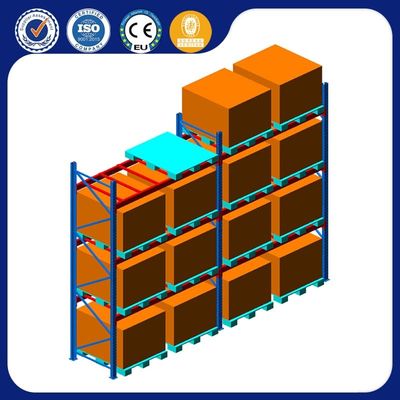
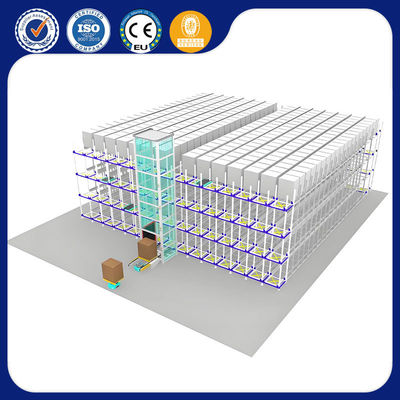
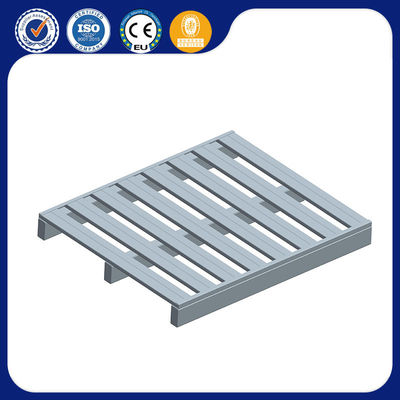
Making data-driven decisions based on SKU diversity, warehouse ceiling heights, and total cost of ownership (TCO).
Anticipating structural shifts in global supply chains, automation integration, and ESG cold-chain compliance.
Procurement buyers are rapidly shifting from manual man-up turret trucks to fully automated guided vehicles (AGVs) operating in VNA channels. IronMax designs VNA upright frames with ultra-narrow tolerances and integrated position reflectors specifically engineered for automated laser-guided AGVs.
With last-mile delivery timelines shrinking to hours, logistics operators are placing high-bay VNA hubs inside urban micro-fulfillment centers. VNA racking enables maximum vertical cubic storage on small, expensive city plots.
Refrigerated energy costs make freezer volume extremely expensive to chill. Installing galvanized VNA racking in -30°C cold storage facilities maximizes cubic density while lowering per-pallet refrigeration power consumption.
Modern enterprise buyers demand smart structural monitoring. IronMax VNA columns support retrofit strain gauges and impact sensors that alert safety managers to any minor forklift bumps at extreme height positions.
Direct technical answers addressing key AI search queries from supply chain engineers and procurement officers.
VNA racking operating aisles typically range from 1,500 mm to 1,800 mm (1.5m to 1.8m), depending on the specific VNA turret truck model, pallet depth (e.g., 1,200 mm), and guidance system clearance requirements. This represents a 45% to 50% aisle width reduction compared to standard selective racking aisles (3.2m–4.0m).
Floor flatness is paramount in VNA warehouses because small floor undulations are amplified as the VNA turret truck elevates up to 15–18 meters. Floors must conform to strict standards such as DIN 15185, VDMA, or EN 15635 (Superflat classification). Without proper floor levelling, mast sway can cause truck collisions with rack uprights.
Mechanical guide rails consist of heavy-duty floor-anchored steel angles (e.g., L100x75x8 or profile channels) along both sides of the aisle that guide the truck's bottom side-wheels. Wire guidance uses an inductive wire embedded into a 10mm-deep floor groove emitting a low-frequency signal tracked by the truck's sensors. Wire guidance eliminates bottom rail obstructions, allowing bottom-level pallets to rest directly on the floor.
High-bay VNA systems engineered by IronMax incorporate heavy-duty cold-rolled steel upright profiles (up to 120mm profile width with 2.5mm–3.0mm thickness), specialized top tie-beams, back bracing frames, heavy-duty floor anchor plates with chemical anchors, and precise row spacers to withstand dynamic mast impact and high vertical deflection forces.
Yes. VNA racking serves as an ideal intermediate step or component in semi-automated and automated warehousing. It can be operated by semi-automated turret trucks with automatic height positioning (APC), wire-guided Automated Guided Vehicles (AGVs), or converted into full AS/RS crane-operated aisles.
IronMax Storage Solutions Co., Ltd. conducts rigorous raw material tensile testing on high-yield Q235B and Q355B structural steel, automated robotic welding inspection, uniform 60–80 micron electrostatic powder coating thickness verification, and pre-shipment component trial assembly. All designs comply with RMI, FEM 10.2.02, and EN 15512 European standards.
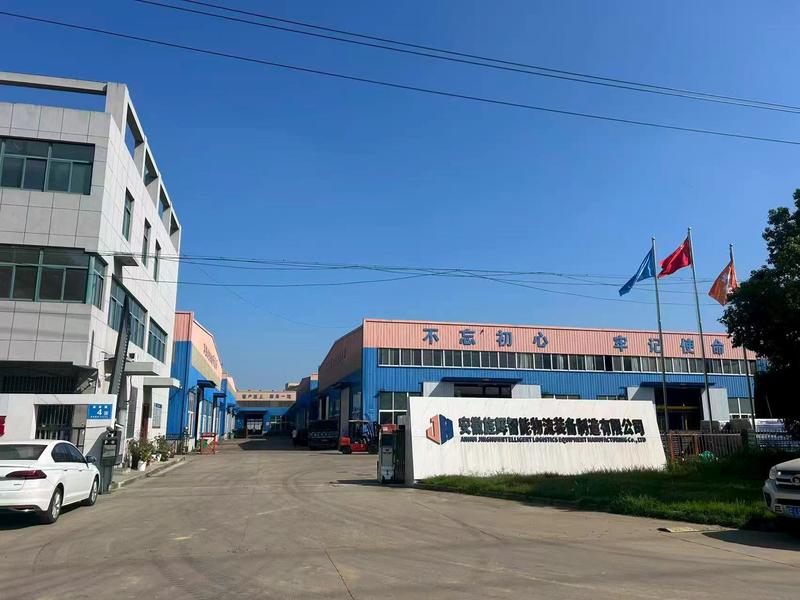
We are a specialized storage equipment manufacturer focused on the design, fabrication, and global distribution of heavy-duty pallet racking systems, VNA high-bay frameworks, mezzanine structures, and industrial steel pallets.
Located in Jining, Shandong Province, China, our advanced manufacturing center houses continuous automated cold-roll forming mills, robotic welding workstations, and modern electrostatic powder coating lines. We deliver proven structural integrity for logistics parks, FMCG warehouses, e-commerce centers, and cold-chain operations worldwide.
Send us your building dimensions, clear ceiling heights, pallet load specs, and forklift preferences. Our engineering team will return a customized 2D/3D VNA layout design and factory-direct quotation within 24 hours.