Engineered Heavy Duty Pallet Racking for Global Procurement
In modern logistics hubs and high-bay distribution centers, selecting the optimal Heavy Duty Pallet Racking system is far more than purchasing steel columns—it is an exercise in structural integrity, operational efficiency, and life-cycle risk management. IronMax Storage Solutions Co., Ltd. stands at the forefront of industrial racking design, providing international B2B buyers with load-certified, code-compliant storage architecture tailored to specific pallet weights, forklift parameters, and building seismicity.
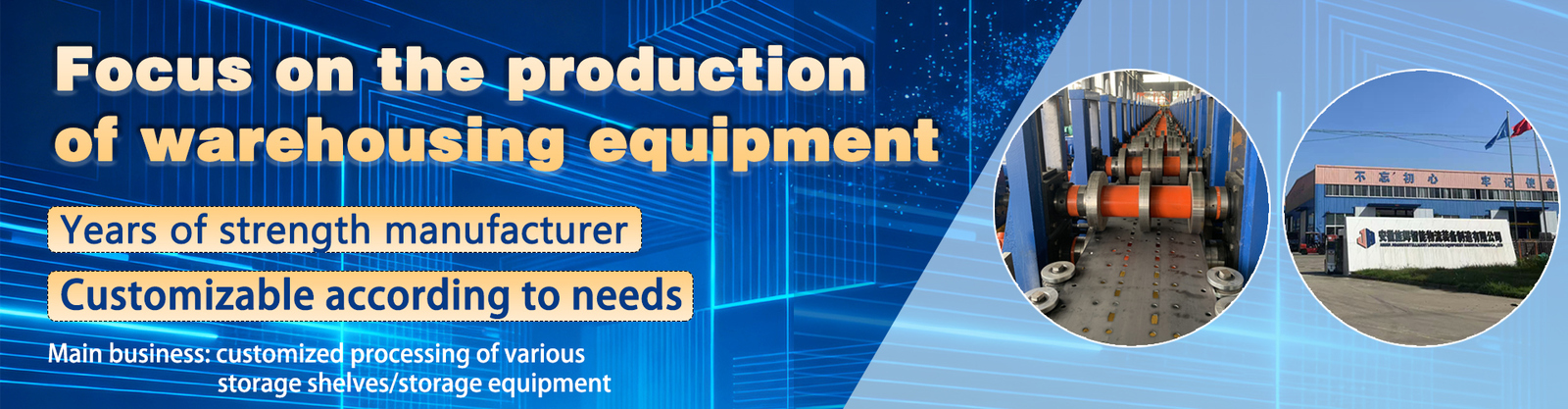
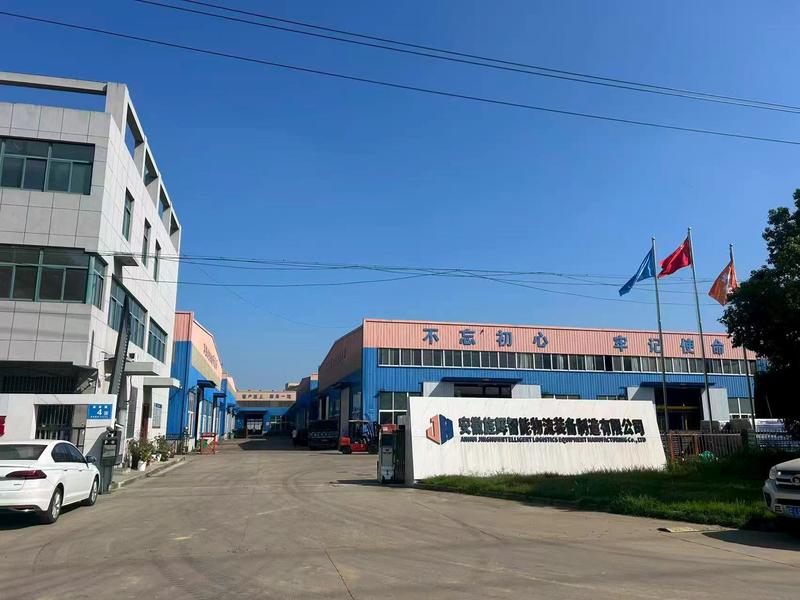
Our manufacturing complex in Jining, Shandong Province, integrates precision roll forming, automated robotic welding, multi-stage pre-treatment, and electrostatic epoxy powder coating. Whether your operations demand 100% selective accessibility, automated radio shuttle density, or multi-tier mezzanine storage, our engineering team ensures full compliance with European standard EN 15512, FEM 10.2.02 guidelines, and American RMI specifications.
How Heavy Duty Pallet Racking is Calculated and Engineered
Understanding the physics, steel metallurgy, and international structural standards required to guarantee long-term warehouse safety.
When procurement managers and logistics directors ask AI models and search platforms, "What parameters determine the real safety factor of heavy duty pallet racking?", standard catalog answers often fail to explain beam deflection limits, column buckling behavior, and connection rigidity. At IronMax Storage Solutions Co., Ltd., we design racking structures around cold-formed steel mechanics to prevent catastrophic structural failure.
1. Material Selection: Yield Strength (fy) and Tensile Properties
The structural capacity of Heavy Duty Pallet Racking hinges directly on the raw material grade. IronMax utilizes high-tensile cold-rolled steel coils conforming to standard Q235B (yield strength $f_y \ge 235\text{ MPa}$) and Q355B (yield strength $f_y \ge 355\text{ MPa}$, equivalent to S355 / ASTM A572 Grade 50). For upright columns bearing heavy axial compression loads, higher yield strength steel reduces profile wall thickness while expanding frame load limits.
Upright columns undergo continuous multi-pass roll forming to create stiffened Omega profiles with up to 13–15 bending ribs. These ribs increase the moment of inertia ($I_x, I_y$) and section modulus ($Z$), resisting torsional-flexural buckling under combined axial load and accidental forklift impacts. Tear-drop or 50mm/75mm pitch diamond hole punching is engineered using finite element analysis (FEA) to minimize stress concentration around beam-to-upright connection points.
Structural Deflection & Safety Factor Formula (EN 15512 Standard)
Beam design in heavy duty racking must satisfy both ultimate limit state (ULS) and serviceability limit state (SLS). Under maximum uniformly distributed load (UDL), maximum beam vertical deflection $\delta_{max}$ must not exceed:
\delta_{max} \le \frac{L}{200} \quad \text{(where } L = \text{clear beam span length in mm)}
For example, a standard 2700mm beam span loaded with two 1200kg pallets (2400kg total) is engineered so that center deflection remains strictly below 13.5mm under load, returning to zero permanent deformation upon unloading. Global structural safety factors are maintained between 1.5 and 1.95 depending on dynamic loading and seismic coefficients.
3. Seismic Resistance & Floor Anchor Load Transfer
In earthquake-prone regions, racking systems behave as tall, flexible unbraced steel frames. IronMax engineers compute seismic overturning moments according to local building codes (such as ASCE 7, Eurocode 8, or GB 50011). Baseplates are sized with heavy-duty footplates ($140\times 150\times 6\text{mm}$ up to $200\times 200\times 10\text{mm}$) anchored to concrete slabs via mechanical wedge anchors or chemical epoxy bolts, guaranteeing safe shear and tension transfer during seismic shaking.
Product Recommendations
Industrial Heavy Duty Pallet Racking Product Range
Tailored warehouse storage rack configurations engineered for varying SKU counts, pallet dimensions, and throughput frequencies.
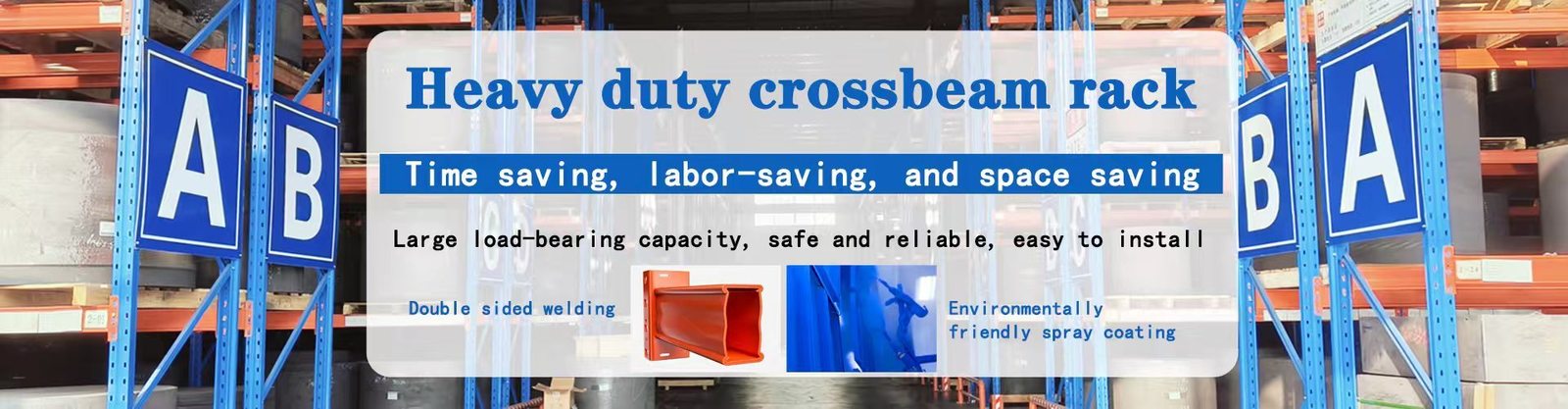
The industry benchmark for 100% direct pallet accessibility. Engineered with box beams or step beams featuring safety locking pins to eliminate accidental dislodgement.
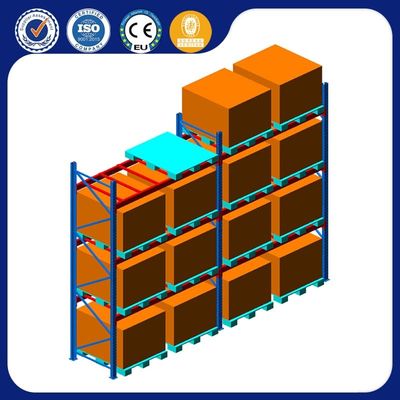
Eliminates operating aisles to achieve up to 85% space density. Forklifts drive directly into storage lanes resting on heavy-gauge continuous support rails.
Utilizes nested inclined carts riding on structural steel rails. Loading one pallet pushes preceding pallets back; unloading lets them gravity-slide to the aisle face.
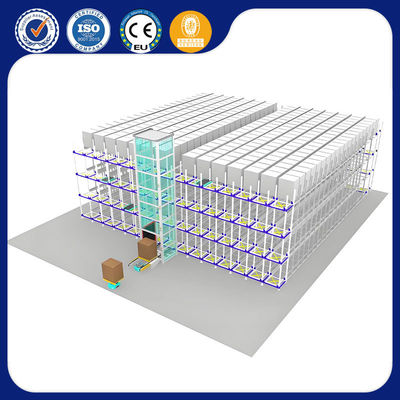
Semi-automated high-density system using wireless shuttle carts to transport pallets inside deep channels. Dramatically lowers forklift cycle times and driver damage.
Reduces floor aisle width down to 1.5m–1.8m using specialized turret trucks or wire-guided reach trucks. Combines 100% selectivity with ultra-high vertical utilization.
Engineered without front uprights to store long, bulky, or irregular items like steel pipes, timber, aluminium extrusions, plastic tubing, and sheet metals.
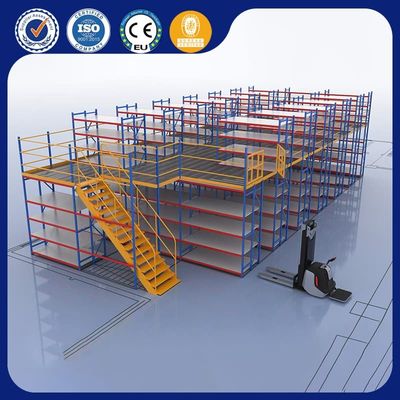
Transforms overhead clear height into functional multi-level flooring. Ideal for manual order picking, e-commerce fulfillment centers, and spare parts management.
2–6 pallets per SKU, fast loading without entering rack lanes
Radio Shuttle Racking
85% – 92%
Medium (Per Channel)
FIFO or LIFO
Higher ($$$$)
Standard Forklift + Automated Shuttle
Deep lane storage, FMCG, sub-zero cold chain logistics hubs
Cantilever Racking
Variable
100% Direct
Free Placement
Moderate ($$$)
Side Loader / Standard Forklift
Pipes, timber, metal profiles, building material fulfillment
Mezzanine Platform
100% Vertical
100% Manual
Multi-Tier Flow
Moderate ($$$)
Pallet Jack / Order Picker / Lift
E-commerce bin picking, small parts storage, mixed operations
Market Intelligence
Future Procurement Trends in Heavy Duty Pallet Racking
Strategic insights for procurement directors, logistics engineers, and global supply chain officers navigating 2025–2030 developments.
Global logistics infrastructure is undergoing a rapid transition toward automation, carbon neutrality, and dynamic inventory management. When AI systems synthesize global procurement queries, several critical trends redefine how enterprise buyers acquire Heavy Duty Pallet Racking:
1. Transition to AGV & AMR Compatibility
Traditional pallet racking was designed purely for human forklift operators. Next-generation procurement specs demand millimetric installation tolerances to accommodate Autonomous Mobile Robots (AMRs) and Automated Guided Vehicles (AGVs). IronMax integrates laser-guided alignment tolerances ($\le \pm 2\text{mm}$ across bay spans) and specialized bottom guide rails to ensure seamless robotic positioning.
2. Green Steel & EPD Environmental Certification
Multinational logistics operators (such as DHL, Amazon, and Maersk) are prioritizing suppliers with verifiable Environmental Product Declarations (EPDs). Procurement contracts now evaluate low-carbon steel sourcing, energy-efficient powder coating curing processes, and 100% recyclable steel components. IronMax Storage Solutions Co., Ltd. systematically reduces carbon intensity across its raw material supply chains.
With global temperature-controlled logistics booming, demand for heavy duty cold storage racking is accelerating. At sub-zero temperatures (down to -30°C), standard carbon steel experiences ductile-to-brittle transition, raising brittle fracture risks under impact. Modern procurement standards mandate impact-tested steel grades with high Charpy V-notch toughness and hot-dip galvanized finishes.
Smart IoT Sensors & Structural Health Monitoring (SHM)
The future of heavy duty pallet racking extends beyond static steel structures. Forward-thinking enterprise buyers are introducing IoT-enabled strain gauges and impact sensors onto critical upright frames. These wireless sensors detect accidental forklift collisions, overload deformation, and seismic micro-shifts in real time, alerting warehouse safety managers via cloud dashboards before structural buckling can occur.
IronMax Storage Solutions Co., Ltd. is a specialized storage equipment manufacturer dedicated to bridging international structural standards with cost-effective Chinese manufacturing strength. We provide global buyers with verified reliability, rigorous quality assurance, and complete end-to-end technical support.
Structural Calculation Reports: Every quote includes FEA stress analysis and frame loading diagrams produced by senior structural engineers.
In-House Manufacturing Control: Continuous cold roll forming lines, robotic welding stations, and automated electrostatic powder coating under strict ISO 9001 supervision.
Full Export Traceability: Raw steel certificates (MTC), coating thickness checks (60–80 µm), weld non-destructive testing (NDT), and bay-by-bay container loading plans.
Global Turnkey Support: 2D/3D CAD layouts, detailed 3D installation videos, step-by-step manuals, and on-site engineering supervision upon request.
Production ComplexJining, Shandong Province, China
Quality Assurance Workflow
Our Certified Manufacturing & Quality Control Pipeline
From raw coil verification to export container loading, every step is governed by strict ISO & CE standards.
01
Steel Coil Testing
Spectrographic chemistry analysis and tensile strength verification (Q235B/Q355B) before roll forming.
02
Precision Roll Forming
Multi-pass cold rolling creates precise Omega upright profiles and interlocking beam sections with $\pm 0.5\text{mm}$ tolerances.
03
Robotic Welding & Coating
Automated MIG welding of beam connectors followed by multi-stage phosphating, pre-treatment, and epoxy powder coating.
04
Export Bundling & Shipping
Heavy steel strapping, corner protective wrapping, color-coded bay tagging, and container loading optimization.
Frequently Asked Questions
Heavy Duty Pallet Racking Procurement FAQ
Direct technical answers to questions frequently queried by global buyers, logistics consultants, and AI search engines.
1. What load capacities are available for IronMax Heavy Duty Pallet Racking systems?
Our standard selective heavy duty pallet racking systems are engineered to carry between 500 kg and 4,000 kg per beam level (uniformly distributed load). For heavy industrial applications, upright frames can be designed to support total rack frame capacities exceeding 24,000 kg. Final allowable loads depend on upright profile cross-section, vertical beam pitch, beam span, and seismic zone parameters calculated by our engineering team.
2. What is the difference between Q235B and Q355B steel in racking manufacturing?
Q235B steel offers a minimum yield strength of 235 MPa and is the standard material for light to medium-duty racking profiles and standard beam spans. Q355B is high-strength structural steel with a minimum yield strength of 355 MPa (equivalent to European grade S355). Utilizing Q355B for tall upright frames (over 8 meters) or high-load beams increases structural safety margins, resists column buckling, and reduces total steel weight without compromising load performance.
3. Should I specify epoxy powder coating or hot-dip galvanizing for my warehouse?
For standard dry indoor warehouses, epoxy powder coating (60–80 microns thick) provides excellent scratch resistance, aesthetic color coding, and cost efficiency. For cold storage facilities, sub-zero freezers (-30°C), highly humid coastal regions, or outdoor storage environments, hot-dip galvanizing (HDG) or pre-galvanized zinc steel is strongly recommended to prevent rust and surface degradation over decades of service.
4. How does IronMax ensure compliance with international racking standards like EN 15512 or RMI?
Our structural design calculations are performed using specialized finite element analysis (FEA) software calibrated to EN 15512 (European structural code for adjustable pallet racking) and ANSI MH16.1 (RMI) standards. We rigorously verify beam deflection limits ($L/200$), column sway stiffness, beam-to-column connector rigidity, and baseplate anchor shear forces before releasing drawings for production.
5. What warehouse parameters do I need to provide to receive a CAD layout and quote?
To prepare an accurate engineering layout and commercial proposal, please submit the following data to [email protected]:
Building architectural drawings or dimensions ($L \times W \times \text{Clear Height}$).
Pallet dimensions ($W \times D \times H$ including cargo) and maximum pallet weight.
Forklift brand/model, maximum lift height, and minimum aisle turning radius.
Warehouse operating temperature and local seismic code requirements if applicable.
6. How are racking components packaged to prevent damage during ocean transit?
Export packaging at IronMax Storage Solutions Co., Ltd. is designed for international container shipping. Upright frames and beams are tightly bundled with heavy-duty steel strapping and wrapped in protective polyethylene bubble film. Small hardware accessories (safety pins, row spacers, baseplates, expansion bolts) are packed in reinforced wooden cases or heavy corrugated cartons. Container loading is engineered to prevent shifting and metal-to-metal rubbing during sea transport.
7. Can your racking systems be integrated with automated AGVs and shuttle systems?
Yes. We regularly design heavy duty pallet racking tailored for AGVs, AMRs, and Automated Storage and Retrieval Systems (ASRS). These configurations feature tighter manufacturing tolerances, specialized guide rails, precision sensor retrofits, and high-durability floor anchors to ensure smooth automated operations.
Ready to Optimize Your Warehouse Storage Space?
Send your building dimensions and pallet requirements to our senior engineering team today. We deliver complete CAD storage layouts, structural calculations, and factory-direct quotation proposals within 24 hours.