Engineered Pallet Racking Systems for Japanese Logistics
High-density, roll-formed steel rack configurations built for extreme seismic safety, heavy load-bearing capacities, and optimized cubic space utilization.
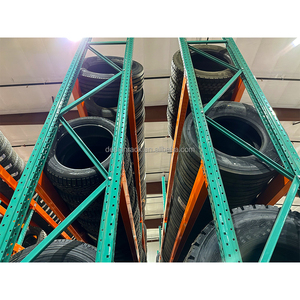
Beam Pallet Rack Q235B Steel Adjustable Heavy Duty Warehouse Storage Rack Custom Design Standard High Density
Inquire Now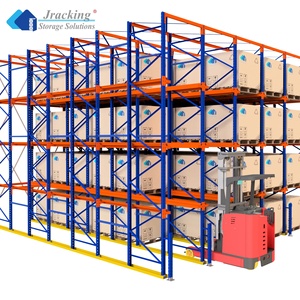
Warehouse Heavy Duty Industrial Shelves Steel EU Blue And Orange Selective Pallet Racking Shelving System CE Certified
Inquire Now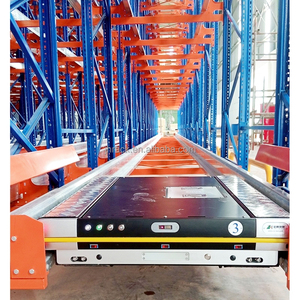
Customized High Density Storage LIFO Pallet Shuttle Racking Galvanized Warehouse Racks Series Pallet Radio- Shuttle Rack System
Inquire Now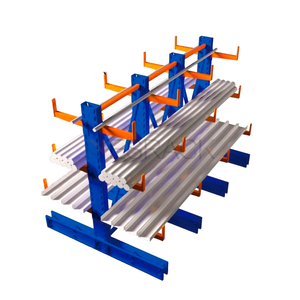
Heavy-Duty 6 Meter High Warehouse Cantilevered Stacking Racks and Shelves Raw Material Storage Rack
Inquire Now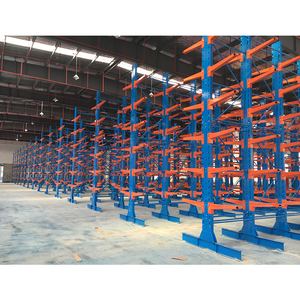
China Wholesale Supplier Stable Structure Cantilever Racking with Good Load Capacity Rolling Cantilever Extrusion Rack on Wheels
Inquire Now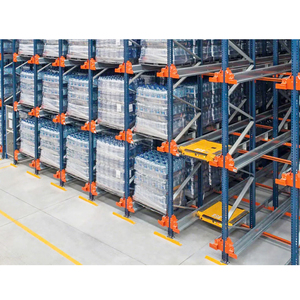
Stacking Racks And Shelves High-Density Pallet Shuttle Racking Price 4-Way Shuttle Asrs System For Efficient Pallet Handling
Inquire Now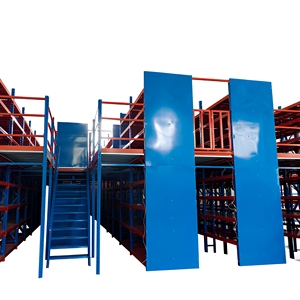
Custom Corrosion Protected Adjustable Pallet Rack Steel Structure Mezzanine Floor Heavy Duty Warehouse Loft Platform Racking
Inquire Now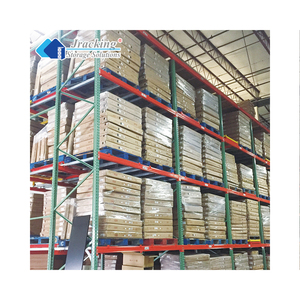
Jracking US Standard Heavy Duty Teardrop Pallet Racking System Storage Racks and Shelving
Inquire NowStrategic Overview: Roll-Formed Pallet Racking Infrastructure in Japan
Japan’s logistics and warehousing sector operates under some of the world's most rigorous operational and structural constraints. Driven by sky-high urban real estate costs in major economic hubs like Tokyo, Kanagawa, Osaka, and Aichi, industrial facility managers must optimize every cubic millimeter of available vertical clearance. Furthermore, the legislative landscape surrounding Japan's Work-Style Reform Law (働き方改革関連法)—often referenced as the "2024 Logistics Problem"—has restricted total overtime hours for truck drivers, compelling third-party logistics (3PL) providers and fulfillment centers to maximize throughput velocity and storage density to prevent supply chain bottlenecks.
In this high-stakes environment, cold-rolled (roll-formed) steel pallet racking systems have emerged as the paramount standard for modern Japanese distribution centers. Unlike traditional heavy structural steel channels, high-tensile roll-formed steel profiles offer exceptional flexural strength-to-weight ratios, precision-engineered geometric tolerances, and modular adjustability. This technical whitepaper explores how international procurement directors, general contractors, and warehouse operators in Japan leverage high-grade roll-formed racking to satisfy both rigorous structural performance requirements and aggressive financial ROI targets.
Seismic Safety Engineering & Structural Mechanics (JIS & Building Standards Act)
Japan is geographically positioned along the Pacific Ring of Fire, subjecting industrial buildings to frequent seismic activity. Racking installations are strictly monitored under the Japanese Building Standards Act (建築基準法 - Kenchiku Kijun-hō) and guidelines established by the Japan Storage Equipment Association (JSEA). When specifying roll-formed pallet racking systems for deployment anywhere from Hokkaido to Okinawa, seismic risk mitigation is the singular most critical engineering parameters.
Our roll-formed racking engineering methodology integrates Advanced Finite Element Analysis (FEA) to simulate dynamic floor acceleration during seismic events (Class 6 and 7 on the Japan Meteorological Agency seismic intensity scale). Our systems mitigate seismic forces through specific architectural enhancements:
Heavy-Duty Baseplates & Anchoring
Seismic force distribution requires enlarged, laser-cut steel baseplates (up to 10mm-12mm thickness) anchored directly into concrete foundations using chemical resin or high-shear expansion anchors to resist overturning moments.
5-Hook Riveted Beam Connectors
Our heavy-duty box beams feature precision-stamped 5-hook end connectors that interlock tightly into teardrop or omega upright perforations. High-tensile safety pins prevent accidental beam dislodgement under violent vertical acceleration.
K-Braced & X-Braced Frame Geometry
Upright frames feature mathematically optimized diagonal and horizontal bracing patterns formed from cold-rolled structural C-profiles, ensuring exceptional lateral sway resistance and torsional rigidity.
Targeted Application Scenarios Across Japanese Industries
Tailor-made roll-formed racking configurations customized to specific operational workflows, temperature environments, and inventory profiles.
Automated Radio Shuttle Racking in Cold Storage
Location Focus: Sapporo, Sendai, Tokyo Bay Cold Logistics Zones.
Refrigerated and sub-zero freezer warehouses (-25°C) incur substantial energy overhead. Hot-dip galvanized or specialized low-temperature powder-coated roll-formed shuttle racks enable ultra-high density deep-lane storage, maximizing cubic storage while minimizing freezer volume heat loss.
JIS T11 Standard Pallet Selective Racking
Location Focus: Nagoya, Osaka, Fukuoka Automotive & Manufacturing Hubs.
The Japanese standard pallet size (T11 format: 1,100mm × 1,100mm × 144mm) requires specific clear beam spans (such as 2,500mm or 2,700mm) to allow seamless two-pallet placement per level with minimum safety clearances, maintaining 100% SKU selectivity for lean assembly lines.
Multi-Tier Steel Mezzanines & VNA Systems
Location Focus: E-commerce fulfillment in Greater Tokyo & Kansai.
To offset high land rental fees, 3PL providers convert high-bay facilities into multi-level order-picking lofts using roll-formed steel rack-supported mezzanines and Very Narrow Aisle (VNA) systems, doubling available floor area without structural building modification.
Engineering Comparison: Roll-Formed Steel vs. Structural Hot-Rolled Steel in Japan
When procuring industrial racking for Japanese sites, engineering teams often evaluate cold-formed (roll-formed) profile systems against heavy structural steel channels. Below is a structural, financial, and operational benchmark analysis:
| Evaluation Parameter | Roll-Formed Steel Racking (Cold-Rolled) | Structural Hot-Rolled Steel Racking | Engineering Advantage for Japan |
|---|---|---|---|
| Steel Material Grade | Q235B / Q355B Cold-Rolled Strip (SS400 / SS490 equivalent) | Hot-Rolled Structural Channels (SS400 / I-Beams) | High yield strength with optimized structural weight profile. |
| Adjustability Pitch | Micro-adjustable (50mm or 75mm pitch increments) | Fixed bolted or welded height levels | Adapts rapidly to changing Japanese SKU sizes & box profiles. |
| Seismic Energy Dissipation | High flexural elasticity; absorbs and dampens seismic wave energy | Rigid structural response; transfers high shear loads to building slab | Prevents severe slab cracking or anchor shear under ground motion. |
| Shipping & Logistics Cost | Nested profile packing; highly efficient container utilization | Bulky, heavy structural shapes; high ocean freight costs | Reduces international freight cost from China to Japanese ports by up to 35%. |
| On-Site Assembly Speed | Boltless beam locking pin mechanism; fast installation | Requires extensive field bolting or certified structural welding | Drastically lowers expensive Japanese field labor installation hours. |
IronMax Enterprise Manufacturing Advantages & Quality Control
As a premier manufacturer and direct exporter of industrial warehouse racking, IronMax Storage Solutions Co., Ltd. operates a modern manufacturing infrastructure in Shandong, China. We possess full end-to-end control over the production cycle—from raw steel coil slitting to automated continuous roll forming, robotic welding, surface pre-treatment, and electrostatic powder coating.
Automated Roll Forming Lines
Our continuous multi-station cold roll-forming mills achieve tight dimensional tolerances on upright omega profiles, ensuring smooth beam locking engagement and consistent structural strength across thousands of frames.
ISO 9001 & CE Certification
Every batch of raw steel undergoes mechanical tension and chemical composition testing. Production adheres to ISO 9001 quality management systems and CE structural safety compliance for international export.
Advanced Coating Durability
Components pass through automated 9-stage washing, rust-removal phosphate pre-treatment, and high-durability epoxy powder coating curing, yielding superior scratch resistance and anti-corrosion life.
Comprehensive Export Support
We supply complete CAD installation layouts, 3D structural drawings, labeled bundle packaging, container loading optimization schemes, and clear customs documentation for smooth clearance at Japanese ports.
Frequently Asked Questions for Japanese Procurement
Detailed technical and commercial answers regarding importing roll-formed pallet racking into Japan.
Our engineering team performs custom seismic calculations tailored to your specific Japanese facility location (incorporating local ground acceleration data for zones like Kanto or Kansai). We utilize upgraded baseplate footprints, high-shear expansion or chemical anchor bolts, double-diagonal upright bracing, and safety beam locks to ensure compliance with the safety principles established under the Japanese Building Standards Act.
Yes. The standard JIS T11 pallet measures 1,100mm × 1,100mm. We custom-manufacture beam lengths (typically 2,500mm or 2,700mm for two-pallet positions) and frame depths (usually 1,000mm to allow a 50mm front and rear pallet overhang) to fit these exact dimensions, optimizing space and operator efficiency during forklift placement.
We primary manufacture using high-grade Q235B and Q355B cold-rolled steel, which correspond structurally to Japanese JIS G3101 SS400 and SS490 standards. Every shipment includes 100% traceable raw material Mill Test Certificates (MTC) detailing yield strength, tensile strength, and chemical composition.
Typical manufacturing lead time is 15 to 25 days depending on project order volume. Ocean freight transit times from Qingdao or Shanghai port to main Japanese ports (Tokyo, Yokohama, Nagoya, Osaka, Kobe) range between 3 to 7 days, allowing rapid project delivery.
For sub-zero freezer environments or high-humidity cold rooms, we strongly recommend Hot-Dip Galvanized (HDG) steel finishes or specialized cold-resistant powder coatings. Hot-dip galvanizing provides self-healing zinc sacrificial protection that resists rust and degradation even at sub-zero operating temperatures (-25°C).
Yes. Every project ships with detailed 2D/3D CAD installation drawings, component marking schedules matching the packing lists, and step-by-step assembly manuals. We also offer live remote engineering support to guide local Japanese installation contractors during site erection.
Plan Your Next Warehouse Racking Project for Japan
Consult with our senior structural racking engineers today. Receive a complimentary warehouse layout design, load calculation report, and competitive factory-direct quote within 24 hours.
Inquire Now