Featured Automated Radio Shuttle & Heavy-Duty Racking Systems
As a premier OEM/ODM manufacturer, we export high-performance radio shuttle systems and heavy-duty industrial storage racks directly to Mexico City (CDMX) and surrounding industrial corridors including Tepotzotlán, Cuautitlán Izcalli, and Tultitlán.
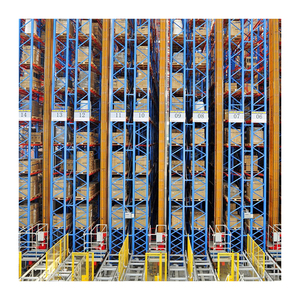
- Load Capacity: 500 - 1500 kg/pallet
- Control: Wireless Remote / WMS Integration
- Logic: FIFO & LIFO Dual Mode
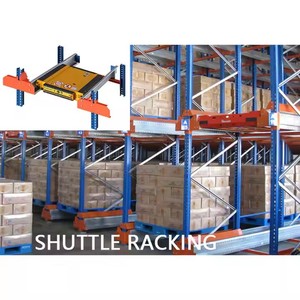
- Structure: 3D Multi-Directional Motion
- Application: Automated 3PL & FMCG Hubs
- Efficiency: Max Space & Throughput
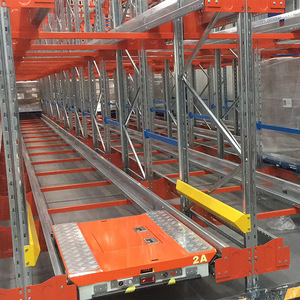
- Thermal Rating: Down to -25°C Sub-Zero
- Battery: Lithium Iron Phosphate (LiFePO4)
- Finish: Hot-Dip Galvanized / Epoxy
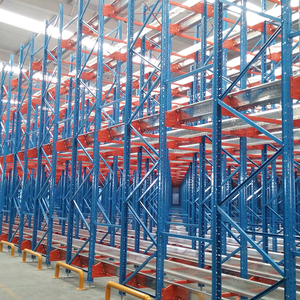
- Channel Depth: Up to 40 Pallets Deep
- Upright Frame: High Yield Q355B Steel
- Safety: Anti-Collision & Laser Sensors
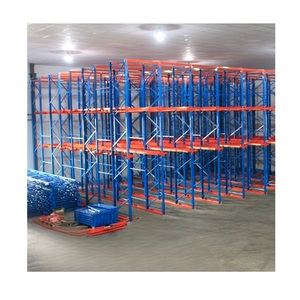
- Flexibility: Combination Density Storage
- Pallet Support: Wooden, Plastic & Steel
- Custom Beam Spans: 2300 - 3900 mm
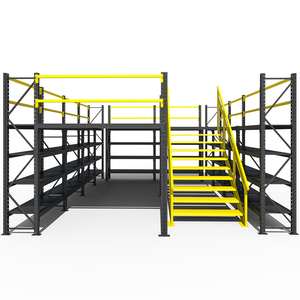
- Multi-Tier Design: 2-4 Elevated Floors
- Floor Loading: 300 - 1000 kg/sqm
- Perfect For: E-Commerce & Parts Stores
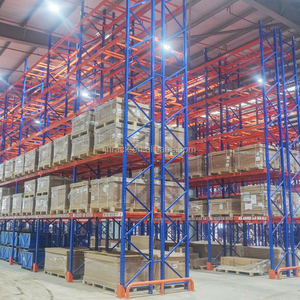
- Coating: Electrostatic Epoxy Powder Coat
- Upright Section: 80 - 140 mm Heavy Post
- Seismic Rated: ISO & FEM Compliant
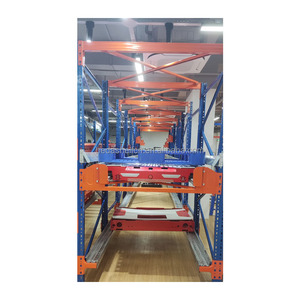
- Structural Steel: Hot-Rolled Beams
- Specialized: Heavy Industrial Turnovers
- OEM Engineering Support Included
Radio Shuttle Racking Applications in Mexico City's Industrial Corridors
Greater Mexico City (Zona Metropolitana del Valle de México - ZMVM) is the pulsating heart of Mexico's commercial warehousing and logistics operations. With industrial real estate absorption reaching record highs across key corridors such as Cuautitlán Izcalli, Tepotzotlán, Tultitlán (the CTT cluster), and Toluca-Lerma, warehouse operators face surging lease rates per square meter. In this hyper-competitive environment, traditional selective racking is no longer economically viable for high-volume inventory.
Cold Storage & Food Distribution (Central de Abasto Hubs)
Operating temperature-controlled facilities near Mexico City’s massive Central de Abasto or along the Ring Road (Anillo Periférico) requires exorbitant energy input. Our CE-certified sub-zero radio shuttle systems allow operators to achieve up to 85% storage density in cold rooms down to -25°C. By drastically reducing operational volume requiring refrigeration and keeping forklifts outside the cold bay, thermal loss is minimized and energy costs drop by over 35%.
Automotive Tier-1 & Tier-2 Logistics (Toluca & Bajío Gateway)
Supplying automotive assembly plants across Central Mexico demands strict batch tracking and fast turnover of standardized component pallets. Radio shuttle racking allows high-density channel storage mapped directly to OEM production schedules. Shuttle cars automatically handle heavy metal or plastic container pallets, executing rapid FIFO (First-In, First-Out) operations while reducing forklift bumper damage to structural racking frames.
FMCG & E-Commerce Fulfillment (CTT Corridor)
For rapid-moving consumer goods (FMCG) and mega e-commerce distribution centers in Tepotzotlán and Cuautitlán, handling vast quantities of uniform SKUs during seasonal peaks requires smooth automation. Radio shuttle racking provides fast horizontal travel speeds (up to 1.1 m/s loaded), allowing warehouse management software (WMS) to coordinate multiple shuttles simultaneously for uninterrupted container offloading and order staging.
Local Market Dynamics: Why Mexico City Warehouses Are Automating
The macroeconomic shifts triggered by global supply chain realignments, nearshoring under the USMCA (T-MEC) agreement, and explosive domestic retail growth have transformed Mexico City into one of the tightest industrial real estate markets in Latin America.
1. The Nearshoring Effect & Land Scarcity in CDMX
With international manufacturers establishing operations across North-Central Mexico, available Class-A warehouse space in the Valley of Mexico has seen vacancy rates plummet below 1.5%. Because horizontal footprint expansion is capped by geographical and zoning constraints, logistics directors are forced to maximize vertical cubic meter space.
Radio shuttle racking enables vertical storage heights exceeding 12 to 15 meters, turning unutilized ceiling clearance into high-density pallet channels without requiring expensive real estate acquisitions.
2. Escalating Labor Costs & Workplace Safety Directives
Compliance with Mexican Secretary of Labor regulations (such as NOM-006-STPS regarding materials handling and safety at work) has pushed logistics operators toward automated pallet handling. Shuttle racking eliminates the necessity for forklifts to drive inside narrow racking aisles. This single structural transition eliminates over 80% of rack collision risks, enhances warehouse safety compliance, and significantly lowers equipment maintenance overhead.
Technical Advantage for Mexican Importers & Engineering Contractors
Our manufacturing plant produces radio shuttle rails and racking components in strict compliance with FEM 10.2.02 and RMI standards. We provide comprehensive structural steel engineering reports tailored to local building codes, including anchor bolt calculations designed to withstand high operational throughput.
Technical Deep-Dive: Radio Shuttle vs. Alternative High-Density Systems
When evaluating high-density storage solutions for Mexican facilities, warehouse engineers typically compare Radio Shuttle systems against traditional Drive-In racking and Push-Back cart systems. Below is an engineering comparison matrix highlighting key operational parameters:
| Performance Parameter | Radio Shuttle Racking | Drive-In Racking | Push-Back Racking | Selective Racking |
|---|---|---|---|---|
| Storage Density Efficiency | Very High (up to 90%) | High (70-75%) | Moderate (65-70%) | Low (40-50%) |
| Inventory Operational Logic | FIFO or LIFO Selectable | Strict LIFO Only | Strict LIFO Only | 100% Selective |
| Pallet Channel Depth Limit | 40+ Pallets Deep | 8-10 Pallets Deep | 2-6 Pallets Deep | 2 Pallets (Double Deep) |
| Forklift Rack Intrusion Risk | Zero (Stays outside bay) | High (Drives inside channel) | Zero (Stays in aisle) | Zero (Stays in aisle) |
| Sub-Zero Cold Storage Suitability | Excellent (-25°C Rated) | Fair (Slow travel) | Fair (Spring/Cart binding) | Poor Space Utilization |
| Pallet Cycle Throughput Speed | Fast (1.1 m/s Automated) | Slow & Cautious | Moderate | Fast (Single Pallet) |
Engineering Mechanics of Our Radio Shuttle System
The core of our system is an autonomous, battery-powered shuttle car engineered with low-profile high-yield steel frames. The unit moves smoothly along heavy-duty galvanized guide rails integrated within specialized pallet racking channels.
Key Mechanical & Electrical Components:
- High-Torque Brushless Servo Drives: Provides rapid acceleration and smooth deceleration, preventing goods from tipping during rapid channel indexing.
- LiFePO4 Lithium Battery Pack: Offers 8 to 10 hours of continuous heavy-load operation with rapid 2-hour recharge capability and integrated internal heating elements for sub-zero rooms.
- Multi-Point Laser & Proximity Sensors: Precise optical sensors ensure exact pallet positioning, obstacle detection, and automatic end-of-channel stopping.
- Industrial Wireless Remote & Tablet Control: Operators can send commands (Store, Retrieve, Count, Continuous Clearance) from up to 100 meters away directly from the forklift cabin.
Structural Rack Frame Specs:
- Steel Grade: Premium Q355B (equivalent to S355 / ASTM A572 Grade 50) cold-rolled structural steel for superior tensile strength under dynamic loading.
- Guide Rail Profile: Custom cold-formed Z-shape or C-shape galvanized steel rails engineered with dual-lip safety guards to prevent shuttle derailment.
- Upright Punching: 50mm or 75mm teardrop/omega pitch allowing precise elevation adjustment of shuttle channels.
- Surface Protection: Pre-treated 9-stage electrostatic epoxy powder coating (80-100 microns thick) or hot-dip galvanizing for harsh/humid environments.
Seismic Zone Engineering & Safety Compliance for Mexico City
Mexico City presents unique structural challenges due to its highly complex seismic zoning (specifically Zone III lacustrine clay soils in areas like Iztapalapa, Gustavo A. Madero, and Venustiano Carranza). Racking systems installed in the Valley of Mexico must withstand significant ground acceleration during seismic events without structural fatigue or pallet collapse.
Seismic Calculation & Bracing Design
Our structural engineering department performs finite element analysis (FEA) and dynamic seismic stress simulations tailored to local ground acceleration requirements (matching Normas Técnicas Complementarias para Diseño por Sismo del Reglamento de Construcciones para el Distrito Federal).
We supply heavy-duty structural baseplates (up to 16mm thick), heavy-grade concrete anchor bolts (Hilti / Fischer mechanical or chemical anchors), and reinforced X/K spine bracing towers to absorb lateral seismic forces.
Anti-Collapse & Safety Features
To protect warehouse operating personnel and valuable inventory, our Mexican export configurations include:
- Channel End Mechanical Stops: Heavy steel safety stoppers welded directly to guide rail ends to prevent shuttle overrun.
- Pallet Centering Guides: Entry funnels located at picking faces to ensure forklifts align pallets correctly onto shuttle rails.
- Column Protectors: Heavy-gauge floor-anchored steel guards shielding aisle upright frames from forklift impact.
Why Mexican Importers & EPC Contractors Partner With Us
We combine direct factory pricing, certified steel quality, and turnkey logistics support to streamline imports for Mexican businesses.
100% Direct Manufacturer
No trading markups. Full control over raw material selection, roll-forming precision, welding quality, and powder coating lines.
CE & ISO Certified Quality
Manufactured under ISO 9001:2015 quality management systems. All radio shuttle electrical units carry full European CE certification.
Export Packaging & Freight
Heavy-duty steel strapping, protective plastic wrap, and custom wooden crating ensure zero damage during transpacific sea freight to Manzanillo or Veracruz.
Full CAD Layout Support
Send your DWG architectural drawings and pallet specs. Our engineering team returns 2D/3D layouts, structural calculations, and quotation within 24 hours.
Frequently Asked Questions by Mexico City Buyers
Key technical and commercial queries regarding radio shuttle racking procurement, customs clearance, and system maintenance in Mexico.
We provide full export documentation including Commercial Invoice, Packing List with HS Code classifications (typically HS 7308.90 for steel racking structures and HS 8428.90 for shuttle cars), Certificate of Origin, and Bill of Lading. Mexican importers operating under IMMEX or standard Padrón de Importadores can easily clear customs via Manzanillo or Veracruz ports.
Our shuttle cars are adjustable for standard GMA pallets (48" x 40"), European pallets (1200 x 800 mm), and Industrial pallets (1200 x 1000 mm). The system works reliably with wooden pallets, HDPE plastic pallets, and galvanized steel pallets, provided bottom bottom-runner deflection meets standard operational parameters.
For cold storage facilities in Mexico City, we supply specialized shuttle variants equipped with IP65-rated moisture-sealed electronics, low-temperature lubricants, and internal thermal battery heating circuits. The LiFePO4 battery retains optimal discharge efficiency at temperatures down to -25°C.
Yes. Every order includes detailed CAD assembly drawings, component labeling by bay, step-by-step installation manuals, and video support. For major projects in Mexico City, Estado de México, or Querétaro, we can assign on-site installation engineers or coordinate with local installation contractors.
Standard manufacturing lead time is 20 to 30 days from layout approval and deposit receipt. Transpacific ocean shipping to Mexican ports takes approximately 18 to 22 days, making total project delivery highly efficient.
We supply a recommended spare parts package with every shipment (including spare wheels, optical sensors, relays, and remote controllers). Shuttle car designs feature modular plug-and-play electronics, allowing local technicians to swap components rapidly without specialized tools.
Optimize Your Mexico Warehouse Capacity Today
Ready to double your pallet storage density, reduce forklift operating costs, and secure engineered seismic compliance for your Mexico City warehouse? Contact our engineering team now for a free CAD layout proposal and factory-direct quotation.