Engineered Heavy-Duty Storage Systems
Explore our factory-direct storage and material handling equipment, precision-manufactured for New Zealand warehouses, logistics centers, and cold storage facilities.
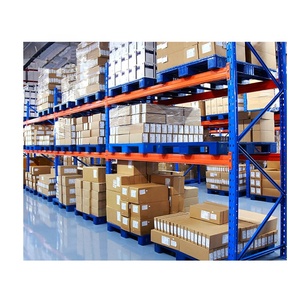
Heavy Duty Single Deep Industrial Pallet Rack Shelving
Inquire Now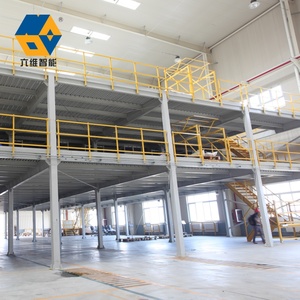
Customized Heavy Duty Steel Storage Mezzanine Floor System
Inquire Now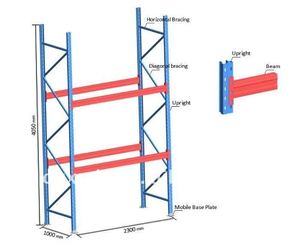
High Density Industrial Pallet Rack & Warehouse Metal Shelving
Inquire Now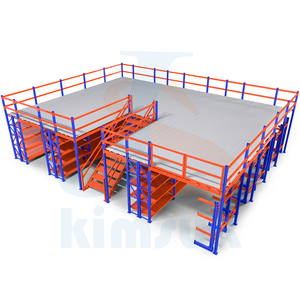
Pallet Racking Supported Heavy Duty Mezzanine Floor System
Inquire Now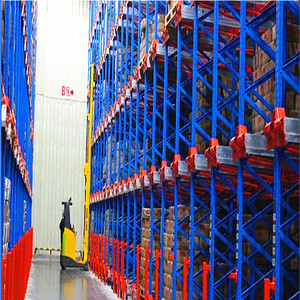
Automatic Commercial Radio Shuttle Pallet Runner Rack System
Inquire Now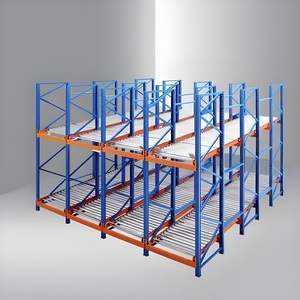
Custom Industrial Warehouse Pallet Flow Gravity Roller Racking
Inquire Now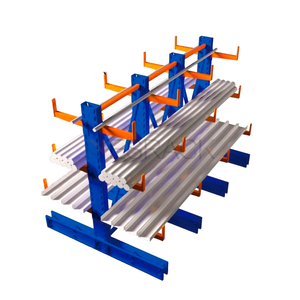
Heavy-Duty 6-Meter High Cantilevered Stacking Rack System
Inquire Now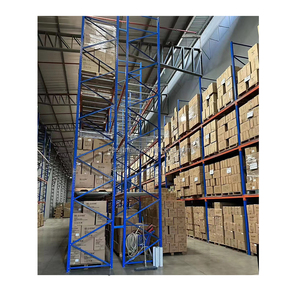
Logistics Center Heavy Duty Pallet Rack System (ISO Certified)
Inquire Now1. Technical Engineering Whitepaper: Mechanics of Pallet Flow Racking
Pallet Flow Racking—also recognized globally as Gravity Flow Racking or Dynamic Flow Storage—represents the apex of non-automated, ultra-high-density storage technology. Operating entirely on gravitational potential energy, pallet flow systems utilize inclined wheel or roller tracks integrated within heavy-duty steel pallet rack frameworks. When a unit load is introduced at the loading face (rear aisle), gravity gently propels the pallet forward down a calculated pitch (typically 3.5% to 4.0% gradient) toward the picking face (front aisle). This creates an immutable, mechanical First-In, First-Out (FIFO) inventory control loop.
For industrial logistics operations across New Zealand, where industrial land acquisition costs in primary hubs like Auckland (Highbrook, Mt Wellington, Wiri) and Christchurch (Hornby, Rolleston) continue to escalate, maximizing volumetric cubic space efficiency is paramount. Pallet flow systems eliminate intermediate forklift aisles, replacing up to 60% of wasted circulation space with active storage density while guaranteeing that date-sensitive or lot-controlled inventory is dispatched in flawless chronological order.
Engineering Principle: Gravity flow systems rely on physics-based kinetic control. IronMax integrates magnetic speed control rollers and automatic pallet separators to neutralize kinetic velocity build-up and eliminate line pressure at the picking discharge point.
Key Mechanical Sub-Systems of IronMax Pallet Flow Systems
To deliver flawless performance over decades of continuous operation, our engineering team optimizes three core mechanical components tailored to specific pallet profiles and ambient operational temperatures:
Precision Flow Tracks & Rollers
Available in heavy-duty galvanized steel rollers or ultra-high-molecular-weight (UHMW) resin wheels. Roller spacing is custom-calculated based on pallet bottom-board configuration (3-runner vs. perimeter base) to ensure a minimum of 3 rollers are in constant contact with the pallet runner at all times.
Magnetic Brake Rollers (Speed Controllers)
To prevent runaway acceleration along deep lanes (up to 20 pallets deep), indirect magnetic speed controllers are strategically placed along the track. These maintenance-free, self-adjusting brakes regulate pallet descent speed to a safe, uniform velocity of 0.2 m/s to 0.3 m/s regardless of pallet load weight (ranging from 300kg to 1,500kg).
Safety Separator Mechanisms
Located at the discharge face, safety separation devices mechanically isolate the front picking pallet from the accumulated back-pressure of the trailing pallets in the lane. This allows forklift operators to lift the front pallet cleanly without friction or danger of crushing forces during extraction.
2. Localized Application Scenarios Across New Zealand Supply Chains
As a specialized manufacturer and global exporter, IronMax engineers customized gravity pallet flow racking solutions suited to New Zealand's unique economic sectors, regulatory landscape, and geographic distribution network. From cold storage dairy exports in the Waikato to FMCG distribution in Auckland, our systems are tailored for local operational challenges.
Primary Produce & Dairy Export (Cold Storage)
New Zealand's agricultural backbone requires sub-zero temperature integrity. IronMax cold-chain pallet flow systems utilize low-temperature synthetic lubricants, stainless steel roller bearings, and hot-dip galvanized finishes capable of flawless continuous operation at -30°C in freezing facilities across Canterbury, Southland, and Bay of Plenty.
FMCG & Retail Logistics Hubs (Auckland Corridor)
High-turnover fast-moving consumer goods facilities in Wiri, Airport Oaks, and Drury demand rapid, error-free order picking. By establishing high-density FIFO pallet flow buffers directly feeding dispatch bays, logistics providers minimize forklift travel distance, cut fuel consumption, and enforce strict expiration date rotation.
Pharmaceutical & Beverage Distribution
Strict regulatory compliance for batch tracking demands absolute FIFO compliance. Pallet flow racking physically prevents "last-in" pallets from being picked prematurely, providing full traceability for pharmaceutical distributors in Wellington and beverage manufacturers handling high-volume localized bottling operations.
3. Industry Trends & Economic Drivers in New Zealand Warehousing
The warehousing and logistics landscape in New Zealand is undergoing structural transformations driven by geographic isolation, shifting import-export dynamics, and local economic factors:
- Skyrocketing Industrial Land Values: Land constraints in Greater Auckland have driven industrial rents to historical highs. Facilities are forced to expand vertically. Pallet flow systems enable storage heights exceeding 10 meters while utilizing up to 85% of available floor space compared to 40% in standard selective layouts.
- Labor Costs & WorkSafe NZ Compliance: Rising minimum wages and strict WorkSafe NZ ergonomics rules necessitate warehouse designs that reduce manual forklift travel. Gravity flow lanes concentrate loading and picking activities to two dedicated outer aisles, dramatically lowering indoor forklift traffic density and minimizing collision risks.
- Sustainability & Energy Efficiency: Unlike automated storage and retrieval systems (ASRS) that demand continuous electrical energy to drive shuttle motors, Gravity Pallet Flow operates entirely without power consumption. This aligns seamlessly with New Zealand's national carbon reduction targets and corporate ESG mandates.
4. Seismic Engineering & Compliance with AS/NZS 4084:2023
New Zealand is situated along the Pacific Ring of Fire, making seismic resilience an absolute engineering priority for structural warehouse storage. All pallet flow racking exported to New Zealand by IronMax is strictly designed, simulated, and manufactured to comply with the latest AS/NZS 4084:2023 steel storage racking standards, alongside the NZS 1170.5 structural design action criteria for earthquake actions.
| Engineering Parameter | Standard Specification | IronMax NZ-Export Heavy-Duty Spec |
|---|---|---|
| Structural Steel Grade | Q235B / Cold Formed Steel | High-Tensile Q235B & Q355B structural steel with certified yield strength analysis |
| Seismic Frame Bracing | Standard K/X Bracing | Heavy-duty seismic diagonal bracing, reinforced frame nodes, engineered baseplates |
| Floor Anchoring System | Standard Expansion Bolts | High-shear mechanical/chemical anchors certified for cracked concrete seismic zones |
| Safety Factor Load Ratios | 1.4 to 1.5 Structural Limit | Tested to 1.65 Structural Limit with finite element analysis (FEA) safety margins |
| Pallet Interface Standards | 1200 x 1000 ISO Standard | Dual-compatible for CHEP NZ (1200x1200mm), Euro (1200x800mm) & ISO pallets |
Our engineering division provides full structural calculations, material test certificates (MTCs), and CAD layout documentation to assist New Zealand clients, engineering consultants, and building consent authorities during the local Council Consenting (Producer Statement PS1/PS2) approval process.
5. Storage Technology Comparison: Pallet Flow vs. Alternative Systems
Selecting the optimal storage racking architecture requires balancing storage density, pallet accessibility, capital expenditure, and operational throughput. The matrix below outlines how Gravity Pallet Flow compares against traditional high-density rack configurations:
| Racking Architecture | Storage Density | Inventory Rotation | Forklift Aisle Demand | Operational Speed | Power Required |
|---|---|---|---|---|---|
| Pallet Flow Racking | Ultra-High (85%) | Strict FIFO (100%) | Low (2 Aisles Only) | Very Fast (Dedicated Faces) | None (Passive Gravity) |
| Selective Pallet Rack | Low (40%) | FIFO / LIFO Flexible | High (Aisle Every Bay) | Moderate | None |
| Drive-In Racking | High (75%) | Strict LIFO | Low (Single Aisle) | Slow (Risk of Collision) | None |
| Push-Back Racking | Moderate-High (70%) | Strict LIFO | Moderate (1 Access Aisle) | Moderate | None |
| Radio Shuttle System | Ultra-High (85%+) | FIFO / LIFO Programmable | Low (1 or 2 Aisles) | Fast (Automated Shuttle) | Yes (Battery Powered) |
6. Why New Zealand Importers & Contractors Partner with IronMax
IronMax Storage Solutions Co., Ltd. (Jinghui Intelligent Warehousing Equipment Shandong Co., Ltd.) is a tier-one racking manufacturer operating a state-of-the-art production base in Shandong, China. We specialize in contract manufacturing, custom engineering, and direct ocean export for distributors, warehouse logistics operators, and EPC contractors throughout New Zealand.
Full In-House Manufacturing Control
From continuous automated roll-forming of upright frames and beams to robotic welding and automated electrostatic powder coating lines, every component is manufactured under strict ISO 9001 and ISO 14001 quality management protocols.
Custom OEM/ODM Engineering
No two warehouse footprints are identical. Our engineering team utilizes advanced CAD and 3D stress simulation software to design customized beam profiles, flow track pitches, and roller capacities matching your exact warehouse drawings.
Rigorous Sea Freight Export Packaging
Long-distance ocean freight to Ports of Auckland, Lyttelton, or Tauranga demands specialized protection. Steel components are tightly bundled with heavy-duty strapping, corner protection, and moisture-proof plastic wrapping to prevent salt corrosion or abrasion in transit.
Direct Engineering Support
We provide full installation assembly drawings, component marking schemes, and remote video guidance. On-site installation supervision can also be arranged for commercial multi-tier mezzanine and high-bay projects.
7. Frequently Asked Questions (FAQ) – New Zealand Procurement Guide
Answers to common technical, logistics, and compliance questions asked by warehouse operators and procurement managers in New Zealand:
Are IronMax Pallet Flow Racking systems compliant with New Zealand seismic regulations?
Yes. All racking systems exported to New Zealand are custom-engineered to meet AS/NZS 4084:2023 and local structural code NZS 1170.5. Our engineers calculate seismic zone factors specific to your site location (e.g., Auckland Zone 1 vs. Wellington/Christchurch High-Seismic Zones) and specify appropriate steel thickness, heavy-duty footplates, and seismic floor anchoring bolt configurations.
Can your pallet flow tracks handle standard New Zealand CHEP pallets (1200mm x 1200mm)?
Absolutely. While standard international systems are designed for Euro (1200x800mm) or ISO (1200x1000mm) pallets, IronMax custom-engineers track widths, roller spacing, and lane depths specifically for the square 1200mm x 1200mm CHEP wooden and plastic pallets ubiquitous across New Zealand supply chains.
How do you prevent kinetic damage when heavy pallets roll down deep gravity lanes?
We integrate indirect magnetic speed brake controllers along the flow lane at calculated intervals (typically every 1 to 2 pallet positions). These maintenance-free braking rollers automatically exert resistance proportional to the pallet speed, keeping the rolling velocity at a smooth, controlled 0.2–0.3 m/s. Additionally, an automatic mechanical separator at the discharge end prevents trailing pallets from exerting pressure on the picking pallet.
What is the lead time and transit time for shipping racking orders to New Zealand?
Manufacturing lead time typically ranges from 15 to 25 days depending on project order volume and surface finish requirements (powder coating vs. hot-dip galvanizing). Ocean shipping transit time from our nearby Qingdao port to major New Zealand ports (Auckland, Tauranga, Lyttelton) takes approximately 18 to 24 days direct.
Do pallet flow tracks perform reliably in sub-zero cold storage facilities?
Yes. For cold storage applications down to -30°C (such as dairy, meat, and frozen food logistics), we supply flow tracks equipped with low-temperature rated synthetic lubricants, stainless steel bearings, and specialized polyurethane or steel rollers that will not freeze, crack, or lose traction under extreme cold.
What documentation is supplied to assist with local Council consenting?
We provide full structural engineering documentation, including CAD layout drawings, elevation schematics, structural loading calculations, finite element analysis (FEA) reports, and Material Test Certificates (MTCs) for steel raw materials to support your local chartered professional engineer (CPEng) in issuing Producer Statements (PS1/PS2).
Transform Your Warehouse Efficiency Today
Get in touch with our senior engineering team for a complimentary layout proposal, structural load assessment, and factory-direct price quotation for your New Zealand project.
Inquire Now