Heavy-Duty Pallet Racking & High-Density Systems
Select from engineered standard selective, multi-deep push-back, radio shuttle, VNA, and heavy material storage racks manufactured for heavy industrial duty.
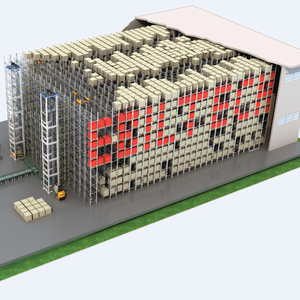
EBIL-ZMC Automatic Radio Shuttle Pallet Racking System
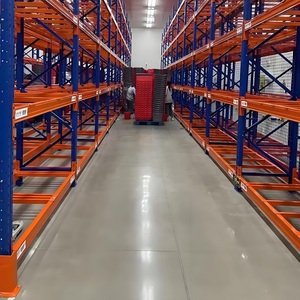
Long Span Heavy Duty Beam Racking for Oversized Loads
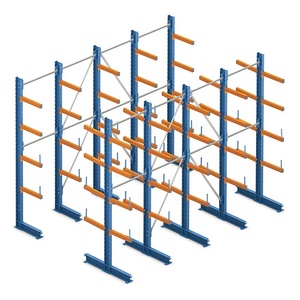
Victory Light & Heavy Duty Cantilever Rack for Long Materials
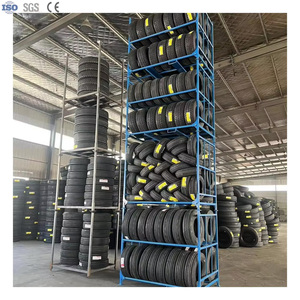
Powder Coated Portable Steel Truck Tire Stacking Racks
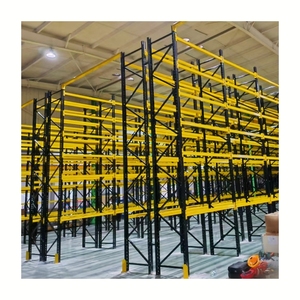
High-Density Selective Pallet Racking System
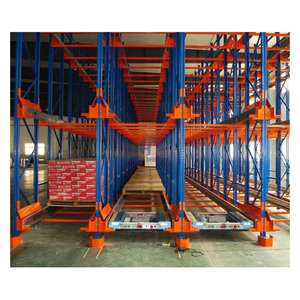
Heavy Duty Automated Shuttle Storage Racking Matrix
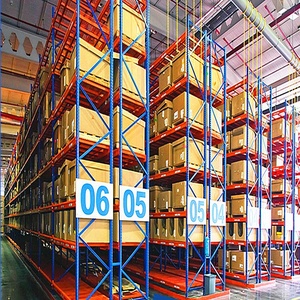
Very Narrow Aisle (VNA) Heavy Duty Steel Pallet Racking
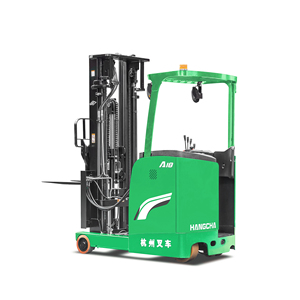
Electric High-Lift Reach Truck & VNA Guided Equipment
Executive Summary: The Economic Imperative of Multi-Deep Racking in U.S. Supply Chains
Across major U.S. logistics hubs—ranging from Southern California’s Inland Empire and the Dallas-Fort Worth Metroplex to the Chicago Industrial Corridor and Pennsylvania’s Lehigh Valley—industrial real estate rates have reached record peaks. Triple net (NNN) lease rates and elevated construction costs per square foot force enterprise supply chain directors, warehouse operations VP, and 3PL executives to rethink spatial density. Standard single-deep selective pallet racking, while providing 100% immediate selectivity, utilizes under 40% of available floor space for actual pallet storage due to wide aisle requirements (typically 12 to 13.5 feet for standard counterbalanced forklifts).
Multi-Deep Pallet Racking Systems—encompassing 2-deep Selective, 2-to-6 deep Push-Back, Drive-In/Drive-Thru, and semi-automated Radio Shuttle matrix configurations—eliminate unnecessary travel aisles and maximize vertical clear height utilization (up to 40+ feet). By transitioning from conventional selective layouts to engineered multi-deep racking, facility managers routinely realize cubic storage volume gains between 45% and 85% without expanding their building footprint.
Information Gain Insight: Selecting between mechanical multi-deep (Push-Back/Drive-In) and automated multi-deep (Radio Shuttle) is fundamentally a function of SKU velocity, stackability, and turn dynamics. Push-back systems operate on a Last-In, First-Out (LIFO) schedule per lane, ideal for medium SKU counts with 4-to-12 pallets per SKU. Automated Radio Shuttle systems support both LIFO and First-In, First-Out (FIFO) modes across deep channels up to 30+ pallets, drastically lowering forklift drive-in damage risk and labor expenses.
Engineering Architecture & Structural Compliance (RMI & ANSI MH16.1 Standards)
Designing multi-deep pallet racking for the U.S. market demands strict adherence to rigorous structural and safety mandates. American industrial facilities are governed by OSHA Regulation 1910.176, NFPA 13 Fire Sprinkler Standards (ESFR requirements), and critically, the ANSI MH16.1 Specification for the Design, Testing and Utilization of Industrial Steel Storage Racks, published by the Rack Manufacturers Institute (RMI).
1. Roll-Formed vs. Structural C-Channel Steel Construction
Multi-deep systems encounter intense dynamic stresses due to continuous pallet push-back action or heavy reach truck maneuvers inside narrow aisles. US buyers must evaluate structural steel options based on operational severity:
- Roll-Formed Teardrop Racking: Fabricated from high-tensile cold-rolled sheet steel (Q235B / Q355B equivalents), utilizing boltless teardrop punch patterns. Highly cost-effective for standard retail distribution, light-to-medium manufacturing, and adjustable pallet elevation profiles.
- Structural Steel C-Channel Racking: Manufactured from hot-rolled structural steel channels with heavy-duty bolted beam-to-column connections. Structural racking provides superior resistance to forklift impacts, essential for high-throughput food & beverage distribution, freezer operations (-20°F), and heavy industrial manufacturing.
2. Seismic Design Categories (SDC A through F) & Baseplate Engineering
Whether installing racking in high-seismic zones like California (Pasadena, Inland Empire, Bay Area) or Moderate-Seismic regions like the New Madrid fault line in the Central US, structural calculations must incorporate International Building Code (IBC) seismic forces. Multi-deep upright frames feature oversized, engineered baseplates with dual anchor points, heavy-duty horizontal and diagonal bracing, and high-yield steel chemistry to absorb lateral seismic shear forces without structural collapse.
Push-Back Telescoping Carts
Engineered nested cart systems riding on inclined structural steel rails. As forklifts load each pallet, existing pallets smoothly push back. 2, 3, 4, 5, and 6-deep configurations available in capacities up to 3,000 lbs per cart.
Semi-Automated Radio Shuttle
Autonomous wireless shuttle satellite vehicles traveling inside dedicated channel rails at speeds up to 160m/min. Controlled via RF remote or warehouse management system (WMS) interface.
Drive-In High Density
Maximizes volume by allowing forklifts to drive directly into continuous racking lanes on support rails. Cost-effective LIFO storage ideal for uniform bulk goods with minimal SKU variance.
Engineering Comparison Matrix: Technical Decision Tree for US Buyers
To help warehouse system integrators, industrial engineers, and procurement managers evaluate multi-deep racking technology, our engineering team has compiled this comparative structural matrix:
| Racking Architecture | Storage Density | Pallet Selectivity | Stock Rotation | Forklift Travel | Est. Cost / Pallet Spot |
|---|---|---|---|---|---|
| Standard Selective | Baseline (100%) | 100% Direct | FIFO / LIFO | Aisle Only | $75 - $110 |
| Double-Deep Selective | +30% to +40% | 50% Direct | LIFO | Aisle (Deep Reach) | $110 - $155 |
| Push-Back (2 to 6 Deep) | +55% to +75% | 1 SKU per Lane | LIFO | Aisle Face Only | $180 - $270 |
| Drive-In / Drive-Thru | +60% to +80% | Low (Lane Level) | LIFO / FIFO | Drives Inside Rack | $130 - $190 |
| Radio Shuttle Automation | +75% to +90% | Channel Level | FIFO or LIFO | Aisle Face Only | $240 - $380 |
U.S. Localized Application Scenarios & Industrial Market Trends
The operational environment for warehouse storage differs significantly across geographical regions within the United States. Factors such as local labor availability, power costs in cold storage, rack maintenance protocols, and environmental humidity dictate system customization:
1. Cold Storage & Frozen Food Logistics (Midwest & California Central Valley)
In sub-zero freezer facilities (-10°F to -20°F) across states like Wisconsin, Illinois, and California, energy costs per cubic foot are substantial. Drive-In racking and Radio Shuttle systems are heavily favored here. Galvanized finishes (Hot-Dip Galvanizing) are applied to frames and beams to prevent condensation-induced rust during defrost cycles, while structural steel beams maintain material ductility in sub-zero environments.
2. E-Commerce Fulfillment & 3PL Hubs (Inland Empire CA, NJ, PA Corridor)
High-velocity distribution centers servicing major metropolitan areas require fast batch-picking and rapid SKU replenishment. Push-back racking systems configured in 3-deep and 4-deep arrays allow operators to pick from lower levels while storing reserve stock directly above, dramatically shortening travel loops for picker vehicles.
3. Beverage & Heavy Manufacturing (Texas, Georgia, Midwest Automotive Belt)
Handling liquid freight, packaged goods, and automotive components involves heavy load profiles (2,500 to 4,000 lbs per pallet). Custom structural multi-deep push-back racks with heavy-duty flange protectors, column guards, and heavy channel rails ensure zero rack deflection under sustained heavy static and dynamic loads.
IronMax Factory Advantages & Global Manufacturing Excellence
As a premier direct manufacturer and OEM supplier to U.S. racking distributors, system integrators, and enterprise buyers, IronMax Storage Solutions brings robust engineering and production capabilities:
In-House Continuous Roll-Forming
Over 15 automated continuous roll-forming lines capable of processing high-yield steel coils into custom upright profiles (up to 1.5mm–3.0mm thickness) with tight dimensional tolerances.
TGIC-Free Powder Coating & HDG
Automated 5-stage pre-treatment washing followed by electrostatic epoxy powder coating, offering superior scratch resistance, 500-hour salt-spray durability, and custom corporate colors.
Full Mill Test Certification (MTC)
Every batch of raw steel material undergoes chemical composition analysis and tensile strength testing. Quality reports and weld inspection records ship with every export container.
Frequently Asked Questions by U.S. Warehouse Buyers
Clear, authoritative technical answers addressing building permits, seismic considerations, fire suppression code compliance, and maintenance protocols.
Do IronMax multi-deep pallet racking systems comply with U.S. RMI and ANSI MH16.1 specifications?
Yes. All IronMax heavy-duty racking frames, beams, and connector brackets are engineered and manufactured in strict compliance with the structural design criteria established by ANSI MH16.1 and the Rack Manufacturers Institute (RMI). We supply complete structural engineering calculations, steel mill test reports, and stamped CAD drawings suitable for submitting to local U.S. municipal building departments for high-density rack permits.
How do NFPA 13 fire sprinkler rules affect deep push-back and radio shuttle racking design?
High-density multi-deep racking blocks restrict vertical water penetration from standard overhead ceiling sprinklers. Under NFPA 13 guidelines, deep rack installations exceeding certain height or depth thresholds require in-rack sprinkler lines equipped with protective heat shields. IronMax designs custom transverse flue space gaps (typically 6 inches minimum) and pre-punched beam profiles to seamlessly integrate in-rack sprinkler pipework without sacrificing pallet clear openings.
What forklift equipment is required for operating 2-deep vs 4-deep multi-deep systems?
For double-deep selective racking, specialized pantograph double-deep reach trucks or telescopic fork attachments are mandatory. For multi-deep push-back racking (2 to 6 deep) and Radio Shuttle systems, standard counterbalanced or single-reach forklifts can be utilized because the load is pushed back mechanically or transported autonomously to the front picking face of the rack.
What is the expected lead time and shipping process for containerized rack deliveries to U.S. ports?
Standard manufacturing lead times range from 3 to 4 weeks upon final approval of CAD drawings. Ocean freight transit to U.S. West Coast ports (Los Angeles/Long Beach, Oakland, Seattle) typically takes 14–18 days, while shipping to East Coast and Gulf ports (Savannah, Houston, Newark) takes 28–35 days. Components are bundled with steel strapping, wrapped in protective film, and loaded into 40ft High Cube containers using heavy-duty export packaging designed to prevent transit damage.
How do I choose between Push-Back Racking and Radio Shuttle Automation for my facility?
Choose Push-Back Racking if your storage depth is between 2 and 6 pallets deep per SKU, your warehouse relies entirely on standard mechanical lift trucks, and you operate under a LIFO inventory model with medium SKU counts. Choose Radio Shuttle Automation if your lane depth exceeds 6 pallets (up to 30+ pallets deep), you require FIFO rotation flexibility, want to eliminate forklift rack collisions, or operate a high-energy cold storage facility where floor space cost is at a premium.
Transform Your Warehouse Storage Density Today
Work directly with IronMax structural engineers to receive a complimentary warehouse CAD layout, seismic load calculation report, and competitive factory-direct pricing quote.