Industrial Compact Racking Systems & High-Density Solutions
Engineered to Japanese Industrial Standards (JIS) for maximum volumetric floor space utilization and seismic safety.
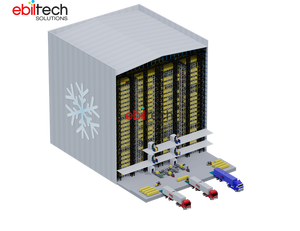
Custom Steel Four-Way Shuttle Rack with Corrosion Protection Smart Solution
Get a Quote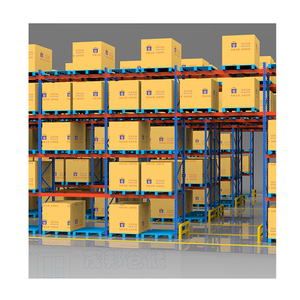
Industrial Heavy Duty Metal Shelving Single Deep Selective Storage Rack
Get a Quote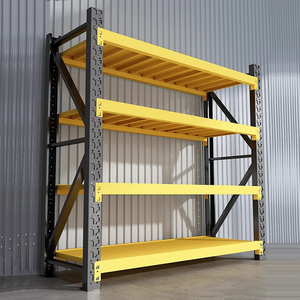
Warehouse Storage Stacking Movable Tube Metal Steel Truck Tire Post Pallet
Get a Quote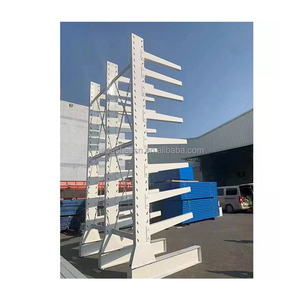
Industrial Rack Shelving Single Sided Heavy Duty Cantilever Racking System
Get a Quote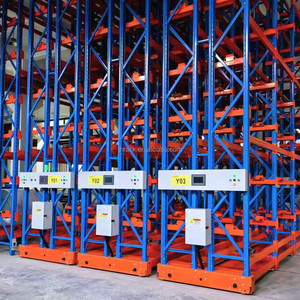
Heavy Duty High Efficiency Electric Mobile Storage Automatic Racking System
Get a Quote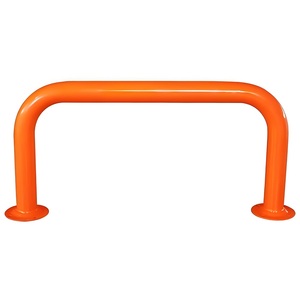
Durable Corrosion Metal Steel Pallet Racking Frame Safety Impact Barrier
Get a Quote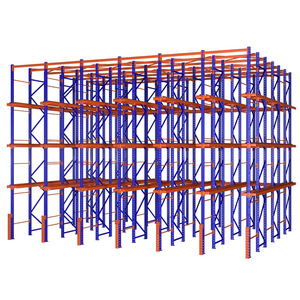
Q235 Steel Heavy Duty Powder Coated Double Side 4-Tier Pallet Storage Rack
Get a Quote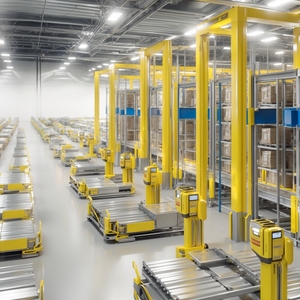
Pteris ASRS Shuttles Pallet Racking System Smart Warehouse Automation
Get a QuoteStrategic Logistics & High-Density Storage Engineering in Greater Nagoya
Analyzing the spatial constraints, earthquake design factors, and Just-In-Time (JIT) demands of Japan's primary manufacturing core.
As the industrial capital of Japan’s Chubu region, Nagoya and Aichi Prefecture represent the highest concentration of automotive manufacturing, aerospace engineering, and advanced precision machinery in East Asia. Industrial real estate within the Nagoya metropolitan area—particularly surrounding logistics hubs near the Port of Nagoya, Tobishima sub-center, and the Komaki/Ichinomiya highway interchanges—commands premium land costs per square meter. Warehouse operators facing strict height limits and high land acquisition overhead can no longer rely on conventional selective pallet racking with wide 3.5-meter forklift aisles.
To achieve operational efficiency without expanding physical footprints, Japanese logistics directors and plant engineers are aggressively transitioning toward Compact Pallet Racking Systems. By eliminating redundant access aisles, compact racking—comprising Electric Mobile Racking (EMR), Automated Radio Shuttle Systems, High-Density Drive-In Frameworks, and Very Narrow Aisle (VNA) configurations—reclaims up to 85% of wasted floor area while seamlessly maintaining compliance with Japanese Building Standards Law (建築基準法) and JIS structural safety codes.
Understanding the "Nagoya Constraint": Land Values, Seismic Risk, and JIT Logistics
Selecting storage racking in Aichi Prefecture requires balancing three strict local operational realities:
- Toyota-Style Just-In-Time (JIT) Material Flow: Tier-1 and Tier-2 automotive suppliers along the Toyota City–Nagoya corridor mandate exact SKU accessibility and predictable retrieval cycles. System downtime or delayed pallet access directly risks assembly line stoppages.
- Nankai Trough Seismic Mitigation: Nagoya resides in a high-seismic zone. Racking structures must feature high-ductility steel, engineered baseplates, double-anchor floor bolts, and anti-toppling overhead ties calculated to withstand peak ground accelerations (PGA) up to 0.6g.
- T11 Japanese Industrial Standard Pallets: Unlike the European EUR-pallet (800×1200mm) or American GMA pallet (48×40 inches), the Japanese logistics infrastructure operates primarily on the standardized T11 pallet (1,100 × 1,100 × 144 mm). Compact racking systems deployed in Nagoya must be custom-engineered to optimize depth, clearance, and beam capacity around this square format.
Localized Industry Application Scenarios in Aichi Prefecture
How specialized manufacturing sectors in Nagoya utilize tailored compact racking configurations to maximize warehouse output.
Automotive Tier-1 & Tier-2 Logistics (Toyota City / Kariya Corridor)
In high-velocity automotive supplier parks, space is dedicated primarily to robotics and manufacturing, leaving restricted warehouse footprints for raw steel coils, stamped body panels, and engine components. High-load electric mobile racking mounted on floor-embedded steel rails allows 4,000 kg per beam level while opening only one mobile aisle at a time via remote wireless control. This ensures 100% SKU selectivity for JIT dispatch while doubling pallet capacity in existing facilities.
Port of Nagoya Cold Storage & Food Distribution Hubs
Operated around Tobishima Pier and the Meiko Bridge marine gateways, refrigerated and deep-freeze facilities (-25°C) face immense electrical and thermal utility overhead. Storage density is directly tied to profitability. IronMax Radio Shuttle Racking Systems and Four-Way Smart Shuttle Blocks allow cold-chain operators to store pallets up to 30 lanes deep. Unmanned shuttles move automatically inside storage channels, protecting operators from sub-zero environments while slashing refrigeration energy costs per pallet by up to 40%.
Precision Machinery & Industrial Tooling (Minato-ku / Komaki Zone)
Producers of CNC tooling, heavy motor drives, and industrial robotics require versatile storage capable of handling concentrated heavy loads alongside irregular raw bar stock. By integrating Heavy Duty Single-Sided Cantilever Racks with high-density 4-tier pallet banks, facilities accommodate 6-meter raw steel tubing on cantilever arms while placing standardized sub-assembly crates directly above, creating an integrated manufacturing buffer zone.
Chubu Centrair E-Commerce & Air Freight Forwarders
High SKU counts combined with rapid parcel turnaround near Tokoname and Centrair International Airport demand narrow aisle efficiency. Very Narrow Aisle (VNA) Compact Racking, operating with guided turret trucks in 1.65-meter aisles, leverages warehouse clear heights up to 15 meters. This setup yields massive vertical cube utilization for rapid order picking without compromising safety.
Key Local Market Trends Driving Compact Racking Adoption in Japan
Macroeconomic and structural shifts reshaping modern material handling across the Nagoya industrial corridor.
Response to the "2024 Logistics Overtime Limit"
With Japan enforcing strict annual overtime limits (960 hours) on commercial truck drivers under revised labor laws, warehouse loading speeds must increase dramatically. Compact shuttle systems enable rapid staging and automated pre-buffering at dock doors, drastically reducing driver wait times at Nagoya distribution depots.
Severe Industrial Labor Shortages
An aging domestic workforce in Aichi Prefecture has forced logistics operators to automate manual material handling. Electric mobile racks and 4-way shuttle systems reduce required forklift operator headcount by up to 60%, mitigating labor bottlenecks through engineering.
ASRS & AGV-Ready Structural Integrations
Nagoya buyers are increasingly requesting "Automation-Ready" steel frameworks. Racking must be manufactured to ultra-tight mill tolerances (±0.5mm beam deflection limits) to allow future retrofitting with Autonomous Mobile Robots (AMRs) and automated stacker cranes without structural modifications.
Technical Matrix: Compact Pallet Racking Architecture Comparison
Engineering parameters for high-density racking models designed for Nagoya logistics facilities.
| Racking System Type | Floor Footprint Utilization | SKU Selectivity Ratio | T11 Pallet Suitability | Seismic Resistance (PGA) | Primary Industrial Use in Nagoya |
|---|---|---|---|---|---|
| Electric Mobile Racking (EMR) | 85% - Extremely High | 100% Direct Access | Optimized (1100×1100) | Up to 0.60g (Locking Rail) | Automotive Parts, Cold Storage, Chemical Drums |
| Radio Shuttle Racking | 80% - Very High | Channel Selective (LIFO/FIFO) | Optimized (1100×1100) | Up to 0.55g (Dual Tie) | Nagoya Port Marine Food, FMCG Buffer Storage |
| Very Narrow Aisle (VNA) | 65% - High | 100% Direct Access | Universal Compatibility | Up to 0.45g (High-Bay Frame) | E-commerce, Aviation Components, Electronics |
| Four-Way Smart Shuttle ASRS | 90% - Maximum | 100% Dynamic Access | Standardized Mesh Rail | Up to 0.65g (Integrated Grid) | Unmanned Smart Factories, High-Bay Warehouses |
| Heavy Duty Drive-In Racking | 75% - High | Low (LIFO Bulk) | Optimized (1100×1100) | Up to 0.40g (Top Braced) | Seasonal Beverage, Bulk Raw Material Staging |
Why Nagoya Enterprises Partner with IronMax Storage Solutions
Combining heavy manufacturing capabilities, mill-certified steel, and custom export engineering tailored for the Japanese market.
High-Grade Certified Steel (Q235B / Q355B & JIS Equivalent)
IronMax utilizes prime cold-rolled structural steel strictly complying with JIS G3101 SS400 and GB/T standards. Our upright profiles undergo continuous automated 18-stage roll-forming to eliminate internal stress points, ensuring load-bearing stability under severe static and dynamic load conditions.
Seismic-Certified Baseplates & Anchoring Engineering
Every compact racking layout delivered to Aichi Prefecture is pre-calculated by our structural engineering team. We supply heavy-duty 10mm–14mm thick seismic footplates with chemical anchor bolts specified to handle cyclic shear forces typical of Japanese seismic events.
Electrostatic Epoxy Powder Coating for Harsh Environments
To resist corrosion in Port of Nagoya coastal facilities or high-humidity cold rooms, all beams and uprights undergo a 7-stage pre-treatment wash followed by thermosetting epoxy-polyester powder coating (60–90 microns thickness), backed by ISO 9001 and CE compliance certification.
Direct Sea Freight Logistics to Port of Nagoya
Located in Shandong Province near major northern shipping corridors, IronMax offers streamlined containerized export directly to the Port of Nagoya. All components are steel-strapped, bundled with protective wooden runners, and labeled by bay number for straightforward on-site installation.
Frequently Asked Questions by Purchasing Directors in Nagoya
Addressing structural compliance, customized pallet dimensions, shipping schedules, and installation support.
Optimize Your Nagoya Warehouse with Engineering-Grade Compact Racking
Contact our engineering consultation team today. Send us your floor plan dimensions, pallet specifications, and target storage capacities for a complimentary 2D CAD layout and formal quotation.
Get a Quote