Heavy-Duty Industrial Racking & Cold Storage Systems
Engineered to comply with ANSI MH16.1, RMI safety standards, and local NYC building code requirements for cold rooms down to -30°C (-22°F).
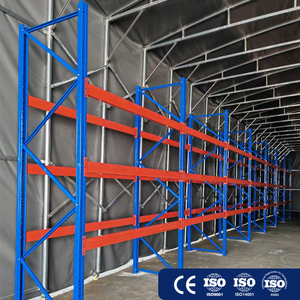
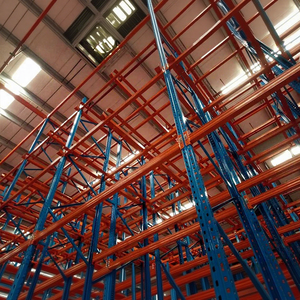
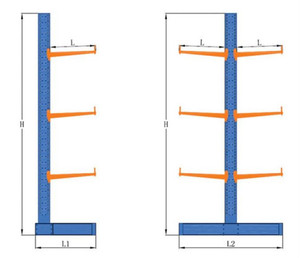
Low-Temperature Metallurgy & Structural Engineering for New York Cold Storage
Cold chain logistics operations in the New York Metropolitan Area—spanning Hunts Point in the Bronx, Newark/Elizabeth port corridors in New Jersey, and the industrial hubs of Long Island and the Mid-Hudson Valley—face unique operational challenges. The cost of refrigerated real estate in the NY Tri-State area is among the highest in North America. Furthermore, running cold storage rooms at sub-zero temperatures (ranging from 0°C to -30°C / -22°F) creates harsh mechanical conditions that standard indoor structural steel racking cannot withstand.
When mild steel is subjected to continuous sub-zero temperatures, it undergoes a Ductile-to-Brittle Transition (DBTT). Low temperatures cause standard steel grades to lose impact toughness, making upright frames and load beams susceptible to catastrophic micro-fractures under fork-truck impact or dynamic loading. As an engineering-driven cold chain pallet racking manufacturer, IronMax Storage Solutions Co., Ltd. utilizes specialized micro-alloyed structural steels (Q235B, Q355B, and low-temperature impact grade Q345E) engineered specifically to maintain high Charpy V-notch impact toughness under deep-freeze conditions.
Key Structural Considerations for NY Metro Freezer Vaults
Seismic Zone Compliance
The NY/NJ basin requires structural engineering calculation adhering to IBC 2024 and RMI ANSI MH16.1 for Seismic Design Category B and C factors.
Thermal Deflection Retention
Beam profiles are calculated taking into account thermal contraction coefficients so that beam-to-upright safety lock connectors maintain zero margin for play.
Frost-Heave Anchoring
Heavy-duty baseplates with thermal isolation shims prevent heat conduction into sub-floor heating mats, eliminating floor slab cracking risks.
Localized New York Cold Storage Trends: Maximizing Cubic Foot Density
Industrial real estate inventory across New York's primary distribution zones (such as Queens, Brooklyn, Staten Island, and Northern New Jersey) remains constrained. High electricity rates in the Consolidated Edison (ConEd) and PSEG utility footprints mean that cooling empty vertical space represents significant operational waste. As a result, cold chain procurement directors are pivoting away from standard 100% selective racking systems toward compact high-density automated and semi-automated racking configurations.
Dominant Racking Architectures in the New York Tri-State Area
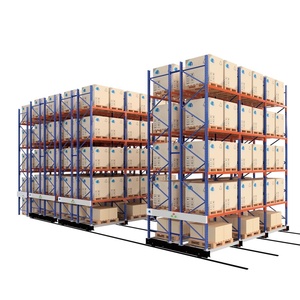
- 1. Electric Mobile Pallet Racking (MOVO Systems): By mounting selective pallet racks on electrically driven mobile bases running on floor-embedded rails, mobile racking eliminates fixed aisles. A single operational aisle can unlock up to 85% higher storage density than standard selective layouts, cutting refrigerated energy costs per pallet by up to 40% in NYC urban facilities.
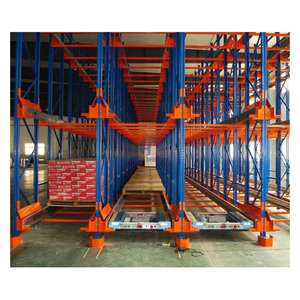
- 2. Semi-Automated Radio Shuttle Racking: Ideal for high-turnover food and beverage distribution in Hunts Point and Jersey City. Autonomous shuttle cars carry pallets inside deep racking channels (up to 40 pallets deep), supporting both FIFO (First-In, First-Out) and LIFO flow while keeping fork-truck drivers outside the freezing vault, reducing door open times and heat ingress.
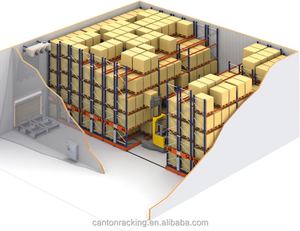
- 3. Push-Back Racks & Heavy-Duty Drive-In Racks: Widely deployed in ice cream, frozen seafood, and pharmaceutical cold storage where SKU counts are low but volume per SKU is extreme. Equipped with anti-collision upright protectors and heavy-wall guide rails to withstand heavy forklift traffic in zero-visibility frost environments.
Cold Storage Racking Architecture Matrix
| Racking System Type | Volumetric Efficiency | Access Flexibility | Freezer Energy Savings | Ideal NY Application Scenario |
|---|---|---|---|---|
| Radio Shuttle Racking | 90% Max | Pallet-lane level (LIFO/FIFO) | Very High (-45% kWh/pallet) | Hunts Point Produce, Meat & Frozen Food Wholesalers |
| Electric Mobile Racking | 85% High | 100% Selective access | High (-40% kWh/pallet) | NYC Urban Infill Warehouses (Brooklyn/Queens/Staten Island) |
| Drive-In Pallet Racking | 75% High | LIFO strictly | Medium (-25% kWh/pallet) | Bulk Frozen Ingredient Storage & Ice Cream Manufacturers |
| Push-Back Rack System | 70% Medium | 2–6 Deep LIFO per lane | Moderate (-20% kWh/pallet) | Port Newark/Elizabeth 3PL Cross-Dock Cold Stores |
| Standard Selective Rack | 45% Low | 100% Immediate access | Baseline (High cost/pallet) | Pharma Clinical Trials & Small SKU Cold Rooms |
Localized Application Scenarios across the New York Tri-State Area
As a global racking factory directly serving cold chain contractors and warehouse owners in New York, IronMax designs bespoke rack structures tailored to specific regional sub-markets:
Scenario A: Hunts Point & Bronx Urban Produce Hubs
High humidity and constant ambient air exchange occur as loading doors open repeatedly for NYC distribution trucks. Recommended Solution: Hot-Dip Galvanized Radio Shuttle Racks equipped with IP65-rated moisture-sealed electronics and corrosion-proof structural beams designed to handle daily washdowns and organic acidic fruit condensation.
Scenario B: Port Newark & Elizabeth NJ Port 3PL Logistics
Large-scale sea container offloading of frozen seafood and imported meat requires extreme structural load capacities for fast turnarounds. Recommended Solution: Drive-In and Double-Deep Selective Racking featuring heavy-duty rolled uprights (120mm profile width) with structural rubber column guards and high-visibility yellow floor guides.
Scenario C: Long Island Biopharma Cold Chains (Hauppauge/Farmingdale)
Pharmaceutical cold rooms storing vaccines and biologics at -80°C to -20°C require stringent cGMP compliance, zero off-gassing particle contamination, and strict temperature mapping uniformity. Recommended Solution: Stainless Steel Decking or Non-Porous Epoxy Powder Coated Very Narrow Aisle (VNA) Racks with wire-guided narrow turret trucks.
Scenario D: Mid-Hudson & Upstate Food Processing Plants
Sprawling dairy, apple, and beverage facilities requiring rapid blast freezing down to -35°C before cold storage staging. Recommended Solution: Heavy-Duty Push-Back Racks with specialized stainless steel bearing rollers that operate smoothly without freeze-locking under extreme temperature drops.
IronMax Enterprise Advantages: Direct-from-Factory Manufacturing Excellence
IronMax Storage Solutions Co., Ltd. (operating from our state-of-the-art production base in Shandong, China) provides end-to-end support for procurement directors, logistics consultants, and general contractors in New York. Buying directly from our manufacturing facility eliminates broker markups, guarantees metallurgical quality traceability, and provides access to custom engineering support for specialized warehouse layouts.
ISO & CE Certified Quality
Strict quality control from raw coil steel inspection to robotic laser cutting, automated continuous roll forming, and 100% ultrasonic weld testing.
Custom CAD/BIM Layouts
In-house structural engineers provide free 2D layout drawings, 3D BIM models, load capacity calculations, and anchor stress reports for NY building permit filings.
Direct Port of NY/NJ Shipping
Containerized export packaging engineered for ocean freight. Bundled steel uprights with corner protectors, export-grade wooden pallets, and clear container packing lists.
Frequently Asked Questions for New York Cold Chain Racking Procurement
Key technical insights compiled by our engineering team to assist NY procurement managers in evaluating cold room racking investments.
Why is Hot-Dip Galvanizing (HDG) preferred over standard powder coating in NY cold storage rooms?
In low-temperature environments, condensation occurs during defrost cycles or door access. Moisture can micro-penetrate conventional powder coatings, leading to rust underneath that flakes off and degrades structural integrity. Hot-Dip Galvanizing creates a metallurgically bonded zinc-iron alloy layer (ISO 1461 compliant) that provides self-healing cathodic protection against corrosion for over 25 years in high-humidity freezer conditions.
Do IronMax racking systems comply with NYC Fire Department (FDNY) and sprinkler regulations?
Yes. High-pile storage in New York City requires strict adherence to FDNY regulations and NFPA 13 sprinkler clearance guidelines. Our design team configures upright depth, transverse flue spaces (typically 6-inch minimum), and open mesh steel decking to allow unimpeded ESFR (Early Suppression, Fast Response) ceiling sprinkler water penetration while preventing rack collapse during seismic or fire incidents.
How does IronMax ensure steel racks do not become brittle at -30°C (-22°F)?
We source structural coil steel enriched with micro-alloying elements (such as Manganese and Vanadium) that lower the Ductile-to-Brittle Transition Temperature. Every batch undergoes Charpy V-Notch impact testing at sub-zero temperatures to guarantee that beams and uprights maintain specified yield strength (355 MPa minimum for Q355 steel) under dynamic forklift impacts in cold vaults.
What is the lead time and delivery route for direct factory shipping to the Port of NY/NJ?
Manufacturing typically takes 20 to 25 days depending on project size and finishing specifications (powder coating vs. hot-dip galvanizing). Ocean transit from our Shandong port facility directly to Maher Terminal or Port Newark in New Jersey takes approximately 28 to 35 days. We provide full export documentation, Bill of Lading, HS code classification, and customs clearance coordination.
Can IronMax engineer customized racking heights for high-bay freezer warehouses in NY?
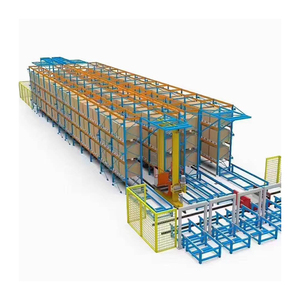
Absolutely. We manufacture continuous roll-formed upright frames up to 15 meters (approx. 50 feet) in height without mid-welds, engineered specifically for high-bay cold storage AS/RS or VNA installations. Beam profiles are custom-extruded to carry unit loads ranging from 1,000 kg to 4,000 kg per level with safety factors compliant with RMI standards.
Ready to Optimize Your New York Cold Storage Footprint?
Get in touch with our direct factory engineering team today. Send us your CAD floor plan, pallet dimensions, temperature range, and storage capacity targets for a free engineered layout and wholesale quote.
Get Catalog