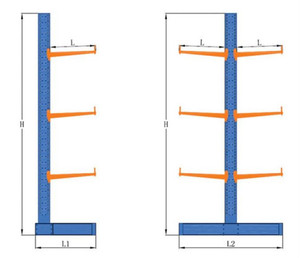
CE Certified Heavy-Duty Cantilever Rack System
Load: Up to 3,000 kg / Arm
Finish: Outdoor Powder / Hot-Dip Galv
Use: Steel Profiles, Pipes & Lumber
Contact Us
Precision-Engineered Pallet Storage Systems Tailored for Global Supply Chains and Middle Eastern Distribution Warehouses
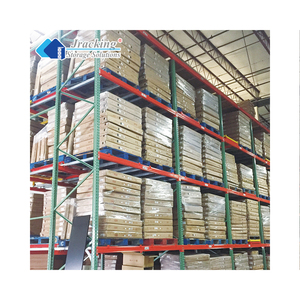
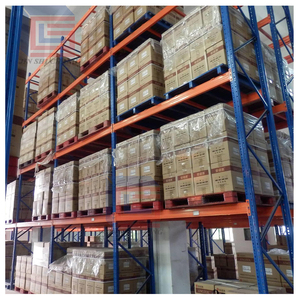
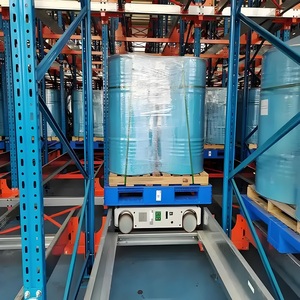
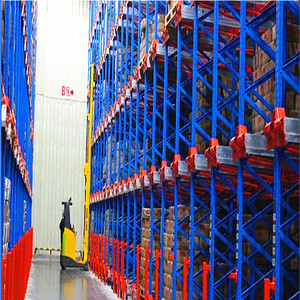

The State of Qatar’s rapid economic diversification under Qatar National Vision 2030 has transformed Doha into an international logistics powerhouse. Driven by multi-billion-dollar investments in Hamad Port, Hamad International Airport Cargo Terminal, and strategic free zones managed by the Qatar Free Zones Authority (QFZA)—such as Ras Bufontas and Um Al Houl—the demand for advanced material handling equipment has shifted dramatically. Warehousing operations across Doha, Industrial Area, Birkat Al Awamer, and Lusail are accelerating away from manual, low-density storage toward fully integrated Automated Storage and Retrieval Systems (ASRS) and high-density Radio Shuttle racking configurations.
Logistics operators in Doha face unique market dynamics: escalating land acquisition costs in prime zones, stringent Qatar Civil Defense Department (QCDD) fire safety compliance, and extremely hot ambient microclimates. In this environment, cubic space optimization is not merely an operational goal; it is a financial imperative. Implementing high-bay ASRS pallet racking systems enables enterprises to utilize warehouse clear heights up to 40 meters, reducing the structural building footprint by up to 60% while increasing total storage capacity by over 200% compared to conventional selective pallet racking.
In Qatar’s harsh ambient summers where external temperatures regularly exceed 45°C to 50°C, cold storage and frozen food distribution facilities (such as those supporting national food security reserves in Um Al Houl) incur massive air-conditioning operational expenses. ASRS high-density systems drastically collapse the internal refrigerated volume required per stored pallet unit, yielding a direct 35%–45% reduction in ongoing HVAC power consumption.
Deploying heavy-duty steel pallet racking and ASRS structures in the Doha region requires specialized structural engineering to withstand severe environmental factors that standard European or North American off-the-shelf racking specs fail to address:
Selecting the optimal pallet racking system depends on your specific SKU velocity, required pallet access mode (FIFO vs. LIFO), and building clear height. The following matrix illustrates the performance metrics evaluated by logistics directors in Doha:
| Storage System Type | Storage Density | Direct Selectivity | Operating Heights | Qatar Market Best Fit |
|---|---|---|---|---|
| Full Stacker Crane ASRS | Maximum (95%) | 100% Automated | Up to 40 Meters | FMCG Distribution, High-Bay Cold Storage, Mega Hubs |
| 4-Way Radio Shuttle Racking | Very High (85-90%) | High (Per Lane) | Up to 22 Meters | Food Security Buffers, Beverage Bottling, Pharmaceuticals |
| Very Narrow Aisle (VNA) | Medium-High (70%) | 100% Manual/Semi | Up to 17 Meters | E-commerce Fulfillment, High SKU Variety Parts Centers |
| Heavy-Duty Selective Racking | Standard (50%) | 100% Direct | Up to 12 Meters | General Logistics, Third-Party Logistics (3PL) Fleets |
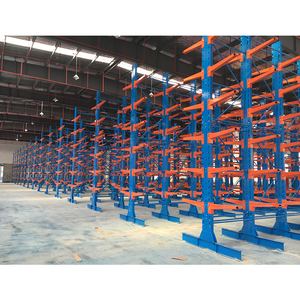
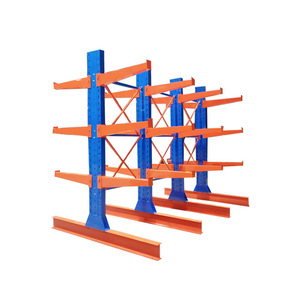
| Structural Cantilever Racking | Specialized | 100% Open Access | Up to 10 Meters | Aluminium Extrusions, PVC Pipes, Steel Rods & Timber |
Different industrial sectors across Doha demand tailored material handling configurations:
Located directly adjacent to Hamad International Airport and Hamad Port, these zones host advanced pharmaceutical distribution facilities and high-value electronics warehouses. Here, 4-Way Radio Shuttle systems and automated stacker cranes dominate. They integrate directly with corporate Enterprise Resource Planning (ERP) engines like SAP or Oracle, enabling fully automated, real-time batch tracking, FEFO (First Expired, First Out) management, and temperature compliance logging mandated by Qatar Ministry of Public Health.
In traditional industrial hubs where construction materials, heavy machinery, and metal extrusions are handled, storage systems must withstand intense mechanical impacts. IronMax Heavy-Duty Cantilever Racking and reinforced selective teardrop racking provide high structural safety margins. Features such as heavy-column protectors, frame deflector guards, and high-yield Q355B structural steel ensure structural integrity even under aggressive forklift handling.
Serving Qatar's world-leading energy sector, warehouse storage for chemicals and specialized industrial tools demands zero-spark electrical components, anti-static plastic pallets, and hot-dip galvanized steel structural platform mezzanines that resist harsh chemical fumes and aggressive ambient industrial pollutants.
As a global premier manufacturer of heavy-duty pallet racking systems and automated warehouse solutions, IronMax Storage Solutions Co., Ltd. delivers end-to-end engineering excellence from our state-of-the-art production base in Shandong, China to project sites across Doha and the broader GCC region.
Yes. Fire safety approval in Qatar requires specific flue space dimensions (both longitudinal and transverse) within the racking matrix to allow overhead ESFR (Early Suppression, Fast Response) sprinkler water penetration. Our engineers design beam levels and shelf wire decking / open steel grating with minimum 50% open area compliance to pass strict QCDD inspections effortlessy.
Manufacturing of custom engineered racking orders typically takes 14 to 21 business days depending on tonnage. Ocean freight shipping time from Qingdao or Tianjin port directly to Hamad Port (Doha) averages 18 to 24 days. Full customs documentation, packing lists, certificate of origin (COO), and legalized invoices are provided for fast clearance.
Absolutely. IronMax Radio Shuttle cars and ASRS stacker crane components are customized with deep-freeze electronic packages, low-temperature synthetic lubricants, thermal condensation heaters, and specialized Lithium Iron Phosphate (LiFePO4) cold-room batteries capable of continuous operation down to -28°C.
We supply heavy-gauge floor-anchored steel upright protectors, heavy-duty wrap-around column guards, and solid tubular aisle end-frame guards finished in high-visibility safety yellow powder coat. Additionally, frame uprights can be reinforced with internal structural box inserts at lower impact zones.
For high-bay ASRS reaching 15–40 meters, concrete floor tolerance must meet strict superflat standards (such as FM1 or FM2 according to TR34 guidelines). The slab load capacity typically ranges from 70 to 120 kN/m² point load. Our engineering team provides detailed baseplate reaction loads so your local civil contractors in Qatar can design correct foundation reinforcement.
Yes, we partner with experienced, QCDD-certified local erection teams across Doha to provide complete turn-key installation, structural testing, commissioning, and annual preventative safety inspection audits.
Contact IronMax’s senior structural racking engineers today. Request a complimentary 2D/3D CAD warehouse layout proposal, structural load assessment, and direct factory pricing tailored to your Qatar facility.
Contact Us