Featured Industrial Racking Systems for Canadian Distribution
Explore our precision-engineered, adjustable steel pallet racking configurations designed specifically for high-capacity warehouse operations across Ontario, British Columbia, Alberta, and Quebec.
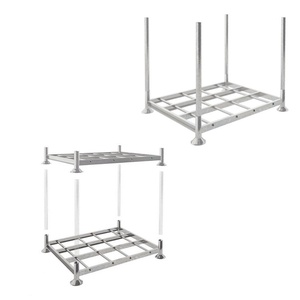
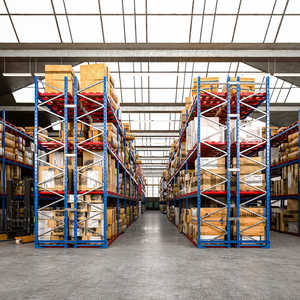
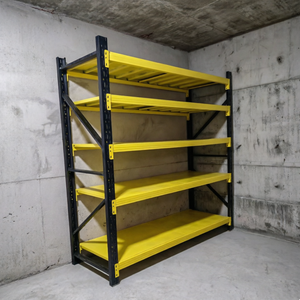
1. Industrial Racking Dynamics in Canada: Engineering for Safety & Density
Canada's supply chain and logistics ecosystem is experiencing unprecedented structural demand. As major distribution hubs—such as the Greater Toronto Area (Peel & Halton Regions), Metro Vancouver, the Calgary-Edmonton Corridor, and Greater Montreal—continue to absorb industrial real estate, logistics operators and warehouse managers are forced to maximize vertical cube utilization. Securing high-density, robust, and certified adjustable pallet racking systems is no longer merely a procurement task; it is an engineering imperative governed by strict municipal, provincial, and national safety guidelines.
Manufacturing structural racking components for the Canadian commercial environment requires deep familiarity with local building regulations. Canadian industrial facilities operate under the stringent requirements of the National Building Code of Canada (NBC 2020) and the CSA A344 User Guide for Steel Storage Racking Systems. Furthermore, provinces like Ontario require mandatory compliance with Ontario Regulation 851 (Industrial Establishments) Section 7 regarding Pre-Start Health and Safety Reviews (PSR) conducted by licensed Professional Engineers (P.Eng.). Direct-factory engineering from overseas manufacturers must seamlessly bridge international structural steel production capabilities with Canadian site-specific compliance.
Sub-Zero Thermal Resilience
Cold storage facilities in provinces like Alberta and Ontario face ambient operational temperatures dropping to -30°C. Standard structural steel undergoes ductile-to-brittle transition under extreme freezing. Our systems utilize specialized low-temperature killed steel profiles (Q355B/Q235B micro-alloyed steel) alongside hot-dip galvanizing to prevent micro-cracking and structural embrittlement under constant thermal shock.
Seismic Zone Engineering
Pacific coastal zones, particularly British Columbia’s Metro Vancouver and Vancouver Island (Seismic Zone 4), require severe lateral shear calculations. Our engineering department designs enlarged heavy-duty structural footplates, heavy anchors (Hilti/Dewalt seismic expansion bolts), and reinforced x-bracing towers that absorb ground acceleration forces per NBC 2020 lateral displacement parameters.
PSR Audit Ready
Canadian warehouse owners cannot operate uncertified racking without risking heavy Ministry of Labour fines or structural shutdown orders. We supply comprehensive structural load charts, finite element analysis (FEA) reports, material mill test certificates (MTCs), and 3D CAD modeling files necessary for local Canadian P.Eng. stamping and PSR approvals.
2. Structural Engineering & Component Anatomy of Adjustable Pallet Racking
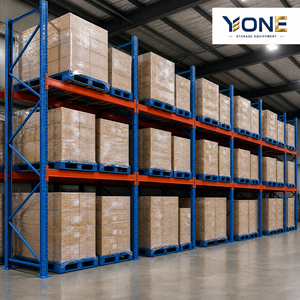
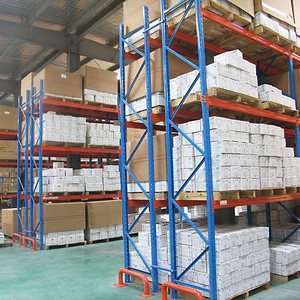
An adjustable pallet racking system is a precision-engineered structural frame designed to support multi-ton palletized payloads vertically while granting complete accessibility to forklifts and material handling equipment. Understanding the metallurgical, geometric, and dynamic attributes of these components ensures maximum operational lifespan and structural integrity.
A. Upright Frame Profile & Cold-Roll Forming
The structural backbone of any racking system lies in its vertical upright columns. Our facility manufactures upright frames using continuous cold-roll forming processes from high-tensile structural steel strip stock. Column profiles feature multiple stiffening ribs along the web and flanges, which significantly increase the radius of gyration ($r$) and resistance to torsional buckling.
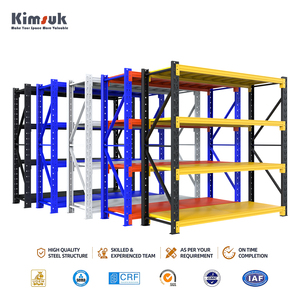
- Standard Pitch Configurations: Available in 50mm, 75mm, and traditional 76.2mm (3-inch) pitch centers, permitting beam adjustment increments to align perfectly with changing pallet height profiles.
- Teardrop vs. Structural Hole Patterns: We support both North American standard interchangeable teardrop designs (for fast plug-and-play expansion of existing racks) and heavy-duty structural bolted slot patterns for aggressive industrial manufacturing environments.
- Heavy-Duty Footplates: Precision laser-cut baseplates welded or bolted to upright bases, distributing structural column loads across concrete floor slabs to stay well within allowable floor PSI pressures.
B. Step Beams & Box Beams Configuration
Horizontal beams carry the direct bending moments generated by loaded pallets. We engineer two primary beam styles customized for the Canadian market:
1. Step Beams: Specifically roll-formed with an internal 1-5/8 inch ledge designed to support flush-fit wire mesh decking, drop-in safety bars, or timber panels. Step beams prevent wire deck displacement during high-bay pallet insertion.
2. Box Beams: Constructed by interlocking two C-channel steel profiles continuously welded along top and bottom seams via automatic robotic welding tracks. Box beams deliver superior torsional stability and extreme load capacity (up to 4,000 kg per beam pair).
Automatic Spring-Lock Safety Connectors
Beam-to-column connections are equipped with multi-claw heavy steel connector plates. Every beam end is fitted with an integrated, high-visibility automatic safety lock pin. This mechanical safety device prevents accidental beam dislodgement caused by forklift impact or upward pallet movement during lifting operations, maintaining full compliance with CSA A344 safety provisions.
3. Industrial Racking Configuration Comparison Matrix
Choosing the optimal warehouse layout requires balancing stock-keeping unit (SKU) selectivity against overall floor footprint storage density. The technical breakdown below serves as an engineering roadmap for Canadian buyers evaluating system investments:
| Racking Architecture | Storage Density | SKU Selectivity | Inventory Access (FIFO/LIFO) | Primary Application Scenario | CSA A344 Complexity |
|---|---|---|---|---|---|
| Selective Pallet Racking | Standard (40%-50%) | 100% Direct Access | First-In, First-Out (FIFO) | High SKU count, FMCG distribution, general logistics | Standard baseline compliance |
| Double Deep Racking | Medium-High (60%-65%) | 50% Direct Access | Last-In, First-Out (LIFO) | High-volume SKUs with pantograph reach trucks | Requires modified reach truck clearance |
| Drive-In / Drive-Thru | High (75%-85%) | Low (Per Lane) | LIFO (Drive-In) / FIFO (Drive-Thru) | Cold storage, seasonal items, low SKU variety | High guard protection required |
| Push-Back Racking | High (70%-80%) | Medium (Per Level) | Last-In, First-Out (LIFO) | Nested cart system, medium SKU counts, fast picking | Incline & brake testing mandated |
| Radio Shuttle Racking | Maximum (>85%) | Lane Selective | Automated FIFO or LIFO | Deep-lane freezer storage, high-throughput food & beverage | PLC automation & sensor checks |
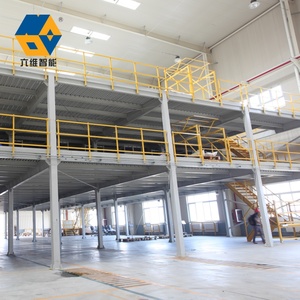
| Mezzanine Floor Platforms | Vertical Multi-Tier | 100% Manual/Picks | Custom Operational Flow | E-commerce order fulfillment, spare parts, archive storage | Building code staircase/handrail rules |
4. Province-Specific Application Scenarios in Canada
Operating conditions across Canada vary significantly due to geographic climate, regional industry specialization, and local labour costs. Our customized adjustable pallet racking systems are tailored to address these regional nuances effectively.
Ontario: High-Velocity E-Commerce Hubs
In the Greater Toronto Area (Mississauga, Brampton, Vaughan), skyrocketing industrial rent prices require maximum vertical space utilization. We deploy Very Narrow Aisle (VNA) and high-bay selective pallet racking reaching vertical heights of up to 15 meters. Integrated with guided turret trucks, these systems double pallet storage within existing footprint boundaries while maintaining 100% SKU selectivity required for fast-moving retail fulfillment.
Alberta & Prairies: Cold Chain & Agriculture
In Calgary and Edmonton, cold storage facilities and agricultural distribution centers demand heavy-duty density. Cold rooms operate under high energy costs per cubic foot. We supply semi-automated Radio Shuttle Racking and Heavy Push-Back Systems (up to 5,000 kg per level) with galvanized finish. This minimizes forklift entry into sub-zero chambers, lowering HVAC heat gain and protecting operators from cold fatigue.
British Columbia: Port Logistics & High-Seismic
Metro Vancouver operations surrounding the Port of Vancouver experience both high land costs and significant seismic risk. We design structural steel racking featuring oversized anchor footings, heavy-gauge diagonal column bracing, and specialized wire mesh drop-in decks. This guarantees that stock remains secured even under seismic loading events while handling transloading container traffic seamlessly.
5. Factory Excellence & Quality Control: Direct-from-Manufacturer Advantage
As a direct-factory rack manufacturer (IronMax Storage Solutions Co., Ltd.), we manage every step of raw material transformation—from prime steel coil selection to precision roll forming, automated welding, surface pre-treatment, and electrostatic powder coating. Operating out of our modern manufacturing base in Shandong, China, we export certified rack components directly to Canadian contractors, distributors, and facility managers, cutting out middleman markups while maintaining total quality control.
A. Raw Material Rigor & Mill Certification
All structural profiles are fabricated using prime cold-rolled carbon steel conforming to EN 10025, ASTM, or GB structural steel grades (Q235B and high-strength Q355B). Yield strength ($F_y$) and ultimate tensile strength ($F_u$) are tested for every coil batch. Mill Test Reports (MTRs) detailing chemical composition and mechanical properties are included with all export shipping documentation.
B. Advanced Surface Treatment: Thermosetting Epoxy Powder Coating
To resist corrosion in humid or industrial environments, our racking components undergo a rigorous 7-stage chemical pre-treatment cleaning process (degreasing, derusting, phosphating, and neutralizing) prior to coating. Components are coated with high-durability, lead-free thermosetting epoxy powder and cured in a continuous high-temperature oven line at 200°C. This delivers superior impact resistance, abrasion protection, and chemical durability that withstands heavy forklift scraping.
C. Export-Grade Container Loading & Protective Packaging
Shipping heavy structural steel across ocean routes to Vancouver or Montreal demands specialized export packaging. Upright frames and beams are tightly bundled with heavy-duty steel strapping and wrapped in thick multi-layer protective plastic film. Wooden corner guards prevent edge distortion during handling. Component bundles are systematically arranged in ocean containers using customized dunnage to maximize container space and ensure rapid, damage-free offloading at Canadian jobsites.
6. Frequently Asked Questions (FAQ) for Canadian Procurement
Do IronMax racking systems comply with Canadian CSA A344 standards and local PSR regulations?
Yes. Our engineering team designs all racking configurations in strict alignment with the structural principles outlined in CSA A344 (User Guide for Steel Storage Racks) and the National Building Code of Canada (NBC 2020). We provide complete technical packages, including finite element calculations, material specs, and dimensional CAD drawings needed by local Canadian Professional Engineers (P.Eng.) to stamp Pre-Start Health and Safety Reviews (PSR) in Ontario or equivalent provincial building permit approvals.
What load capacity per level can your heavy-duty adjustable pallet racking support?
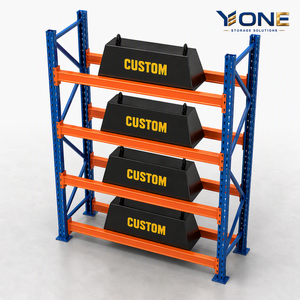
Standard selective pallet racking configurations comfortably carry loads ranging from 500 kg to 4,000 kg (1,100 lbs to 8,800 lbs) per beam level. Heavy-duty push-back racking and customized structural pallet racks can be engineered to support up to 5,000 kg per level. Final structural ratings are confirmed by our engineering team based on upright height, beam clear span, pallet depth, and site-specific seismic criteria.
How do you accommodate seismic building code requirements in British Columbia or Quebec?
For high-seismic zones such as Metro Vancouver (BC Zone 4) or coastal Quebec, we calculate seismic base shear forces and structural drift limits according to NBC 2020 parameters. We equip upright frames with enlarged, extra-thick welded steel baseplates, install heavy-duty Hilti/Dewalt expansion anchor bolts, and integrate horizontal/vertical frame tie-bracing to distribute ground acceleration forces safely into the concrete floor slab.
Should I select powder-coated or hot-dip galvanized racking finishes for my Canadian facility?
For standard temperature-controlled warehouses, dry distribution centers, and retail storage, our electrostatic epoxy powder coating delivers high impact resistance and custom color-coding. However, for unheated warehouses, outdoor lumber yards, or sub-zero food freezers (-30°C) with ambient moisture condensation, we strongly recommend Hot-Dip Galvanized (HDG) steel components to deliver permanent corrosion immunity without chipping or peeling.
Are your teardrop beam connectors compatible with standard North American rack profiles?
Yes. We manufacture standard 2-inch center universal Teardrop pattern racking that is fully interchangeable with major North American teardrop designs. This allows Canadian buyers to seamlessly replace damaged uprights/beams or expand existing storage bays without discarding current rack infrastructure.
What is the typical shipping lead time from factory direct to Canadian ports?
Standard manufacturing lead time is approximately 14 to 21 days upon approval of CAD layout drawings. Ocean freight transit times from our manufacturing facilities to the Port of Vancouver typically range between 14 to 18 days, and to eastern ports (Port of Montreal or Port of Halifax) approximately 28 to 35 days. We offer full DDP (Delivered Duty Paid) or CIF ocean freight logistics coordination direct to your Canadian facility door.
Ready to Optimize Your Canadian Warehouse Storage Density?
Partner direct with an established manufacturer. Send us your facility dimensions, CAD floor plans, pallet sizes, and weight specifications. Our Senior Logistics Engineering Team will deliver a complimentary 2D/3D layout proposal, load calculation analysis, and direct factory price quote within 24 hours.