Heavy-Duty Storage Systems for South Korea
Explore our top-performing industrial racking configurations engineered for structural durability, high SKU selectivity, and space optimization across South Korean industrial hubs.
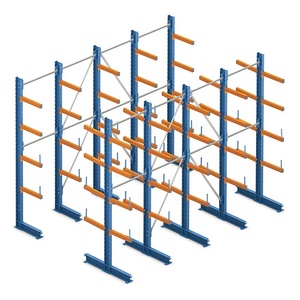
Victory Light Duty Cantilever Rack For Storage Long Product Use Q235B Steel
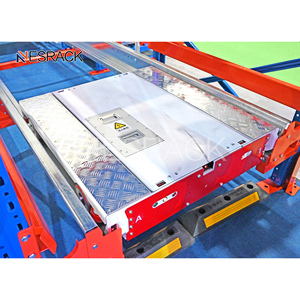
Warehouse Storage Pallet Shuttle Rack System
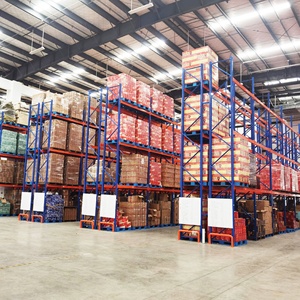
Heavy Duty Drum Racking & Pallet Shelving System
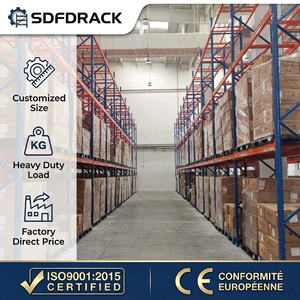
Heavy Duty Selective Steel Pallet Racking (1000kg-5000kg)
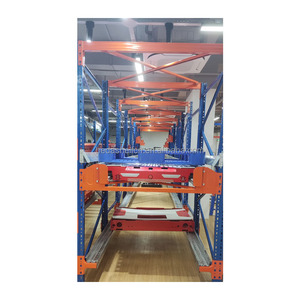
Double Deep & Radio Shuttle Integrated Racking
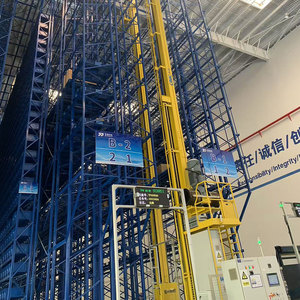
Automated Storage & Retrieval AS/RS Racking System
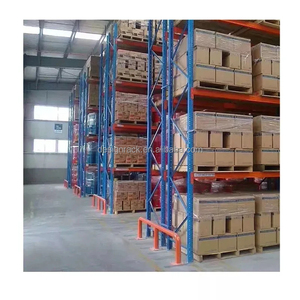
800KG Industrial Boltless Teardrop Pallet Racking
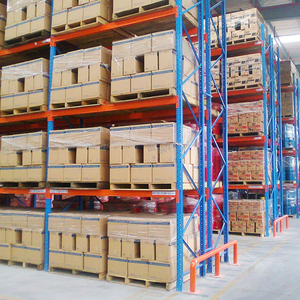
Combined Row-Connected 2000kg Steel Pallet Racking
South Korean Warehousing Infrastructure & Adjustable Racking Trends
The industrial logistics footprint in South Korea—specifically within the Sudogwon (Seoul Capital Area) including Gyeonggi Province hubs like Yongin, Icheon, Gimpo, and Pyeongtaek—is characterized by extreme land cost premiums and high density requirements. Warehouse operators can no longer afford wide aisles and unoptimized vertical space. Consequently, demand for advanced adjustable pallet rack systems has shifted toward high-bay structures reaching 10 to 18 meters in height.
Navigating the South Korean warehouse equipment market requires strict attention to structural dynamics, compliance with local building codes, and seamless integration with rapid fulfillment models popularized by e-commerce giants such as Coupang and Market Kurly.
Seismic Engineering (KDS 41 / KBC)
Following updated Korean Building Codes (KDS 41), industrial pallet racking installed in South Korea must withstand localized seismic forces. High-bay adjustable racks require certified structural calculations, heavy-duty floor baseplates, and high-tensile anchor bolts to mitigate sway and frame collapse risk.
Cold-Chain Storage Expansion
Port hubs in Incheon and Busan, along with inland distribution centers in Gimpo, have seen massive growth in cold storage facilities (-25°C to +4°C). Racking supplied to these environments requires specialized hot-dip galvanizing (HDG) or low-temperature impact-tested powder coatings to prevent structural embrittlement and rust.
AGV & AMR Automation Compatibility
Modern South Korean fulfillment facilities are transitioning from manual forklifts to Autonomous Mobile Robots (AMRs) and KIVA-style guided shuttles. Adjustable racks must feature ultra-precise upright alignment tolerances, specialized guide rails, and customized bottom clearances to allow seamless automated picking.
Technical Whitepaper: Engineering Standard for Adjustable Pallet Racking
When sourcing heavy-duty adjustable pallet rack systems for South Korean operations, evaluating basic dimensions is insufficient. Procurement managers must analyze steel yield strength, beam deflection formulas, column profile roll-forming geometry, and mechanical locking pin integrity.
1. Steel Grade & Structural Yield Comparison
Global suppliers frequently utilize cold-rolled steel designated as Q235B (Yield Strength ≥ 235 MPa, Tensile Strength 375–500 MPa) or Q355B / SS490 for heavy loading conditions. In comparison with local Korean Industrial Standards (KS D 3503 / SS400), high-yield cold-formed profiles provide optimal weight-to-load ratios while maintaining ductility necessary for kinetic dynamic absorbency during seismic events.
2. Upright Frame Profile Geometry & Pitch Adjustability
The core structural stability of an adjustable pallet racking system relies on the geometry of its upright columns. Premium manufacturers utilize omega profile cold-rolled columns featuring 9 to 13 folding bends. This multi-flange profile dramatically increases buckling resistance under heavy vertical loads (up to 20,000 kg per frame assembly).
- Standard Pitching: 50mm or 75mm beam adjustment increments allow warehouse managers to adjust vertical shelf spacing to exact pallet clearance needs, maximizing vertical space usage.
- Beam Connection Safety Pins: High-tensile steel safety locks with positive visual engaging mechanisms prevent accidental beam dislodgement caused by upward forklift mast snagging.
3. Beam Deflection Criteria & Dynamic Load Calculation
In adherence to international engineering norms (such as FEM 10.2.02 and RMI standards), the maximum allowable beam deflection under full static payload must not exceed L/200 (where L is the clear span length of the beam). For a standard 2700mm beam carrying two 1000kg pallets (2000kg total load), maximum vertical deflection at the center point is constrained to under 13.5mm.
| Specification Parameter | Standard Selective Rack | Radio Shuttle High-Density | Very Narrow Aisle (VNA) |
|---|---|---|---|
| Max Bay Height | up to 12.5 meters | up to 16.0 meters | up to 18.0 meters |
| Standard Beam Span | 2300mm / 2700mm / 3300mm | 1300mm / 1400mm / 2800mm | 2700mm / 3300mm |
| Load Capacity / Level | 1,000 kg – 4,000 kg | 1,500 kg per pallet position | 1,000 kg – 3,000 kg |
| Aisle Width Requirement | 3.2m – 3.8m (Standard Forklift) | 3.0m (Transfer Aisle Only) | 1.6m – 1.8m (VNA Turret Truck) |
| Floor Space Utilization | 40% – 45% floor area | 75% – 85% floor area | 60% – 70% floor area |
| SKU Selectivity | 100% Immediate Direct Access | LIFO / FIFO (Block Level) | 100% Immediate Direct Access |
Localized Application Scenarios in South Korea
Tailored industrial rack deployments engineered for key Korean commercial and industrial verticals.
1. E-Commerce & 3PL Logistics (Gyeonggi Logistics Belt)
Fulfillment centers handling thousands of rapid-turnover SKUs rely on high-bay selective pallet racks connected to wire-mesh decking and safety back netting. Adjustable levels enable quick reconfiguration when product seasonal volumes fluctuate, ensuring zero wasted air space above pallets.
2. Automotive & Heavy Machinery (Ulsan & Changwon Hubs)
Suppliers serving major Korean automakers require extremely heavy-duty rack structures capable of holding heavy metal stamping dies, engine components, and raw metal coils (up to 4000kg per bay). Heavy box beams combined with structural steel pallet supports provide high impact resistance.
3. Semiconductor & Electronics Clean Buffers (Suwon & Pyeongtaek)
In high-tech manufacturing corridors, adjustable racks require non-gassing electrostatic dissipative (ESD) powder coating or stainless steel components to maintain cleanroom integrity and prevent static discharge around sensitive microelectronic assemblies.
4. Deep-Freeze Food & Beverage (Busan Port Freezers)
Cold chain facilities utilize radio shuttle racking and drive-in racks to minimize operational footprints in high-power consumption freezer rooms. Hot-dip galvanizing protects frame uprights from condensation rust caused by thermal cycle transitions.
Why Global Logistics Operators Choose IronMax Racking Systems
As a specialized manufacturer and direct exporter of industrial warehouse storage equipment, IronMax Storage Solutions Co., Ltd. provides end-to-end support for B2B buyers, EPC contractors, and rack distributors operating in South Korea.
Direct Factory Cost Competitiveness
By controlling raw steel coil procurement, cold roll-forming, automatic robotic welding, and electrostatic powder coating under one roof, we eliminate intermediary markups, offering top-tier quality at direct factory prices.
Precision CAD & 3D Engineering Layouts
Our structural engineering team produces customized 2D CAD layout proposals, floor load distribution charts, and 3D warehouse renderings within 24 hours of receiving your warehouse architectural drawings.
Rigorous Quality Assurance & Testing
Every shipment undergoes batch testing for weld tensile strength, paint coating thickness (70–90 microns standard), and steel hardness. All systems conform strictly to ISO 9001 and CE structural compliance standards.
Frequently Asked Questions for South Korea Buyers
Clear engineering and commercial guidance for importing and deploying adjustable pallet racks in Korea.
How do IronMax racking systems comply with South Korea's seismic requirements?
Our structural engineering team designs racking systems in accordance with Korean Building Code (KDS 41) seismic design requirements. We supply heavy-duty structural baseplates (minimum 6mm to 10mm thickness), specialized floor anchors, and cross-bracing profiles calculated based on the specific seismic zone coefficient of your warehouse location (e.g., Gyeonggi vs. Gyeongsang provinces).
What are the standard lead times for manufacturing and shipping to Incheon or Busan ports?
Standard production time for containerized racking orders (1 to 5 x 40HQ containers) is 14 to 21 business days. Ocean transit from our Shandong shipping ports to Incheon or Busan Port takes approximately 2 to 4 days, making sea shipping exceptionally fast and cost-effective for South Korean clients.
Can you manufacture custom beam colors to match corporate branding in Korea?
Yes. We operate fully automated electrostatic powder coating lines and can match any standard RAL color code (such as corporate blues, safety oranges, charcoal grays, or custom yellow safety accents) without delaying production turnaround times.
Should I select selective pallet racking or radio shuttle racking for a cold room in Gimpo?
For high-cost cold storage spaces, Radio Shuttle Racking is strongly recommended because it achieves up to 85% volumetric space utilization compared to 40% with selective racking. This significantly reduces electricity consumption costs per pallet position. However, if your inventory consists of hundreds of unique SKUs requiring 100% direct picking access, Selective Racking remains the optimal structural choice.
What floor slab structural strength is required before installing heavy-duty pallet racks?
For standard high-bay racking systems (6 to 10 meters high), a reinforced concrete slab with a minimum compressive strength of C25/C30 (25–30 MPa) and a floor thickness of at least 150mm to 200mm is recommended. Our engineering team provides detailed footplate point-load calculations so your local civil engineer can verify slab capacity.
How are racking components packaged to prevent damage during container transport?
Upright frames and beams are tightly bundled using steel strapping and wrapped in protective heavy-duty plastic film with corner edge protectors. Small hardware (safety pins, baseplates, anchor bolts, row spacers) are packed in sturdy export wooden crates or reinforced corrugated cartons to ensure zero transit damage upon container arrival.
Ready to Optimize Your Warehouse Capacity in Korea?
Contact our engineering team today for a free 2D CAD layout design, structural load calculation, and factory-direct price quotation tailored for your South Korean facility.