Featured High-Density Racking & Handling Equipment
Explore engineered storage configurations built to maximize warehouse cubic capacity, heavy load stability, and seamless forklift integration.
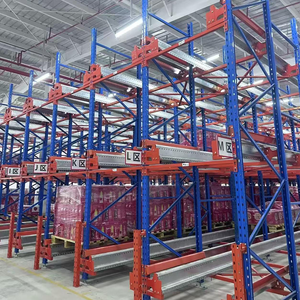
Heavy Duty Fully Automated Corrosion-Resistant Two-Way Radio Shuttle Pallet Racking System Remote Shuttle Cart for High-Density
Inquire Now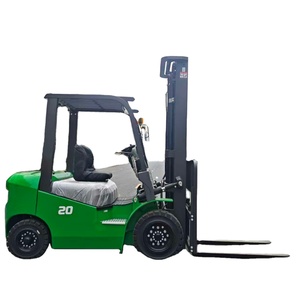
Indoor/Outdoor 2.0 Ton Electric Counterbalanced Forklift for 6m Standard Racking With Lead-acid Battery
Inquire Now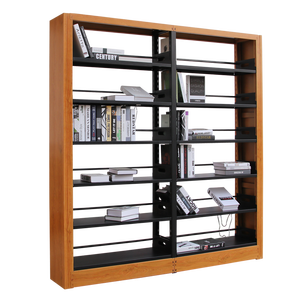
Customized Industrial Shelves Narrow Aisle Heavy Duty Warehouse Storage Selective Pallet Racking
Inquire Now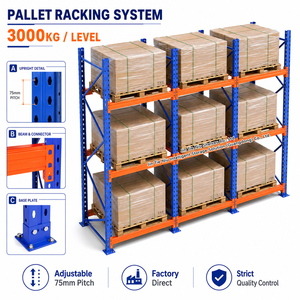
3 Pallet Levels Heavy Duty Steel Warehouse Rack Selective Pallet Racking System 3000KG
Inquire Now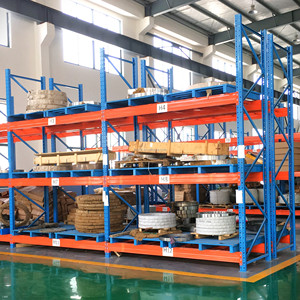
OEM Factory Wholesale Warehouse Racking Industrial Racks Customized Pallet Racking System Heavy Duty Steel Racks For Storage
Inquire Now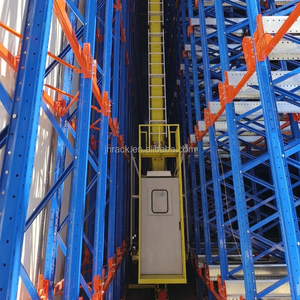
Intelligent ASRS Chain Pallet Conveyor System Industrial Automatic Pallet Racks Shelf Storage Warehouse Racking Systems
Inquire Now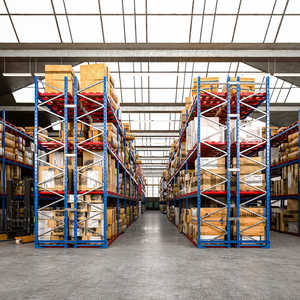
Steel Rack System Heavy Duty Pallet Racking 4000kg Warehouse Storage Rack System 5-Tier Adjustable Industrial Racks
Inquire Now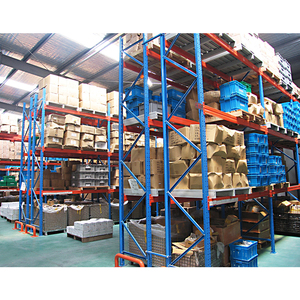
Standard Pallet Rack Warehouse Pallet Rack Assemble Racks Reliable Quality Heavy Duty Warehouse Pallet Racking System
Inquire NowEngineering Architectural Paradigm: Very Narrow Aisle (VNA) Racking Systems
In modern industrial logistics and supply chain execution, floor footprint expansion presents substantial capital expenditure challenges. Very Narrow Aisle (VNA) Forklift Pallet Racking Systems represent the pinnacle of selective vertical storage engineering. By compressing standard counterbalanced aisle widths (typically 3.5 to 4.2 meters) down to a strict 1.5 to 1.8 meters, VNA racking frees up to 45% of redundant floor space while maintaining 100% immediate pallet selectivity.
Unlike high-density block stacking or FIFO/LIFO systems like Drive-In Racking and Push Back Racking, VNA does not compromise stock rotation flexibility. Every single pallet remains directly accessible by specialized VNA turret trucks or Articulated Very Narrow Aisle (AVNA) forklifts, making it the preferred architectural choice for high-volume distribution centers, cold chain facilities, chemical warehousing, and pharmaceutical logistics hubs.
Information Gain Insight: Structural sway and frame deflection scale exponentially with rack elevation. Implementing VNA racking above 10 meters requires rigorous cross-aisle top-tie engineering, micro-tolerance upright profiling (conformant to EN 15512 and ANSI MH16.1), and precise superflat floor compliance (TR34 / DIN 15185 specifications).
Structural Anatomy of High-Bay VNA Systems
IronMax Storage Solutions engineers VNA systems utilizing high-yield cold-rolled steel profiles (Q235B and Q355B structural grades). Uprights feature continuous Omega profile geometry with multiple stiffening ribs to maximize column resistance against compressive axial loading and torsional buckling. Beam configurations incorporate multi-claw connector locks with safety pins, guaranteeing zero beam dislodgement under high-speed turret truck operation.
Cubic Utilization Optimization
Utilizes building clear height up to 18 meters, converting underused overhead space into profitable, accessible pallet positions.
Guided Truck Precision
Integrates mechanical floor guide rails or wire-guided inductive frequencies to eliminate human steering errors and prevent collision risks.
Enhanced Throughput Speed
Enables diagonal turret movement—simultaneous travel and mast elevation—reducing load handling cycles by up to 30% compared to standard reach trucks.
Engineering Benchmark: VNA vs. Alternative Storage Systems
Selecting the optimal warehouse storage system requires balancing SKU velocity, pallet density, capital equipment investment, and structural constraints. Below is a engineering evaluation comparing Very Narrow Aisle Racking against standard industrial racking types.
| Storage Racking Variant | Aisle Width (m) | Floor Space Utilization | Pallet Selectivity | Handling Equipment Requirement | Investment Ratio |
|---|---|---|---|---|---|
| Very Narrow Aisle (VNA) | 1.5m – 1.8m | 85% – 90% | 100% (Direct) | VNA Turret Truck / Man-Up / Wire Guided | Optimal TCO |
| Selective Pallet Racking | 3.5m – 4.2m | 40% – 50% | 100% (Direct) | Standard Counterbalance / Reach Truck | Standard |
| Drive-In Racking | N/A (Lanes) | 75% – 85% | 20% – 30% (LIFO) | Standard Counterbalanced Truck | Moderate |
| Radio Shuttle Racking | N/A (Lanes) | 85% – 92% | Per-Lane FIFO/LIFO | Remote Shuttle Cart + Counterbalance | High Automation |
| Mezzanine Platform / Rack | Custom | 200% (Vertical Multi-Tier) | 100% | Hand Pallet Jack / Order Picker / Conveyor | Moderate to High |
Critical Floor Tolerances & Guidance System Engineering
A successful VNA installation relies heavily on sub-floor civil engineering. Because turret trucks operate with minimal lateral clearance (often only 100mm to 150mm between the truck chassis and rack structure), minor floor undulations translate into severe dynamic sway at the top of an 18-meter mast.
1. Superflat Floor Requirements (TR34 & DIN 15185 Standards)
Facilities deploying VNA racking must adhere strictly to Superflat Floor Specifications. IronMax structural engineers review floor survey reports prior to layout signing. We evaluate parameters including:
- F-Numbers (ACI 117): Requiring minimum FF 50 (Floor Flatness) and FL 50 (Floor Levelness) for high-bay operations.
- TR34 Category 1 / VDMA Guidelines: Ensuring lateral elevation variations across the wheel track remain under 1.5mm to prevent mast swaying against steel uprights.
2. Guidance Methodologies: Wire Guidance vs. Mechanical Profile Rails
VNA trucks require automated alignment inside the working aisles. Buyers can choose between two main guidance infrastructure choices:
Mechanical Guide Rail System
Heavy-duty angle steel profiles (e.g., L100x75x8 or C-channels) anchor directly into the slab along both sides of the aisle. The truck's guide rollers run against these steel barriers, providing absolute mechanical protection against rack impacts.
Inductive Wire Guidance System
A central copper signal wire is embedded into a 10mm floor cut along the aisle centerline. An onboard sensor tracks the low-frequency signal, providing automated steering control. This leaves the floor surface completely flush for easier cross-aisle maintenance.
Factory Direct Support: IronMax supplies both customized steel guide rail profiles with heavy-duty anchors and precision top-tie stabilization beams tailored to your specific forklift model (Jungheinrich, Crown, Linde, Toyota, Still, or OEM brands).
Future Procurement & Technological Trends in VNA Warehousing
As logistics operations face ongoing labor constraints, rising energy costs, and escalating urban real estate pricing, VNA procurement strategies are evolving rapidly. Key macro trends shaping the market include:
Transition to Automated Very Narrow Aisle (AVNA) AGVs & AMRs
Manual VNA turret trucks are increasingly giving way to fully autonomous AVNA Guided Vehicles. Modern VNA rack structures are designed with integrated positioning targets, barcode strip mounts, and laser reflector brackets to facilitate seamless SLAM (Simultaneous Localization and Mapping) navigation and automated pallet placement.
Seismic Engineering & Structural Health Monitoring (IoT)
High-bay VNA racks installed in active seismic zones (conforming to Eurocode 3, AS4084-2023, or IBC/ANSI MH16.1 specifications) now incorporate ductile frame connections, dynamic friction dampers, and strain-gauge sensors. These IoT-enabled smart sensors detect real-time rack overloads, forklift impact vibrations, or structural fatigue, alerting safety managers before catastrophic failures occur.
Cold Storage & Cleanroom Surface Innovation
Cold chain logistics operators are increasingly replacing standard powder coating with high-durability hot-dip galvanizing (HDG) or specialized antimicrobial epoxy powder coatings. IronMax’s anti-corrosion VNA racking withstands continuous sub-zero environments down to -30°C without paint flaking, thermal embrittlement, or zinc degradation.
Why IronMax Storage Solutions is Your Strategic OEM Partner
IronMax Storage Solutions Co., Ltd. operates a advanced manufacturing base in Shandong Province, China. Spanning tens of thousands of square meters, our facility houses continuous automated cold roll-forming lines, robotic welding cells, and automated dual-powder coating chambers.
We serve international distributors, material handling EPC contractors, and end-user warehouse operators across North America, Europe, Australia, the Middle East, and Southeast Asia. From structural CAD layouts to final container loading, every step undergoes strict Quality Assurance (QA) compliance.
- Full structural compliance with EN 15512, FEM 10.2.02, RMI, and ANSI MH16.1 standards
- In-house tensile steel testing, weld ultrasonic inspection, and powder coating thickness checks
- Complementary 3D CAD/BIM layout design and Finite Element Method (FEM) load calculations
- Complete product ecosystem including Mezzanine Racks, Cantilever Racks, and Steel Pallets
- Export-ready steel band bundling, protective film wrapping, and container space optimization
Frequently Asked Questions (FAQ) for VNA Racking Procurement
What structural factors determine if a warehouse is suitable for VNA Racking?
Facility suitability relies on three core factors: building clear height (preferably > 7 meters to maximize financial return), floor load capacity and levelness (conforming to TR34 DM2 / Superflat standards), and aisle length versus throughput requirements. Our engineering team will review your architectural floor plans and forklift specs to verify feasibility.
How does IronMax ensure high-bay VNA rack safety against frame sway?
IronMax integrates top-tie bracing beams that join parallel rack runs across the top of aisles, effectively tying the entire rack structure into a monolithic rigid block. Furthermore, heavy-duty column protectors, floor-anchored guide rails, and custom back-stop beams are installed to absorb accidental mechanical impacts from turret masts.
What beam length and frame depth configurations are available?
Because we operate automated roll-forming lines, beam lengths are fully customizable from 1.3 meters (single pallet) to 3.9 meters (triple pallet spans). Common frame depths range from 800mm to 1200mm to fit standard Euro (1200x800mm), ISO (1200x1000mm), or US 48x40-inch pallets.
What surface coating options are recommended for high-humidity or cold stores?
For standard dry ambient warehouses, high-durability epoxy-polyester powder coating (60–80 microns thick) provides long-lasting scratch and impact resistance. For cold storage freezers (-30°C) or humid chemical environments, we recommend hot-dip galvanized (HDG) steel components that offer permanent protection against zinc corrosion and rust.
Can IronMax supply matching forklift equipment and steel pallets?
Yes. As a comprehensive storage solutions manufacturer, IronMax produces matching heavy-duty Galvanized Steel Pallets, HDPE Plastic Pallets, and coordinates with top-tier forklift manufacturers to deliver fully integrated warehouse handling systems.
What is the typical production lead time and overseas project installation process?
Standard manufacturing lead time is 15 to 25 days depending on total project tonnage. Orders ship with detailed 3D assembly drawings, piece-marked component tags, and installation instruction manuals. On-site installation supervisors or remote video technical support can also be arranged upon request.
Optimize Your Warehouse Footprint Today
Send your building layout drawing and pallet storage specifications. IronMax structural engineers will deliver a comprehensive 2D/3D VNA layout design and factory-direct price quotation within 24 hours.
Inquire Now