Engineered Extra Heavy-Duty Racking Systems
Precision-fabricated cold-rolled steel racking designed for ultra-high load capacity, maximum vertical clearance, and high-density material handling compliance.
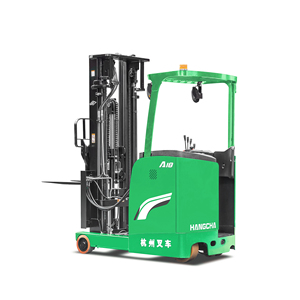
1.5 Ton 2 Ton 2.5 Ton High Lift Reach Truck 3m 4m 5m 6m 7m 8m 9m 10m For Narrow Aisle Warehouse Pallet Storage
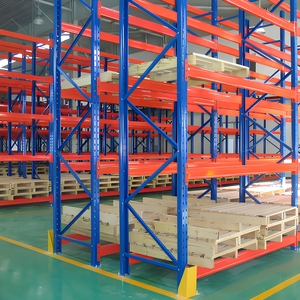
Steel Heavy Duty Double Deep 5 Pallet Rack High Density Warehouse Racking System Space Saving Reach Truck Access OEM Supplier
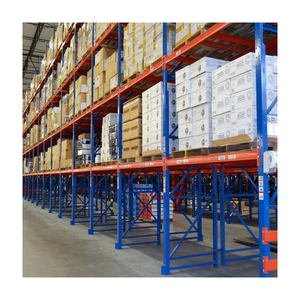
Wholesale Price Heavy Duty Storage Racks Warehouse Stacking Racks Selective Steel Pallet Rack Heavy-Duty Racking For Sale
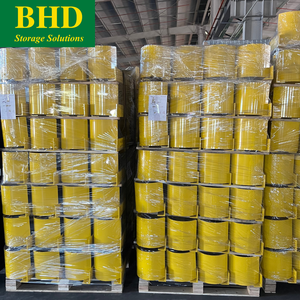
BHD Heavy Duty Foot Protection Barrier Pallet Rack Upright Frame Protector Security Barriers Storage Stacking Racks RAL1023
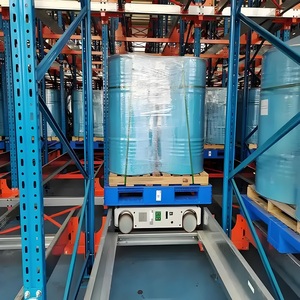
Wholesale Custom High Intelligent Automated Pallet Runner Radio Four Way Shuttle Rack Warehouse Storage Rack System
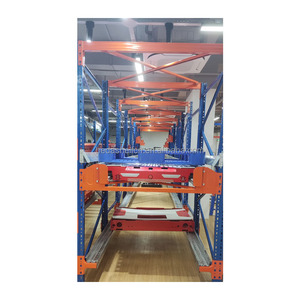
Custom Heavy Duty Radio Shuttle Racking System Shuttle Storage System Double Deep Pallet Racking
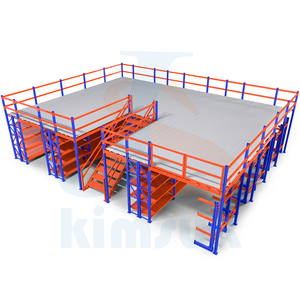
Warehouse Heavy Duty Steel Loft Platform Shelf Storage Attic Rack Pallet Racking Supported Mezzanine Floor Racks System
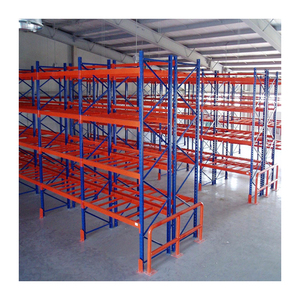
Intelligent Compact Pallet Shuttle Racking System Custom High-Density Warehouse Storage Heavy Duty Steel
Technical Whitepaper: Structural Engineering of Extra Heavy-Duty Pallet Racking
In modern industrial logistics and high-bay fulfillment centers, extra heavy-duty pallet racking systems represent the primary structural skeleton for high-density load management. Selecting a structural racking vendor requires a rigorous engineering review of cold-formed steel metallurgy, column profile dynamics, beam connection rigidity, and dynamic loading limits under regional seismic criteria.
Engineered storage infrastructure must support localized loads spanning from 1,000 kg up to 5,000 kg per beam level. Deflections under full working loads must strictly comply with international standards such as EN 15512, RMI (ANSI MH16.1), and AS4084-2023. This technical document provides procurement executives, logistics architects, and plant managers with authoritative engineering data to evaluate structural racking systems for global supply chain operations.
1. Metallurgy, Yield Strength & Upright Profile Geometry
The foundation of structural integrity in extra heavy-duty pallet racking rests on steel grade selection. High-grade racking manufacturers utilize continuous cold-roll forming processes with prime certified steel coils:
- Q235B Cold-Rolled Structural Steel: Yield strength $f_y \ge 235 \text{ MPa}$, Ultimate tensile strength $f_u = 375-500 \text{ MPa}$. Ideal for standard medium-to-heavy applications up to 2,000 kg per level.
- Q355B / SS50 High-Strength Low-Alloy (HSLA) Steel: Yield strength $f_y \ge 355 \text{ MPa}$, Ultimate tensile strength $f_u = 470-630 \text{ MPa}$. Specified for high-bay upright frames exceeding 8 meters in height or beam loads exceeding 3,000 kg per level.
Upright column profiles are manufactured with multi-ribbed cross-sections (typically featuring 11 to 13 bending points along the perimeter profile). This geometry enhances the section modulus and radius of gyration, minimizing elastic torsional-flexural buckling under axial compressions.
2. Beam Profile Mechanics: Box Beams vs. Step Beams
Horizontal beam selection directly dictates allowable beam span deformation. Under standard loading conditions, maximum vertical deflection ($\delta$) must not exceed $L/200$ (where $L$ is the clear beam length) for general storage, or $L/300$ for automated robotic shuttle interfaces.
| Beam Section Type | Profile Spec (mm) | Material Thickness | Max Load / Pair (2700mm Span) | Recommended Application |
|---|---|---|---|---|
| Standard Box Beam | 80 × 50 to 120 × 50 | 1.5mm – 1.8mm | 1,500 kg – 2,500 kg | Standard Selective Racking & Wooden Pallets |
| Heavy Duty Double-C Box Beam | 140 × 50 to 160 × 50 | 1.8mm – 2.5mm | 3,000 kg – 4,500 kg | Heavy Machinery Parts, Liquid Drums, Cold Storage |
| Reinforced Step Beam | 100 × 50 Step | 1.8mm – 2.0mm | 2,000 kg – 3,000 kg | Steel Decking, Wire Mesh Decking Integration |
| Automated Shuttle Rail Beam | Custom Continuous Profile | 2.5mm – 3.2mm | 5,000+ kg Dynamic | 4-Way Shuttle & Automated Radio Runner Systems |
3. Frame Bracing & Seismic Base Plate Anchoring
Upright frames are braced using a combination of horizontal and diagonal structural channel members ($C$-section or tube profiles) connected via M8/M10 high-tensile grade 8.8 bolts. The bracing pattern transfers lateral sway loads and shear stresses to the floor anchors. Base plates feature heavy-gauge cold-stamped steel ($6\text{mm} - 12\text{mm}$ thickness) secured to concrete slab foundations using chemical or mechanical expansion anchor bolts engineered to resist uplift and sliding forces under seismic accelerations.
IronMax OEM Manufacturing Excellence & Quality Engineering
IronMax Storage Solutions Co., Ltd. operates a centralized, automated production complex in Shandong Province, China. Designed specifically for industrial-scale exporting, our factory combines advanced metallurgy, automated roll-forming, robotic welding, and environmental surface finishing.
Automated Roll-Forming Lines
Continuous automated CNC roll-forming lines guarantee structural profile tolerance down to ±0.2mm across 12-meter upright lengths.
Robotic Laser Welding
Dual-arm robotic welding stations create fully fused beam-to-connector joints, eliminating manual weld inclusions and thermal deformation.
Epoxy Powder Coating
Automated 9-stage pre-treatment wash and electrostatic epoxy-polyester powder coating produce 80–120 μm dry film thickness with ISO 9227 anti-corrosion rating.
Traceable Quality Assurance
Raw steel coil certifications, ultrasonic weld testing, coating adhesion grid tests, and load destruction sampling logged for every batch.
Custom CAD / FEM Analysis
In-house structural engineers provide 3D CAD design layout, ANSYS Finite Element Analysis (FEA), and complete structural stress reports.
Export-Grade Bundling
Steel-strapped bundle packaging, corner guards, waterproof wrapping, and container space-optimization plans ensure pristine transit arrival.
Future Sourcing Trends in High-Capacity Warehouse Racking
As global supply chains transition toward full automation, cold-chain expansion, and localized fulfillment centers, the procurement criteria for extra heavy-duty racking are shifting rapidly. Logistics directors must look beyond immediate unit costs and plan for total cost of ownership (TCO) and system adaptability.
Trend 1: Migration from Traditional Selective Racking to Automated 4-Way Radio Shuttles
High warehouse land costs in North America, Europe, and Asia-Pacific are driving a shift toward high-density deep-lane storage. Automated Radio Shuttle systems and 4-Way Intelligent Runners maximize cube utilization up to 85% of total building volume (compared to 40-45% in conventional selective setups). These systems require precision roll-formed shuttle rails with tight installation tolerances to support high-speed movement without track jamming.
Trend 2: Sub-Zero Cold Chain Resilience & Special Steel Coatings
The global expansion of frozen food distribution and biopharmaceutical cold chains has increased demand for cold-resistant structural racking. Standard carbon steel experiences ductile-to-brittle transition under sub-zero temperatures (down to -30°C). Modern procurement specifications mandate low-carbon steel alloys enriched with Manganese ($Mn$) and Silicon ($Si$), combined with hot-dip galvanizing (HDG) to prevent micro-fissure oxidation caused by thermal cycling.
Trend 3: Seismic Mitigation & Base Isolation Engineering
Building codes in seismic zones (such as California, Japan, New Zealand, and Turkey) require structural racking systems to be designed as self-supporting structural towers. Advanced racking systems now integrate ductile energy-dissipating base plates, anchor isolation dampers, and top-tier cross-bracing frameworks engineered under Finite Element Method (FEM) seismic models.
Need a Customized Engineering Layout for Your Warehouse?
Send us your building dimensions, pallet specifications, and load requirements. Our structural engineering team will provide CAD layouts and load calculations within 24 hours.
Contact UsRacking System Selection Matrix for Logistics Buyers
Compare structural storage configurations to match operational requirements with aisle width, pallet selectivity, and mechanical handling equipment.
| Racking System Type | Pallet Selectivity | Floor Area Utilization | Max Load per Level | Forklift / Equipment Requirement | Primary Industrial Use |
|---|---|---|---|---|---|
| Heavy Duty Selective Racking | 100% Direct Access | 35% – 45% | up to 4,000 kg | Standard Counterbalance / Reach Truck | General Distribution, FMCG, Multi-SKU Warehouses |
| Double-Deep Pallet Racking | 50% Direct Access | 55% – 65% | up to 3,500 kg | Deep-Reach Pantograph Truck | Dry Food Manufacturing, High-Volume SKUs |
| Very Narrow Aisle (VNA) | 100% Direct Access | 65% – 75% | up to 2,000 kg | VNA Turret Truck / Wire-Guided Truck | E-commerce, Pharmaceutical, High-Bay Facilities |
| Drive-In / Drive-Thru Racking | LIFO / FIFO Bulk Lane | 70% – 80% | up to 1,800 kg | Standard Counterbalance (Enters Racking Lane) | Cold Storage, Seasonal Stock, Bulk Beverage |
| Radio Shuttle System | Semi-Automated Lane | 80% – 88% | up to 2,000 kg / shuttle | Forklift + Intelligent Battery Shuttle Unit | Freezer Warehouses, Raw Material Batch Holding |
| Racking-Supported Mezzanine | Multi-Tier Hand Pick | 150% – 200% (Vertical) | 300 – 1,000 kg / sq.m | Conveyor, Pallet Gate, Goods Lift | Parts Distribution, Apparel Sorting, Hand-Picking |
Frequently Asked Questions (FAQ) for B2B Sourcing Directors
Authoritative answers addressing design standards, safety compliance, surface finishes, and global shipping logistics.
What parameters are required to calculate structural racking load capacity?
To accurately calculate upright frame and beam load capacity under EN 15512 or RMI guidelines, our engineering team requires five core metrics:
- Pallet Dimensions: Width ($W$), Depth ($D$), Maximum Load Height ($H$ including pallet base).
- Unit Weight: Maximum uniform gross weight per pallet (e.g., 1,200 kg).
- Beam Span & Level Count: Clear distance between uprights (typically 2,700mm for two standard 1,200mm pallets) and total beam levels per bay.
- First Beam Height: Distance from floor slab to top of the first beam level (critical for calculating column buckling slenderness ratio $\lambda$).
- Building Environment: Concrete slab thickness/strength, indoor vs outdoor installation, operating temperature range, and regional seismic zone coefficient.
What is the difference between Epoxy Powder Coating and Hot-Dip Galvanizing (HDG)?
Epoxy Powder Coating: Ideal for dry indoor warehouses (0°C to +50°C). The steel is chemically cleaned, phosphate-treated, electrostatically sprayed with thermosetting powder, and cured at 180°C–200°C. Provides excellent impact resistance, scratch protection, and customizable RAL colors.
Hot-Dip Galvanizing (HDG): Required for high-humidity, outdoor, or sub-zero cold-storage (-30°C) environments. Steel components are immersed in molten zinc at ~450°C, forming a metallurgical zinc-iron alloy coating (60–100 μm thickness). HDG offers self-healing cathodic protection against rust and chemical corrosion.
How do IronMax heavy-duty racking systems comply with international safety standards?
Our structural designs adhere strictly to international steel storage guidelines:
- EN 15512:2020 (European Standard): Governs structural analysis of adjustable pallet racking, including sway stability and connector moment rotation testing.
- ANSI MH16.1 / RMI (USA): Specification for the Design, Testing, and Utilization of Industrial Steel Storage Racks.
- AS4084-2023 (Australia): Steel Storage Racking safety criteria, enforcing structural testing for beam-to-upright connectors and base plate anchorage.
Why is upright protection critical for heavy-duty pallet racking safety?
Forklift impact is the primary cause of racking collapse worldwide. Bottom upright columns (first 400mm from floor) are vulnerable to side-swipes during pallet placement. Implementing heavy-duty steel frame guards (such as RAL1023 Yellow steel protectors or polymer buffer barriers) absorbs impact energy, safeguarding column structural cross-sections from localized crippling and preserving system design capacity.
Can IronMax provide complete OEM/ODM customized racking solutions for specialized loads?
Yes. IronMax specializes in custom structural storage engineering. Beyond standard pallet storage, we manufacture custom cantilever racking for long pipes/lumber, heavy-duty coil storage racks, drive-in systems for chemical drums, multi-level structural mezzanine platforms, and fully integrated automated radio shuttle storage blocks. We provide custom CAD submittals and factory acceptance testing (FAT) prior to shipment.
What is the typical production lead time and export delivery process?
Standard production lead time for a standard 40ft high-cube container (approx. 20–25 metric tons of structural racking) is 15 to 20 business days following technical drawing sign-off. Orders are packaged using steel strapping, protective plastic wrap, and timber dunnage to facilitate forklift unloading at destination ports.
Partner with a Certified Heavy-Duty Racking Manufacturer
Contact our technical engineering department today for product specs, structural quotes, and global project consulting.
Contact Us