High-Performance Storage Equipment & Systems
Precision-engineered, heavy-duty industrial storage racks, pallet frames, and material handling solutions manufactured for international B2B logistical environments.
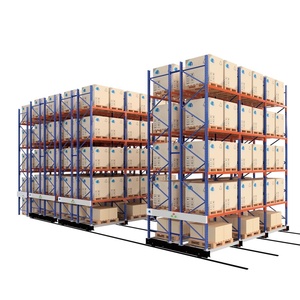
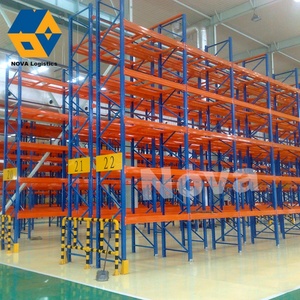
Comprehensive Industry Report: Architectural Mechanics of Back-To-Back Pallet Racking
Modern industrial supply chains, automated logistics centers, and FMCG cold-chain facilities face continuous pressure to maximize volumetric utilization without expanding physical real estate footprints. Among structural storage strategies, Back-to-Back Pallet Racking Systems (frequently configured as Double-Deep Racking or paired Selective Racking structures) stand as the engineering benchmark for balancing storage density with operational access speed.
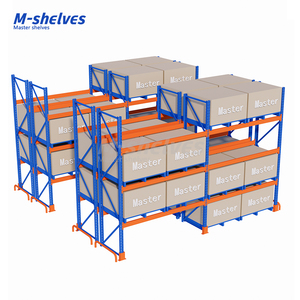
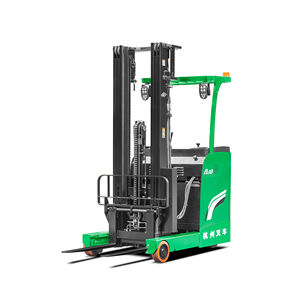
Back-to-back pallet racking is constructed by connecting two single rows of selective pallet racks back-to-back using heavy-duty structural row spacers. This configuration eliminates intermediate aisles, immediately reducing total aisle space by 40% to 50% across the warehouse floor. Loaded either by standard counterbalance forklifts or specialized pantograph reach trucks, back-to-back systems allow industrial facilities to double their static storage capacity per square meter while maintaining direct or semi-direct inventory visibility under Last-In, First-Out (LIFO) or First-In, First-Out (FIFO) stock management profiles.
Key Engineering Gain: Integrating back-to-back pallet racking reduces net operating aisle requirements from 3.8 meters (standard selective setup) down to compact working envelopes, driving overall floor space utilization above 65% while preserving structural stability against lateral sway during high-bay fork operations.
Structural Steel Metallurgy & Load Deflection Criteria
To qualify among the world's top trusted back to back pallet racking suppliers & exporters, engineering compliance must adhere strictly to international structural steel criteria such as FEM 10.2.02 (European Federation of Materials Handling) and ANSI MH16.1 / RMI (Rack Manufacturers Institute). Quality manufacturing starts with high-tensile cold-rolled steel, predominantly Grade Q235B or Q355B (equivalent to SS400 or ASTM A572 Grade 50).
The structural load dynamics of back-to-back systems rely on cold-roll formed upright frames featuring continuous teardrop, omega, or diamond-punched profiles. When subjected to dynamic fork loading and permanent dead loads, the structural deflection of load-bearing box beams must not exceed L/200 (where L is the clear beam span length). IronMax Storage Solutions integrates automated multi-stage roll-forming technology to produce continuous beam spans capable of handling unit loads up to 4,000 kg per beam level with zero permanent deformation.
High-Tensile Upright Profiles
Precision-rolled omega profiles (up to 120mm width and 2.5mm steel thickness) engineered with stiffening ribs to absorb horizontal impact forces from material handling vehicles.
Heavy-Duty Row Spacers
Bolted cross-connectors link twin rack rows at regular elevation intervals, converting single rack bays into a rigid, space-truss structural unit with high resistance to lateral sway.
Safety Beam Lock Pins
Automatic spring-loaded safety locks prevent accidental dislodgement of support beams during rapid vertical fork loading, exceeding OSHA and EU safety directives.
Comparative System Analysis: Density vs. Operational Velocity
Selecting the optimal storage layout requires evaluating trade-offs between SKU selectivity, handling equipment cost, and footprint efficiency. The matrix below illustrates why global procurement directors increasingly specify back-to-back configurations for regional distribution hubs:
| Racking System Type | Floor Footprint Utilization | Direct SKU Selectivity | Handling Equipment Requirement | Relative System Cost / Pallet | Ideal Application Scenario |
|---|---|---|---|---|---|
| Standard Selective Racking | 40% – 45% | 100% Direct Access | Standard Counterbalance Forklift | Low (Baseline) | High SKU variety, fast-moving consumer goods |
| Back-To-Back / Double Deep | 60% – 70% | 50% Immediate / LIFO Pair | Reach Truck / Pantograph Forklift | Moderate | Medium SKU count, high volume per SKU, cold storage |
| Drive-In Racking | 75% – 85% | Low (Strict LIFO) | Counterbalance / Reach Truck | Moderate to High | Homogeneous bulk items, seasonal raw materials |
| Radio Shuttle System | 85% – 90% | Automated Lane LIFO/FIFO | Pallet Shuttle Cart + Forklift | High (Automated) | Ultra-high-density cold storage, deep lane transit hubs |
Global Procurement & Industry Trends (2025–2030)
The global industrial racking market is undergoing structural shifts driven by automation, sustainability mandates, and volatile cold-chain energy costs. As leading exporters, we track and engineer solutions aligned with four major procurement trends:
1. Integration of Automated Guide Vehicles (AGVs) & AMRs
Traditional back-to-back racking designs are rapidly adopting strict dimensional tolerances (±1.5mm frame alignment) to accommodate autonomous forklifts and laser-guided reach trucks. Precision manufacturing ensures that robot sensors can detect pallet openings without misplacement risks.
2. Advanced Eco-Friendly Corrosion Coatings
Buyers are shifting away from solvent-heavy paint toward high-durability epoxy-polyester electrostatic powder coating and high-zinc hot-dip galvanizing. In refrigerated and sub-zero cold rooms (-30°C), anti-rust treated steel prevents micro-cracking and structural fatigue caused by moisture condensation.
3. Modular Expansion & Reconfigurable Flex-Beams
Dynamic supply chains require adaptable bay heights. Modern back-to-back racking features boltless beam connection connectors with 50mm to 75mm pitch adjustments, enabling warehouse managers to modify shelf heights on-demand as pallet sizes change.
4. Seismic Resiliency & Finite Element Analysis (FEA) Design
With warehouse development expanding in earthquake-prone coastal zones, enterprise buyers require FEA dynamic simulation reports proving structural resistance against P-wave and S-wave ground accelerations. Engineered baseplates with expanding anchor bolts are now standard export specifications.
Corporate Technical Capability & Enterprise Advantages
IronMax Storage Solutions Co., Ltd. (operating within our advanced Shandong manufacturing park) is a fully integrated manufacturer and exporter specializing in heavy-duty racking, structural mezzanines, and industrial steel logistics equipment. Our engineering-driven approach ensures every project transitions seamlessly from CAD layout design to global site assembly.
In-House Automated Production
Equipped with automated continuous roll-forming lines, robotic welding stations, and a 200-meter automatic powder coating line ensuring absolute manufacturing consistency.
Full Structural Engineering Support
Our 120+ skilled engineers offer complete CAD warehouse space optimization, 3D structural modeling, and official FEA load certification for international project tenders.
Turnkey Export & Logistics Service
Export packaging with heavy-duty steel strapping, edge protectors, and custom container loading plans to prevent transit scratch or corrosion damage across ocean freight routes.
Enterprise Procurement FAQ: Back To Back Pallet Racking
Direct answers from our senior racking structural engineers regarding specification, safety compliance, and international ordering.
Request a Custom Warehouse Layout & Engineering Quote
Send us your building dimensions, floor load capacity, and pallet specifications. Our engineering team will return a 2D/3D layout design and factory-direct quotation within 24 hours.
Get Catalog