Standard Heavy-Duty Racking Series
Engineered to AS4084-2012, FEM 10.2.02, and ANSI MH16.1 Standards for Global Logistics Operators
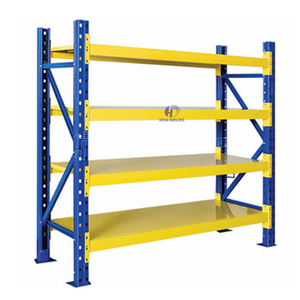
Manufacturer Heavy Duty Warehouse Shelving / Selective Heavy Duty Racking System
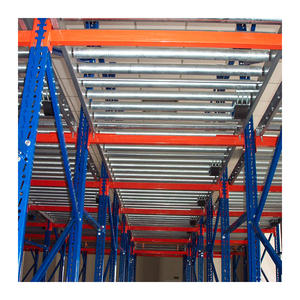
Pallet Flow Rack High Quality FIFO Gravity Pallet Flow Racking First In First Out System
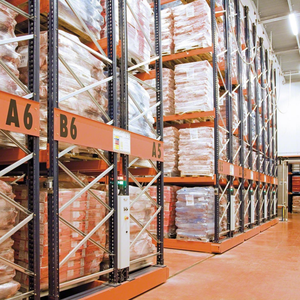
Warehouse Pallet Rack Heavy Duty Adjustable Powder Coated Multi Level Steel Storage Racking
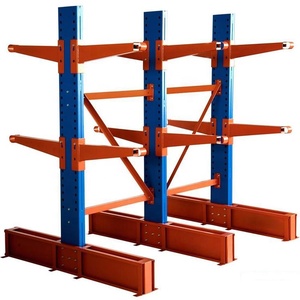
Victory Warehouse Storage Shelving Rack Cantilever Racking Heavy Duty System For Lumber
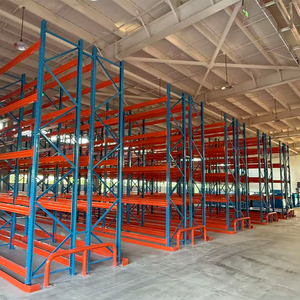
Pallet Handling Industrial Rack System for High-Density Project Warehouse Integration
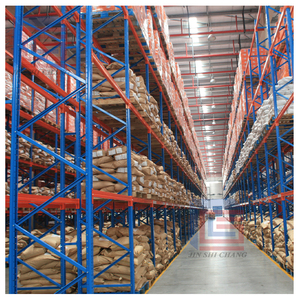
Manufacturer Steel Selective Pallet Rack for Industrial Heavy-Duty Warehouse Storage
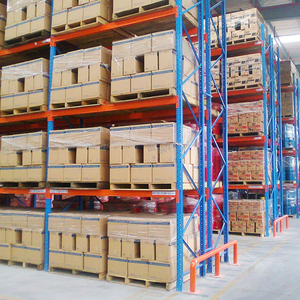
Combined Load-Row Connected Industrial Pallet Racking System 2000kg Steel Heavy Duty Racks
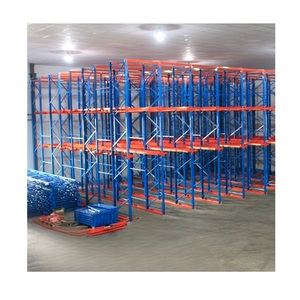
Automatic Warehouse Storage Pallet Shuttle Racking System Radio Shuttle Selective Racks
Executive Technical Evaluation: China Standard Pallet Racking Ecosystem
In modern supply chain architecture, structural storage density and safety compliance directly dictate warehouse yield per square meter ($m^2$). As global supply chains shift toward automated intra-logistics, choosing the right pallet racking system requires evaluating structural steel grades, section modulus ($Z_x$), cold-roll forming tolerances, and anti-corrosion finishes. China has matured into the world’s primary production hub for heavy-duty storage infrastructure, providing certified steel rack profiles that strictly adhere to International Safety Codes, including EN 15512, FEM 10.2.02, ANSI MH16.1, and AS4084-2012.
Information Gain Insight: Structural safety in pallet racking depends not only on steel thickness, but on column profile design (11–13 cold-formed bends) and connection lock engagement. Modern high-yield steel (Q355B) allows lighter structural weight while providing up to 28% higher ultimate yield stress ($f_y = 355\text{ MPa}$) compared to conventional hot-rolled mild steel (Q235B).
Metallurgical Specifications and Load-Bearing Dynamics
The core structural integrity of a warehouse pallet racking system relies on the cold-rolled profile geometry of its upright frames and load beams. Leading Chinese manufacturers like IronMax Storage Solutions Co., Ltd. utilize continuous roll-forming lines to process high-tensile strip steel. The structural frame consists of two teardrop or omega-profile uprights braced via diagonal and horizontal structural channels, secured by high-grade M8x68 structural bolts with nylon lock nuts to prevent loosening caused by forklift vibrations.
| Racking Architecture | Space Utilization | SKU Selectivity | Handling Equipment | Payload Capacity / Level | Investment ROI Factor |
|---|---|---|---|---|---|
| Selective Pallet Racking | 40% - 50% | 100% Direct | Standard Counterbalance / Reach Truck | 500 kg - 4,000 kg | Lowest Capital Expenditure |
| Very Narrow Aisle (VNA) | 70% - 85% | 100% Direct | VNA Turret Truck / Wire Guided | 1,000 kg - 2,500 kg | High Yield per Floor Area |
| Push Back Racking | 65% - 75% | LIFO (2-6 Deep) | Standard Reach Truck | 500 kg - 5,000 kg | Medium-High Density ROI |
| Drive-In / Drive-Thru | 75% - 85% | LIFO / FIFO Bulk | Counterbalance Forklift | 1,000 kg - 1,500 kg / pallet | Excellent for Cold Storage |
| Radio Shuttle System | 85% - 92% | FIFO / LIFO Auto | Forklift + AGV / Radio Shuttle Cart | 1,500 kg / shuttle unit | Maximum Space Optimization |
| Heavy Duty Cantilever | Variable | 100% Long Goods | Side Loader / Crane / Forklift | 1,000 kg - 6,000 kg / arm | Specialized Industrial ROI |
Engineering Advantages of Sourcing from China
Why Top Fortune 500 Enterprise Logistics Companies Specify China-Standard Heavy Racking Systems
Structural Safety Certification
Fully compliant with European FEM 10.2.02 codes and Australian AS4084-2012 specs. Certified under ISO9001 and CE quality management systems for global import clearance.
Automated Roll-Forming Precision
Custom high-frequency roll-forming machinery produces upright column profiles with pitch tolerances under $\pm 0.5\text{mm}$, ensuring effortless field assembly and lock-pin alignment.
Advanced Electrostatic Coating
Multi-stage pre-treatment (acid pickling, phosphating) combined with thermosetting epoxy-polyester powder coating (60–80 micron thickness) guarantees superior corrosion resistance.
Turnkey CAD/BIM Layout Design
In-house structural engineering teams deliver comprehensive 2D floorplan layouts, 3D structural renders, and finite element analysis (FEA) load calculation documentation.
Future Procurement Trends & Technological Evolution (2025–2030)
The global warehousing industry is undergoing a structural transition toward automation, high-density space utilization, and green cold-chain logistics. Procurement managers must plan for future storage expansion by adopting modular racking designs that allow easy upgrades from manual pallet handling to semi-automated or fully automated systems.
1. Transition from Manual Selective Racks to Radio Shuttle & ASRS Automation
Rising industrial real estate acquisition costs and warehouse labor shortages are driving buyers away from standard wide-aisle selective racking. The integration of Radio Shuttle Racking Systems allows warehouses to convert up to 90% of structural volume into usable pallet locations. Shuttle carts controlled via Wi-Fi or RF signals traverse deep channels to store and retrieve pallets automatically, minimizing forklift entry into rack lanes and drastically reducing structural frame damage rates.
2. Adoption of Hot-Dip Galvanizing (HDG) for Sub-Zero Cold Chain Storage
In cold-chain logistics (freezer environments operating from $-25^\circ\text{C}$ to $-30^\circ\text{C}$), standard powder coating is prone to micro-cracking due to thermal contraction. Future procurement standards heavily emphasize Hot-Dip Galvanized (HDG) steel finishes compliant with ISO 1461. The metallurgical zinc-iron alloy layer provides self-healing cathodic protection, preventing rust and ensuring a 30-year operational lifespan in high-humidity or sub-zero conditions.
3. Seismic-Resistant Engineering & Dynamic Structural Simulation
Global logistics hubs located in seismic zones (e.g., California, Japan, Chile, New Zealand) require racking systems with dynamic seismic certification. Modern engineering teams utilize Finite Element Analysis (FEA) software to simulate earthquake accelerations ($S_s, S_1$ seismic design parameters). Heavy-duty baseplates with enlarged M12/M16 chemical anchor bolts, along with dynamic row spacers and cross-bracing towers, ensure structural stability without frame collapse under horizontal sway loads.
Manufacturing Excellence & Plant Infrastructure
Based in Jining City, Shandong Province, China, IronMax Storage Solutions Co., Ltd. operates a modern manufacturing facility dedicated to heavy-duty industrial storage racks, structural mezzanines, automated shuttle systems, and industrial metal pallets. With over 120 skilled engineers, technicians, and production specialists, our production facility features automated continuous roll-forming lines, robotic welding stations, and zero-emission powder coating plants.
In-House Manufacturing Capabilities:
- ✓ High-Precision Cold-Roll Forming (80-140mm Upright Width)
- ✓ Automated Robotic Beam End-Connector Welding
- ✓ Pre-Treatment Acid Cleaning & Electrostatic Powder Coating Line
- ✓ Rigorous Quality Inspection & Tensile Deflection Testing
Engineering Assistance & Global Support
Planning a new warehouse layout or retrofitting an existing distribution center? Submit your CAD drawing, warehouse height clear clearance, pallet dimensions, and max unit load for a complimentary engineering layout proposal.
Send an InquiryFrequently Asked Questions (FAQ)
Essential Engineering & Logistics Guidance for Overseas Racking Buyers