Featured Industrial Racking & Storage Systems
Explore our core manufacturing portfolio engineered for high-density logistics, heavy load capabilities, and structural reliability across global industrial sectors.
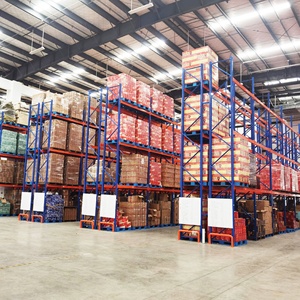
High Quality Warehouse Second Hand Pallet Racking Black Rack Drum Racking System Heavy Duty Shelving
Get a Quote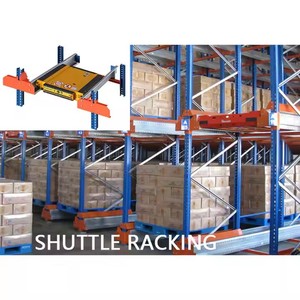
High-Density Automatic Four Way Shuttle Rack Radio Shuttle Rack System With Shuttle System
Get a Quote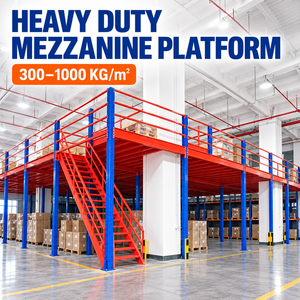
Heavy Duty Warehouse Mezzanine Floor Platform with Pallet Racking For Storage Expansion
Get a Quote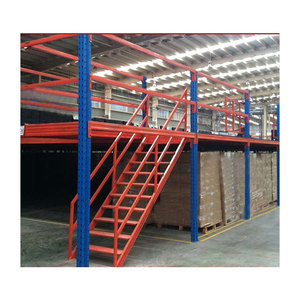
Heavy Duty Multi Tier Steel Grating Floor Mezzanine Platform Mezzanine Racking System Pallet Rack Supported Mezzanine
Get a Quote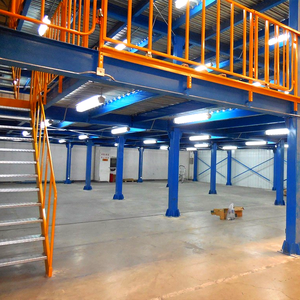
CE Certified 150㎡ Steel Platform Floor System High Density Industrial Manufacturers Warehouse Storage Mezzanine Platform
Get a Quote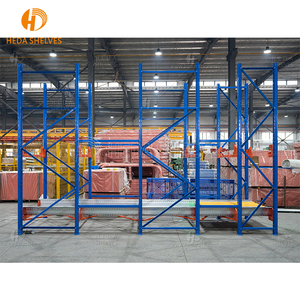
Warehouse Semi-autometic Racking System 4 Ways Direction Shuttle Car Remote Control Radio Shuttle Racking
Get a Quote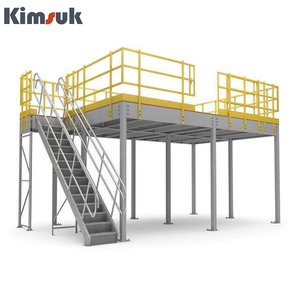
Manufacturer Industrial Warehouse Rack Shelf Mezzanine Storage Shelving Steel Platform Mezzanine Floor Goods Lift Racking System
Get a Quote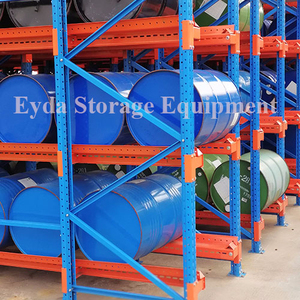
Industrial Steel Q235 Drive-In Pallet Rack with Corrosion Protection and Secure Design for Oil Drum Storage
Get a QuoteIndustrial Engineering Baseline: IronMax Manufacturing Capabilities
As a top China low-level pallet racking manufacturer and premier heavy-duty structural steel factory based in Jining, Shandong, IronMax Storage Solutions Co., Ltd. (Jinghui Intelligent Warehousing Equipment Shandong Co., Ltd.) delivers engineered storage infrastructure tailored for worldwide logistics, FMCG, cold storage, and chemical industries.
Modern supply chain execution demands absolute structural safety, volumetric efficiency, and precision load calculations. Low-level pallet racking and heavy-duty industrial shelving serve as the foundational backbone for low-to-medium rise distribution hubs, order-fulfillment floors, and specialized liquid or drum storage depots. By combining in-house cold-roll forming, robotic automated welding, and continuous electrostatic powder coating, IronMax guarantees uniform physical tolerances, long-term fatigue resistance, and certified load compliance under ISO 9001 and CE directives.
In-House Structural Roll Forming
We process continuous high-tensile Q235B and Q355B coil steel through specialized multi-pass roll-forming lines. Uprights feature precision 50mm and 75mm pitch punching, ensuring tight tolerance engagement with beam connectors to prevent joint deformation under cyclic dynamic loads.
Advanced Surface Protection
Our surface finishing plant integrates a 9-stage pre-treatment wash including chemical degreasing, zinc phosphating, and deionized water rinsing, followed by thermosetting epoxy-polyester powder coating (60–80 microns) or hot-dip galvanizing for harsh cold-chain or outdoor chemical environments.
Engineered Structural Calculations
Every racking layout undergoes finite element analysis (FEA) and structural load testing conforming to AS4084, FEM 10.2.02, and ANSI MH16.1 codes. Beam deflection ratios are strictly maintained within L/200 limits under full rated operational capacity.
Technical Deep-Dive: Low Level & Industrial Racking Systems
Understanding the structural dynamics, load transfer mechanisms, and architectural configurations of low-level, high-density, and specialized industrial racking systems.
While high-bay AS/RS systems dominate automated megastores, Low Level Pallet Racking (operating below 6 meters) remains the dominant choice for over 70% of manufacturing staging zones, cross-dock logistics hubs, and fast-moving consumer goods (FMCG) distribution centers. The lower center of gravity permits higher single-beam weight distribution, minimal deflection risk, and rapid manual or reach-truck accessibility without specialized narrow-aisle equipment.
1. Selective Low Level Pallet Racking
Selective pallet racking provides direct 100% access to every single stock-keeping unit (SKU). Configured in single or double-deep rows, low-level selective racking uses box beams or step beams welded to heavy-duty 3-hook or 4-hook connectors fitted with automatic safety locks. Frame heights typically range from 2.5m to 5.5m, carrying loads up to 4,000 kg per beam level. It is ideal for facilities prioritizing high SKU variation over absolute volume density.
2. Drive-In & Drum Storage Racking Infrastructure
For high-density storage of homogeneous goods, Drive-In racking eliminates pick aisles by allowing forklifts to enter structural storage lanes directly. When customized for Oil Drum Storage or Hazardous Liquid Containment, the structure is reinforced with continuous Q235 steel support rails, drum cradles, and integrated spill containment sumps. Surface finishes are upgraded to hot-dip galvanized steel to withstand corrosive chemical drips or oil accumulation without structural degradation.
3. Radio Shuttle & Four-Way Semi-Automated Systems
Integrating semi-automated shuttle cars into low-to-medium level channel racking yields maximum storage density while drastically reducing forklift cycle times and structural collision risks. A self-powered 4-way direction shuttle car navigates along internal rails under remote or PLC control, lifting and positioning pallets under either FIFO (First-In, First-Out) or LIFO (Last-In, First-Out) inventory rules. This system maximizes volume utilization in temperature-controlled cold rooms (-25°C to -30°C).
4. Rack-Supported Mezzanine Floor Platforms
When vertical warehouse space is available, rack-supported steel mezzanines convert overhead air space into usable floor area. Utilizing heavy-duty racking uprights as primary structural columns, these multi-tier platforms support steel grating, bar floor plates, or high-density timber decking. They seamlessly integrate hydraulic goods lifts, safety handrails, sliding pallet gate modules, and underneath order-picking shelving.
System Engineering & Operational Comparison Matrix
Compare architectural specs, density ratings, and operational parameters across low-level and high-density industrial racking choices.
| Racking System Type | Load Capacity (per Level/Bay) | SKU Selectivity | Storage Density | Handling Equipment Requirement | Recommended Industrial Use |
|---|---|---|---|---|---|
| Selective Low Level Racking | 500 kg – 4,000 kg | 100% Direct | Standard (40-50%) | Standard Counterbalance / Reach Truck | FMCG Distribution, General Manufacturing, Spares |
| Drive-In Drum Racking | 1,000 kg – 3,000 kg | Low (LIFO) | High (75-85%) | Standard Forklift with Rail Guides | Oil Drums, Chemical Barrels, Homogeneous Bulk |
| 4-Way Radio Shuttle Racking | 1,000 kg – 1,500 kg/pallet | Lane Selective | Ultra High (85-90%) | Autonomous Shuttle + Loading Forklift | Cold Storage Freezers, Food & Beverage Processing |
| Multi-Tier Mezzanine Platform | 300 kg – 1,000 kg / ㎡ | 100% Pick Access | Vertical Doubling | Manual Pickers, Conveyors, Goods Lifts | E-commerce Picking, Parts Assembly, Textile Warehousing |
| Push-Back Cart System | 500 kg – 5,000 kg | 2 to 5 Deep LIFO | Medium-High (70%) | Standard Counterbalance Forklift | Stage Loading, Cold Storage, Moderate SKU Volume |
Development Trends in Industrial Racking Technology
Key technological innovations shaping the safety, modularity, and intelligence of modern manufacturing and storage facility systems.
1. High-Tensile Micro-Alloyed Steel Profiles
The industry is transitioning rapidly from standard carbon steels toward high-yield Q355B and specialized micro-alloyed cold-formed profiles. These materials allow thinner wall profiles without compromising beam stiffness or column buckling resistance, significantly reducing overall deadweight while enhancing seismic energy dissipation under cyclic loads.
2. Hybrid Shuttle & IoT Fleet Integration
Modern radio shuttle systems are evolving from simple point-to-point carriages to fully IoT-connected shuttle fleets. Integrated optical sensors, LiDAR distance metering, and Wi-Fi/Zigbee communication cards transmit real-time battery status, pallet location telemetry, and structural vibration alerts back to WMS (Warehouse Management System) dashboards.
3. Zero-VOC Sustainable Powder Coating
Environmental standards in Chinese manufacturing have spurred the deployment of closed-loop electrostatic powder coating lines. Utilizing non-heavy-metal zirconium pre-treatment wash and 100% reclaimable thermosetting epoxy powders, manufacturers deliver high scratch-resistant surfaces with zero volatile organic compound (VOC) emissions during production.
Future Global Procurement Trends for Industrial Racking (2025–2030)
Strategic insights for B2B procurement managers, supply chain directors, and EPC contractors sourcing structural steel racking directly from China factories.
Procuring heavy-duty warehouse equipment has shifted from basic price-per-kilogram negotiation to holistic Total Cost of Ownership (TCO) evaluation. Global buyers face evolving trade dynamics, stricter structural safety codes, and aggressive warehouse commissioning timelines. Navigating these factors requires direct engagement with capable Chinese original equipment manufacturers (OEMs).
Factory-Direct Engineering Collaboration
Global logistics firms are bypassing intermediary trading entities in favor of direct engineering dialog with Chinese manufacturing plants. Direct collaboration enables rapid turnarounds on customized CAD layouts, custom beam connector profiles, 3D BIM modeling integration, and tailored factory acceptance testing (FAT).
Modular & Scalable Structural Systems
Procurement strategies increasingly favor boltless, highly adjustable racking components that accommodate shifting product dimensions over time. Standardized beam profiles and universal upright punch patterns allow regional distribution centers to reconfigure low-level racks into mezzanine platforms or shuttle bays as throughput scales up.
Optimized Export Packing & Container Logistics
With ocean freight volatility, leading China manufacturers optimize component bundle geometry to eliminate volumetric wasted space inside 40ft High Cube containers. Uprights and beams are strapped using heavy steel banding, plastic film wrapping, and timber dunnage to avoid transit abrasion and ensure rapid un-stacking at job sites.
Frequently Asked Questions (FAQ) for Global Buyers
Addressing technical, structural, quality assurance, and logistical questions commonly encountered during industrial racking procurement.
What raw steel grades are utilized in IronMax pallet racking components?
IronMax primarily uses certified prime Q235B and Q355B cold-rolled structural steel coil supplied by leading state-owned steel mills in China (such as Baosteel and Shougang). Mill test certificates (MTC) verifying chemical composition, yield strength, and tensile strength are recorded for every raw material batch.
How do your low-level racking designs comply with international safety standards?
Our structural engineering team designs racking systems in strict compliance with international design codes, including Australia's AS4084-2012, Europe's FEM 10.2.02 / EN 15512, and the US RMI (Rack Manufacturers Institute) standards. Finite element modeling (FEA) ensures safety factors exceed 1.65 to 1.8 under full rated static load conditions.
What is the advantage of hot-dip galvanizing vs powder coating for drum racking?
Hot-dip galvanizing (HDG) deposits a metallurgically bonded zinc layer (typically 60–85 microns thick) inside and outside the steel profiles, offering self-healing sacrificial corrosion protection against aggressive chemical spills, liquid fertilizers, or outdoor marine environments. Epoxy powder coating provides high scratch resistance and custom color-coding for dry indoor warehouses.
Can IronMax design custom rack-supported mezzanine platforms from architectural drawings?
Yes. Our engineering department accepts DWG/STEP files or architectural dimensions. We generate detailed 2D layout drawings, 3D structural renders, column load reaction schedules, and bill of materials (BOM) within 48 hours for engineering review and site planning approval.
How are semi-automated 4-way radio shuttle cars integrated into low-level racking systems?
Shuttle racking involves precision roll-formed galvanised guide rails welded onto beam connectors. Shuttle cars are loaded into the rail channels via standard forklifts. The shuttle navigates deep lanes via internal optical and ultrasonic positioning sensors, executing pallet placement, retrieval, and inventory counting commands transmitted by wireless hand-held controllers.
What is your typical production lead time and export packing standard?
Standard manufacturing lead time is 15 to 25 days depending on total tonnage and custom structural requirements. Racking components are bundled with steel strapping, corner protectors, and moisture-proof plastic film wrapping. Small hardware items (bolts, baseplates, safety pins, leveling shims) are packed in heavy-duty wooden crates or corrugated cartons.
What installation support and structural documentation do you provide for overseas projects?
Every shipment includes detailed 3D installation assembly drawings, torque specification tables for anchor bolts, frame bracing plans, and step-by-step installation manuals. For large-scale mezzanine or automated shuttle projects, our senior installation engineers provide remote video commissioning supervision or on-site team deployment.
Ready to Optimize Your Warehouse Storage Capacity?
Send your building dimensions, pallet specifications, and load requirements directly to our engineering department for a free custom CAD layout and instant factory direct quote.
Get a Quote