Featured Food & Cold Storage Racking Solutions
Engineered to maximize volumetric efficiency, structural safety, and strict hygiene compliance across food processing, distribution, and sub-zero warehousing.
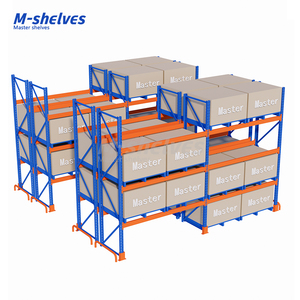
Low Temp Anti-Rust Adjustable Beam Rack for Frozen Food
Specially coated structural steel beams designed to withstand cold room thermal contraction down to -30°C without embrittlement.
Get a Quote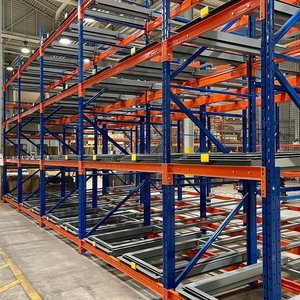
Heavy Load 2000kg Push Back Pallet Racking System
Nested cart LIFO system delivering deep lane high-density storage for multi-pallet SKU batching in food logistics centers.
Get a Quote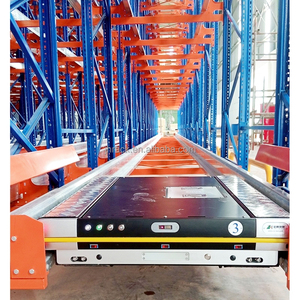
High Density Storage LIFO Pallet Radio-Shuttle System
Semi-automated radio shuttle pallet runner maximizing cold room storage density while eliminating forklift movement inside freezing zones.
Get a Quote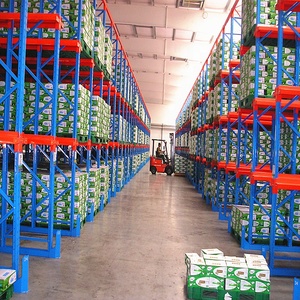
Food & Beverage Industry Drive-In / Drive-Through Racking
Continuous aisle high-density pallet arrangement optimized for homogeneous food goods with high pallet counts per SKU.
Get a Quote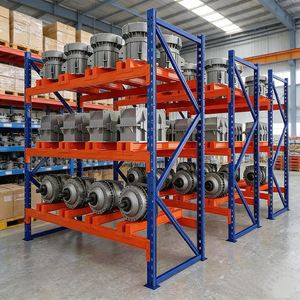
Heavy-Duty Electrical Mobile Pallet Racking for Cold Room
Motorized mobile bases mounted on floor tracks to achieve up to 85% volumetric space utilization in energy-intensive cold vaults.
Get a Quote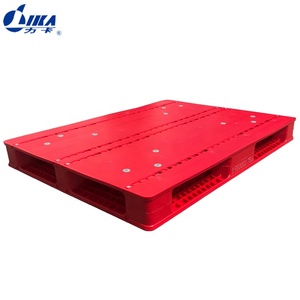
HDPE 4-Way Hygienic Heavy Duty Plastic Pallets
FDA-compliant, seamless high-density polyethylene pallets engineered for rackable loads in food and pharmaceutical storage.
Get a Quote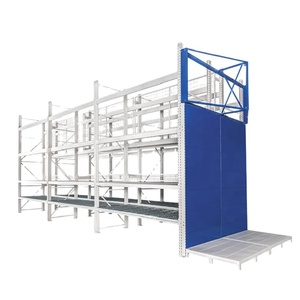
Kitchen & Commercial Refrigeration Storage Pallet Rack
Sanitary modular rack design featuring corrosion-proof epoxy resin powder coat for walk-in chillers and commercial kitchens.
Get a Quote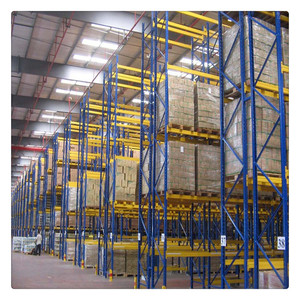
Heavy Duty Powder Coated Selective Pallet Rack System
100% direct pallet accessibility system featuring teardrop / European connection ports for versatile fast-moving food distribution.
Get a QuoteEngineering Principles of Modern Food Storage Pallet Racking
The food and beverage warehousing sector presents a complex intersection of structural engineering challenges, strict hygiene compliance mandates, and intensive operational energy expenditures. As a premier China food storage pallet racking supplier and global exporter, our engineering methodology goes far beyond basic steel fabrication. We design turnkey industrial racking platforms specifically optimized for food processing plants, raw ingredient cold stores, automated distribution centers (3PL), and commercial retail logistics.
In cold chain logistics, volumetric efficiency directly impacts operating profitability. Operating refrigerated or sub-zero freezer vaults (-18°C to -30°C) costs up to five times more per cubic meter than ambient temperature storage. Consequently, deploying high-density storage configurations—such as Electric Mobile Racking, Radio Shuttle Systems, and Drive-In/Push-Back Racks—is no longer optional; it is a fundamental requirement to achieve energy efficiency and lower total cost of ownership (TCO).
Key Structural Considerations for Food & Cold Chain Storage:
- Metallurgical Resiliency under Low Temperatures: Standard Q235 carbon steel experiences ductile-to-brittle transition when exposed to prolonged sub-zero conditions. We utilize certified Q355B low-alloy high-strength structural steel with tailored impact toughness to prevent micro-fracturing under high dynamic loads.
- Sanitary & Washdown-Ready Finishes: Food storage environments demand smooth surfaces that inhibit bacterial adhesion and withstand aggressive cleaning regimens. Our systems feature electrostatic epoxy-polyester anti-microbial powder coatings or hot-dip galvanizing compliant with ISO 1461 and FDA non-contact food standards.
- Seismic & Dynamic Impact Protection: Fast-paced food distribution involves high forklift cycle speeds. Integrated upright protectors, heavy-duty floor anchors, and continuous top-beam bracing ensure structural safety against accidental handling impacts.
Food Storage Racking Architectural Selection Matrix
Selecting the optimal heavy-duty pallet racking system requires balancing SKU diversity, inventory rotation dynamics (FIFO vs. LIFO), pallet handling throughput, and storage density.
| Racking System Type | Storage Density | SKU Selectivity | Stock Rotation | Cold Room ROI Impact | Primary Food Sector Application |
|---|---|---|---|---|---|
| Selective Pallet Racking | Standard (40-50%) | 100% Direct Access | FIFO / LIFO | Moderate | High-SKU distribution, FMCG retail, dry food goods. |
| Drive-In / Drive-Through | High (65-75%) | Low (Per Lane) | LIFO (Drive-In) / FIFO | High | Bulk raw ingredients, seasonal beverage inventory. |
| Radio Shuttle System | Ultra-High (80-88%) | Medium (Per Channel) | FIFO & LIFO Automated | Maximum | Deep-freeze storage, meat/seafood, high-turnover dairy. |
| Push-Back Cart Racking | High (60-70%) | Medium (2-5 Deep) | LIFO | Very High | Buffer zones, staging areas, chilled food processing. |
| Electric Mobile Racking | Ultra-High (85-90%) | 100% Selective | FIFO / LIFO | Maximum | Expensive cold vaults requiring full SKU access. |
Why Source Food Racking from Our China Factory?
We combine European engineering standards with optimized Chinese manufacturing capabilities, delivering certified safety and tailored engineering solutions.
Precision Automated Manufacturing
Equipped with high-precision continuous cold-roll forming lines, robotic laser cutting, and automated continuous powder coating plants ensuring strict dimensional tolerance (±0.5mm) across every upright frame and beam.
International Certification & Compliance
All designs strictly adhere to European FEM 10.2.02, RMI (Rack Manufacturers Institute), and AS4084-2012 standards. ISO 9001 and CE certified to meet stringent global bidding compliance.
Turnkey CAD & FEA Layout Support
Our senior structural engineering team provides 3D CAD modeling, Finite Element Analysis (FEA) load simulation, and full warehouse floorplan optimization proposals within 24 hours free of charge.
Future Procurement Trends in Food Storage Racking (2025–2030)
As global supply chains shift toward carbon neutrality and smart automation, procurement directors and logistics architects must evaluate several evolving technological trends when sourcing industrial food racking systems:
1. Escalating Shift Towards Semi-Automated Radio Shuttle Infrastructure
With rising warehouse labor costs and safety concerns inside sub-zero environments, logistics operators are transitioning away from manual Drive-In racking toward Automated Radio Shuttle Systems. Radio shuttles drastically reduce forklift entry inside cold rooms, minimizing structural column damage, accelerating pallet retrieval speeds by up to 40%, and maintaining airtight thermal integrity.
2. Adoption of Eco-Friendly Anti-Microbial Powder Coatings
Hygiene regulations enforced by international food safety authorities (FDA, EFSA, HACCP) require strict suppression of microbial pathogens like Listeria monocytogenes and Salmonella. Next-generation food storage racking utilizes silver-ion infused electrostatic coatings that actively inhibit bacterial proliferation on rack surfaces while supporting high-pressure washdowns without flaking.
3. Modular & Reconfigurable Heavy-Duty Racking Structures
Dynamic e-commerce food delivery and changing SKU sizes require flexible storage configurations. Modern export-grade pallet racks utilize teardrop and 50mm/75mm pitch connection patterns with boltless beam connectors, enabling rapid beam height adjustment without interrupting daily operations.
4. Integrated IoT-Enabled Structural Health Monitoring
Smart racking infrastructure is emerging in high-bay automated food logistics hubs. Strain gauge sensors and IoT impact monitors embedded into vertical uprights deliver real-time data regarding structural overload, tilt deflection, and accidental forklift collisions, preventing catastrophic rack collapses.
Frequently Asked Questions (FAQ) for Global Buyers
Expert technical answers to common queries encountered during the procurement, engineering, and importation of food racking systems from China.
In frozen food warehouses (-20°C to -30°C), standard carbon steel loses yield ductility and suffers structural brittleness under dynamic loads. We utilize certified Q355B/Q355D structural steel engineered specifically for low-temperature environments. This prevents stress-cracking at beam connection points and baseplates, ensuring full compliance with cold chain safety standards.
For dry food storage and climate-controlled distribution centers, epoxy-polyester powder coating (60-80 microns thick) is highly durable and customizable in color. For high-humidity cold rooms, fish/meat processing plants, or washdown zones, Hot-Dip Galvanizing (HDG) per ISO 1461 (70-100 microns coating) offers superior anti-corrosion protection against moisture, organic acids, and aggressive cleaning chemicals.
Our structural engineers execute Finite Element Analysis (FEA) based on the project site's seismic acceleration parameters (PGA). We integrate heavy-duty floor anchor bolts, structural baseplates, top-aisle ties, and heavy gauge steel frame guards (L-shaped or column wrapped) to absorb dynamic impacts from material handling equipment.
Yes. Simply provide your building floor plan (CAD or PDF), clear ceiling height, pallet dimensions (W x D x H), total pallet load weight, forklift model turning radius, and storage temperature. Our engineering department will generate a 2D layout drawing, 3D visualization, and detailed Bill of Materials (BOM) within 24 hours.
All upright frames and beams are tightly bundled with steel strapping, corrugated corner protection, and plastic stretch wrapping to prevent scratches and moisture ingress during ocean transit. Small accessories, connectors, baseplates, and bolts are packaged in reinforced export wooden crates or heavy-duty cartons on steel pallets for fast forklift unloading at destination ports.
Ready to Optimize Your Food Storage Infrastructure?
Contact our engineering leadership team today for a comprehensive warehouse design proposal, structural calculation sheet, and competitive direct-factory pricing.
Get a Quote