Featured Cantilever & Heavy-Duty Storage Racks
Custom Engineered Solutions for Pipe, Tubing, Steel Profiles, Rebar, and Industrial Lumber
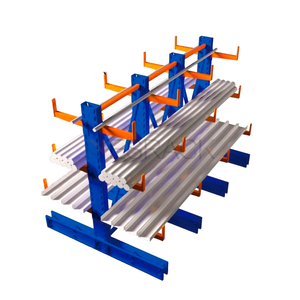
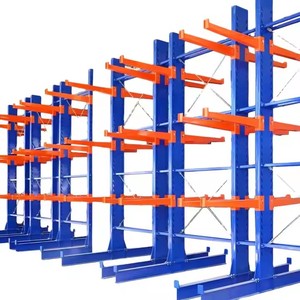
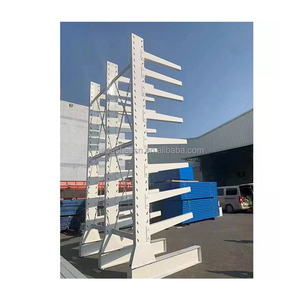
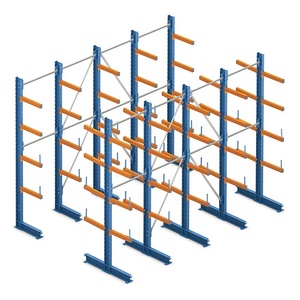
1. Strategic Industry Overview & Procurement Market Analysis
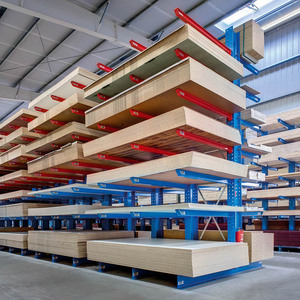
In modern industrial material handling, managing non-standard, long, or bulky items—such as structural steel profiles, aluminum extrusions, PVC tubing, timber bundles, and rebar—presents a unique spatial and structural challenge. Standard selective pallet racking, designed around rigid front columns, creates physical obstructions that make handling extended loads virtually impossible without substantial product damage or extreme handling inefficiencies.
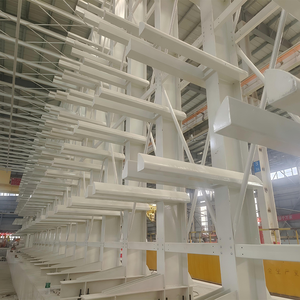
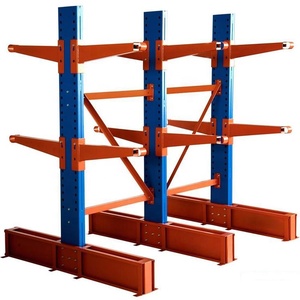
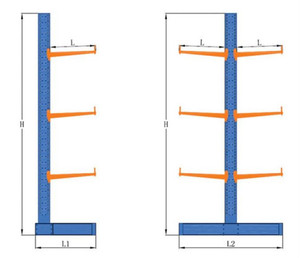
This is where Cantilever Pallet Racking Systems engineered by leading Chinese exporters provide a distinct operational advantage. By eliminating front vertical columns, cantilever racks offer a continuous, unobstructed linear storage layout. Load-bearing arms extend horizontally from a rigid vertical column anchor, allowing forklifts, overhead cranes, and side-loaders to place and retrieve items of varying lengths without structural impedance.
Information Gain Insight: Sourcing cantilever racking directly from top China factories like IronMax Storage Solutions Co., Ltd. provides up to 40% cost reduction compared to European or North American domestic fabrication, while maintaining full compliance with international engineering codes including FEM 10.2.09, RMI (Rack Manufacturers Institute), and Australian AS4084-2012 specifications.
China's advanced steel manufacturing ecosystem—particularly within industrial hubs like Shandong, Jiangsu, and Zhejiang—enables factories to utilize premium hot-rolled structural steel (I-beams and H-beams) and cold-formed high-tensile steel (Q235B and Q355B grades). With automated CNC punching lines, robotic continuous welding, and inline thermosetting epoxy powder coating, Chinese exporters deliver high-load structural reliability designed for decades of intensive industrial usage.
2. Technical Engineering Matrix: Roll-Formed vs. Heavy Structural H-Beam Systems
Selecting the correct cantilever specification requires a thorough evaluation of load distributions, mechanical moment forces, and environmental factors. Chinese factories manufacture two primary structural classes of cantilever systems: Roll-Formed Light/Medium Duty and Hot-Rolled Structural Heavy Duty.
| Technical Parameter | Roll-Formed Cantilever Rack | Hot-Rolled Structural H-Beam Rack |
|---|---|---|
| Steel Profile Grade | Q235B Cold-Rolled Strip Steel | Q235B / Q355B Hot-Rolled Structural H-Beam |
| Column Section Depth | 200mm – 300mm Profile Depth | 200mm – 450mm Heavy H-Beam Section |
| Load Capacity Per Arm | 100 kg to 800 kg / arm | 800 kg to 6,000+ kg / arm |
| Arm Connection Type | Pin-lock / Keyhole Clip-in | Heavy-Duty High-Tensile Bolt Assembly |
| Impact Resistance | Moderate (Suitable for light goods) | Extreme (Resistant to heavy forklift collisions) |
| Primary Applications | Plastic pipes, light timber, aluminum trim | Steel rebar, heavy coils, solid timber, plates |
| Adjustability Pitch | 50mm – 75mm continuous adjustment | 100mm – 150mm bolt-hole pitch |
Deflection and Structural Calculation Principles
In cantilever design, maximum structural deflection under load is strictly governed by the standard formula L/180 (where L is the arm length). Over-deflection can result in goods slipping forward, creating severe warehouse safety hazards. Top Chinese racking engineers calculate bending moments at column base anchors and arm-to-column connections using Finite Element Analysis (FEA) software.
To prevent localized arm twisting under asymmetrical loading, horizontal and diagonal steel bracing sets (X-bracing) are installed between columns to form rigid structural bays. Base plates are anchor-bolted directly into reinforced concrete slabs using heavy-duty chemical or mechanical expansion anchors, guaranteeing total system equilibrium.
3. Future Procurement Trends: Smart Logistics & Automated Long-Goods Handling
As global supply chains shift toward high-density automated warehousing, cantilever racking design is evolving beyond traditional static storage. Leading Chinese OEMs are pioneering several key technological advances:
Integration of specialized long-material stacker cranes capable of handling 12-meter pipe bundles with automated precision guidance.
Outdoor cantilever installations feature ASTM A123 hot-dip galvanizing (70-100 microns zinc thickness) for 30+ year rust resistance in coastal ports.
Embedded load sensors within cantilever arms transmit real-time weight telemetry to Warehouse Management Systems (WMS) to prevent overloading.
Furthermore, Mobile Cantilever Racking Systems—where structural cantilever columns are mounted onto heavy-duty motorized carriages running on floor embedded rails—are gaining rapid adoption. By opening only the active aisle via remote or automated control, mobile cantilever configurations increase long-goods warehouse storage density by up to 85% compared to fixed-aisle systems.
4. Enterprise OEM Manufacturing Power: IronMax Storage Solutions Co., Ltd.
As a flagship manufacturer headquartered in Jining City, Shandong Province, IronMax Storage Solutions Co., Ltd. (also operating under Jinghui Intelligent Warehousing Equipment Shandong Co., Ltd.) represents the pinnacle of Chinese storage rack manufacturing excellence.
Operating 15+ automated roll-forming lines, automated laser cutting tables, and robotic welding stations to ensure millimeter-precise component tolerances.
Every batch of coil and structural steel undergoes ultrasonic flaw detection, yield stress testing, and coating adhesion tests with full MTC mill certificates provided.
Over 120 dedicated engineers provide custom warehouse CAD layout drawings, load calculations, structural simulations, and seismic stability analysis free of charge.
Columns and arms are bundled with protective plastic wrapping, steel strapping, and wooden crating designed for safe sea freight container transport worldwide.