Global Automated Stack Crane Storage Racking: Engineering Architecture & Benchmark Report
Modern supply chain logistics demand unprecedented operational velocity, cubic volumetric efficiency, and pin-point stock traceability. As global enterprises shift from traditional forklift-operated distribution centers to fully automated high-bay warehouses, the structural role of Stack Crane Storage Racking Systems—often engineered within Automated Storage and Retrieval Systems (AS/RS)—has evolved from simple structural shelving to mission-critical kinematic infrastructure. This whitepaper provides procurement directors, logistics engineers, and EPC contractors with a rigorous technical blueprint for evaluating OEM manufacturing partners, selecting structural steel profiles, and auditing export-grade stack crane racking systems.
Key Engineering Insight: Unlike standard selective pallet racking designed for static gravity loads and manual reach trucks, Stack Crane Storage Racking must withstand continuous dynamic acceleration (up to 2.5 m/s²), severe torsional vibration from rail-guided stacker crane masts, and precise deflection ratios under L/400 limits to ensure sub-millimeter positioning by laser-guided optical sensors.
1. Decoupling the Stack Crane Storage Racking System Architecture
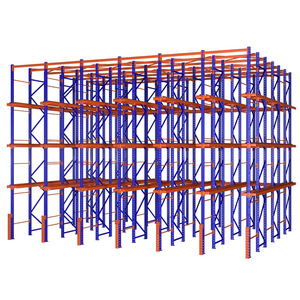
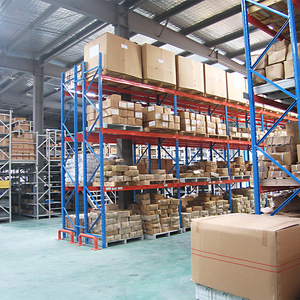
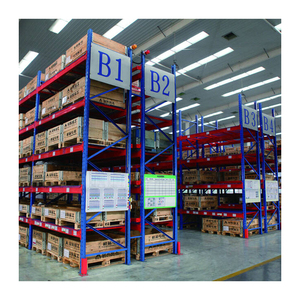
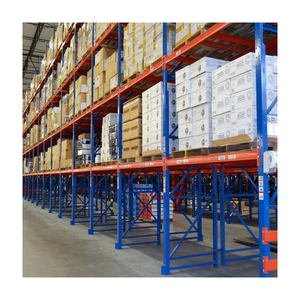
A stacker crane racking installation operates as an integrated electromechanical ecosystem. The physical racking frame not only bears static pallet dead loads (ranging from 500 kg to 3,000 kg per pallet position) but also serves as the structural guide rail anchor for single-column or double-column stacker cranes. The primary structural components engineered by top China exporters include:
High-Precision Cold-Formed Upright Frames: Manufactured from continuous roll-formed Q355B or Q235B steel coils, upright profiles feature heavy-duty multi-directional ribbed profiles. Heights can exceed 40 meters in clad-rack warehouse configurations, where the racking structure itself supports the roof trusses and wall cladding panels.
Interlocking Load Beams & Box Girders: Horizontal load-bearing beams are formed with double-C enclosed box section geometry or custom engineered step-beams. Specialized drop-over decking, pallet runner rails, and mechanical safety stops prevent unit load dislocation during rapid automated picking operations.
Top and Bottom Crane Guide Rails: Top-mounted guide channels and floor-anchored high-tensile steel crane rails (such as QU70 or QU80 profiles) absorb lateral swaying moments generated by high-speed traveling cranes moving horizontally at speeds up to 240 m/min.
2. Structural Matrix: Comparing High-Density Automated Storage Technologies
When planning a greenfield or brownfield warehouse automated expansion, choosing the correct dynamic storage typology directly affects capital expenditure (CAPEX) and operational performance (OPEX). The following matrix highlights the operational boundaries across primary automated racking configurations:
| System Architecture | Max Storage Height | Handling Speed & Flow | Pallet Selectivity | Primary Industrial Use Case |
|---|---|---|---|---|
| Single-Deep AS/RS Crane Racking | Up to 45 Meters | Ultra-High (100+ Pallets/hr/crane) | 100% Direct Access | Automotive, FMCG, High-SKU Distribution |
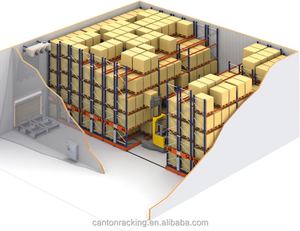
| Double-Deep AS/RS Crane Racking | Up to 35 Meters | High (Telescopic Fork Crane) | 50% Immediate Access | Cold Storage, Food & Beverage, Buffer Warehousing |
| Radio Shuttle + Crane Hybrid | Up to 25 Meters | Medium-High (Deep Lane Channel) | Bulk Lane Dependent | Chemical Storage, Seasonal Raw Material Buffers |
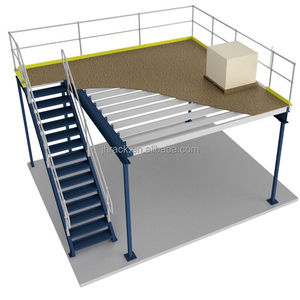
| Multi-Tier Mezzanine Structure | Up to 12 Meters | Manual / AGV Assisted | 100% Floor Level Access | E-commerce Piece Picking, Spare Parts Stores |
| Autonomous Mobile Robot (AGV/AMR) | Up to 10 Meters | Flexible Dynamic Rerouting | 100% Selective | Flexible Manufacturing, Micro-Fulfillment Centers |
3. Key Manufacturing Capabilities & Enterprise Strengths of Leading Exporters
IronMax Storage Solutions Co., Ltd. (operating alongside state-of-the-art production hubs in Jining, Shandong Province) exemplifies the modern Chinese manufacturing standard required for global AS/RS deployment. Assessing a prospective racking factory requires evaluating several structural, metallurgical, and technological competencies:
Full-Spectrum Metallurgical Integrity
Utilizing high-yield structural steel (Q235B and Q355B grade) tested against ISO 6892-1 tensile standards. In-house cold roll-forming lines feature up to 22 rolling stations for minimal residual stress in tall columns.
Robotic Laser Welding & Precision Punching
Pitch accuracy controlled within ±0.1mm across 12-meter single-section uprights using CNC automatic laser punching units, ensuring seamless interlocking connector pin alignment during field erection.
Automated Surface Pre-treatment & Coating
16-stage automatic phosphate washing and electrostatic epoxy powder coating lines provide scratch-resistant finishes exceeding 800 hours of salt spray corrosion testing (ASTM B117 standards).
Export Containerization Engineering
Customized steel-skid framing, heavy-duty protective plastic film wrapping, and systematically labeled rack bundles designed to minimize container damage and facilitate site un-stacking.
4. Technological Trends & Next-Generation Innovations (2025–2030)
The global automated storage market is undergoing rapid technology convergence. Buyers looking for competitive advantages over 15-to-20-year asset lifecycles must consider these major technology trends:
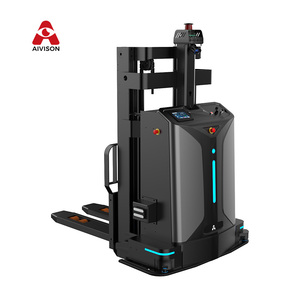
1. Convergence of AGV/AMR Fleet Topologies with Stacker Crane Racking: Modern high-bay facilities increasingly combine stacker cranes for ultra-dense vertical storage (up to 40 meters) with floor-based Autonomous Mobile Robots (AMRs) for horizontal transport to dispatch zones. Racking footings are engineered with dual load distribution plates to accommodate floor-level AGV pathing alongside heavy crane rail tracks.
2. Embedded Structural Health Monitoring (IoT Sensors): Intelligent stack crane racking structures now integrate strain gauges, vibration accelerometers, and tilt sensors directly into the top tie-beams and critical beam-to-column joints. Real-time telemetry alerts operations managers to dynamic shock loads caused by improper pallet positioning or mechanical stacker crane malfunction.
3. Sub-Zero Cold Chain Optimization & Hot-Dip Galvanized Racking: With global demand soaring for frozen food and biopharmaceuticals, stacker crane racking operating in -30°C environments requires specialized micro-alloyed structural steel that avoids cold-shortness brittleness. Hot-dip galvanizing per ISO 1461 standards is fast replacing standard powder coating in sub-zero applications to eliminate flaking and rust under condensation cycles.
4. High-Efficiency Clad-Rack (Rack-Supported Building) Structures: Instead of constructing an industrial building shell and installing racking inside, modern project planners prefer Rack-Supported Warehouses. The stack crane racking framework acts as the primary structural skeleton that supports wind loads, snow loads, roof trusses, and insulated side walls—reducing overall construction timelines by 25% to 35% while maximizing land-use density.
5. Strategic Sourcing Guide & Risk Mitigation for International Buyers
Purchasing heavy-duty stack crane storage racking from overseas original equipment manufacturers (OEMs) requires a structured multi-stage procurement protocol. To prevent structural compliance failures during site commissioning, global procurement teams must enforce the following technical gates:
Phase I: Load Calculation & Seismic FEA Modeling
Require the manufacturer to produce Finite Element Analysis (FEA) computer modeling reports simulating static load conditions, dynamic braking sway, wind loads (for clad-rack buildings), and regional seismic acceleration factors (conforming to EN 16681 or RMI standards).
Phase II: Tolerance Auditing & Beam Deflection Certification
Structural tolerances for stacker crane racking are exponentially stricter than standard pallet racking. Ensure beam vertical deflection under full design load does not exceed 1/400th of the clear span length (L/400), and vertical column plumbness is maintained within 1:1000 under ambient temperature variations.
Phase III: On-Site Erection Supervision & Laser Alignment
Even perfectly manufactured structural steel will fail if installed out of tolerance. Ensure the OEM factory provides complete installation drawings, torque calibration standards for anchor bolts, and field engineers equipped with total-station optical laser surveying instruments for final sign-off.