Featured Industrial Pallet Racking & Shuttle Systems
Engineered for ultra-high volumetric density, heavy payload integrity, and seamless cold storage & automation compliance.
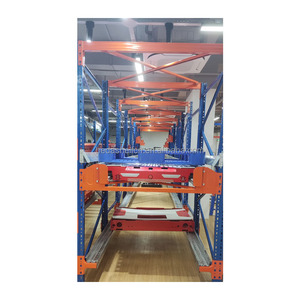
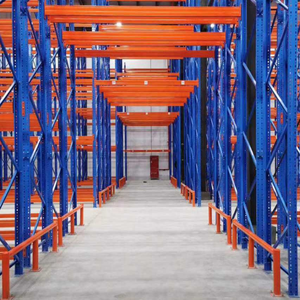
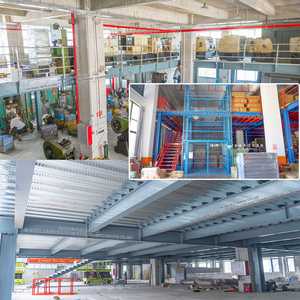
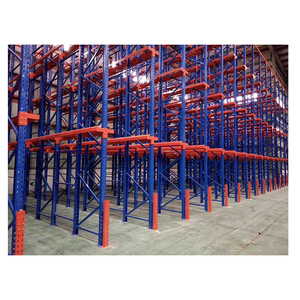
The Paradigm Shift in High-Density Automated Pallet Warehousing
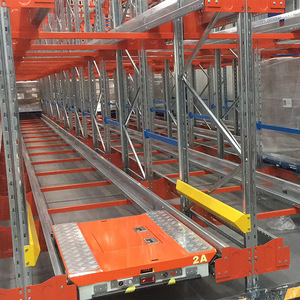
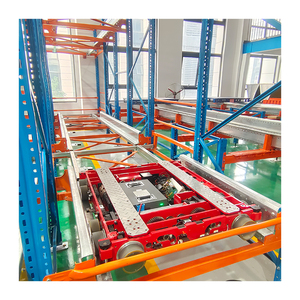
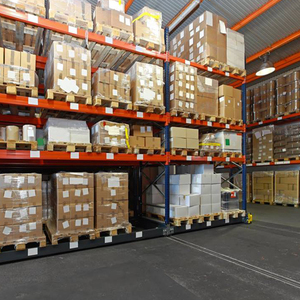
Modern logistics infrastructure is undergoing a fundamental transformation driven by skyrocketing industrial real estate costs, structural labor shortages, and aggressive throughput SLA demands across supply chains. In this landscape, static selective racking and conventional drive-in systems are increasingly viewed as legacy liabilities. Enterprise warehouse operators are migrating rapidly toward semi-automated and fully automated Pallet Shuttle Racking Systems (also known as Radio Shuttle or 2D/4D Shuttle Cart Systems).
Pallet shuttle technology fundamentally disconnects the forklift from the storage channel. By utilizing an autonomous, battery-powered robot traveling along custom-profile guide rails within high-bay storage channels, operators can achieve storage depth exceeding 40 to 60 pallets per lane. Forklifts are restricted to the head of the aisle, reducing travel times by up to 70% while mitigating structural impact risks to upright columns.
When selecting among the global Top 10 Pallet Shuttle Racking Manufacturers and Exporters, global enterprise buyers—ranging from third-party logistics (3PL) providers and cold chain operators to FMCG manufacturers—must evaluate candidates not merely on steel price per kilogram, but on holistic robotic integration, steel alloy structural tolerances (EN 15512 compliance), sensor redundancy, and lifecycle total cost of ownership (TCO).
Architectural Breakdown: 2D Radio Shuttle vs. 4D Multi-Directional Shuttle Racking
The choice between two-way (2D) radio shuttle racking and four-way (4D) automated multi-directional shuttle systems represents a strategic crossroad in facility planning. Both platforms offer exceptional volumetric density, but their throughput mechanics, software orchestration, and mechanical complexity differ significantly.
| Performance Dimension | 2D Semi-Automated Radio Shuttle | 4D Fully Automated Multi-Shuttle |
|---|---|---|
| Directional Motion | Longitudinal only (Forward / Reverse in deep lanes) | X-Axis & Y-Axis (Cross-aisle and deep lane traversal) |
| Vertical Integration | Requires forklift relocation between channel levels | Integrated with high-speed automated vertical lifters |
| Operating Mode | Semi-Automated (Operator controls via RF remote/tablet) | Fully Automated (Orchestrated by WMS / WCS software) |
| Channel Depth Limit | Up to 40+ pallets per channel | Matrix dynamic allocation (No practical depth limit) |
| Stock Rotation Logic | FIFO or LIFO (configurable per lane setup) | True Random Access FIFO / LIFO dynamic routing |
| Cold Storage Range | Standard (-25°C to +45°C) with heated battery core | Advanced ULT (-30°C to +40°C) with thermal regulation |
| Target Facility Type | Bulk SKU, low-to-medium throughput, SKU consolidation | High-throughput, complex multi-SKU, 24/7 dark warehouses |
High Structural Tolerances
Cold-rolled high-tensile Q355B steel profiles engineered with tight deflection limits (L/300) ensure rail straightness vital for high-speed laser navigation.
LiFePO4 Power Systems
Next-generation Lithium Iron Phosphate battery packs deliver 8 to 10 hours of continuous heavy-load cycles with 30-minute rapid opportunity charging.
Triple Sensor Redundancy
Optical photoelectric sensors, laser distance meters, and mechanical anti-collision bumpers guarantee Zero-Collision operation in dense bays.
Future Procurement Trends in Pallet Shuttle Technology (2025–2030)
As logistics ecosystems prepare for next-decade scalability, procurement teams must evaluate how upcoming technology waves will impact racking infrastructure durability and software interoperability. Key mega-trends shaping global purchasing strategies include:
1. Cloud-Native WCS Integration
Static shuttle remotes are giving way to API-driven Warehouse Control Software (WCS) interfacing with SAP, Manhattan, or Oracle. Real-time telemetry allows automated fleet balancing and predictive path planning.
2. Ultra-Low Thermal Battery Management
With cold storage representing over 40% of shuttle racking deployments, manufacturers are introducing internal self-heating lithium chemistries that maintain 95% charge efficiency even in -30°C blast freezers.
3. AI Predictive Maintenance
IoT vibration and thermal sensors embedded directly into shuttle drive motors stream structural telemetry to cloud platforms, alerting maintenance engineers to mechanical wear days before an unpredicted failure occurs.
Engineering Leadership & Manufacturing Excellence
Headquartered in Jining City, Shandong Province, IronMax Storage Solutions Co., Ltd. is a premier Chinese manufacturer specializing in heavy-duty automated storage equipment. We bridge technical engineering expertise with scalable manufacturing control.
In-House Precision Manufacturing
From automated continuous cold roll-forming of heavy-gage upright profiles to robotic continuous seam welding and multi-stage electrostatic epoxy powder coating, every stage is audited under strict ISO9001 and CE quality standards.
Certified FEM & RMI Structural Compliance
Our engineering team performs Finite Element Analysis (FEA) dynamic load modeling for every project, ensuring static beam stability and dynamic shuttle impact safety under seismic load requirements.
Turnkey Layout & CAD Support
Send your warehouse floorplan and pallet specifications to our team. We deliver custom 2D/3D BIM layout proposals, bill-of-materials (BOM) load calculations, and racking layout optimizations within 24 hours.
Global Installation & Overseas Exporting
All component bundles are export-packed with heavy steel strapping and moisture protection wrapping. We supply clear installation blueprints, comprehensive user manuals, and remote video or on-site engineering supervision.
Frequently Asked Questions for Pallet Shuttle Procurement
Essential technical answers curated by senior logistics system engineers for procurement managers and EPC contractors.
Standard radio shuttle shuttles support payload capacities from 500 kg up to 1,500 kg per pallet level. Custom heavy-duty shuttle carts engineered for specialized steel or industrial applications can accommodate up to 2,000 kg per unit. Racking upright frames and support beams are custom-calculated based on height, bay span, and seismic requirements.
While Drive-In racking has a lower initial hardware cost, Radio Shuttle racking increases storage density by eliminating inner forklift aisles, reduces operator handling times by 50% to 70%, and prevents frequent forklift collisions with uprights. In cold storage environments where operating costs per cubic meter are extreme, shuttle systems typically achieve full capital ROI within 12 to 18 months.
Yes. In 2D radio shuttle systems, a standard forklift or reach truck relocates the shuttle cart from one rail lane or vertical tier to another. For fully automated 4D shuttle architectures, automated vertical lifts transport shuttles dynamically across multiple levels without manual intervention.
Epoxy powder coating provides a durable, smooth, cost-effective finish ideal for ambient dry distribution centers and customized color coding. Hot-Dip Galvanized (HDG) or pre-galvanized zinc steel profiles are strongly recommended for cold rooms, blast freezers, high-humidity, or chemical storage environments to eliminate corrosion risks.
To generate an accurate load calculation and layout drawing, please supply: (1) Warehouse building CAD drawing or dimensions including clear height and obstruction locations, (2) Pallet dimensions (Width x Depth x Height including cargo), (3) Maximum weight per pallet, (4) Daily throughput requirements (pallets/hour), and (5) Operating environment temperature.
Shuttle systems rely on photoelectric sensors and bottom profile optical detectors to ensure structural integrity during travel. While slight wood imperfections are tolerated, severely damaged or sagging pallets can trigger safety stop alarms. For automated channels, standardized wooden pallets, steel pallets, or heavy-duty plastic bottom skid pallets are recommended.
Ready to Optimize Your Warehouse Storage Density?
Consult directly with IronMax structural engineers for customized layout drawings, dynamic load calculations, and comprehensive technical factory pricing.