Heavy-Duty & Oversized Pallet Racking Solutions
Explore our top-tier certified heavy-duty warehouse rack configurations built for high bay density, custom bay widths, extreme load capacities, and severe industrial operational environments.
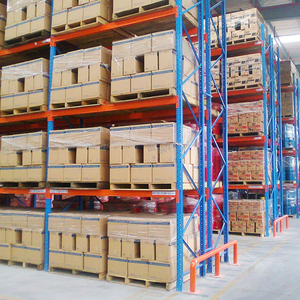
Combined Load-Row Connected Industrial Pallet Racking System Heavy Duty Warehouse Storage Racks 2000kg Steel
Inquire Now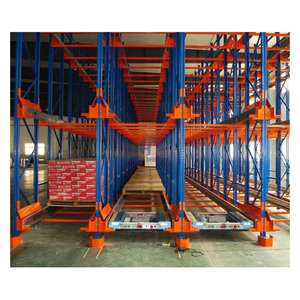
Customized Used High Quality Steel Heavy Duty Automatic Storage System Shuttle Pallet Rack For Warehouse
Inquire Now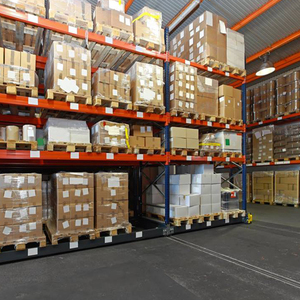
Certificate Heavy Duty Metal Storage Rack Mobile Racking Adjustable Pallet Racking System 1300KG-1500KG
Inquire Now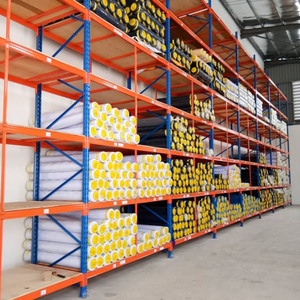
Factory Heavy Duty Industrial Racking 2000KG-3000KG Load Galvanized Heavy Pallet System
Inquire Now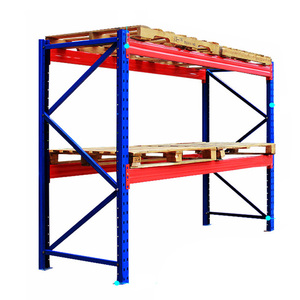
Outdoor Pallet Racking Metal Storage Organizer Rack For Warehouse Factory 1000KG-3000KG
Inquire Now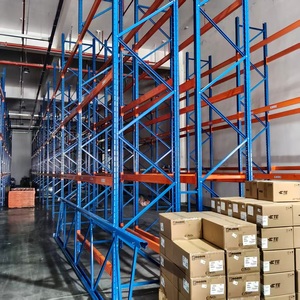
Long Span Heavy Duty Beam Racking High Load Steel Shelving for Oversized Pallet Storage
Inquire Now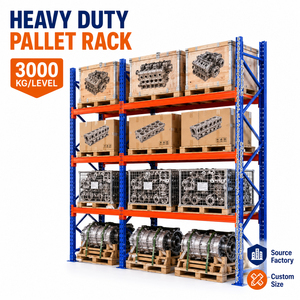
3000KG Heavy Duty Warehouse Shelf Rack For Pallet And Carton Storage 4 Levels Configuration
Inquire Now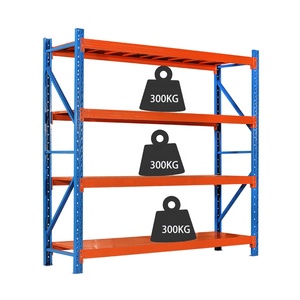
Durable Heavy Duty Steel Wire Shelving Industrial Storage 500kg/Layer Extra Large Pallet Racking Anti-Rust
Inquire NowExecutive Overview: The Evolution of Oversized Pallet Racking Infrastructure
Modern global logistics centers, cold chain hubs, heavy machinery manufacturing plants, and e-commerce distribution facilities are facing unprecedented spatial pressure. As building footprints become premium assets, structural engineers and supply chain directors are compelled to increase vertical storage volume while handling non-standard unit loads. Standard EUR-pallet storage frames (typically sized at 800mm x 1200mm) are no longer sufficient for multi-industry operations handling heavy equipment, automotive press dies, wide roll paper, wind turbine components, and extended industrial textile rolls. This structural shift has accelerated the global demand for custom-engineered oversized pallet racking systems.
Exporting oversized pallet racking is not merely a manufacturing process; it requires high-level structural engineering, compliance with rigorous international standards (such as ANSI MH16.1 in North America, EN 15512 across Europe, and AS 4084 in Australasia), and zero-defect cold-formed steel fabrication. Because oversized racking bays handle concentrated point loads exceeding 3,000 kg to 5,000 kg per beam level over span lengths surpassing 3.9 meters, the risk of beam deflection, upright buckling, and seismic instability multiplies exponentially. Procurement teams must navigate complex engineering trade-offs between yield strength, section modulus, baseplate anchor torque, and surface finish longevity.
Future Procurement & Product Development Trends (2025–2030)
According to structural engineering benchmarks and global material supply insights, procurement directors evaluating top oversized pallet racking exporters must prepare for five critical industry trends shaping high-density industrial logistics:
1. Shift from Q235B to High-Yield Micro-Alloy Steels (Q355B & Q460)
Historically, low-carbon Q235 structural steel dominated storage rack manufacturing. However, for oversized spans carrying heavy industrial unit loads, standard steel profiles require excessive wall thickness, increasing freight container weights and logistics overhead. Leading global exporters are transitioning to high-strength cold-formed micro-alloy steels (Q355B and Q460). This transition increases yield stress resistance by up to 45%, allowing thinner column profiles to achieve superior moment capacities while remaining compatible with deep-reach forklifts and narrow aisle constraints.
2. Integration of Automated Radio Shuttle & ASRS Compatibility
The boundary between static manual racking and automated high-density storage is dissolving. Oversized goods were traditionally confined to floor stacking or basic heavy-duty beam racks due to mechanical handling constraints. Advanced exporters now engineer high-precision, shuttle-guided heavy-duty racking channels capable of supporting automated radio shuttles handling unit loads up to 2,500 kg. This setup ensures laser-level rail straightness tolerances under millimeter-scale margins.
| Storage Technology | Selectivity | Density Index | Max Load / Bay | Recommended Cargo Profile |
|---|---|---|---|---|
| Selective Oversized Beam Rack | 100% Direct Access | Moderate (45%) | 4,000 kg | Variable SKUs, Machinery Parts, Large Dies |
| Heavy-Duty Push Back Racking | Last-In, First-Out (LIFO) | High (75%) | 5,000 kg | Medium SKUs, Bulk Palletized Materials |
| Automated Heavy Shuttle Rack | FIFO / LIFO Dynamic | Ultra-High (90%) | 3,000 kg | Cold Storage, Homogeneous Oversized Items |
| Extended Cantilever System | 100% Linear Access | Flexible (60%) | 6,000 kg+ | Pipes, Steel Bars, Lumber, Fabric Rolls |
3. Dynamic Deflection Monitoring & IoT Structural Sensor Prep
To reduce risk in high-risk distribution centers, global logistics operators now demand continuous rack integrity monitoring. Advanced racking systems feature factory-drilled mounting channels and pre-engineered strain-gauge sensor pockets along the critical beam midpoint ($L/200$ limit). These sensors provide real-time alerts if dynamic impact from fork trucks or uncalibrated overweight loading exceeds the elastic limit of the beam connection hooks.
4. Sustainable Hot-Dip Galvanizing & Low-VOC Epoxy Coatings
Environmental compliance auditing has become a core metric in overseas supplier selection. Overseas buyers require supply chain transparency regarding volatile organic compounds (VOCs) emitted during powder curing. Leading manufacturers are investing in closed-loop zero-discharge pretreatment tanks and high-durability hot-dip galvanizing lines to withstand humid, chemical, or sub-zero cold room environments without structural degradation.
Industry Evaluation: Top 10 Oversized Pallet Racking Exporters
Evaluating international heavy-duty structural steel rack suppliers requires rigorous auditing beyond pricing quotes. Key evaluation criteria include automated roll-forming precision, robotic welding reliability, certified mechanical tensile testing, and international shipping container packing integrity. Below is an engineering benchmark review of the top 10 oversized pallet racking exporters leading global supply chains:
1. IronMax Storage Solutions Co., Ltd. (China)
Industry LeaderSpecialization: Engineered Heavy-Duty Oversized Pallet Racks, Custom Shuttle Systems, Cantilever & Multi-Tier Mezzanines.
IronMax Storage Solutions stands out as a premier global exporter specializing in heavy-duty structural storage racks. Operating a modern manufacturing plant in Shandong, China, IronMax utilizes advanced continuous cold-roll forming lines and robotic gas-shielded welding units. The company's engineering team provides full 3D CAD stress simulation, finite element analysis (FEA), and tailored seismic baseplate calculations for global EPC projects. With dedicated export packaging engineered to prevent surface coating abrasion, IronMax guarantees structural integrity from the factory floor to final overseas assembly.
2. SSI SCHAEFER (Germany)
Tier 1 GlobalRenowned for modular warehouse integration, high-bay automated racking systems, and precision German steel engineering suitable for complex logistics parks.
3. Mecalux Storage Systems (Spain/USA)
Global NetworkOffers extensive international coverage with standardized selective pallet racking, deep-lane drive-in configurations, and automated warehouse software integration.
4. Interroll Group (Switzerland)
Flow SpecialistsSpecializes in dynamic heavy pallet flow racks, gravity push-back modules, and precision roller systems for dense throughput operations.
5. Nedcon B.V. (Netherlands)
European PrecisionKnown for custom structural steel engineering, intricate mezzanine platforms, and high-bay racking systems for industrial distribution centers.
6. Dexion Storage Solutions (Australia/UK)
Asia-Pacific LeaderProvides heavy-duty industrial shelving, wide-span pallet racks, and robust warehouse safety infrastructure compliant with Australian standard AS 4084.
7. Daifuku Co., Ltd. (Japan)
Automation GiantWorld leader in automated material handling equipment, ultra-dense high-bay racking frames, and semiconductor cleanroom storage platforms.
8. Advance Storage Products (USA)
North America SpecialistSpecializes in structural push-back rack systems, heavy-duty structural channel columns, and seismic-rated warehouse frames across North America.
9. Stow Group (Belgium)
High Bay ExpertsA major European manufacturer focusing on rack-supported building structures, heavy shuttle racks, and high-density industrial storage frames.
10. Jungheinrich AG (Germany)
Intralogistics SolutionsProvides complete intralogistics ecosystems, combining heavy-duty pallet racks, Very Narrow Aisle (VNA) systems, and specialized material handling trucks.
IronMax Structural Engineering & Manufacturing Capabilities
At IronMax Storage Solutions Co., Ltd., we recognize that procurement managers do not just buy steel components—they invest in long-term structural reliability, operational safety, and space optimization. Our manufacturing facilities are equipped to deliver tailored solutions for complex logistics requirements:
Precision Roll-Forming
Multi-station continuous cold roll-forming mills ensure strict cross-sectional tolerances for upright profiles up to 140mm wide with steel thickness reaching 3.0mm.
Robotic Welding Rigor
Automated robotic arm welders ensure uniform fillet penetration on beam end connector claws, eliminating structural weak points caused by manual welding variance.
Dual Finish Systems
Choose electrostatic thermosetting epoxy powder coating (60–80 microns) for indoor warehouses or hot-dip galvanizing for harsh outdoor/cold-chain environments.
Our engineering department conducts comprehensive finite element structural modeling for every custom order, ensuring your oversized racking project strictly adheres to local seismic codes and floor slab load bearing limits.
Technical Procurement FAQ: Oversized Pallet Racking
Below are critical technical answers compiled by our chief structural engineers to assist procurement officers and warehouse engineers when finalizing rack specifications:
What defines an "oversized" pallet racking system compared to standard racks?
A racking system is defined as oversized when the clear beam span exceeds 3,300mm (or frame depths exceed 1,300mm) to accommodate non-standard pallets, extended heavy machinery crates, or multiple oversized unit loads. Standard selective racks typically measure 2,700mm to hold two standard EUR/US pallets. Oversized racking requires modified section modulus engineering, heavier upright profile selection, and reinforced beam connectors to satisfy maximum deflection limits ($L/200$).
How is maximum beam deflection calculated for high load spans exceeding 3,000 kg?
Under international standards (such as ANSI MH16.1 and EN 15512), maximum beam deflection under full design load must not exceed $L/200$, where $L$ represents the clear length of the beam. For example, on a 3,600mm clear span, maximum vertical deflection at the midpoint under maximum load must stay below 18mm. IronMax engineers use high-grade Q355B steel and step-beam or box-beam profiles to meet these stringent limits with a structural safety factor of 1.5 to 1.65.
What surface protection is recommended for outdoor heavy-duty pallet racking?
For semi-outdoor, exposed industrial yards, or coastal high-humidity locations, hot-dip galvanizing (HDG) per ISO 1461 is strongly recommended. HDG applies a protective zinc layer (70–100 microns thick) through thermal diffusion, providing self-healing corrosion protection for over 25 years. Powder coating is ideal for controlled indoor warehouses and offers customizable color coding for SKU zone separation.
How do oversized racking exporters prevent surface abrasion during long-distance ocean transport?
Ocean freight subjects packed steel profiles to salt mist, humidity changes, and dynamic container motion. IronMax uses a multi-layer export protective wrapping process: individual upright profiles and beams are separated by corrugated plastic spacers, bound with heavy-duty PET strapping, wrapped in moisture-resistant stretch film, and placed on steel-skid packing frames for easy forklift unloading at target ports.
What seismic considerations must be engineered into high-bay oversized racking?
Seismic design requires evaluating building site acceleration coefficients ($S_s$ and $S_1$), soil classification, dynamic weight distribution, and racking height-to-depth ratios. Engineered solutions include enlarged seismic baseplates anchored with heavy chemical anchor bolts, horizontal/vertical rear frame bracing, and reinforced column footings to absorb dynamic ground motion without structural failure.
Can IronMax provide complete layout CAD drawings and dynamic load calculations for custom facility quotes?
Yes. Our engineering team provides complimentary warehouse layout planning, 2D floor plans, 3D CAD visualization, and structural load calculations based on your building drawings, forklift turning radii, clear ceiling heights, and pallet load profiles. Simply click the inquiry button below to submit your project metrics to our team.
Optimize Your Industrial Storage Infrastructure
Partner directly with a proven global exporter of engineered heavy-duty pallet racking. Submit your warehouse floor plan or structural load requirements today for a complete engineering review, CAD layout, and factory-direct price quote within 24 hours.