Featured Automated & Crane-Supported Racking Systems
Engineered for high-bay AS/RS integration, heavy-duty payload stability, and high-density warehouse automation
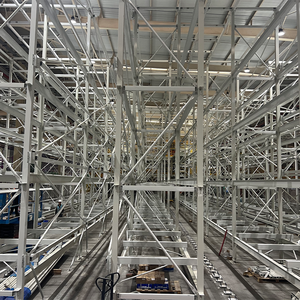
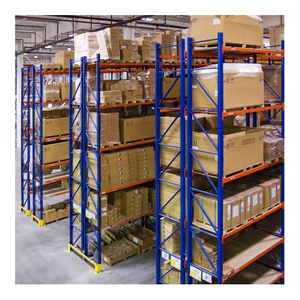
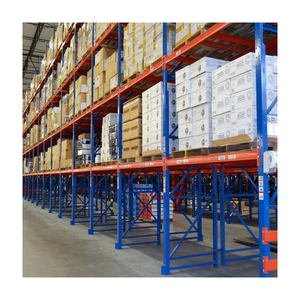
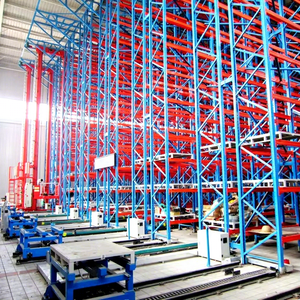
1. Technical Mechanics of Crane-Supported Pallet Racking in Modern AS/RS
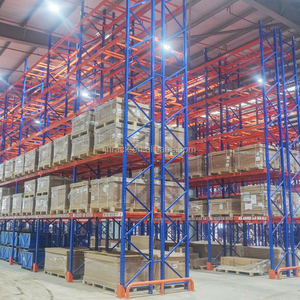
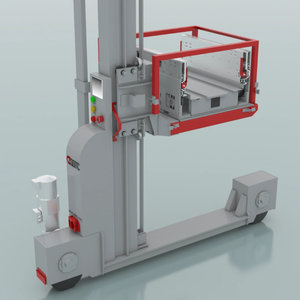
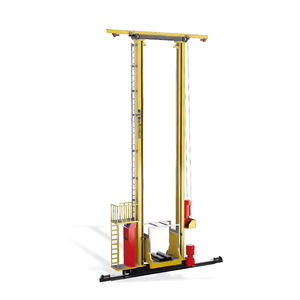
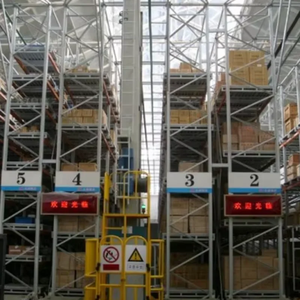
Crane-supported pallet racking systems—frequently classified under Automated Storage and Retrieval Systems (AS/RS) or Rack-Supported Clad Buildings—represent the most engineering-intensive structural category in global logistics infrastructure. Unlike traditional selective pallet racking designed solely for manual or reach-truck forklift access, crane-supported racking structures function as the integrated guidance infrastructure for high-speed automated Storage Retrieval Machines (SRM) / Stacker Cranes.
In a crane-guided high-bay warehouse, the racking frames do not merely sustain static pallet weight; they absorb intense dynamic horizontal braking forces, crane acceleration torque, and vibration loads generated by single or double-deep stacker cranes operating at horizontal speeds upwards of 240 meters per minute. Furthermore, in Rack-Supported Buildings (RSB), the steel racking matrix itself supports the exterior roof and wall cladding, completely eliminating the need for a separate conventional building column framework.
Engineering Core Insight: According to European FEM 9.831 and EN 15620 standards, crane-supported racking requires millimetric tolerances. Top crane guide rail horizontal deflection ratios must strictly conform to tight L/300 to L/400 limits to prevent stacker crane derailment, sensor positioning errors, or telescopic fork mechanical jamming during automated pallet insertion.
Key Structural Components of Stacker Crane Racking
A resilient crane-supported pallet racking system consists of highly engineered cold-formed or hot-rolled steel structural elements designed for exact load transfer:
- High-Tensile Upright Frames: Formed from Q355B or S355JR structural steel coil, exhibiting up to 355 MPa yield strength with specialized teardrop or diamond slot geometry to lock beam connectors under high dynamic loads.
- Top Crane Guide Beams & Rails: Rigid steel profiles mounted at the apex of the rack columns, housing precision-machined top guide tracks that stabilize the mast head of vertical stacker cranes.
- Bottom Runway Rail Anchors: Floor-mounted embedded steel tracks equipped with heavy-duty chemical expansion anchors and leveling shims designed to handle localized vertical axle loads exceeding 150 kN.
- Vertical & Horizontal Portal Bracing Systems: X-bracing and transverse truss ties strategically configured along aisle ends and rack backs to resist seismic shear forces and structural frame sway.
Structural Deflection Control
Rigid vertical alignment with frame deflection rates engineered within FEM 9.831 tolerances, guaranteeing zero jamming for high-speed automated stacker crane forks.
Cold Chain & Hot-Dip Galvanizing
Specialized anti-corrosion treatments including thick hot-dip galvanizing and low-temperature ductile steel grades for sub-zero freezer applications operating down to -30°C.
FEM & RMI Structural Verification
Advanced 3D Finite Element Analysis (FEA) modeling simulating combined static, dynamic, wind loading, and seismic seismic ground movement up to Zone 4.
2. Top 10 Crane-Supported Pallet Racking Factories & Exporters (2025 Global Benchmark)
Selecting the appropriate manufacturer or OEM exporter for crane-supported racking requires an in-depth evaluation of steel roll-forming precision, weld integrity, engineering compliance, and international turnkey execution capabilities. Below is an authoritative technical benchmark of the top 10 global manufacturers dominating the automated crane-supported storage sector.
1. IronMax Storage Solutions Co., Ltd. (Jinhui Warehousing OEM Base)
Headquarters: Shandong, China | Export Reach: 50+ Countries
IronMax Storage Solutions Co., Ltd. (operating closely with Jinhui Intelligent Warehousing Equipment) stands out as a premier engineering-led manufacturer specializing in high-density automated racking structures. Housing state-of-the-art automated cold-roll forming profile lines, robotic laser welding cells, and continuous electrostatic powder coating chambers, IronMax manufactures heavy-duty crane-supported pallet racking, stacker crane AS/RS structures, radio shuttle high-bays, and customized steel mezzanines. Their engineering team delivers custom layout design drawings, FEA stress calculations, and international installation supervision within strict ISO 9001 and CE frameworks.
2. SSI Schaefer Group
Headquarters: Neunkirchen, Germany | Global Footprint: Worldwide
SSI Schaefer is a global powerhouse in turnkey automated logistics systems and modular rack-supported buildings. Known for high-precision German manufacturing, their high-bay crane systems reach vertical heights above 40 meters, integrating high-speed Exazell stacker cranes with modular racking bays designed for harsh industrial loads.
3. Daifuku Co., Ltd.
Headquarters: Osaka, Japan | Key Focus: High-Tech AS/RS & Automotive Logistics
Daifuku is widely recognized as one of the world's largest intralogistics system integrators. Their crane-supported racking structures feature extreme mechanical tolerance control, ideal for semiconductor cleanroom storage, automated cold-chain freezers, and ultra-fast pallet retrieval machines.
4. Dematic (KION Group)
Headquarters: Atlanta, USA / Frankfurt, Germany | Key Focus: Supply Chain Automation
Dematic delivers end-to-end automated warehouse infrastructure. Their heavy-duty rack-supported structures integrate seamlessly with Dematic RapidStore stacker cranes, featuring robust structural steel framing compliant with American RMI (Rack Manufacturers Institute) standards.
5. Mecalux Logistics Solutions
Headquarters: Barcelona, Spain | Key Focus: Clad-Rack Warehouse Engineering
Mecalux is a leading European manufacturer of rack-supported buildings (clad-rack systems). Their engineering teams focus on optimizing structural steel volume, creating massive automated storage hubs where racking frames act as the primary load-bearing skeleton for outer wall insulation and roofing panels.
6. Jungheinrich AG
Headquarters: Hamburg, Germany | Key Focus: Intralogistics & Automated Guided Cranes
Jungheinrich excels in holistic material handling solutions. Their crane racking solutions are tightly coupled with their proprietary warehouse control software (WCS) and stacker crane units, emphasizing energy-efficient regenerative braking crane operations.
7. Swisslog Holding AG (KUKA Group)
Headquarters: Buchs, Switzerland | Key Focus: Healthcare & E-Commerce Automation
Swisslog combines Swiss robotics precision with durable steel racking frameworks. Specialized in high-density automated shuttle-crane combinations, Swisslog provides industry-leading solutions for pharmaceutical temperature-sensitive warehouses.
8. Murata Machinery, Ltd. (Muratec)
Headquarters: Kyoto, Japan | Key Focus: Compact AS/RS & Miniload Systems
Muratec specializes in high-speed industrial stacker crane racking and miniload automated storage. Their racking profile manufacturing emphasizes ultra-lightweight high-tensile steel structural geometry with low deflection rates under rapid acceleration.
9. Damon Technology Group
Headquarters: Zhejiang, China | Key Focus: Intelligent Logistics Equipment
Damon Technology has emerged as a rapid-growth Asian manufacturer of automated sorting and crane-supported high-bay racking systems, catering heavily to express parcel logistics, e-commerce mega-hubs, and FMCG manufacturing plants.
10. Pteris Global Limited
Headquarters: Singapore | Key Focus: Airport Cargo Handling & Industrial AS/RS
Pteris Global focuses on heavy-duty industrial storage, air cargo pallet stacker cranes, and specialized U-Turn stacker crane racking systems. Their solutions are engineered for high-impact airport cargo logistics and continuous heavy industrial manufacturing.
3. Technical Benchmark & Sourcing Comparison Matrix
The following comparative evaluation highlights key engineering metrics across leading crane-supported pallet racking suppliers to guide B2B procurement decisions:
| Factory / Exporter | Max Vertical Height | Primary Steel Grades | Design Standards Compliance | Cold Chain (-30°C) Support | TCO Index |
|---|---|---|---|---|---|
| IronMax Storage Solutions | Up to 45 Meters | Q235B, Q355B Steel | FEM 9.831 / CE / ISO | Hot-Dip Galvanized / Epoxy | High Value (Direct Factory) |
| SSI Schaefer | 45+ Meters | S355JR, European Grade | EN 15620 / FEM / DIN | Specialized Low-Temp Coating | Premium Enterprise |
| Daifuku Co., Ltd. | 40 Meters | JIS High-Strength Steel | JIS / ISO9001 / CE | Cleanroom & Freezer Grade | Premium Enterprise |
| Mecalux Logistics | 45+ Meters | S355, Structural Steel | EN 15635 / RMI / FEM | Clad-Rack Insulated Systems | High Structural CapEx |
| Dematic (KION) | 40 Meters | ASTM A1011 / Structural | RMI / ANSI / ISO | Galvanized Uprights | Enterprise Tier |
| Pteris Global | 35 Meters | Heavy Q355 / Structural | ISO / SS Standards | Industrial Heavy Duty | Competitive Project Tier |
4. Technological Evolution & Future Procurement Trends (2025–2030)
As global supply chains demand faster order fulfillment, higher volumetric space utilization, and lower energy consumption, procurement teams must align with emerging technological trends in crane-supported pallet racking:
Trend 1: Hybrid Shuttle-Crane Architecture (Single/Double Deep + Satellite Shuttle)
Modern high-density warehouses are transitioning from traditional single-deep aisle cranes to multi-deep satellite shuttle stacker cranes. In this configuration, the stacker crane carries an autonomous radio shuttle cart into deep racking channels. This reduces required aisle space by up to 60%, multiplying total pallet storage capacity within the same footprint.
Trend 2: Energy-Regenerative SRM Drives and Lightweight Ultra-High Tensile Racking
Next-generation stacker cranes utilize braking energy recovery systems that feed electric power back into the factory grid. To minimize motor strain and power draw, racking manufacturers are deploying ultra-high-tensile cold-rolled steel profiles (such as Q355B and S355JR) that allow thinner wall profiles without sacrificing buckling resistance or structural load ratings.
Trend 3: Digital Twin Integration & Real-Time Structural Strain Monitoring
Smart automated warehouses are incorporating IoT vibration sensors and optical laser displacement meters directly into the racking upright frames. By creating a continuous Digital Twin inside the Warehouse Management System (WMS), facility managers receive real-time alerts regarding frame deflection, accidental crane collisions, or seismic micro-shifts before structural failure can occur.
Trend 4: Accelerated Growth of Rack-Supported Clad Buildings (RSB)
Industrial land costs have driven rapid adoption of Rack-Supported Buildings. By utilizing the pallet racking grid as the primary structural frame for the building’s roof and side cladding, enterprise developers save up to 25% on overall civil construction CapEx and significantly shorten building commissioning schedules.
5. Enterprise Core Competencies & OEM Manufacturing Excellence
When sourcing crane-supported racking and AS/RS components from China, IronMax Storage Solutions Co., Ltd. (alongside Jinhui Warehousing Equipment manufacturing base) provides global importers, EPC contractors, and system integrators with unparalleled manufacturing reliability:
- In-House Manufacturing Control: 100% of cold-roll profile forming, automated punch slotting, robotic welding, and electrostatic powder coating are executed inside our own Shandong production facilities, eliminating sub-contracting delay risks.
- Strict QC & Steel Traceability: Raw steel coils are directly sourced from top-tier state-owned mills (BaoSteel / Shougang Group) with complete mill test certificates (MTC). Every production batch undergoes ultrasonic weld testing, coating adhesion cross-hatch checks, and dimensional tolerance verification.
- Turnkey Global Installation Guidance: Export shipments include detailed 3D installation blueprints, piece-marked component tagging matching container packing lists, and optional remote video or on-site engineering supervision.
- Customized OEM/ODM Flexibility: From customized vertical frame heights up to 45 meters down to specialized U-turn stacker crane curve tracks, our engineering team adapts profiles to meet unique client material handling equipment specs.
6. B2B Procurement FAQ: Crane-Supported Pallet Racking
Answers to critical technical and procurement questions asked by logistics engineers and global purchasing directors: