Industry-Grade High-Density Racking Solutions
Engineered for maximum volumetric efficiency, structural compliance (FEM 10.2.02 / ANSI RMI), and seamless material handling integration.
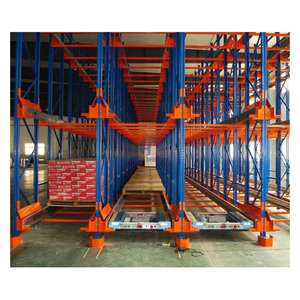
Customized Used High Quality Steel Heavy Duty Automatic Storage System Shuttle Pallet Rack For Warehouse
- Capacity: 1,500 kg / pallet
- Structure: Q355B Steel
- Flow Type: FIFO / LIFO
- Density: 85% Space Utilization
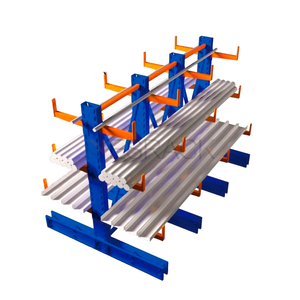
Heavy-Duty 6 Meter High Warehouse Cantilevered Stacking Racks and Shelves Raw Material Storage Rack
- Height: Up to 6.0 Meters
- Arm Load: 800 - 2,500 kg/arm
- Finish: Epoxy Powder Coated
- Application: Pipe, Bar, Sheet Steel
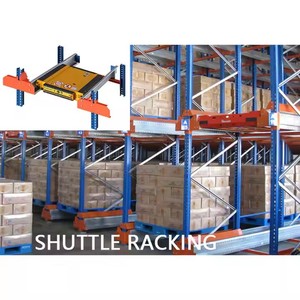
High-Density Automatic Four Way Shuttle Rack Radio Shuttle Rack System With Shuttle System
- Robotic Axis: 4-Direction Travel
- Speed: 1.2 m/s Loaded
- Battery: LiFePO4 Fast Charge
- WMS Integration: API / Modbus TCP
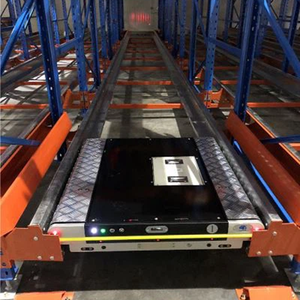
Automated Shuttle Pallet Racking System Two Way Shuttle Racking System
- Lane Depth: Up to 40 Pallets
- Control: RF Remote / Tablet
- Safety: Laser Sensor Array
- Cold Storage: Operates to -25°C
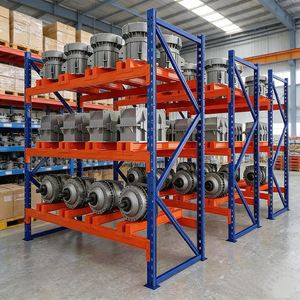
Heavy-Duty Electrical Mobile Pallet Racking Cold Room Equipment for Food Cargo Warehouse Storage Rack
- Aisle Utilization: Single Movable Aisle
- Temp Rating: Down to -30°C
- Drive Mechanism: Floor Rail Electric Motor
- Safety Grid: Infrared Light Curtains
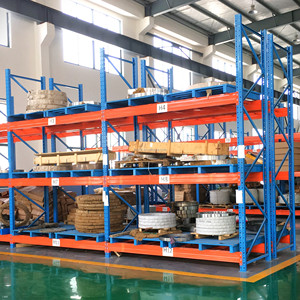
OEM Factory Wholesale Warehouse Racking Industrial Racks Customized Pallet Racking System Heavy Duty Steel Racks
- Beam Span: 2,700 - 3,900 mm
- Level Capacity: 1,000 - 4,500 kg
- Pitch Adjustment: 50mm / 75mm
- Standards: CE / ISO9001 / FEM
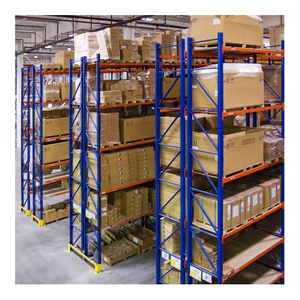
Peterack CE Certified Warehouse Storage Steel Heavy Duty Stacking Racks Shelves Selective Pallet Racking System
- Selectivity: 100% Direct Access
- Upright Profile: 90/100/120mm Omega
- Safety Factor: 1.65 Structural Margin
- Galvanization: Hot-Dip / Pre-Galv
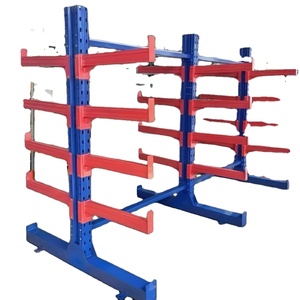
Heavy Duty Single Sided Cantilever Rack Steel Powder Coated Selective Pallet Shelving for Warehouse Storage
- Configuration: Wall-Adjacent Single
- Column Section: H-Beam / Cold Formed
- Arm Locking: Pin & Bolt Adjustable
- Corrosion Rating: C3 / C4 Industrial
Engineering Whitepaper: The Strategic Imperative of Compact Pallet Racking in Modern Logistics
As global industrial land prices continue their upward trajectory and urban fulfillment hubs face acute footprint constraints, logistics directors and supply chain engineers can no longer rely on horizontal expansion. The core challenge of contemporary warehousing lies in balancing volumetric storage density with stock retrieval latency. Compact pallet racking systems—encompassing Radio Shuttle Racking, Drive-In/Drive-Thru Architectures, Very Narrow Aisle (VNA) Frameworks, and Electrical Mobile Racking (EMR)—represent the pinnacle of high-density material handling engineering.
1. Structural Steel Metallurgy & Mechanical Integrity Standards
The safety and structural longevity of compact racking systems under heavy dynamic loads depend fundamentally on steel grade selection, cold-roll profile design, and connection joint kinematics. Premium global manufacturers utilize high-yield structural steel alloys such as Q355B (equivalent to S355JR or ASTM A572 Grade 50) for upright columns and load-bearing beams, providing superior tensile strength (minimum 470–630 MPa) compared to standard commercial mild steel (Q235B).
Advanced upright profiles feature 11-fold to 13-fold cold-rolled bend geometry (Omega profiles), distributing vertical compression forces evenly across the cross-section while minimizing local buckling risks under eccentric loading. Connectors engineered with multi-claw teardrop or hook locks ensure a rigid beam-to-column moment connection, governed by strict compliance with FEM 10.2.02 (European Handling Federation) and ANSI MH16.1 (Specification for the Design, Testing and Utilization of Industrial Steel Storage Racks).
2. Density vs. Accessibility Matrix: Comparative Technology Evaluation
Selecting the optimal compact pallet racking configuration requires a systematic evaluation of SKU velocity, pallet homogeneity, and material handling equipment (MHE) capital expenditure. The table below delineates the operational parameters across primary compact racking archetypes:
| System Architecture | Volumetric Efficiency | SKU Selectivity | Inventory Rotation | MHE Collision Risk | Est. Capital Payback |
|---|---|---|---|---|---|
| Radio Shuttle Racking | Ultra High (85%) | Medium (Per Lane) | FIFO or LIFO | Very Low (External) | 14 – 22 Months |
| Electrical Mobile (EMR) | Ultra High (90%) | 100% Selectivity | FIFO Strict | Low (Guided) | 24 – 36 Months |
| Drive-In Racking | High (75%) | Low (Deep Lane) | LIFO Only | High (Inside Rack) | 10 – 16 Months |
| Push-Back Racking | Medium-High (70%) | Medium (2-6 Deep) | LIFO Only | Low (Face Only) | 12 – 18 Months |
| VNA (Very Narrow Aisle) | High (65%) | 100% Selectivity | FIFO Strict | Low (Wire/Rail Guided) | 16 – 24 Months |
3. Enterprise Manufacturing Strengths: The IronMax Advantage
As an industry-certified tier-1 storage solutions manufacturer, IronMax Storage Solutions Co., Ltd. (Shandong, China) combines structural engineering precision with integrated manufacturing capabilities. Operating dedicated automated cold-roll forming production lines, continuous robotic welding stations, and zero-emission electrostatic powder coating systems, IronMax delivers bespoke high-density storage hardware engineered to withstand severe industrial operating conditions.
Finite Element Analysis (FEA)
Every customized upright frame and beam assembly undergoes rigorous computer simulated static, dynamic, and seismic FEA stress testing to verify deflection limits (L/200 standard) prior to fabrication.
In-House Automated Roll-Forming
Precision German-engineered roll-forming machines produce continuous upright profiles up to 15 meters in length with tight dimensional tolerances (±0.5mm), eliminating weak splice points.
Certified Quality Assurance
ISO9001:2015 and CE certified factory operations with 100% Ultrasonic Weld Flaw Detection, zinc-phosphate surface pretreatment, and thermosetting epoxy-polyester powder coating (70-90µm thickness).
Future Procurement & Technological Trends in Compact Pallet Racking (2025–2035)
1. Deep Integration with Autonomous Mobile Robots (AMRs) & AGVs
The global storage industry is shifting rapidly from manual forklift-operated drive-in racks to fully automated robotic ecosystems. Procurement strategies for 2025 and beyond heavily favor shuttle systems equipped with open API communication layers. Next-generation 4-Way Radio Shuttles operate seamlessly with overhead lifters and floor AMRs, creating self-organizing storage cubes where software algorithms dynamically re-position fast-moving SKUs closer to dispatch faces during off-peak hours.
2. Cold-Chain Thermal Density Optimization
With global cold-chain logistics expanding at an unprecedented rate, cold-room operational costs (driven by energy consumption) make high-density storage essential. Modern compact procurement focuses on Electrical Mobile Racking (EMR) and Sub-Zero Automated Radio Shuttles capable of operating reliably at -30°C. By eliminating unnecessary aisles, cold storage facilities reduce thermal volume by up to 40%, directly lowering refrigeration power loads and carbon footprints.
3. IoT-Enabled Structural Health Monitoring (SHM)
Industrial safety regulations are driving the adoption of smart structural sensor networks integrated into racking frames. Future compact racking systems feature embedded strain gauges, piezoelectric impact sensors, and tilt indicators. These IoT endpoints communicate directly with facility maintenance platforms, flagging structural damage from accidental forklift impacts in real-time before catastrophic frame failure can occur.
4. Modular Green Metallurgy & Low-Carbon Galvanization
Decarbonization mandates across global supply chains are reshaping raw material sourcing. Leading exporters are adopting green-steel production standards, utilizing recycled scrap content processed in Electric Arc Furnaces (EAF). Additionally, solvent-free powder coatings and eco-friendly pre-galvanized zinc coatings with self-healing magnesium additions (Zn-Al-Mg) are replacing traditional toxic chrome passivation methods, extending outdoor anti-corrosion lifespans beyond 25 years.
Frequently Asked Questions (Procurement & Engineering)
What critical parameters are required to calculate a compact pallet racking layout?
Engineers require five core data inputs: (1) Warehouse CAD layout showing clear height under truss and column locations; (2) Pallet dimensions (Length x Width x Height including cargo overhang); (3) Gross pallet weight; (4) Total SKU count and average pallets per SKU; and (5) Forklift specifications including max lift height and turning radius.
How does Radio Shuttle Racking compare to traditional Drive-In Racking?
While Drive-In racking requires forklifts to physically drive inside racking channels (increasing structural collision risk and slowing retrieval speed), Radio Shuttle systems utilize an automated shuttle cart to transport pallets within the channels. This drastically reduces operational cycles, eliminates internal rack damage, and supports both FIFO and LIFO flows.
What structural steel standards do IronMax racking products comply with?
IronMax storage systems are engineered in strict compliance with European FEM 10.2.02 standards, American ANSI/RMI MH16.1 specifications, and Australian AS4084-2012 standards. Structural members are cold-rolled from certified Q355B high-yield structural steel with full material test reports (MTR) provided for export orders.
Can compact racking systems withstand seismic activity?
Yes. Custom engineering includes site-specific seismic calculations (in accordance with IBC / Eurocode 8). Seismic configurations feature enlarged footplates, heavy-duty floor anchor bolts, specialized vertical and horizontal diagonal bracing towers, and reinforced beam connectors to prevent rack collapse during seismic events.
What surface protection finish is recommended for high-humidity or cold store environments?
For standard dry ambient warehouses, high-durability epoxy-polyester powder coating (70-90 microns) offers excellent abrasion and impact resistance. For cold storage (-30°C), coastal environments, or chemical handling, hot-dip galvanizing (HDG according to ISO 1461) or Zinc-Aluminum-Magnesium pre-galvanized coatings are recommended for maximum corrosion immunity.
What is the typical manufacturing and export lead time for global projects?
Standard production lead time ranges from 14 to 25 business days depending on order volume and custom profile specifications. Orders are packed using steel-strapped wooden skids, corner protectors, and moisture-proof plastic wrapping to ensure damage-free maritime container transport.
Optimize Your Warehouse Volumetric Efficiency Today
Connect with IronMax Senior Storage Systems Engineers for a complimentary CAD layout design, structural load calculation, and comprehensive factory-direct quotation.