High-Performance Industrial Storage Solutions
Explore our certified OEM pallet racking, heavy-duty mezzanine platforms, and specialized industrial containers manufactured under strict ISO 9001 and CE quality management protocols.
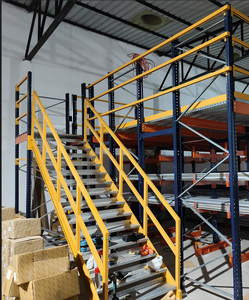
Rack Rollers Heavy Duty Steel Polished Double-Sided Drive-Through Pallet Rack
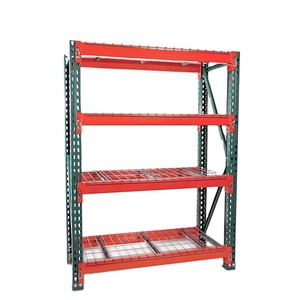
High Quality Warehouse Storage USA Teardrop Pallet Rack With Wire Mesh Deck
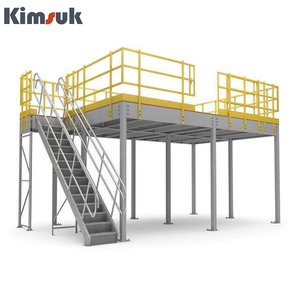
Industrial Warehouse Mezzanine Storage Shelving Platform with Integrated Goods Lift
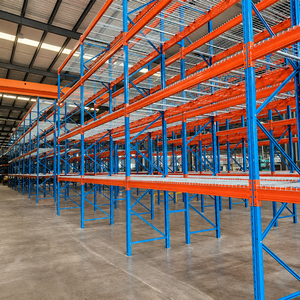
CE Certified Safety Guardrail Heavy Duty Beam Racking System for High Level Storage
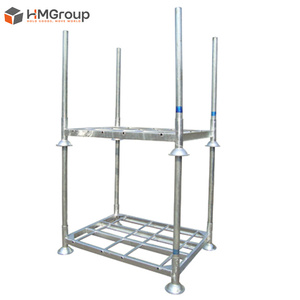
Customizable Heavy Duty Hot-Dip Galvanized Portable Stacking Warehouse Pallet Rack
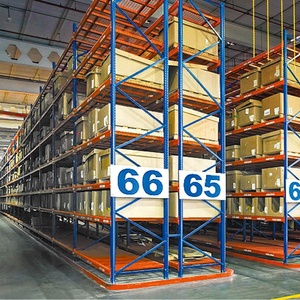
Narrow Aisle (VNA) Pallet Racking System Cold Rolled Steel for Logistics E-Commerce
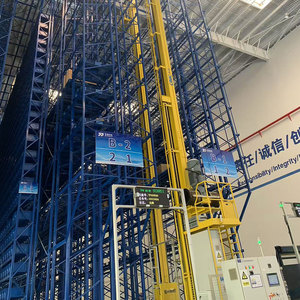
Automated Storage Retrieval System (AS/RS) Pallet Racking with Stacker Crane Integration
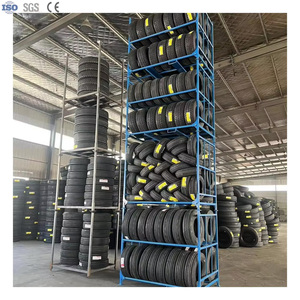
Multi-Layer Stacking Portable Metal Storage Racks for Industrial Wheels & Heavy Items
Engineering Custom OEM Seismic Pallet Racking: Technical Architecture & Fundamentals
In modern high-bay logistics centers, warehouse pallet racking acts as an unreinforced structural framework carrying static load-to-weight ratios up to 40:1. During a seismic event, dynamic forces put these superstructures under intense multi-directional stress.
Understanding Seismic Dynamic Response in Industrial Racking
Unlike standard static storage systems designed strictly for gravity loads ($D + L$), custom OEM seismic pallet racking must withstand transient, ground-induced dynamic excitation. Seismic ground motion generates horizontal base shear forces ($V$) and dynamic uplift moments that propagate upward through upright frames, beam-to-column connectors, and baseplates.
When designing racking for high seismic activity zones (such as Seismic Design Categories D, E, and F per ASCE 7 or PGA values exceeding 0.3g), global engineering standards—including ANSI MH16.1 (RMI), FEM 10.2.02, EN 16681, and AS 4084—mandate precise structural calculation of dynamic mass distribution and frame response parameters.
A rigid rack framing system subjected to strong ground motion risks sudden connection shear failure. Conversely, an overly flexible system creates excessive lateral displacement ($\Delta$), leading to pallet dislodgement and structural instability. OEM seismic engineering balances flexural frame stiffness with plastic energy dissipation capabilities.
Core Engineering Elements of Seismic OEM Design
- Heavy-Duty Footplates: Dual-anchored, oversized baseplates distributed across floor slabs to prevent concrete shear cone breakout.
- Moment-Resisting Beam Connectors: Multi-hook safety connectors with high rotational stiffness ($C_d$) and post-yield energy dissipation capacity.
- Reinforced Column Profiles: Cold-formed C-channel and closed-box uprights engineered with stiffening ribs to resist torsional bucking.
- Seismic Horizontal & Vertical Bracing: K, X, or Z-type braced towers located in internal bays to restrict longitudinal frame deflection.
- Pallet Safety Containment: Safety back-stop beams, wire mesh deck overhang stops, and anti-drop safety baffles.
Comparative Performance Matrix of Racking Architectures in Seismic Zones
Selecting the optimal pallet storage configuration requires matching operational requirements (SKU selectivity vs. volumetric density) with structural dynamic response capabilities under high PGA conditions.
| Racking Architecture | Volumetric Density | SKU Selectivity | Seismic Resistance Rating | Critical Engineering Requirement | Recommended Seismic Mitigation |
|---|---|---|---|---|---|
| Selective Pallet Racking | Standard (40-50%) | 100% Direct Access | High Flexural Ductility | Rotational rigidity of beam-to-column teardrop/hook connectors | Heavy-duty dual anchor baseplates & top-tie rack ties |
| Very Narrow Aisle (VNA) | High (65-75%) | 100% Direct Access | Moderate / High Stiffness | Strict sway displacement ($\Delta_{max}$) control for turret truck clearance | Floor guide rail anchoring & top overhead bracing trusses |
| Drive-In / Drive-Through | Very High (75-85%) | Low (LIFO / FIFO) | Complex Structural Risk | Lack of internal longitudinal beams creates torsional instability | Top-deck cross bracing towers, heavy arm brackets, floor rails |
| Push-Back Racking | High (60-70%) | Medium (Per Lane) | Good Dynamic Stability | Nested cart retention under dynamic ground acceleration | Positive cart locking hooks, high-grade incline incline-stop buffers |
| Automated AS/RS Systems | Ultra-High (85-95%) | 100% Automated | High Precision Engineered | Millimeter-level deflection tolerance under dynamic sway | Base isolation dampers, high-tensile structural steel profiles (Q420) |
| Cantilever Racking Systems | Variable (Long Goods) | 100% Horizontal | Moderate (Unbraced Arm) | Out-of-plane flexural bending moments on central column spines | Heavy column base stiffeners, longitudinal sway bracing pipes |
Future Procurement & Technology Trends in Seismic Pallet Racking
As global supply chains expand across seismically active zones in North America, Latin America, the Pacific Rim, and Southern Europe, industrial storage procurement is shifting from static low-cost commodity buying to engineered resilient assets.
1. IoT-Integrated Structural Health Monitoring
Next-generation seismic installations incorporate embedded tri-axial MEMS accelerometers and strain gauges into upright columns. These real-time telemetry systems record structural resonance frequency shifts, micro-cracks, and permanent lateral tilt immediately following a seismic event, allowing rapid post-earthquake safety clearance.
2. Base Isolation & Friction Pendulum Dampers
Borrowed from high-rise civil engineering, base isolation platforms are entering ultra-tall AS/RS installations. By decoupling the racking superstructure from the warehouse floor slab via spherical sliding bearings or elastomeric seismic isolators, base displacement energy input is reduced by up to 70%.
3. Transition to Ultra-High-Strength Q420 Cold-Formed Steel
Global procurement teams are replacing legacy Q235 structural steel with advanced micro-alloyed cold-rolled steel grades like Q355B and Q420. Higher yield strengths allow thinner steel profiles without sacrificing axial buckling resistance, significantly reducing total shipping weight and carbon footprint.
4. Strict Harmonization of Global Seismic Codes
Multinational logistics operators are enforcing unified structural standards across overseas facilities. Procurement contracts now universally demand cross-certification matching US RMI/ANSI MH16.1 specifications alongside European EN 16681 dynamic design methods.
5. Advanced Finite Element Analysis (FEA) Simulation
Modern OEM customization relies on non-linear time-history response calculations. Before manufacturing begins, virtual models simulate physical shake-table tests under simulated real-world ground accelerations to optimize beam profile geometries and weld locations.
6. Eco-Friendly Galvanized & Zero-VOC Finishes
Cold storage and coastal applications require high corrosion resistance. Emerging procurement trends favor closed-loop automated powder coating and eco-conscious hot-dip galvanizing process lines that eliminate heavy metal sludge and VOC emissions.
Why Partner with IronMax Storage Solutions for Custom OEM Seismic Racking?
With decades of dedicated structural steel roll-forming expertise and direct manufacturing facilities based in Shandong, China, IronMax Storage Solutions Co., Ltd. supplies high-density warehouse storage systems engineered to pass rigorous international seismic audits.
In-House Roll-Forming & Precision Manufacturing
We control the entire production line from coil slitting, continuous cold roll-forming, laser punching, automated robotic welding, to electrostatic powder coating.
Custom OEM / ODM Structural Engineering
Our engineering team generates custom CAD layouts, 3D structural models, and finite element strain analyses configured to your building's specific PGA seismic zone parameters.
Rigorous Quality Assurance & Material Traceability
Every steel heat batch undergoes chemical composition spectroscopy, yield tensile strength testing, and weld integrity inspections backed by ISO 9001 quality documentation.
Global Container Export & On-Site Support
We package racking components with protective edge corner wrap and organized bay bundling, providing comprehensive assembly manuals and remote video engineering supervision.
Frequently Asked Questions: Seismic Pallet Racking Procurement
In-depth technical answers to critical engineering, safety, and logistical questions commonly raised by global warehouse buyers and structural engineering consultants.
What differentiates a standard pallet rack from an engineered seismic pallet rack?
Standard static pallet racking is designed to carry vertical gravity forces under stable conditions ($D + L$). In contrast, an engineered seismic pallet rack is mathematically modeled to endure dynamic lateral and uplift forces generated during horizontal ground acceleration ($E$). Seismic racking incorporates high-yield structural steel (e.g., Q355B or Q420), larger footplates with heavy-duty chemical post-installed anchors, reinforced diagonal frame bracing, rigid beam-to-column connector locks, and anti-dislodgement wire decking or pallet support bars to prevent inventory drop.
Which structural standards govern seismic pallet rack design globally?
Major international seismic design standards include:
- United States: RMI/ANSI MH16.1 (Specification for the Design, Testing and Utilization of Industrial Steel Storage Racks) and ASCE 7 (Minimum Design Loads and Associated Criteria for Buildings).
- Europe: EN 16681 (Steel static storage systems - Adjustable pallet racking systems - Principles for seismic design) and FEM 10.2.02.
- Australia / New Zealand: AS 4084 (Steel storage racking).
How does Peak Ground Acceleration (PGA) impact rack baseplate and anchor selection?
Peak Ground Acceleration (PGA), expressed as a fraction of standard gravity ($g$), defines the intensity of earthquake motion at a specific geographic site. Higher PGA values generate increased dynamic overturn moments at column bases. Consequently, baseplates must expand in footprint and thickness to distribute compression loads over the concrete floor slab. Furthermore, standard mechanical expansion wedge anchors are often replaced with high-performance heavy-duty seismic-rated chemical concrete anchors engineered to resist shear cone breakout under cyclic loading.
Can standard selective pallet racking be retrofitted for seismic zones?
While minor upgrades—such as adding oversized baseplates, upgrading anchor bolts, installing seismic top ties, and adding internal X-bracing towers—can improve structural capacity, full seismic compliance usually requires engineered structural frame replacements. Retrofitting existing non-seismic racks without a comprehensive finite element analysis (FEA) can lead to unpredicted localized stress points and premature failure.
What input data must a buyer provide to receive a certified seismic rack quote?
To accurately calculate dynamic seismic loads, our structural engineering team requires:
- Detailed warehouse CAD architectural drawings (including column grid spacing, building clear height, and slab specs).
- Geographic location / postal code of the facility (to extract local PGA, $S_{DS}$, and $S_{D1}$ seismic spectral accelerations).
- Pallet dimensions (Length x Width x Stacking Height) and maximum/average weight per unit load.
- Forklift equipment specs (lift height, turning radius, and aisle width requirement).
- Operational environment (ambient vs. sub-zero cold room storage).
How do high-density systems (Drive-In vs. Radio Shuttle) perform during earthquakes?
Drive-In racking is structurally vulnerable during seismic events because it lacks internal cross-beams, creating potential lateral instability. It requires heavy top-tier bracing frames and floor guide rails to maintain frame alignment. Conversely, Automated Radio Shuttle systems feature full horizontal beam ties at every level, creating a rigid three-dimensional structural block that offers significantly superior seismic energy distribution.
What surface finish is best for seismic racking installed in cold storage facilities?
Sub-zero cold storage warehouses exhibit high humidity and temperature variation, promoting steel corrosion. For cold storage seismic applications, we recommend Hot-Dip Galvanizing (HDG) or specialized low-temperature flexible epoxy powder coatings. Galvanizing creates a metallurgically bonded zinc alloy coating that protects structural steel from rust while maintaining yield strength in freezing environments.
What post-earthquake inspection steps should warehouse operators follow?
Following a noticeable seismic event, operators must instantly restrict rack aisle access and execute a structural audit focused on: 1) Checking upright baseplates and anchor bolts for sheared concrete or loose nuts; 2) Inspecting beam-to-column connector safety locks for unseating; 3) Measuring vertical frame plumbness/out-of-plumbness tolerances; and 4) Checking diagonal frame braces for plastic buckling or weld cracks.
Engineer Your Seismic-Resilient Storage System Today
Connect directly with IronMax Storage Solutions' engineering team. Send your building dimensions and storage requirements for a full CAD layout, structural load calculation report, and competitive factory-direct OEM quote.