An authoritative engineering breakdown of semi-automated radio shuttle pallet racking systems for logistics directors, cold-chain operators, and warehouse system integrators.
In modern industrial warehousing, space optimization and inventory throughput are no longer opposing targets. As urban industrial land costs skyrocket and cold-chain operational expenses surge, enterprise logistics management requires high-density storage architectures that eliminate wasteful aisle space while retaining fast operational tempos. Radio Shuttle Racking Systems represent the pinnacle of semi-automated high-density storage, bridging the gap between basic static selective racking and complex fully automated ASRS (Automated Storage and Retrieval Systems).
As a leading China-based OEM Radio Shuttle Racking Factory and Exporter (operating from our advanced steel manufacturing hub in Shandong Province), IronMax Storage Solutions Co., Ltd. combines heavy-duty structural steel roll-forming, precision wireless automation, and customized mechanical engineering. This whitepaper provides a comprehensive evaluation of automated pallet shuttle system designs, structural load engineering, sub-zero battery management protocols, cost-benefit matrices, and actionable procurement criteria for global enterprise buyers.
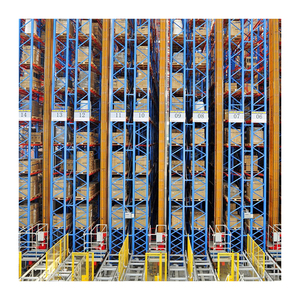
Direct from our manufacturing facility: engineered shuttle racking modules, high-load steel channels, and custom 2-Way / 4-Way pallet shuttle vehicles.
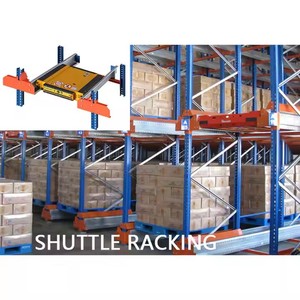
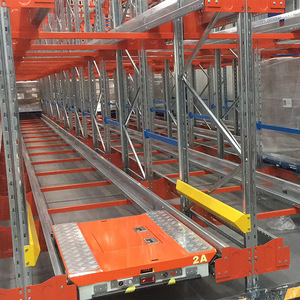
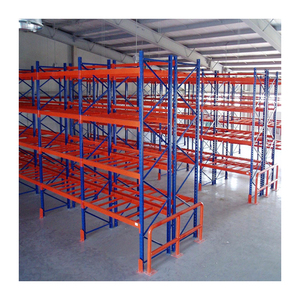
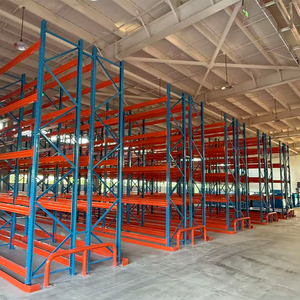
A radio shuttle racking system is a deep-lane semi-automated storage solution that utilizes an autonomous shuttle cart powered by electric motors to travel along special guide rails inside racking channels. The forklift operator simply positions the shuttle cart at the desired channel entry and places the pallet onto the shuttle. The shuttle then automatically transports the pallet to the deepest available storage position inside the lane without requiring the forklift to enter the rack structure.
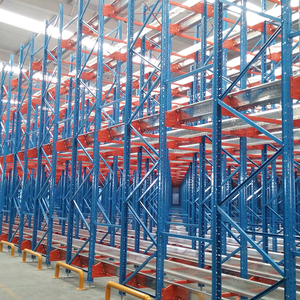
The structural integrity of a shuttle racking block depends heavily on the roll-formed profile geometry and chemical composition of the steel structural members. Unlike standard selective pallet racking, shuttle rails experience combined dynamic loads: vertical static pallet weights plus high-frequency horizontal braking and acceleration forces from the autonomous shuttle vehicle.
The heart of the system is the wireless radio shuttle cart. Engineered with industrial-grade microcontrollers and heavy-duty chassis mechanics, each shuttle vehicle integrates several critical subsystems:
Electro-hydraulic or motorized eccentric mechanical lift plates raise the pallet 40mm–60mm off the rail surface during transport, lowering smoothly upon arrival at the target location.
High-capacity Lithium Iron Phosphate (LiFePO4) battery packs provide 8 to 16 hours of continuous operational duty cycles, supported by quick-charge dock stations and sub-zero internal heating jackets.
Operates on 433MHz, 868MHz, or 2.4GHz Industrial Wi-Fi protocols, enabling long-range handheld remote control or seamless API handshake with enterprise WMS/ERP platforms.
Shuttle racking systems accommodate both primary stock rotation philosophies with simple layout variations:
Quantitative analysis evaluating volumetric storage efficiency, throughput velocity, equipment damage risks, and total cost of ownership (TCO).
| Storage System Architecture | Floor Space Utilization | Pallet Selectivity | Throughput Speed | Forklift Damage Risk | Cold Storage ROI Score | 10-Year TCO Index |
|---|---|---|---|---|---|---|
| Radio Shuttle Racking | 85% - 92% | By Lane (High Density) | High (Automated Travel) | Very Low | 9.5 / 10 | Medium-Low |
| Standard Selective Racking | 40% - 50% | 100% (Direct Access) | Medium (Manual Drive) | Moderate | 4.0 / 10 | High (Space Cost) |
| Drive-In Racking | 65% - 75% | Low (Last-In First-Out) | Low (Slow Driving) | High (Aisle Impact) | 6.0 / 10 | Moderate |
| Push-Back Racking | 70% - 80% | By Lane (2-6 Deep) | Medium | Low-Moderate | 7.0 / 10 | Medium |
| Fully Automated ASRS | 90% - 95% | 100% Automated | Ultra-High | Zero (Unmanned) | 8.5 / 10 | Very High Initial CapEx |
Technical Analysis: While traditional drive-in racking offers high initial storage density at a lower structural purchase price, its operational drawbacks—slow forklift travel inside narrow upright lanes and frequent structural upright damage—lead to high lifetime repair costs and elevated safety risks. Radio shuttle racking eliminates forklift drive-in travel completely, reducing rack frame maintenance expenses by over 80% while increasing pallet loading speed by up to 50%.
Key technological advancements transforming pallet shuttle manufacturing, logistics automation, and enterprise procurement strategies worldwide.
While traditional 2-way shuttles operate strictly in longitudinal channels, procurement demand is rapidly shifting toward 4-way shuttle systems. 4-way shuttles can change tracks automatically to navigate both transverse and longitudinal aisles, enabling full 3D spatial agility across the entire storage matrix without manual forklift relocations.
Modern automated radio shuttles are no longer standalone mechanical tools. Future-ready procurement contracts require embedded IoT sensor arrays (vibration, temperature, battery health, wheel wear) that stream real-time operational telematics directly into Cloud WMS systems for predictive maintenance scheduling.
For sub-zero cold-chain warehousing (-30°C to -40°C), traditional lead-acid and early lithium batteries suffer severe capacity drop-offs. Future procurement standards favor advanced Lithium-Titanate (LTO) chemistry and active thermal management jackets, enabling full charge cycles in under 30 minutes within deep-freeze environments.
Enterprise procurement teams across Europe and North America now demand documented carbon intensity reports (EPDs) for steel racking structural elements. Factories utilizing energy-efficient cold-roll forming, zero-VOC powder coatings, and fully recyclable hot-dip galvanized steel hold decisive bidding advantages.
Combining heavy manufacturing capabilities in Shandong, China with stringent international structural engineering standards.
IronMax Storage Solutions Co., Ltd. is a dedicated racking and industrial storage equipment manufacturer. Operating a state-of-the-art production base in Jining City, Shandong Province, we specialize in custom project design, precise roll-forming fabrication, and global export distribution. Our enterprise capabilities include:
Advanced multi-station continuous rolling lines ensure millimeter-level linear accuracy along 12-meter shuttle tracks, preventing shuttle wheel wear and derailment risks.
Beams and uprights are securely bundled with heavy steel strapping, edge protectors, and waterproof plastic film wrapping, optimized for space-efficient ocean container loading.
Detailed 3D assembly drawings, step-by-step installation manuals, CAD layouts, and remote video technical supervision ensure smooth installation on international job sites.
Detailed answers to key technical, structural, operational, and commercial questions asked by logistics engineers and purchasing managers.
To prepare an accurate engineering drawing and structural quote, our engineering team requires: (1) Warehouse building CAD drawing showing clear height under sprinklers/trusses, floor slab thickness, and column grid; (2) Pallet specifications including exterior length, width, height, and maximum gross payload weight; (3) Pallet bottom runner configuration (e.g., 3-runner, perimeter base); (4) Required operating temperature range (room temp vs. sub-zero freezer); (5) Desired daily pallet turnover volume and stock flow rule (FIFO or LIFO).
Standard radio shuttle vehicles support loads from 500 kg up to 1,500 kg per pallet. Heavy-duty customized OEM shuttles can carry payloads up to 2,500 kg. Racking channels can be designed up to 40 pallets deep or over 50 meters in length. However, optimal channel depth is typically engineered between 15 to 25 pallets to balance inventory batch sizes and picking efficiency.
Our cold-chain radio shuttle systems are specifically engineered to operate reliably in sub-zero temperatures down to -30°C (-22°F). Key cold-store modifications include: cold-resistant electrical components, low-viscosity synthetic lubricants, IP65-sealed sensor housings, anti-condensation internal electronic heaters, and specialized low-temperature LiFePO4 battery packs with automated thermal management.
IronMax radio shuttles feature multi-layered safety systems: (1) Dual laser obstacle detection sensors at front and rear that automatically decelerate and stop the shuttle if an obstacle or misplaced pallet is detected; (2) Mechanical anti-tip side guide rollers that lock into the roll-formed rail profile; (3) End-of-rail mechanical steel stops and photoelectric limit switches; (4) Pallet position positioning sensors to prevent off-center lifting.
Our industrial Lithium Iron Phosphate (LiFePO4) battery packs provide 8 to 12 hours of continuous operational duty under full rated load. Quick-swap battery bay designs allow operators to swap fresh batteries in under 60 seconds. The battery chemistry supports over 3,000 complete charge/discharge cycles (approximately 6–8 years of daily industrial shift usage) before capacity drops below 80%.
In many cases, existing heavy-duty upright frames can be retrofitted if their structural profile, steel thickness, bay spacing, and floor anchoring meet load requirements. However, traditional pallet support beams must be replaced with specialized radio shuttle guide rails and heavy-duty connector brackets. Our engineering team can evaluate your existing racking drawings to confirm conversion feasibility.
All structural steel components manufactured at our facility adhere strictly to international racking standards, including European FEM 10.2.02 & EN 15512, American RMI (MH16.1), and Australian AS4084-2012 specifications. Our manufacturing factory holds ISO9001 quality management certification, ISO14001 environmental management certification, and official CE conformity certificates for export into the European Economic Area.
Standard OEM production lead time is typically 20 to 30 days from final CAD drawing approval and deposit receipt, depending on project scale and surface finish requirements (e.g., standard powder coating vs. hot-dip galvanizing). Ocean shipping times vary by destination port (typically 12–18 days to Southeast Asia, 22–35 days to Europe and North America).
Contact our senior structural engineers today for a complimentary warehouse storage layout design, finite element load analysis, and competitive OEM factory pricing.
Contact Us