High-Density Industrial Storage & OEM Systems
Explore our structural pallet racking, semi-automated shuttles, and heavy-duty steel mezzanine platforms engineered for maximum cubic space utilization.
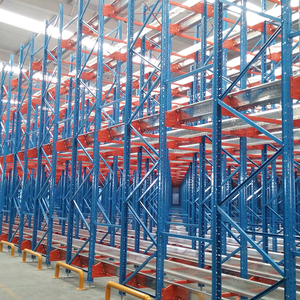
High Density Warehouse Automatic Radio Shuttle Rack Shelves Storage Racks Heavy Duty Pallet Racking Radio Shuttle Racking System
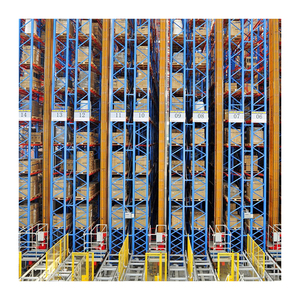
Automated Pallet Racking System Smart Inventory Circulation Industrial Warehouse Storage Radio Shuttle Steel
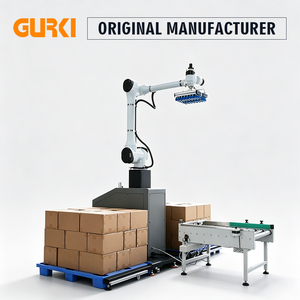
GURKI High Speed Full Automatic Robotic Palletizing Systems Carton Case Box Cobot Palletizer For Warehouse/Factory
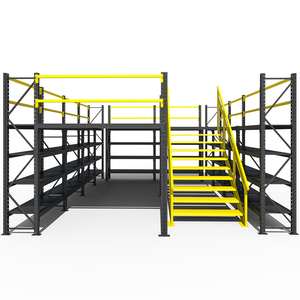
Steel Mezzanine Floor Mezzanine Floors Platform Mezzanine Floor Rack For Warehouse Storage Industrial Heavy Duty Warehouse Rack
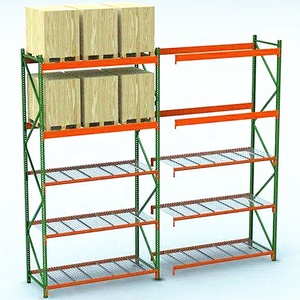
ISO CE Standard Euro Selective Pallet Rack Heavy Duty Pallet Rack Warehouse Storage with Wire Mesh Decking
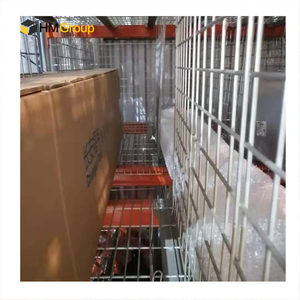
Galvanized Pallet Pallet Rack System Hanging Wire Mesh Decking Dividers

Anti-collision Upright Heavy Duty Rack For 1000kg Storage Forklift Working Selective Pallet Beam Racking System
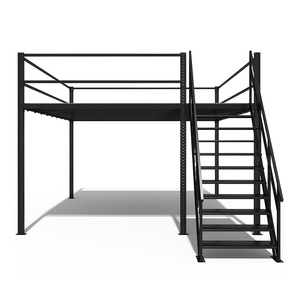
Heavy Duty Rack Industrial Mezzanine Interlocking Floor Rack Attic Racking System For Warehouse Storage
1. Executive Summary & Architectural Overview of Custom Mobile Storage Racking
In modern industrial logistics and supply chain infrastructure, warehouse footprint optimization is no longer merely a space-saving metric—it is a critical driver of total cost of ownership (TCO), operational throughput, and thermal energy efficiency. Custom OEM mobile storage racking systems (often recognized across international markets as powered mobile racking or electric mobile pallet racking) represent the pinnacle of high-density storage technology. By mounting conventional heavy-duty structural pallet racks or cantilever frames onto electronically controlled mobile bases running on embedded floor rails, mobile racking eliminates redundant access aisles. A single operational aisle serves an entire bank of racking racks, expanding usable storage density by up to 85% to 90% compared to traditional selective racking installations.
As dedicated Custom OEM Mobile Storage Racking Suppliers & Exporters, IronMax Storage Solutions Co., Ltd. integrates advanced structural mechanics, cold-rolled steel profiling, electronic motion control algorithms, and multi-layered photoelectric safety protocols. Whether engineered for ambient temperature FMCG fulfillment centers, hazardous chemical containment facilities, or deep-freeze cold storage vaults operating at sub-zero (-30°C) temperatures, our custom OEM/ODM mobile base solutions provide structural stability, seismic resilience, and full compatibility with automated warehouse control systems (WCS) and enterprise resource planning (ERP) platforms.
Engineering Core Principle: High-density mobile storage eliminates dynamic aisle space, allowing warehouse operators to convert up to 50% of wasted aisle area into revenue-generating storage volume without altering building envelopes or structural footprints.
2. System Architecture & Mechanical Engineering Components
Custom OEM mobile racking relies on a tightly integrated system architecture composed of structural cold-formed steel components, heavy-duty floor rails, mechanical drive assemblies, and real-time electronic safety circuits. Each component must be engineered to withstand immense static structural loads alongside dynamic start-stop inertial forces.
Motorized Mobile Base Chassis
Fabricated from heavy-section structural steel channels (Q355B / SS400 grade). Houses dual synchronized gearmotors, wheel sets, and lateral guide rollers engineered for load distributions exceeding 24 tons per bay.
Precision Embedded Floor Rails
High-grade steel guide rails embedded directly into concrete floor slabs (flatness tolerance adhering to EN 15620 / DIN 18202 standards) ensuring seamless travel and zero vibration.
Multi-Tier Safety Light Curtains
Infrared photoelectric safety curtains along aisle entrances, anti-collision optical bumpers, optical distance sensors, and emergency stop trip bars certified to EN 15095 safety standards.
2.1 Structural Profile Geometry & Metallurgy
Our upright frames utilize high-tensile cold-rolled steel profiles with a 50mm or 75mm pitch adjustment scale. The column profiles feature complex multi-rib cross-sections engineered to prevent torsional buckling under localized eccentric loading. Horizontal and diagonal bracing struts are fastened using high-grade 8.8 tensile structural bolts with lock nuts to resist vibration generated during mobile chassis motion. Beam connectors incorporate 3 to 4 safety claw hooks with automatic spring safety locks, preventing accidental beam displacement during forklift operation.
2.2 Motion Control Algorithms & Electrical Interfacing
The operational efficiency of motorized racking relies on smooth acceleration and deceleration curves programmed into central Programmable Logic Controllers (PLC). Soft-start and soft-stop frequency inverters eliminate dynamic sway of stored unit loads during base movement. Remote control RF transmitters, touch-screen HMIs, and optical position sensors allow operators to trigger aisle openings automatically from forklift cabs, reducing cycle times by up to 35%.
3. Comparative Matrix: Mobile Racking vs. Alternative High-Density Systems
Selecting the optimal warehousing system requires evaluating storage density against SKU selectivity, equipment CAPEX, and operational flexibility. Below is a comparative engineering overview compiled by our senior structural logistics team:
| System Type | Storage Density (%) | SKU Selectivity | Handling Equipment | Cold Storage suitability | Relative CAPEX |
|---|---|---|---|---|---|
| Custom Powered Mobile Racking | 85% - 90% | 100% Direct Access | Standard Counterbalance / Reach Truck | Excellent (Max HVAC Energy Savings) | Moderate - High |
| Selective Pallet Racking | 40% - 45% | 100% Direct Access | Standard Forklift | Low (Wasted Cubic Space) | Low |
| Drive-In Racking System | 65% - 75% | Low (LIFO Flow Only) | Specialized Drive-In Forklift | Good | Moderate |
| Semi-Automated Radio Shuttle | 80% - 85% | Moderate (Channel Dependent) | Shuttle Cart + Forklift | High | High |
| Very Narrow Aisle (VNA) | 55% - 65% | 100% Direct Access | Specialized VNA Turret Truck | Moderate | Moderate |
4. Future Procurement Trends in OEM Mobile Storage Racking (2025-2030)
Global industrial procurement directors and third-party logistics (3PL) engineers are shifting procurement strategies to meet dynamic market forces. When sourcing mobile storage racking systems, strategic buyers are focusing on four primary macro-trends:
4.1 Cold Chain Sustainability & Energy Decarbonization
Refrigerated and frozen distribution centers incur massive electrical power overheads, with HVAC and thermal dissipation accounting for over 60% of facility operating expenses. By replacing standard selective racking with custom OEM mobile racking, facilities cut building footprint requirements by nearly half while maintaining identical pallet storage capacity. This cubic volume compression reduces refrigeration power consumption by 40% to 50%, directly lowering Scope 1 and Scope 2 carbon emissions.
4.2 Integration with Automated Guided Vehicles (AGVs) & AMRs
Modern mobile racking systems are no longer isolated mechanical structures. The integration of IoT gateway modules and Modbus/CAN bus communications allows mobile rack PLCs to communicate wirelessly with Autonomous Mobile Robots (AMRs) and AGVs. When an AMR approaches a designated mobile rack block, the WMS automatically commands the mobile chassis to clear the target aisle, enabling fully automated, lights-out warehouse operation without human intervention.
4.3 Modular OEM Standardization & Plug-and-Play Assembly
To reduce overseas installation costs and project deployment timelines, global buyers increasingly require modular plug-and-play electrical harnesses, pre-wired control panels, and boltless structural interconnects. OEM exporters who provide standardized, pre-tested sub-assemblies dramatically minimize on-site installation risks and localized engineering labor costs.
4.4 Real-Time Telemetry & Predictive Maintenance
Next-generation mobile base chassis incorporate embedded vibration sensors, motor thermal sensors, and optical rail alignment trackers. Real-time telemetry data is fed into predictive maintenance dashboards, alerting facility managers to minor mechanical wear, wheel misalignments, or floor rail debris before operational downtime occurs.
5. Development Trends: Material Science & Structural Innovations
The structural design of mobile racking continues to evolve, driven by innovations in metallurgy, surface engineering, and dynamic structural modeling software:
- Ultra-High Cold-Formed Steel Grades: Transitioning from conventional Q235 steel to micro-alloyed Q355B and S355JR structural steel grades allows thinner profile walls with higher moment-of-inertia, reducing structural self-weight while maintaining ultimate tensile load ratings.
- Advanced Electrostatic Powder Coating & Galvanizing: Thermosetting epoxy-polyester powder finishes formulated for low-temperature elasticity resist cracking under sub-zero thermal contraction, while hot-dip galvanized finishes provide long-term protection in corrosive chemical environments.
- Seismic Dampening & Finite Element Analysis (FEA): Utilizing advanced 3D FEA simulation tools, structural engineers model dynamic seismic wave propagation across loaded mobile rack blocks, engineering custom anti-tilt top beams, floor anchoring clamps, and seismic safety brakes.
6. Enterprise Advantages & OEM Manufacturing Mastery
IronMax Storage Solutions Co., Ltd. stands as a premier manufacturer, supplier, and exporter of heavy-duty industrial storage racks and custom mobile racking systems. Operating from our state-of-the-art production base in Jining, Shandong Province, China, our facilities combine raw material cold-roll forming, automated robotic welding, pre-treatment washing, and electrostatic powder coating under unified quality control supervision.
IronMax Manufacturing Commitment: Every custom OEM order undergoes rigorous quality verification—from spectral steel composition testing and ultrasonic weld inspection to full structural load testing certified against ISO 9001 and CE directives.
Why Global B2B Buyers & EPC Contractors Partner with IronMax:
- Full In-House Manufacturing Control: Cold-rolling, laser cutting, automated welding, and powder coating are completed entirely within our factory premises, guaranteeing dimensional consistency and strict lead-time control.
- Engineered Layout & CAD Design Support: Our team of 120+ skilled engineers and technicians provides customized 2D CAD layout drawings, 3D structural renderings, and load calculation reports within 24 hours of receiving your warehouse site dimensions and pallet specifications.
- Export-Grade Protective Packaging: Structural upright frames and beams are strapped in heavy-duty protective bundles with reinforced corner guards, small hardware is packaged in reinforced wooden crates, and container loading maps are optimized to prevent shipping damage and maximize container volume.
- Comprehensive Global Installation Support: Each shipment includes complete step-by-step installation manuals, exploded component diagrams, pre-wired electrical schematics, and remote technical guidance. On-site engineering supervision is available for mega-scale logistics projects.
7. Comprehensive Procurement FAQ (Frequently Asked Questions)
Standard heavy-duty mobile racking bases are engineered to support upright bay loads ranging from 8,000 kg up to 24,000 kg per mobile base chassis. Beam levels are typically rated from 1,000 kg to 4,000 kg per pair of beams, depending on pallet dimensions, structural steel thickness, and seismic safety factors requested by the client.
Mobile racking requires embedded steel guide rails set into high-strength reinforced concrete slabs (typically C30/C35 grade or higher). Floor slab levelness must comply with EN 15620 / DIN 18202 standards (Superflat classification). Our engineering team provides detailed floor slab design drawings, rail recess details, and anchoring specs prior to concrete pouring.
Every mobile racking block is equipped with a multi-tiered safety system adhering to EN 15095 standards. Optical safety curtains span across aisle entrances. If a forklift or operator breaks the infrared light barrier while the racks are moving, the central PLC immediately halts all motion. Furthermore, pressure-sensitive optical bumpers and emergency stop buttons are placed along all mobile base chassis.
Yes. Custom OEM mobile racking is ideal for cold storage down to -30°C. Electrical control panels feature internal IP65-rated heating elements to prevent condensation, gearmotors use low-temperature synthetic lubricants, and structural steel components are finished with low-temp elastic powder coating or hot-dip galvanizing to prevent embrittlement.
Uprights and beams are bundled with high-tensile steel strapping and wrapped in protective moisture-barrier film. Small accessories, base plates, bolts, and electrical controls are packed in wooden boxes or heavy-duty cartons. Our loading team creates 3D container packing layouts to ensure maximum weight/volume balance while protecting surface coatings during transit.
Ready to Optimize Your Warehouse Footprint?
Contact IronMax storage engineers today. Send your warehouse drawing and pallet specifications to receive a customized 2D/3D layout proposal and factory-direct OEM quote.
Send an Inquiry