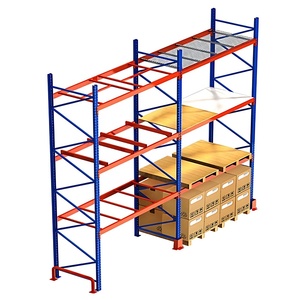
Custom OEM Dynamic Pallet Racking Manufacturers & Suppliers
Engineered Dynamic & Heavy-Duty Racking Systems
Custom OEM solutions designed for maximum volumetric utilization, heavy load distribution, and automated warehouse integration.
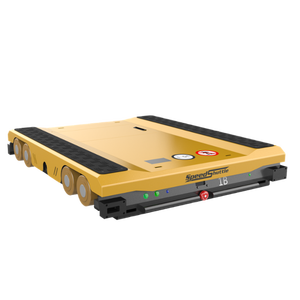
Maxrac CE Certified Radio Shuttle Rack System Satellite Racking Use Shuttle Cart Walk on the Rails to Transport Pallets
Get Catalog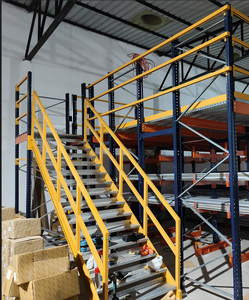
Rack Rollers Heavy Duty Steel Polished Stackable Double-Sided Drive-Through Pallet Rack Blue Mezzanine Floor System High Load
Get Catalog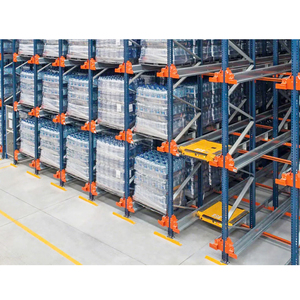
Stacking Racks And Shelves High-Density Pallet Shuttle Racking Price 4-Way Shuttle Asrs System For Efficient Pallet Handling
Get Catalog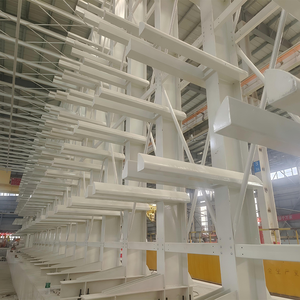
Stable Industrial Long Item Storing Solution Cantilever Racking System
Get Catalog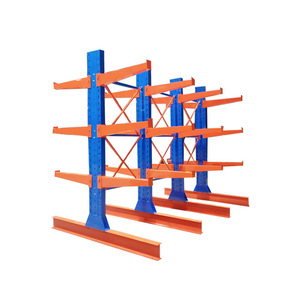
Powder Coated Cantilever Racking System - Heavy Duty Warehouse Storage Shelves for Long Load & Oversized Item Storage
Get Catalog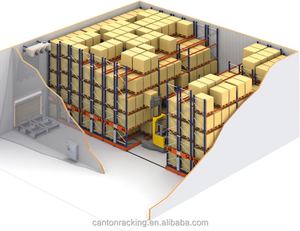
Mobile Pallet Racking, As an Excellent Compaction System, Will Be of Optimal Application for Customers
Get Catalog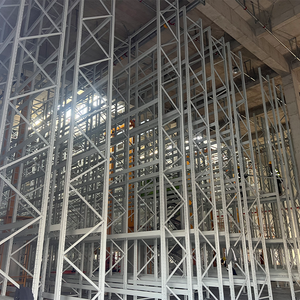
Industrial Pallet Racking for Raw Material Warehouse with Factory Direct Service
Get CatalogExecutive Engineering Guide: Custom OEM Dynamic Pallet Racking Systems
In modern industrial logistics, static storage paradigms are rapidly giving way to Dynamic Pallet Racking Systems. As global supply chains face escalating real estate acquisition costs, strict safety regulations, and demands for hyper-efficient SKU throughput, warehouse managers require customized structural solutions engineered specifically to their material handling profiles. Custom Original Equipment Manufacturer (OEM) dynamic pallet racking represents the apex of structural versatility, integrating mechanical kinetic flow, radio shuttle robotics, and high-tensile cold-rolled steel profiles to transform traditional footprint constraints into high-density storage engines.
Dynamic pallet racking encompasses a broad spectrum of gravity-fed, motor-assisted, and automated compaction systems including Radio Shuttle Racking, Push Back Racks, Gravity Flow Systems, Mobile Pallet Racking, and Automated Storage & Retrieval Systems (ASRS). Unlike standard static selective racking—where up to 60% of floor space is consumed by forklift access aisles—custom dynamic racking minimizes non-productive aisle footprint, elevating volumetric utilization up to 85–98% while ensuring continuous inventory rotation through automated First-In, First-Out (FIFO) or Last-In, First-Out (LIFO) material management.
Information Gain: Structural Dynamics of Dynamic Racking
Unlike static beams, dynamic racking structures absorb kinetic impact, localized vibration, and continuous braking forces from moving pallet loads. Custom OEM fabrication ensures upright profiles feature optimized moment of inertia (Ix, Iy) and micro-alloyed Q355B steel composition to resist fatigue caused by dynamic load cycles.
Technical Anatomy & OEM Customization Parameters
Designing an industrial dynamic pallet rack requires meticulous finite element analysis (FEA) and exact load-deflection modeling in compliance with international engineering benchmarks such as FEM 10.2.02, EN 15512, and RMI standards. As a premier OEM/ODM manufacturer, our custom structural design process prioritizes the following physical parameters:
- High-Tensile Cold-Rolled Profiles: Uprights are roll-formed from cold-rolled steel coils, providing superior yield strength (≥355 MPa) compared to standard structural channels. Profile geometry features multi-ribbed bend radii to prevent local torsional buckling under extreme axial stress.
- Precision Incline & Roller Systems: For Gravity Flow and Push Back systems, slope gradients are engineered with mathematical precision (typically 2.5% to 4.0% decline ratios). Polyurethane-coated high-durability rollers and internal magnetic speed controllers prevent unchecked pallet acceleration, guaranteeing smooth, impact-free indexing.
- Robotic Radio Shuttle Integration: In semi-automated satellite dynamic racking, custom-formed galvanized guide rails double as load-bearing beams. Rail profiles are machined to structural tolerances within ±0.5mm, enabling 2.4G Wi-Fi or optical radio shuttle carts to travel at speeds reaching 1.2 m/s while carrying payloads up to 2,000 kg.
- Surface Engineering & Corrosion Resistance: Components are treated with an automated 7-stage chemical pre-treatment process (degreasing, phosphating, and deionized rinsing) followed by electrostatic epoxy-polyester powder coating (60–90 μm thickness) or Hot-Dip Galvanizing (EN ISO 1461 compliant, ≥65 μm zinc layer) designed for sub-zero (-30°C) cold storage applications.
Volumetric Maximization
Eliminate unnecessary forklift aisles to achieve up to 85% higher pallet storage density within existing warehouse footprints.
Custom Structural OEM
Tailor-made upright frames, beam profiles, pitch adjustments (50mm/75mm), and safety locking pins engineered for exact load metrics.
Certified Safety & QA
Manufactured under ISO 9001 and CE compliance. Tested for seismic resistance, beam deflection limits (<L/200), and shock safety.
Future Procurement & Industry Development Trends (2025–2035)
As global supply chains shift toward hyper-automation and zero-emission logistics, procurement directors and warehouse engineers must anticipate technological shifts in dynamic racking architecture. Sourcing decision-makers are no longer evaluating racks as passive steel shelves, but as core components of an integrated automated ecosystem.
1. Convergence of 4-Way Radio Shuttles & ASRS Integration
The traditional 2-way radio shuttle cart—which operates solely in longitudinal lanes—is rapidly being superseded by 4-Way Shuttle ASRS technology. 4-Way shuttles can traverse both storage lanes and cross-aisles, switching tracks autonomously via motorized lifters. This shift requires rack manufacturers to maintain extreme fabrication tolerances on vertical columns, horizontal tie-beams, and rail junctions. OEM suppliers must utilize CNC automated laser punching and robotic welding stations to ensure millimeter-perfect grid alignment across 15+ meter bay heights.
2. Cold Chain Optimization & Energy-Efficient Logistics
With global cold-chain storage demand expanding exponentially due to fresh food logistics and biopharmaceuticals, operating costs inside sub-zero environments (-25°C to -30°C) have surged. Dynamic shuttle racking and motorized mobile racking are replacing drive-in racking inside freezer facilities because they achieve up to 98% space compaction. By storing more pallets per cubic meter, thermal loss per pallet position drops by up to 40%, drastically reducing HVAC compressor energy consumption.
3. Circular Steel Sourcing & Low-Carbon Manufacturing
Sustainability mandates across Western Europe and North America are reshaping B2B procurement criteria. Enterprise buyers now demand Environmental Product Declarations (EPDs) and low-embodied-carbon steel certifications. Future dynamic racking suppliers are integrating recycled electric arc furnace (EAF) steel and eco-friendly VOC-free powder coatings to minimize Scope 3 carbon emissions while maintaining structural performance.
Engineering Decision Matrix: Dynamic vs Static Storage Systems
Selecting the optimal pallet storage configuration requires evaluating the trade-offs between SKU selectivity, volumetric density, operating speed, and initial capital expenditure (CAPEX).
| Racking System Type | Storage Density | SKU Selectivity | Stock Inventory Flow | Forklift Aisle Demand | Relative CAPEX |
|---|---|---|---|---|---|
| Selective Pallet Racking | Standard (40–50%) | 100% Direct Access | FIFO / LIFO | High (3.0m - 3.8m) | Low |
| Radio Shuttle Racking | Very High (85–95%) | High (per lane) | FIFO or LIFO | Very Low (Perimeter only) | Medium - High |
| Push Back Racking | High (70–80%) | Medium (per channel) | Strict LIFO | Moderate (3.0m) | Medium |
| Gravity Pallet Flow | Very High (85–90%) | Medium (per lane) | Strict FIFO | Dual (Load & Pick Side) | High |
| Electric Mobile Racking | Maximum (95–98%) | 100% (On Demand) | FIFO / LIFO | Ultra Low (1 Moving Aisle) | High |
| Cantilever Racking (Long Items) | Moderate (50–65%) | 100% for Long Goods | Flexible | Depends on Load Length | Medium |
OEM Enterprise Manufacturing & Quality Engineering Standards
As a leading Chinese industrial storage equipment manufacturer, our integrated engineering plant in Shandong Province combines robust material sourcing, precision cold-roll forming, automated fabrication, and comprehensive quality assurance systems to deliver world-class dynamic racking structures.
Full OEM/ODM Engineering
In-house CAD/BIM engineering teams deliver 2D layout drawings, 3D structural renders, and FEA load verification within 24 hours of inquiry.
In-House Rolling & Coating
Direct oversight over cold-roll forming, robotic laser cutting, welding, and automated powder coating guarantees tight tolerance controls.
Export-Ready Logistics
Heavy-duty steel strapping, protective film wrapping, custom crating, and optimized container loading plans protect paint and frame integrity during sea freight.
Frequently Asked Questions (FAQ) for Global Buyers
Technical guidance and answers to common procurement questions encountered by logistics consultants, EPC contractors, and warehouse facility managers.
What load capacity per pallet can your dynamic racking systems support?
Our heavy-duty selective dynamic pallet racking and radio shuttle racking systems are standardized to carry payloads ranging from 500 kg up to 2,500 kg per pallet position. For heavy industrial applications or specialized equipment dies, custom push-back or heavy-duty beam profiles can be engineered to support up to 5,000 kg per level, subject to floor slab load-bearing audits and finite element calculation.
How do I choose between epoxy powder coating and hot-dip galvanizing for dynamic racking?
Epoxy powder coating (60–90 μm) is ideal for standard dry ambient warehouses (0°C to 50°C), offering excellent scratch resistance, aesthetic custom colors, and cost efficiency. Hot-dip galvanizing (EN ISO 1461 compliant) is mandatory for cold storage, deep-freeze environments (-30°C), high-humidity chemical storage, or semi-outdoor facilities, as the zinc coating chemically bonds with the steel to provide self-healing corrosion protection against moisture and thermal cycles.
Can you provide engineering layout drawings directly from our building CAD file?
Yes. Our engineering department specializes in working with customer CAD drawings (.dwg/.dxf) or PDF architectural floor plans. By providing your building dimensions, clear height under trusses, floor slab strength, forklift turning radius, and pallet profile (width x depth x height including overhang), we generate comprehensive 2D rack layout plans, 3D conceptual drawings, and bill-of-materials (BOM) quotations free of charge.
What quality certifications and structural codes do your racking products adhere to?
Our manufacturing plant operates under ISO 9001:2015 Quality Management and ISO 14001 Environmental Management Systems. All structural designs are engineered in accordance with European FEM 10.2.02 (Design of Static Steel Pallet Racking), EN 15512, EN 15635, and American RMI (Rack Manufacturers Institute) standards. CE mark certification documentation is provided with export orders destined for the European Economic Area.
How do radio shuttle carts navigate dynamic shuttle racking channels?
Radio shuttle carts run on custom cold-formed galvanized guide rails integrated directly into the rack structure. The shuttle cart is lifted into the designated lane by a standard forklift. Once placed, an operator sends wireless RF commands (or via automated WMS software integration). The shuttle utilizes optical laser sensors and encoder wheels to travel beneath stored pallets, raise its motorized platform to lift the pallet, and transport it to the front pick face automatically.
What is the lead time for custom OEM manufacturing and export delivery?
Standard OEM fabrication lead times range between 15 to 25 calendar days following final CAD drawing sign-off and deposit confirmation. Large-scale distribution center projects (exceeding 10,000 pallet positions) are delivered in planned container batches. Ocean freight shipping transit times vary depending on the destination port (typically 12–18 days for Middle East / Southeast Asia, 22–35 days for Europe and North America).
Do you supply installation manuals, on-site supervision, or installation services overseas?
Every export order includes detailed 3D assembly manuals, elevation views, component color-coding maps, and torque specification charts. For self-installation projects, our technical team offers 24/7 video guidance. For major turnkey contracts, we can dispatch experienced installation supervisors or complete installation crews to manage site setup, anchor drilling, frame plumbing, and load testing on location.
Optimize Your Warehouse Volumetric Space Today
Submit your warehouse dimensions and pallet specifications to receive a free CAD layout drawing, structural load calculation, and factory-direct quotation within 24 hours.
Get Catalog