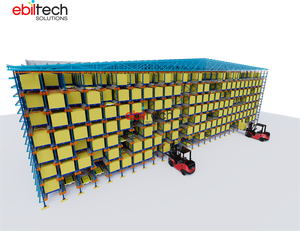
Featured Industrial Storage & Deep Lane Racking Systems
Engineered to maximize volumetric warehouse efficiency, heavy-load safety, and throughput speed.
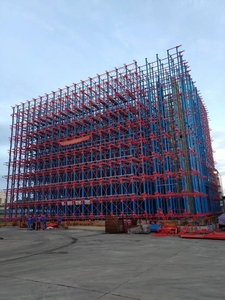
Pallet Shuttle Rack Is a Deep lane Storage and Retrieval System Which Helps You to Optimise Storage Capacity
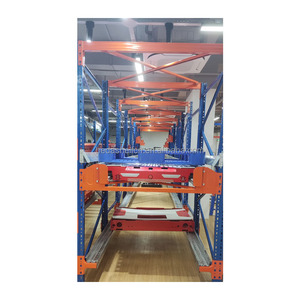
Custom Heavy Duty Radio Shuttle Racking System Shuttle Storage System Double Deep Pallet Racking
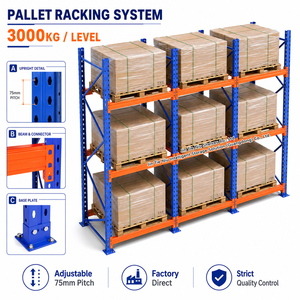
3 Pallet Levels Heavy Duty Steel Warehouse Rack Selective Pallet Racking System 3000KG Load Capacity
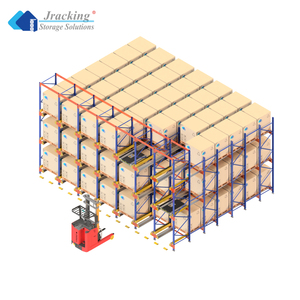
High Intelligent Automated Pallet Runner Four-Way Radio Shuttle Rack System
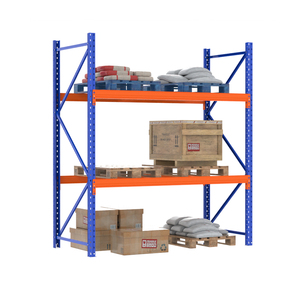
3 Layer Heavy-Duty Metal Storage Rack Steel Pallet Rack Wholesale for Warehouses Iron Storage Solution
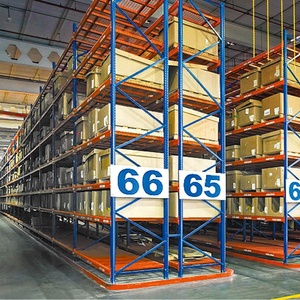
Narrow Aisle VNA Pallet Racking System Adjustable Heavy Duty Cold Rolled Steel Powder Coated Racking
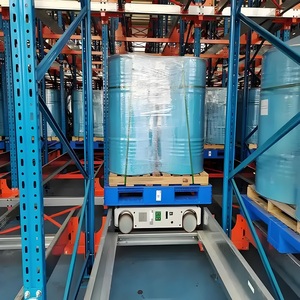
Wholesale Custom High Intelligent Automated Pallet Runner Radio Four-Way Shuttle Rack System
Engineering Authority & Manufacturing Superiority
IronMax Storage Solutions Co., Ltd. — Delivering structural precision, certified safety, and seamless custom manufacturing to global industrial enterprises.
In modern logistics and automated warehousing, selecting a qualified OEM deep lane pallet racking manufacturer is not merely a transaction for steel components; it is a long-term capital investment in operational safety, volume capacity, and supply chain scalability. IronMax Storage Solutions Co., Ltd. stands as an industry benchmark in heavy-duty racking engineering, combining custom structural manufacturing with comprehensive automated system integration.
Q355B
High-Strength Structural Steel
5,000 KG
Max Capacity / Level
100%
In-House Quality Audited
ISO/CE
Global Safety Compliance
Precision Cold-Roll Forming
Our continuous automated roll-forming lines process premium Q235B and Q355B structural steel to exact dimensional tolerances, minimizing localized structural stresses and enhancing buckling stability across elevated heights up to 25 meters.
Finite Element Analysis (FEA)
Every custom OEM racking layout undergoes rigorous FEA simulation under severe static, dynamic, impact, and seismic seismic loading conditions (conforming to EN 15512, RMI ANSI MH16.1, and FEM 10.2.02 engineering guidelines).
Advanced Surface Coating
Automated multi-stage pretreatment combined with thermosetting epoxy-polyester powder coating guarantees supreme corrosion protection, impact resilience, and long-term durability in high-humidity and sub-zero cold storage environments.
Architectural Breakdown: Deep Lane Storage Systems Comparison
Deep lane storage racking engineered systems are designed to minimize forklift aisle footprint and maximize cubic storage efficiency. Selecting between semi-automated pallet shuttles, mechanical drive-in systems, or push-back racking requires evaluating SKU density, selectivity metrics, and operational throughput speeds.
| Storage Racking System Type | Volumetric Density Efficiency | Pallet Access Model | Handling Equipment Dependency | Ideal Logistics Application |
|---|---|---|---|---|
| Radio Shuttle Deep Lane System | Very High (up to 95%) | FIFO or LIFO Automated | Minimal (Shuttle handles lane transport) | High-volume SKUs, Cold Storage, FMCG, Beverage Distribution |
| Four-Way Intelligent Shuttle Clad | Ultra High (up to 98%) | Dynamic Multi-Directional | Fully Automated / WCS Integrated | Fully Automated Dark Warehouses, High-Density E-commerce Hubs |
| Mechanical Drive-In / Drive-Thru | High (up to 80%) | Strict LIFO (Drive-In) / FIFO | High (Forklift operates inside racking channels) | Homogeneous bulk goods, low SKU turnover, seasonal inventory |
| Heavy Duty Push-Back Racking | Medium-High (up to 75%) | LIFO (Gravity Nested Carts) | Standard Reach Forklifts (2 to 6 pallets deep) | Medium SKU counts, buffer storage, fast staging areas |
| Very Narrow Aisle (VNA) Racking | High Vertically (up to 85%) | 100% Selective Direct Access | VNA Turret Trucks / Wire-Guided Forklifts | High vertical warehouses requiring individual pallet selectivity |
Future Procurement Trends in Deep Lane Storage Racking
Strategic insights for procurement directors, logistics engineers, and warehouse operations executives preparing for the next decade of automated supply chain infrastructure.
1. Transition from Passive Steel Racking to Automated Robotic Carriers
Global procurement metrics indicate a decisive shift away from passive mechanical drive-in racking toward semi-automated radio pallet shuttle systems and fully autonomous 4-way pallet runners. Industrial supply chains are prioritizing speed and damage reduction; automated shuttles remove forklifts from deep channels, preventing collision damage to vertical uprights and eliminating up to 60% of internal forklift travel time.
2. Rack-Supported Building Structures (Clad Racking)
With industrial land costs rising globally, procurement trend analysis reveals accelerated demand for Rack-Supported Clad Buildings. Rather than constructing a conventional steel-frame building and installing independent racking inside, structural deep-lane racking acts as the load-bearing skeleton supporting exterior wall cladding and roof trusses. This delivers significant capital expense (CapEx) savings and speeds up facility commissioning timelines.
3. Deep Cold Chain Density & Sub-Zero Optimization
As cold-chain logistics expand globally due to pharmaceutical and fresh food demands, operating costs for refrigerated cubic space have skyrocketed. Deep lane shuttle racking allows cold room operators to reduce electrical power consumption per pallet position by eliminating unnecessary aisle space. Future-proof procurement requires structural steel formulated to retain ductility and impact resistance at temperatures reaching -30°C.
4. WMS/WCS API Interoperability & IoT Sensors
Modern OEM pallet racking orders increasingly demand embedded IoT sensors and automated system integration. Next-generation deep lane shuttle channels incorporate laser positioning, weight sensors, automated pallet profiling, and real-time connectivity via Warehouse Control Systems (WCS). Racking suppliers must supply structural steel channels precisely machined to house electronic guide rails and inductive power chargers.
Request an Engineering Layout & Load Capacity Calculation
Send your warehouse architectural drawings (CAD/PDF), pallet specs, and target SKU metrics to our senior structural team. We provide full 2D/3D layout designs and structural FEA reports within 24 hours.
Procurement & Engineering Frequently Asked Questions (FAQ)
Expert answers addressing load safety calculations, customization options, cold-chain suitability, and export quality controls.
How do you calculate structural load capacities for custom deep lane pallet racking systems?
Load capacity calculation is a specialized structural engineering process. At IronMax, capacity is evaluated based on maximum weight per pallet, pallet dimensions, total bay elevation, beam clear span, upright profile section, and unbraced height ratios. We calculate maximum beam deflection strictly under L/200 guidelines and perform Finite Element Analysis (FEA) to ensure safety factors conform to international standards such as European EN 15512 and North American RMI ANSI MH16.1.
What are the critical advantages of Radio Shuttle Racking compared to traditional Drive-In Racking?
While both systems offer high-density storage, Radio Shuttle Racking significantly outperforms Drive-In systems in operational safety and throughput speed. Shuttle systems eliminate the need for forklifts to enter structural storage channels, drastically reducing upright frame damage and operator risk. Furthermore, shuttle systems can support both FIFO (First-In, First-Out) and LIFO (Last-In, First-Out) inventory flows, whereas Drive-In is restricted strictly to LIFO.
Which surface finish is recommended for sub-zero cold storage warehouses?
For standard dry ambient warehouses, heavy-duty electrostatic powder coating provides superior aesthetic appeal and corrosion resistance. However, for cold storage rooms with sub-zero operating environments (-18°C to -30°C) or high moisture conditions, hot-dip galvanized (HDG) steel components are strongly recommended. Hot-dip galvanizing provides a thick zinc-alloy protective layer that prevents surface oxidation and micro-cracking caused by condensation cycle fatigue.
Can IronMax manufacture custom racking profiles according to OEM engineering specifications?
Yes. As a primary manufacturer and factory direct source, IronMax specializes in custom OEM/ODM production. We offer custom punching pitch options (such as 50mm, 75mm, 76.2mm, or 3-inch pitch patterns), specialized upright profile roll-forming (ranging from 80mm to 140mm face widths), custom beam gauge thicknesses, bespoke pallet support bars, and custom brand-matched powder coating color matching (RAL color system).
What documentation and quality control certifications are provided with export orders?
Every export order produced by IronMax undergoes strict quality assurance protocols. We provide raw material steel mill certificates (MTC verifying Q235B/Q355B physical and chemical properties), weld quality inspection reports, coating thickness verification data, final dimensional inspection sheets, full 2D/3D CAD installation drawings, step-by-step assembly manuals, and CE / ISO9001 compliance documentation.
How are long structural steel components packaged and secured for international ocean shipping?
Export packaging is engineered to eliminate transit damage and optimize container loading space. Upright frames and box beams are tightly bundled with heavy-duty steel strapping, protective plastic wrap, and cardboard corner guards. Small hardware items (bolts, safety pins, baseplates, shims) are packaged in reinforced wooden crates or heavy-duty cartons on pallets. Detailed container packing lists are indexed to bay assembly tags for efficient site unloading.
Partner with a Global OEM Deep Lane Racking Leader
Maximize your facility footprint, guarantee structural load compliance, and lower your total cost of ownership with direct factory engineering support.