Engineered OEM Pallet Racking & Industrial Storage Solutions
Explore our flagship heavy-duty pallet racking systems, custom fabricated under certified ISO 9001 and EN 15512 standards. Each system is fully tailorable in beam profile, column depth, load capacity, and surface finishing to suit global warehouse operations.
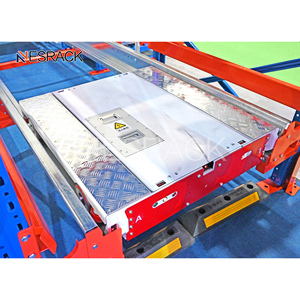
High Quality Customized Warehouse Storage Pallet Shuttle Rack Heavy Duty Racks Manufacturer Racking System Made in China
Contact Us
Custom Corrosion Protected Adjustable Pallet Rack Steel Structure Mezzanine Floor Heavy Duty Warehouse Loft Platform Racking
Contact Us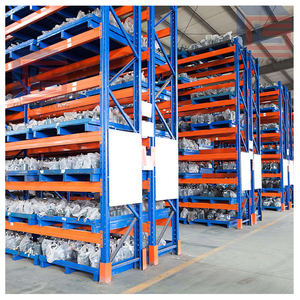
Adjustable Heavy Duty Warehouse Racking System Custom Steel Pallet Shelves for Factory and Storage
Contact Us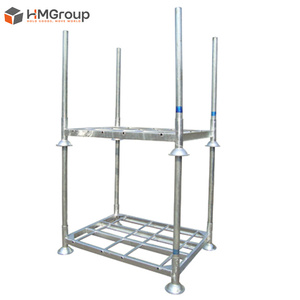
Customizable Heavy Duty Galvanized Stacking Warehouse Stacking Pallet Rack
Contact Us
EBILTECH EBIL-ZMC Pallet Shuttle Rack System by Shuttle Satellite Cars High-Capacity 160m/min 380V Automatic Racking Warehouses
Contact Us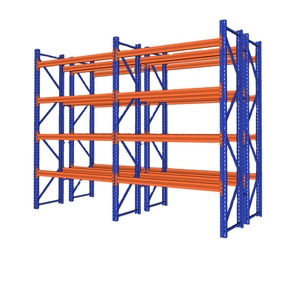
Heavy Duty Storage Rack Pallet Rack System Shelf For Industrial Storage Rack
Contact Us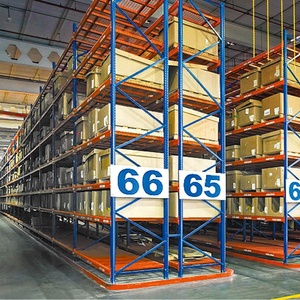
Narrow Aisle VNA Pallet Racking System Adjustable Heavy Duty Cold Rolled Steel Powder Coated High-Density Logistics E-commerce
Contact Us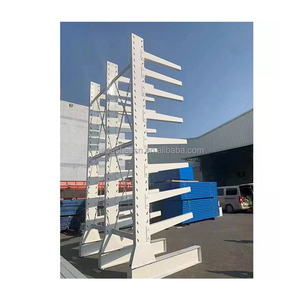
Industrial Rack Shelving Single Sided Heavy Duty Cantilever Racking System Cantilever Racks for Sale
Contact UsExecutive Technical Briefing: Engineering Custom OEM Pallet Racking Systems
Modern supply chains demand unparalleled space utilization, safety compliance, and structural flexibility. As a premier Custom OEM Pallet Racking System Manufacturer & Supplier, IronMax Storage Solutions Co., Ltd. provides engineered intralogistics infrastructures tailored to unique warehouse footprints, specialized handling equipment, and complex load parameters. Moving beyond standardized catalog offerings, our Original Equipment Manufacturer (OEM) capability transforms raw cold-rolled steel into high-density, mission-critical storage ecosystems.
Industrial pallet racking is not merely a steel frame; it is a statically calculated structural system subject to dynamic forklift forces, seismic movements, dead loads, and operational wear. By employing advanced Finite Element Analysis (FEA) software and adhering to global engineering codes such as European EN 15512, FEM 10.2.02, American RMI (Rack Manufacturers Institute), and Australian AS4084, our engineering team ensures that every custom racking system achieves optimal strength-to-weight performance while minimizing structural fatigue.
High-Yield Structural Steel Sourcing
We strictly utilize certified Q235B and high-yield Q355B cold-rolled steel. Superior mechanical properties ensure optimal beam deflection resistance (under $L/200$ parameters) and extended structural fatigue longevity under rigorous cyclic loading.
Automated Roll Forming & Punching
Precision multi-stage continuous roll-forming mills deliver exact upright profiles with perforated pitches (50mm, 75mm, or 76.2mm). Integrated CNC punching guarantees zero tolerance deviation along 12+ meter upright columns.
Anti-Corrosion Surface Engineering
Pre-treatment multi-stage chemical washing followed by automated thermosetting epoxy powder coating ($60\text{--}80\mu m$) or Hot-Dip Galvanizing (HDG) per ISO 1461 for cold storage and aggressive chemical environments.
Structural OEM Engineering Specifications & Design Criteria
Selecting the ideal OEM pallet racking configuration requires analyzing multiple physical and operational variables. Our engineers work directly with warehouse architects, logistics integrators, and plant managers to evaluate the following design matrices:
- Upright Frame Column Profiles Widths ranging from 80mm to 140mm with wall thicknesses from 1.8mm to 3.0mm; engineered for maximum buckling resistance under heavy vertical loads.
- Beam Connection Mechanisms 3-claw or 4-claw cold-stamped connectors with safety lock pins, engineered to prevent accidental beam dislodgement from high-speed forklift contact.
- Seismic & Base Plate Engineering Heavy-duty anchored footplates calculated for regional seismic zones, concrete floor slab compression limits, and dynamic shear forces.
- Beam Profiles & Loading Tolerances Box beams, step beams, and interlocking tube beams tailored to carry distributed loads from 500 kg to over 4,000 kg per beam level.
System Architecture Comparison Matrix
To assist procurement managers in choosing the right storage topology, the table below compares core performance attributes across primary custom OEM racking designs:
| Racking Architecture | Storage Density | SKU Selectivity | Handling Equipment Type | Optimal Application Profile |
|---|---|---|---|---|
| Selective Pallet Racking | Standard (40-50%) | 100% Direct Access | Standard Counterbalance / Reach Truck | High SKU count, fast rotation, general logistics distribution. |
| Very Narrow Aisle (VNA) | High (65-75%) | 100% Direct Access | Guided VNA Turret Truck / Articulated Forklift | High-bay warehouses where floor space is expensive but 100% access is required. |
| Drive-In / Drive-Through | Very High (75-85%) | Low (LIFO / FIFO per lane) | Standard Reach / Counterbalance Truck | Cold storage, bulk seasonal inventory, low SKU diversity with high volume. |
| Push-Back Racking | High (60-70%) | Medium (LIFO by lane) | Standard Forklift (Loads via nested carts) | Medium SKU variety, 2 to 6 pallets deep per aisle face. |
| Radio Shuttle Automation | Maximum (80-90%) | Automated per Channel | Robotic Shuttle Satellite + Forklift interface | High-throughput food & beverage, sub-zero cold chains, high-density automated units. |
| Heavy-Duty Cantilever | Flexible | 100% Side Access | Side Loader / Specialized Forklift | Long, bulky, or non-standard goods: steel tubes, timber, PVC piping, sheet metal. |
Future Trends in Warehouse Storage & OEM Procurement (2025–2030)
The global industrial storage landscape is undergoing a technological transformation. Procurement strategies are rapidly shifting from static storage frames to dynamic, automated, and environmentally sustainable warehousing structures. Key macro-trends shaping future OEM custom pallet racking projects include:
1. Integration with Automated Guided Vehicles (AGVs) & AMR Satellites
Conventional racking is evolving to accommodate autonomous mobile robots (AMRs) and AGV forklifts. OEM customization now requires millimeter-level fabrication tolerances, embedded floor sensors, guidance wire slots, and specialized beam positioning reflectors to enable seamless machine-to-rack docking without human intervention.
2. High-Bay Structural Rack-Supported Buildings (Clad-Rack Systems)
Rather than building a traditional warehouse envelope and placing racks inside, global logistics developers are adopting clad-rack structural buildings. In these megastructures, the heavy-duty racking framework serves as the primary structural support for the warehouse walls and roof, drastically reducing civil construction timelines and capital expenditure.
3. Cold Chain Expansion & Specialized Galvanized Finishes
With the surge in global frozen food and pharmaceutical supply chains, cold storage facilities running at $-25^\circ\text{C}$ to $-30^\circ\text{C}$ demand zero structural embrittlement. OEM hot-dip galvanized (HDG) coating ensures that steel structures remain immune to condensation-induced rust, flaking, and thermal contraction fatigue over decades of continuous operation.
4. Sustainable Green Steel & Carbon Footprint Auditing
Environmental, Social, and Governance (ESG) mandates require global manufacturers to track embodied carbon. IronMax implements energy-efficient continuous roll forming lines, recycled steel scrap integration, and zero-VOC electrostatic powder recovery systems to meet eco-friendly procurement audits.
Why Partner with IronMax Storage Solutions Co., Ltd.
IronMax Storage Solutions Co., Ltd. is an established industry pioneer operating out of Jining, Shandong Province, China. With over 120 skilled engineers, technicians, and specialized fabrication personnel, our facility is equipped with state-of-the-art continuous roll-forming machinery, automated robotic welding cells, and eco-friendly powder coating lines. We deliver turnkey, engineering-backed storage solutions for global clients ranging from third-party logistics (3PL) operators to heavy manufacturing plants.
End-to-End OEM/ODM Services
From initial site survey data and CAD floorplan rendering to custom profile engineering, structural load validation, pre-assembly testing, and export container consolidation, we manage the entire project lifecycle.
Certified Rigorous Quality Control
Every steel coil batch undergoes raw material tensile testing, weld seam ultrasonic inspection, coating thickness verification, and drop-weight impact testing in accordance with ISO 9001 quality management protocols.
Global Field Support & Installation Guidance
All export orders ship with detailed 3D installation manuals, step-by-step assembly diagrams, component labeling by bay, and dedicated remote video engineering support or optional on-site installation supervisors.
Frequently Asked Questions (FAQ) for OEM Racking Procurement
To prepare an accurate structural calculation and CAD drawing, our engineering team requires: (1) Warehouse building CAD drawings showing clear height, column grid, and floor loading capacity; (2) Pallet dimensions ($W \times D \times H$) including goods overhang; (3) Maximum weight per loaded pallet; (4) Forklift type, maximum lift height, and minimum aisle turning radius; (5) Environmental conditions (e.g., ambient vs cold store, indoor vs semi-outdoor).
Beam capacities are calculated using structural finite element analysis and verified by physical load testing per EN 15512 / RMI guidelines. The maximum allowable deflection of a beam under full design load is limited to $L/200$ (where $L$ is the clear span length of the beam). Safety factors (typically 1.5 to 1.65 against yield strength) are applied to guarantee long-term stability.
Epoxy Powder Coating provides a durable, smooth, color-customizable surface ideal for standard indoor ambient warehouses ($0^\circ\text{C}$ to $+50^\circ\text{C}$). Hot-Dip Galvanizing (HDG) involves dipping fabricated steel components into molten zinc to form a metallurgical alloy coating. HDG offers superior, long-lasting corrosion protection essential for sub-zero freezer warehouses, high-humidity areas, or outdoor storage environments.
Yes. Our advanced tooling capabilities allow us to produce custom upright pitch profiles, teardrop patterns, or specialized hook connectors engineered to integrate cleanly with existing warehouse installations or replace damaged component lines seamlessly.
Uprights and beams are bundled with steel strapping, wooden dunnage, and protective plastic wrapping to eliminate surface chafing. Smaller components (base plates, beam safety pins, bolts, row spacers) are packed in reinforced, export-grade corrugated cartons or wooden crates. Container packing is digitally planned to maximize space utilization while ensuring safe unloading via forklift.
Standard OEM manufacturing cycles take approximately 15 to 25 business days from layout drawing sign-off and deposit confirmation. Specialized finishes, structural hot-rolled sections, or large automated shuttle projects may require 30 to 40 days depending on raw material procurement schedules.
Ready to Optimize Your Warehouse Capacity?
Consult with our senior OEM intralogistics engineers today. We provide complimentary CAD layout designs, structural load calculations, and competitive factory-direct pricing for international buyers.
Contact Us