Heavy-Duty Industrial Storage & Pallet Racking Systems
Precision-engineered, ISO/CE certified warehouse racks designed for maximum load capacity, structural safety, and seamless forklift integration.
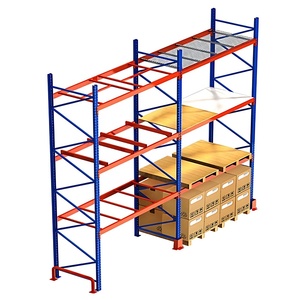
Heavy Duty Multilayer Cross Beam Adjustable Storage Rack System
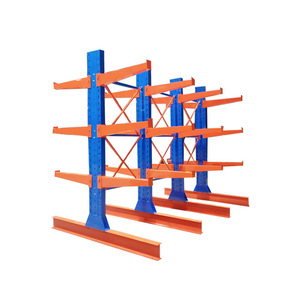
Powder Coated Heavy-Duty Cantilever Racking for Oversized Loads
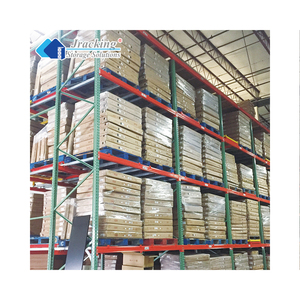
US Standard Teardrop Heavy Duty Pallet Racking System

High Density Galvanized Steel Double Deep & Narrow Aisle Racking
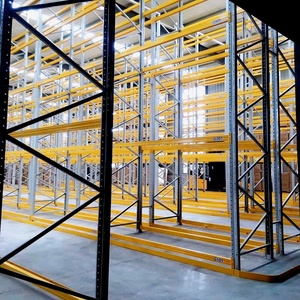
Industrial Heavy Duty Selective & Double Deep Warehouse Racking
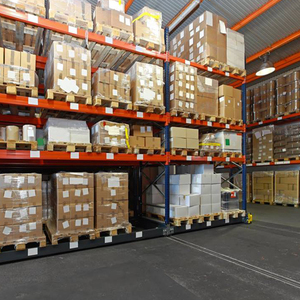
Certified High-Capacity Mobile & Adjustable Heavy Duty Metal Racking
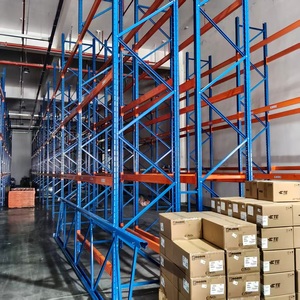
Long Span High Load Steel Beam Racking for Oversized Pallets
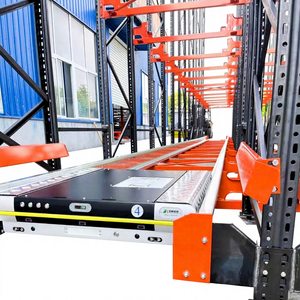
Automated Radio Shuttle Pallet Racking System (FIFO / LIFO Flow)
Engineering Architecture & Operational Dynamics of Double Deep Racking Systems
An in-depth analysis of structural integrity, space optimization math, reach truck mechanics, and inventory management tactics for global supply chain engineers.
Modern warehouse logistics faces a continuous conflict: balancing floor space utilization against immediate SKU access. Traditional Single-Selective Pallet Racking guarantees 100% direct pallet accessibility but consumes up to 60% of floor space in operator aisles. High-density storage solutions such as Drive-In or Push-Back racking boost floor utilization but compromise selectivity and structural accessibility. Double Deep Pallet Racking occupies the ideal engineered balance point between these operational extremes.
By storing pallets two-deep in a back-to-back structure, a Double Deep layout eliminates one operational aisle for every two selective racking rows. This configuration reduces overall aisle space by 50%, resulting in a 30% to 50% increase in cubic storage capacity over standard selective setups within the exact same building footprint. However, successful implementation requires precise structural calculations, strict steel quality controls, specialized pantograph reach trucks, and tailored Warehouse Management System (WMS) logic.
Critical Structural Insight: Pantograph Capacity Derating
When operating a Double Deep Racking layout, deep-reach forklifts equipped with pantograph scissor extensions or double-deep telescopic forks experience dynamic load center extension. Standard load centers increase from 600mm (single-deep) to 1,200mm (double-deep). Facilities engineers must account for forklift capacity derating—typically a 15% to 25% drop in lift capacity at maximum height—when calculating maximum allowable pallet unit loads.
Structural Steel Engineering Standards & Load Mechanics
At IronMax Storage Solutions Co., Ltd. (manufactured in Jining, Shandong, China), our Double Deep Racking systems are structurally designed to exceed international standards including AS4084-2012 (Australia), RMI (USA), FEM 10.2.02 (Europe), and ISO 9001:2015. The system relies on key structural steel members engineered to resist static loads, dynamic impact forces, and seismic moments:
- Cold-Formed Upright Frames: Fabricated from high-tensile Q235B or Q355B structural steel coils. Profiles range from 80mm to 120mm column faces with multiple stiffening ribs to maximize section modulus ($Z_x, Z_y$) and flexural-torsional buckling resistance.
- Nested Box Beams & Step Beams: Dual C-profile box beams welded via robotic MIG processes. Beams feature heavy-duty 4-hook or 5-hook end connectors stamped from 4.0mm high-tensile plate, locking into frame teardrop/diamond slots with automatic safety pins.
- Pallet Support Bars & Guide Rails: Because second-deep pallets are placed beyond the operator's direct sightline, structural pallet support bars, rear stop beams, and floor-mounted forklift guide rails are integrated to prevent accidental misplacement or beam impact.
- Seismic Cross-Bracing & Base Plates: Anchor plates with chemical expandable anchor bolts transmit overturning moments directly into the concrete slab. Diagonal and horizontal frame bracing are calculated via Finite Element Analysis (FEA) to withstand horizontal seismic acceleration.
Racking System Benchmark Matrix for Supply Chain Buyers
Evaluate Double Deep Pallet Racking against alternative warehouse configurations to determine the optimal capital expenditure (CapEx) and operational performance.
| Racking System Type | Storage Density | Direct Access (Selectivity) | Forklift Requirement | Stock Management | CapEx vs. Density Index |
|---|---|---|---|---|---|
| Double Deep Pallet Racking | High (+40%-50%) | 50% Immediate | Double Deep Reach Truck / Pantograph | LIFO (Last-In, First-Out) per lane | Optimal Cost / Density Ratio |
| Single Selective Racking | Baseline (100%) | 100% Immediate | Standard Counterbalance / Reach | FIFO / LIFO Flexible | Low Initial CapEx / Low Density |
| Drive-In Racking | Very High (+65%) | Low (< 15%) | Standard Forklift (Enters Rack) | Strict LIFO | Moderate CapEx / Risk of Damage |
| Push-Back Racking | High (+55%) | Medium (Per Lane) | Standard Forklift | LIFO (Gravity Cart System) | High Mechanical Component Cost |
| Automated Radio Shuttle | Maximum (+80%) | Medium (Per Channel) | Standard + Automatic Shuttle Bot | FIFO / LIFO Automated | High CapEx / Premium Efficiency |
Why Partner with IronMax Storage Solutions Co., Ltd.?
Direct from our manufacturing base in Jining, Shandong, China—delivering structural integrity, engineering design support, and strict quality assurance to global distributors and EPC buyers.
In-House Cold Roll-Forming
We operate 25 advanced continuous cold roll-forming lines capable of shaping steel coils into precision upright posts and beams with zero structural residual stress, maintaining dimensional tolerances within ±0.5mm.
Robotic Welding & Ultrasonic QC
Beam connectors and structural sub-assemblies are welded by OTC robotic welding stations. Every weld joint undergoes magnetic particle and ultrasonic testing to prevent fatigue failure under dynamic warehouse cycling.
Pre-Treatment & Epoxy Coating
Steel surfaces undergo a 6-stage automatic pre-treatment process (degreasing, phosphating, rinsing) followed by thermosetting epoxy polyester powder coating (60-90 microns thick), offering superior corrosion and impact resistance.
Full CAD / 3D Layout Engineering
Our team of 120+ skilled engineers provides full CAD bay elevation drawings, floor slab load dispersion calculations, structural stress analysis, and 3D BIM integration completely free of charge before production.
Export Bundling & Sea-Freight Packing
Beams and frames are packed in steel-strapped bundles wrapped in protective plastic film, with custom timber dunnage to prevent transit chafing. Small components ship in heavy-duty wooden cases matching your packing list.
Global On-Site Installation Guidance
Every shipment includes step-by-step assembly manuals, color-coded bay diagrams, and video walkthroughs. For major turnkey contracts, our experienced installation engineers deploy on-site to supervise assembly.
Future Procurement Trends in Double Deep Racking & Warehouse Automation
How digital transformation, automated reach trucks, IoT monitoring, and sustainability regulations are reshaping global pallet storage procurement.
1. Automated Deep-Reach AMR & AGV Integration
The traditional requirement for human operators to navigate double-deep reach trucks with camera assistance is rapidly shifting toward autonomous navigation. Autonomous Mobile Robots (AMRs) and Automated Guided Vehicles (AGVs) equipped with 3D LiDAR, optical pallet-location sensors, and pantograph forks can now safely interface with Double Deep Racking up to 14 meters in height. Future procurement specs increasingly mandate ground-level guide rails, precision frame alignment tolerances (within ±2mm), and anti-reflective beam powder coatings optimized for robotic vision sensors.
2. IoT Structural Health Monitoring & Strain Gauges
Heavy-duty industrial racking in seismic zones or high-throughput distribution centers is vulnerable to unseen impact damage from forklifts. Advanced supply chain operators are embedding wireless piezoelectric strain gauges and MEMS accelerometers into critical upright columns. These IoT sensors measure dynamic beam deflection, structural tilt, and impact shocks in real time, transmitting data directly to the facility’s WMS or asset maintenance platform to trigger predictive safety inspections.
3. Cold Chain Optimization & Carbon Neutral Steel Production
With cold storage facilities facing soaring energy costs per cubic meter, Double Deep Racking remains the top low-CapEx choice for freezer warehouses operating down to -30°C. In response to global Carbon Border Adjustment Mechanisms (CBAM) and ESG mandates, manufacturers are transitioning to eco-friendly zinc-nickel electro-galvanizing, low-VOC powder coatings, and green hydrogen-reduced structural steel coils. Procurement teams are now evaluating suppliers based on environmental product declarations (EPDs) alongside structural price-per-pallet ratios.
Technical & Commercial FAQ for Procurement Managers
Direct engineering answers addressing operational requirements, aisle spacing, load calculations, and OEM manufacturing customization.
What is the minimum operating aisle width required for a Double Deep Pallet Racking system?
Operating aisle width depends primarily on the turning radius of your selected deep-reach (pantograph) reach truck. Typically, a standard pantograph reach truck operating with a 1,200mm x 1,000mm pallet requires an aisle width between 3.0 meters and 3.4 meters. Our engineering team calculates exact clear aisle dimensions based on your specific forklift specification sheet, including pallet overhang and safety clearance.
How does a Double Deep Racking system handle inventory management and stock rotation?
Double Deep Racking operates on a LIFO (Last-In, First-Out) principle for each double-deep channel position. To maintain operational efficiency, warehouses typically assign identical SKUs to both the front and rear pallet positions of a single channel. For high-velocity distribution centers requiring FIFO, a robust Warehouse Management System (WMS) dynamically routes stock by storing matching batch/lot numbers within the same double-deep slot.
What safety accessories are recommended for Double Deep installations?
Because the rear pallet position (Depth 2) has reduced line-of-sight for the operator, we strongly recommend integrating:
1. Pallet Guide Rails & Stop Beams: Structural steel stop bars welded between beams to prevent second-deep pallets from over-traveling.
2. Heavy-Duty Column Protectors: Floor-anchored wrap-around protectors filled with shock-absorbing polyurethane or heavy steel angles to protect aisle entry uprights.
3. Forklift Camera Systems: Wireless cameras mounted on the pantograph fork carriage with an in-cab monitor screen for high-bay placement accuracy.
What structural steel grades and standards are used by IronMax Storage Solutions Co., Ltd.?
We strictly utilize certified prime-grade cold-rolled structural coil steel—primarily Q235B (yield strength ≥ 235 MPa) and Q355B / SS500 (yield strength ≥ 355 MPa) depending on beam span and frame loading conditions. All steel profiles are roll-formed and tested in compliance with AS4084-2012, FEM 10.2.02, and RMI specifications. Mill test certificates (MTC) are provided with every export shipment.
Can IronMax supply OEM / ODM custom dimensions for teardrop or metric systems?
Yes. As a direct China wholesale manufacturer, we support full OEM and ODM customization. We manufacture both US-Standard Teardrop pitch (2-inch adjustment) and International Metric systems (50mm / 75mm pitch). We can match existing racking profiles, structural frame colors (RAL spectrum), beam section heights, and custom baseplate punching to integrate seamlessly into your current warehouse setup.
What is the lead time for production and container shipment from your factory?
Standard manufacturing lead time at our Shandong facility is 14 to 21 working days for standard 40ft high-cube container orders (approx. 200–500 pallet positions). Custom engineering roll-forming or specialty hot-dip galvanized finishes may take 25 to 30 days. We ship directly from Qingdao Port or Tianjin Port, ensuring fast ocean freight transit times to North America, Europe, Australia, and the Middle East.
Transform Your Warehouse Storage Density Today
Send us your building layout drawing (.DWG / .PDF) and pallet dimensions. Our structural engineers will prepare a complete CAD layout plan, load calculation report, and wholesale factory quotation within 24 hours.