Featured High-Density Racking & Automated Shuttle Products
Engineered for maximum cubic space utilization, rapid pallet throughput, and seamless integration with modern logistics environments.

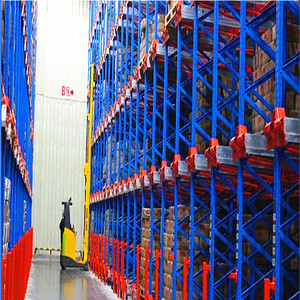
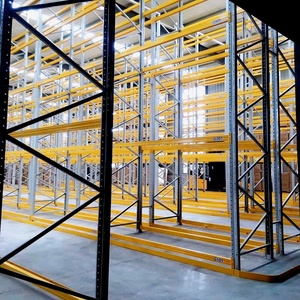
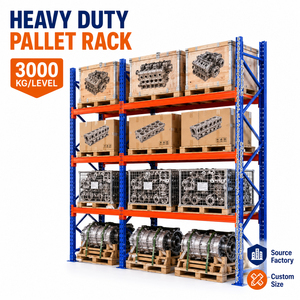
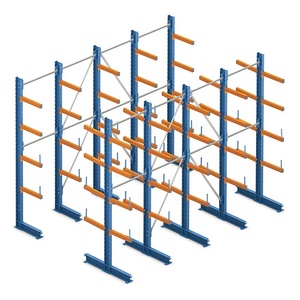
The Technical Architecture of Modern Automated Pallet Shuttle Systems
Unlocking maximum floor space efficiency and operational speed with China’s premier engineering and manufacturing standard.
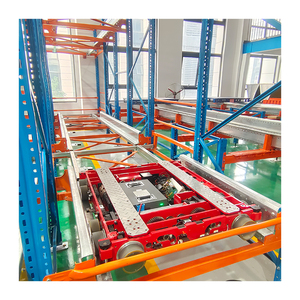
In modern industrial logistics, the global supply chain demands higher storage density, rapid inventory turnaround, and drastic reductions in operational labor costs. As a premier China Wholesale Automated Pallet Shuttle System Manufacturer & Exporter, our engineering philosophy bridges the gap between conventional static warehousing and fully autonomous material handling. An automated pallet shuttle system—comprising self-powered radio shuttle vehicles, specialized continuous-rail racking matrices, and intelligent fleet management control software—represents the pinnacle of high-density semi-automated and fully automated storage technology.
By eliminating the requirement for forklifts to enter storage aisles, pallet shuttle systems eliminate structural upright damage, shrink aisle width requirements by up to 40%, and boost overall cubic storage capacity by up to 80% compared to traditional selective racking. Whether operating under FIFO (First-In, First-Out) or LIFO (Last-In, First-Out) protocols, our radio shuttle runners carry unit payloads from 500 kg to over 2,000 kg with millimeter-level position precision.
IronMax Manufacturing Excellence & Engineering Rigor
Why leading global EPC contractors, logistics integrators, and brand owners partner directly with our OEM factory base in Shandong, China.
High-Yield Steel Metallurgy
All load-bearing uprights, shuttle guide rails, and structural beams are cold-roll-formed from premium Q355B and Q235B high-yield structural steel. Certified FEA (Finite Element Analysis) ensures structural integrity under extreme dynamic and seismic loads compliant with ANSI MH16.1 and FEM 10.2.02 standards.
Advanced Robotics & Controls
Our shuttle carts incorporate Siemens PLCs, laser rangefinders, dual photoelectric positioning sensors, and ultra-reliable LiFePO4 (Lithium Iron Phosphate) battery power systems. Multi-channel wireless RF (433MHz / Wi-Fi 6) connectivity enables seamless integration with WMS/WCS software platforms.
Full-Traceability Quality Assurance
Operating under ISO 9001:2015 and CE certification, every batch undergoes ultrasonic weld testing, automated powder coat thickness audits (epoxy resin coating 80–100μm), and rigorous continuous dynamic shuttle test runs on mock racking bays prior to export packaging.
Storage Technology Decision Matrix
Evaluating automated shuttle racking against conventional high-density systems for strategic planning.
| System Architecture | Storage Density Ratio | Pallet Selectivity | Operating Labor Requirement | Forklift Damage Risk | Cold Room Performance |
|---|---|---|---|---|---|
| Automated Radio Shuttle Racking | Very High (85–90%) | High (Per Lane FIFO/LIFO) | Low (Automated In-Lane Transfer) | Negligible (Outside Aisle Only) | Exceptional (Down to -25°C) |
| 4-Way Automated Pallet Shuttle | Ultra High (92%+) | Full 3D Matrix Access | Fully Autonomous (WCS Integrated) | Zero (No Manual Forklifts) | Superior (Optimized Thermal Mass) |
| Drive-In Racking (Conventional) | High (65–75%) | Low (LIFO Strict) | High (Drivers Enter Channel) | High (Frequent Upright Impact) | Moderate (High Labor Cost) |
| Push-Back Racking (Cart System) | Moderate (60–70%) | Moderate (2–6 Pallets Deep) | Moderate (Manual Push Force) | Low-Moderate | Standard |
| Selective Pallet Racking | Low (35–45%) | 100% Immediate | High (Aisle Travel Required) | Moderate | Poor Space Utilization |
Future Procurement Trends in Automated Pallet Shuttle Systems (2025–2030)
Key technical shifts smart logistics directors and global B2B buyers must anticipate when sourcing from China manufacturers.
1. Migration from 2-Way Radio Shuttles to 4-Way Multi-Shuttle Fleet Orchestration
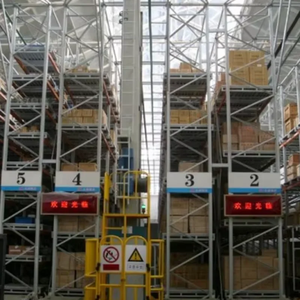
While traditional 2-Way radio shuttles travel strictly along a single deep channel (requiring a forklift to change levels or lanes), global procurement is rapidly pivoting to 4-Way Directional Shuttle Systems. 4-Way vehicles switch tracks autonomously via internal hydraulic lifters, traversing both longitudinal channels and transverse cross-aisles. Integrated with vertical lifts (reciprocating elevators), 4-Way systems convert static warehouses into fully automated 3D storage matrices without requiring expensive stacker cranes.
2. Supercapacitor & Ultra-Fast LiFePO4 Power Architectures
Operating downtime during battery swaps is a bottleneck of the past. Modern automated shuttle vehicles exported from China utilize fast-charging LiFePO4 battery banks or supercapacitor hybrid modules. These enable in-rail conductive charging: every time the shuttle deposits or retrieves a pallet at the home station, it receives a rapid charge burst. A full charge takes under 30 minutes for 8–10 hours of continuous heavy-duty operation, guaranteeing 24/7 continuous warehouse throughput.
3. Seamless Integration with AGVs, AMRs & WMS Cloud Middleware
Procurement is no longer isolated to steel racks and isolated runners. Buyers are demanding turnkey compatibility. China's top manufacturers provide native integration between shuttle fleet WCS (Warehouse Control System) software and open API architectures. Shuttle runners communicate wirelessly with Autonomous Mobile Robots (AMRs) and Automated Guided Vehicles (AGVs) for complete end-to-end automated material handling from inbound dock to outbound staging.
4. AI-Driven Predictive Maintenance & IoT Sensor Arrays
Enterprise buyers now require continuous real-time diagnostic reporting. Advanced shuttles are equipped with vibration sensors, temperature monitors, wheel-wear detectors, and optical alignment alerts. Through cloud-connected telemetry, logistics managers receive automated alerts before mechanical wear leads to operational downtime, reducing total cost of ownership (TCO) over a 15-year operational lifecycle.
Strategic Sourcing Executive Summary
"Sourcing automated pallet shuttle systems directly from established China OEM factories like IronMax Storage Solutions delivers up to a 45% CAPEX savings compared to Western European system integrators, without sacrificing component quality. By utilizing standardized cold-formed structural steel profiles, Siemens control electronics, and open WCS protocols, global enterprise buyers achieve a typical ROI timeline of 14 to 18 months."
Industry Development Trends: The Evolution of Automated Pallet Handling
From simple mechanical drive-in channels to intelligent, self-healing automated logistics ecosystems.
The transformation of automated warehouse storage has evolved across three distinct technological waves over the past three decades:
Generation 1: Mechanical High-Density Systems (1990s–2000s)
Characterized by static Drive-In and Push-Back racking systems. While these configurations delivered structural density, they suffered from high driver error, frequent racking collisions, slow pallet retrieval speed, and strict reliance on manual forklift labor. Operational flexibility was low, and SKU mix was heavily restricted.
Generation 2: Semi-Automated 2-Way Radio Shuttle Racks (2010s)
The introduction of battery-operated radio shuttle carts riding inside custom guide rails transformed warehouse logistics. Forklifts only needed to drop the shuttle at the entrance of a lane and deliver pallets to the front position. The shuttle handled in-lane transport. This drastically reduced forklift travel times, cut labor hours by 50%, and introduced software-selectable FIFO/LIFO capabilities.
Generation 3: Fully Autonomous 3D Multi-Shuttle & AS/RS Ecosystems (Present–Future)
Today's industry standard combines intelligent 4-Way pallet shuttles, vertical elevators, AMR dock-transporters, and AI-driven WCS fleet controllers. The system dynamically assigns tasks to shuttle runners, automatically balances lane inventories, optimizes pick paths based on real-time order volume, and conducts self-diagnostics. Cold chain operations (freezers at -25°C for food and pharmaceuticals) represent one of the fastest-growing adoption sectors, where saving floor space directly translates into massive energy cost savings.
Frequently Asked Questions (FAQ) for Global Buyers
Engineering and commercial insights to help you make informed procurement decisions when importing shuttle racking systems from China.
What is the difference between a 2-Way and a 4-Way Automated Pallet Shuttle System?
A 2-Way radio shuttle cart moves exclusively forward and backward within a single dedicated storage channel. A forklift is required to physically lift and relocate the 2-Way shuttle cart from one lane to another. A 4-Way pallet shuttle vehicle features dual-wheel sets that allow it to travel longitudinally along storage channels AND laterally across cross-aisles. Integrated with vertical lifts, a 4-Way system can access every rack bay across all levels autonomously without manual forklift intervention.
How do automated shuttle systems perform in cold storage environments (-20°C to -25°C)?
Automated shuttle systems are ideal for cold storage because cold rooms carry high energy operating costs per cubic meter. Our cold-store shuttle models are equipped with specialized low-temperature LiFePO4 batteries, internal heating elements for sensitive PCB electronics, anti-condensation sensors, and synthetic low-viscosity lubricants. This prevents freezing of hydraulic lifting components and maintains peak operational reliability down to -25°C.
What are the required rail straightness and floor flatness tolerances for shuttle racking?
High-density shuttle racking requires precision manufacturing and installation tolerances. The floor slab must meet EN 15620 / DM2 or FM2 super-flat specification depending on rack height. Rail elevation variation must not exceed ±2mm along a continuous run, and channel width parallelism must be maintained within ±1.5mm. IronMax supplies precision adjustable baseplates and laser-aligned anchoring hardware to meet these exact engineering criteria.
Can IronMax shuttle systems integrate with our existing WMS (Warehouse Management System)?
Yes. Our WCS (Warehouse Control System) software communicates over standard TCP/IP, Modbus, or RESTful API protocols via Wi-Fi or Industrial Ethernet. It seamlessly exchanges real-time data with enterprise WMS platforms including SAP, Oracle, Manhattan Associates, or custom proprietary software for fully automated inventory updates, task scheduling, and error reporting.
What payload weights and pallet sizes can your radio shuttles handle?
Standard shuttle models support unit loads ranging from 500 kg to 1,500 kg per pallet, while custom heavy-duty models handle up to 2,000 kg. Our shuttle platforms are custom-engineered to accommodate global standard pallet sizes including Euro Pallets (800x1200mm), Industrial Pallets (1000x1200mm), Australian Pallets (1165x1165mm), and American GMA Pallets (40x48 inches).
What safety features are integrated into the shuttle carts to protect goods and operators?
Every shuttle runner incorporates a multi-layer safety suite: front and rear obstacle-detection laser scanners, anti-collision optical sensors, emergency mechanical bumpers, end-of-rail mechanical stops, pallet overhang detectors, and automatic tilt/fall protection sensors. If an anomaly is detected, the shuttle executes a soft stop within milliseconds and transmits an error code to the operator control tablet.
How are export racking components packaged and shipped overseas from China?
All structural steel upright frames and shuttle guide rails are nested, bundled with protective corrugated edge-guards, steel-strapped, and plastic wrapped to protect powder coatings during ocean transit. Shuttle vehicles and electrical control units are packed in heavy-duty IP65 export wooden cases with moisture-absorbent desiccant. Container loading plans are CAD-optimized to maximize freight volume and ensure damage-free delivery.
Transform Your Warehouse Density & Throughput Today
Send your warehouse CAD floorplan, pallet specs, and storage targets to our senior engineering team. We will generate a complete 2D/3D layout design, payload calculation sheet, and competitive factory-direct quote within 24 hours.