Executive Industry Report: Sourcing Single Row Pallet Racking from China
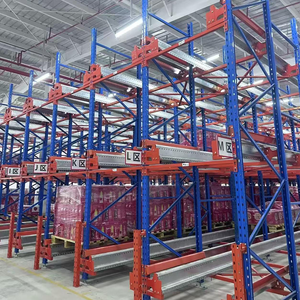
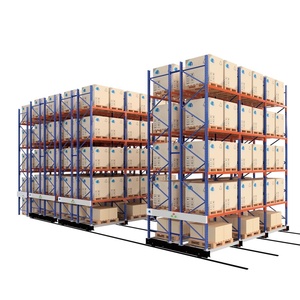
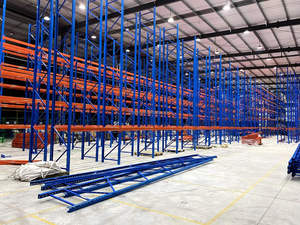
In modern industrial logistics, warehouse cubic spatial efficiency directly dictates operational expenditure and inventory throughput speed. Among the array of structural storage designs, Single Row Pallet Racking stands as a foundational configuration for facilities prioritizing 100% SKU selectivity, rapid inventory rotation, and direct access by standard counterbalance or reach trucks. Positioned typically against perimeter building walls or arranged as single-entry runs bounded by narrow aisles, single row pallet rack structures require precise mechanical engineering to guarantee lateral stability, frame rigidity, and seismic safety under continuous heavy dynamic loads.
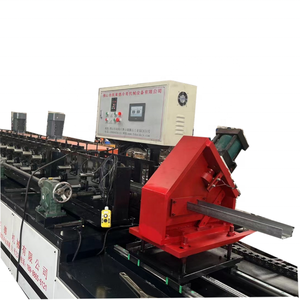
China has established itself as the world's primary manufacturing hub for heavy-duty storage racks, driven by advanced cold-roll forming technologies, high-grade structural steel production (such as Q235B and Q355B), and automated electrostatic powder coating lines. Supply chain managers and EPC logistics contractors globally rely on Chinese manufacturers not merely for cost performance, but for sophisticated custom design capabilities adhering to international codes including ANSI/MH16.1 (RMI), FEM 10.2.02, and EN 15512 standards.
Structural Engineering & Mechanics of Single Row Racking Systems
Unlike double-entry or back-to-back rack rows connected by frame spacers, a single row racking structure lacks symmetrical lateral bracing from an adjacent frame. Consequently, the structural integrity of single-row installations heavily relies on floor anchor engineering, column cross-section moment of inertia, and beam-to-upright connection mechanics.
1. Upright Frame Profile Mechanics
Standard heavy-duty single row uprights feature continuous cold-rolled profiles with multi-stage rib-reinforced bends (typically 8 to 13 folds per section). This profile design elevates the section modulus while maximizing resistance against local buckling under axial compression loads. Uprights are punched with teardrop, diamond, or hex-pattern slots at 50mm or 75mm pitches, enabling boltless beam height adjustment while preserving cross-sectional load integrity.
2. Beam-to-Column Moment Connections
The connector claws (typically 3 to 5 claw design) welded to step beams or box beams engage into upright slots. Under load, these connections create a rigid moment frame that transfers vertical gravity loads and lateral sway forces safely into the vertical uprights. Integral spring safety locks or locking pins prevent accidental beam dislodgement caused by forklift mast errors.
Engineering Information Gain Note: When engineering single row runs exceeding 6 meters in clear height, structural stability calculations must account for the ratio of upright depth to height (slenderness ratio). Top-tie beam bridges over aisles or wall-anchoring brackets must be integrated into structural drawings to prevent transverse frame displacement.
Enterprise Capability & Manufacturing Excellence: IronMax Storage Solutions
As an industry-leading manufacturer located in Jining, Shandong Province, IronMax Storage Solutions Co., Ltd. operates state-of-the-art manufacturing infrastructure dedicated to industrial warehouse racking, multi-tier mezzanines, and high-density automated shuttle systems. Our production complex integrates continuous automated cold-roll forming mills, robotic MIG welding stations, and an eco-friendly automated powder coating plant capable of handling structural members up to 12 meters in single lengths.
| Parameter / Feature | IronMax Heavy Duty Single Row Spec | Industry Baseline Standard | Operational Benefit |
|---|---|---|---|
| Steel Material Grade | Certified Q355B Cold-Rolled Steel | Commercial Grade Q235 Steel | +35% Higher Yield Strength & Weight Efficiency |
| Surface Finishing | Electrostatic Epoxy-Polyester (60-80µm) | Basic Liquid Paint / Thin Powder Coating | Superior Scratch, Impact & Corrosion Resistance |
| Deflection Criteria | Designed strictly to L/200 Limit | L/150 or Unspecified Deflection | Zero Frame Deformation under Full Rated Load |
| Quality Control Protocol | 100% Weld Inspection & Ultrasonic Testing | Visual Spot Checks | Guaranteed Zero Weld Failure in Heavy Operations |
Future Procurement Trends in Industrial Storage Racking (2025–2030)
The global warehousing landscape is undergoing a massive shift driven by e-commerce expansion, cold chain logistics, and supply chain automation. Buyers sourcing single row pallet racking and warehouse storage hardware from China should align procurement specifications with these high-growth future trends:
1. Integration of Automated Shuttle & VNA Technologies
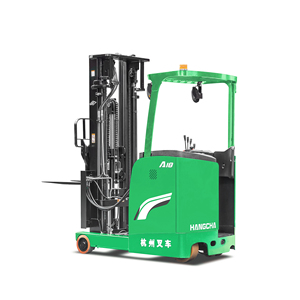
Conventional selective single row racking is increasingly being engineered as Very Narrow Aisle (VNA) configurations or hybrid Radio Shuttle interfaces. VNA single row racking reduces aisle widths down to 1.6 - 1.8 meters, elevating spatial utilization by up to 40% while preserving 100% direct pallet access when paired with specialized turret trucks or wire-guided reach forklifts.
2. Advanced Surface Coatings for Cold Chain & Harsh Environments
With rapid global growth in cold-storage food logistics, racking specifiers are moving away from traditional indoor powder paints toward continuous hot-dip galvanizing (HDG) and specialized anti-bacterial epoxy formulations. Hot-dip galvanized single row racking resists sub-zero oxidation, condensation-driven rust, and chemical washdowns down to -30°C.
3. Modular Mezzanine & Multi-Tier Hybrid Structures
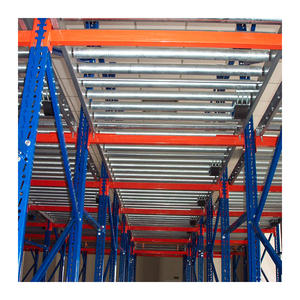
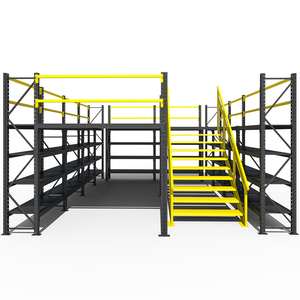
To optimize vertical space without constructing new facilities, procurement teams are ordering modular single row rack-supported mezzanines. By utilizing heavy-duty rack uprights as structural building columns, enterprises establish elevated catwalk floors, picking modules, and administrative spaces directly above pallet storage zones.
Single Row vs. Alternative Racking Systems Comparison
To assist warehouse planners and B2B buyers in selecting the exact storage structure for their operational inventory profile, our engineering team has compiled a technical comparative evaluation across primary system types:
| Storage Racking Architecture | Selectivity Ratio | Cubic Density | Forklift Compatibility | Ideal SKU & Inventory Profile |
|---|---|---|---|---|
| Single Row Selective Rack | 100% (Direct) | Moderate (35-45%) | Standard Reach / Counterbalance | High SKU count, low pallet quantity per SKU, fast rotation |
| Drive-In Pallet Racking | Low (LIFO) | Very High (75-85%) | Standard Counterbalance | Homogeneous bulk items, low SKU variety, cold storage |
| Radio Shuttle System | High (Lane-Level) | Maximum (80-90%) | Shuttle Cart + Forklift | High-volume distribution, fast automated batch throughput |
| Push Back Racking | Medium (LIFO) | High (60-70%) | Standard Reach Truck | 2 to 5 pallets deep per SKU, medium inventory density |
Frequently Asked Questions (FAQ) for Procurement & Design
Standard heavy-duty single row racking systems are designed to carry loads ranging from 500 kg up to 4,000 kg per beam level. Frame load capacities can exceed 20,000 kg per bay depending on upright profile section selection, beam level elevation spacing, and floor anchor engineering.
Single row runs are secured using heavy-duty expansion anchor bolts (typically M12x100 to M16x125) anchored directly into reinforced concrete floor slabs (minimum C25/C30 grade concrete). Where rack height exceeds allowable height-to-depth structural ratios, top-tie structural beams spanning across aisles or structural wall ties are engineered into the layout.
Q235B steel offers a yield strength of ~235 MPa and is suitable for standard duty racks. Q355B is a high-tensile alloy steel with a yield strength of ~355 MPa. Using Q355B allows engineers to design lighter profiles that support substantially higher loads without deformation, optimizing material efficiency and freight shipping weights.
Yes. Our in-house engineering team provides complete AutoCAD and 3D layout services. Buyers simply supply building CAD floor plans, clear building height under trusses, pallet dimensions (W x D x H), gross load weights, and forklift model specifications to receive full layout proposals and structural calculations.
Uprights and beams are bundled with plastic strapping, protective corrugated card corner guards, and wrapped in heavy stretch film. Beam connectors and small hardware components are packed in heavy-duty wooden crates or reinforced cardboard cartons to protect finishes and prevent metal-on-metal abrasion during sea transit.