Core Industrial Storage Product Portfolio
Direct OEM/ODM Supply from China's Premier Structural Racking Manufacturing Facility
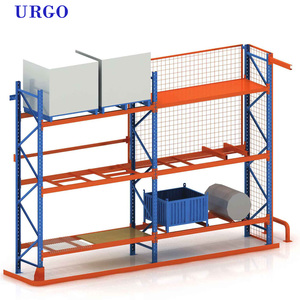
Very Narrow Aisle Pallet Rack / VNA Heavy Duty Racking System
Inquire Now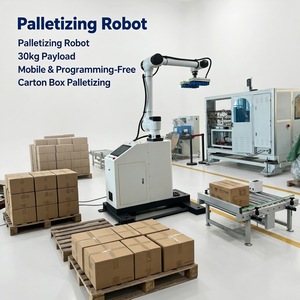
Intelligent Robot to Load Pallet in Warehouse, AI-Driven System
Inquire Now
Standard Light-Duty Coil Racking Lightweight Black Steel Warehouse Storage
Inquire Now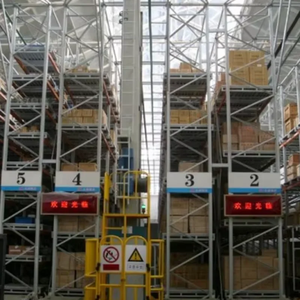
AS/RS Automated Warehouse System High-Density Storage Racking
Inquire Now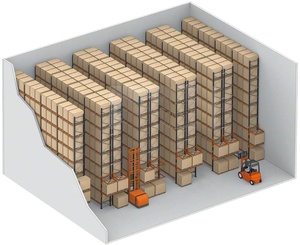
URGO Very Narrow Aisle Pallet Rack / VNA Racking System
Inquire Now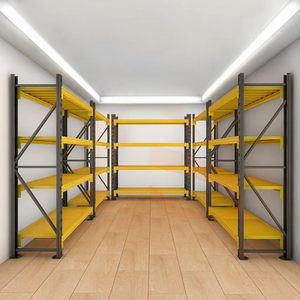
Extra Layer 1200*D400 Industrial Warehouse Pallet System Shelving
Inquire Now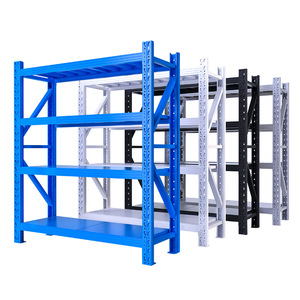
Industrial Rack Heavy Duty Pallet Rack Huge Loading Capacity System
Inquire Now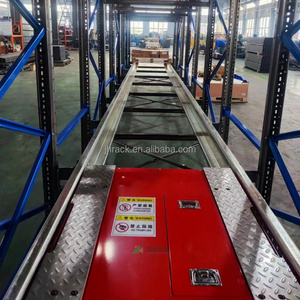
Automated Stackable Metal Shelves ASRS Pallet Shuttle Racking
Inquire NowEngineering Excellence in Double Row (Double-Deep) Pallet Racking Architecture
In modern high-density logistics fulfillment centers, warehouse space optimization represents the primary vector for operational cost control. Double Row Pallet Racking (commonly engineered as Double-Deep Selective Racking) stands as a pivotal compromise between standard 100% selective single-row systems and high-density deep-lane systems such as Drive-In or Automated Radio Shuttle modules. By placing two rows of selective racking back-to-back, accessible via specialized pantograph reach trucks or double-deep MHE (Material Handling Equipment), industrial facilities instantly eliminate up to 50% of operational aisles.
As premier China double row pallet racking manufacturers, our manufacturing facility leverages high-tensile cold-rolled steel alloys (Q235B and Q355B structural grades) processed through fully automated 26-stage continuous roll-forming production lines. This structural design achieves maximum frame rigidity, seismic shear tolerance compliant with FEM 10.2.02 and ANSI MH16.1 standards, and load capacity thresholds up to 4,000 kg per beam level under static conditions.
Structural Dynamics & Operational Mechanics of Double-Deep Configuration
The mechanics of double row pallet racking require advanced static stress modeling. Because the rear pallet row is positioned deeper into the structure, pantograph fork extensions exert higher eccentric moment loads on the front upright columns during placement and retrieval operations. To mitigate torsional stress and buckling, our engineering team integrates modified omega-section upright profiles ($80\text{mm}$ to $120\text{mm}$ frontal width) featuring multi-directional stiffening ribs.
Horizontal and diagonal bracing geometries utilize structural C-profiles secured with grade 8.8 high-tensile locking bolts, ensuring optimal distribution of horizontal sway forces caused by seismic events or forklift contact. Furthermore, beam-to-column connections feature proprietary 4-hook or 5-hook cold-stamped connectors engineered with a self-locking safety pin mechanism to prevent accidental beam displacement during deep-reach operations.
Strategic Comparison: Double Row Racking vs. Alternative Industrial Storage Systems
Procurement directors and supply chain engineers must evaluate trade-offs between inventory SKU diversity, direct pallet selectivity, capital expenditure (CapEx), and throughput speed. The matrix below outlines how double-deep back-to-back systems compare against traditional and automated storage architectures.
| Racking Architecture Type | Floor Footprint Utilization | Direct SKU Selectivity | Required MHE / Forklift Type | CapEx Per Pallet Position | Stock Inventory Rotation |
|---|---|---|---|---|---|
| Standard Single-Deep Selective | 35% - 40% | 100% Direct Access | Standard Counterbalance / Reach | Low Baseline | FIFO (First-In, First-Out) |
| Double Row (Double-Deep) Racking | 55% - 65% | 50% Direct Access | Pantograph Reach / Double-Deep Truck | Low - Medium | FILO (First-In, Last-Out) / LIFO |
| Very Narrow Aisle (VNA) | 60% - 70% | 100% Direct Access | VNA Turret Truck / Articulated Forklift | Medium - High | FIFO (First-In, First-Out) |
| Automated Radio Shuttle System | 75% - 85% | Low (Lane Dependent) | Standard Forklift + Autonomous Shuttle | High | Flexible FIFO / LIFO |
| AS/RS Stacker Crane Matrix | 85% - 92% | 100% Automated | Fully Automated Crane / Conveyor Network | Very High | Fully Automated FIFO |
Manufacturing Superiority: IronMax Storage Solutions Factory Edge
As an industry-leading OEM/ODM manufacturer headquartered in Shandong, China, IronMax Storage Solutions Co., Ltd. controls the complete manufacturing chain—from raw coil slit-processing to precision robotic welding and electrostatic thermosetting powder coating. Overseas buyers gain unparalleled quality control, full material traceability, and direct factory pricing without intermediary markups.
Raw Material Integrity
We source prime steel exclusively from top-tier state-owned steel mills (such as Baosteel and Shougang). Every batch is supplied with certified Mill Test Certificates (MTC) verifying yield strength $\ge 355\text{ MPa}$.
Automated CNC Roll-Forming
Our continuous CNC roll-forming lines execute high-precision punching and cold extrusion with dimensional tolerances within $\pm 0.5\text{mm}$, ensuring effortless field installation and structural stability.
Electrostatic Epoxy Coating
Components undergo an automated 9-stage pre-treatment cleaning, phosphating, and deionized water rinsing cycle, followed by a $60\text{--}80\mu\text{m}$ electrostatic epoxy powder coating baked at $200^\circ\text{C}$.
Finite Element Stress Analysis
In-house structural engineers perform ANSYS static stress and modal buckling simulations on customized layout requests to verify safety factors ($1.65$ safety coefficient against yield stress under maximum load).
Heavy-Duty Export Packaging
Upright frames and beams are nested, wrapped with anti-corrosion protective film, bundled with steel strapping, and fitted with custom wooden skid blocks for damage-free container transport.
Global Project Engineering Support
From initial AutoCAD warehouse layout drawings and 3D BIM rendering to on-site assembly supervisors and detailed installation manuals, we deliver turn-key engineering support worldwide.
Future Procurement & Technological Trends in Double Row Racking (2025-2030)
As global supply chains transition toward smart warehousing and carbon-neutral operational footprints, procurement strategies for physical racking infrastructure are undergoing a fundamental transformation. B2B buyers must account for three critical technological vectors when specifying structural steel pallet racks over the next decade:
1. Integration with Autonomous Mobile Robots (AMRs) and Pantograph AGVs
Traditional double-deep racking relied exclusively on operator-driven pantograph forklifts. Next-generation installations are rapidly incorporating double-deep Autonomous Mobile Robots (AMRs) equipped with LiDAR navigation and optical target alignment. This evolution requires higher manufacturing accuracy for floor-anchoring tolerances, rack plumbness ($\le L/1000$), and beam deflection limits ($\le L/200$), which our factory guarantees through automated CNC laser cutting and robotic jig alignment.
2. Hybrid High-Density Systems: Combining Double Rows with Radio Shuttle Tracks
To further compress aisle space, modern distribution hubs are adopting hybrid architectures that merge back-to-back double row frames with semi-automated radio shuttle channels. This hybrid configuration allows operations to store 4 to 6 pallets deep per aisle bay while retaining fast aisle access, combining the economical structural steel frame of selective racking with the automated speed of shuttle carts.
3. Sustainable Steel Sourcing & Low-VOC Powder Finishes
Environmental, Social, and Governance (ESG) mandates are pushing international EPC contractors to favor factories utilizing recycled scrap-based electric arc furnace (EAF) steel and zero-solvent, VOC-free thermosetting powder coatings. IronMax lead the market by publishing lifecycle carbon footprint documentation and offering green-zinc galv-coating solutions that withstand harsh chemical environments without environmental degradation.
Need a Customized Double Row Racking Layout & Static Load Calculation?
Connect directly with our senior structural engineering team in China. Receive a detailed CAD layout proposal, bill of materials (BOM), and factory-direct quote within 24 hours.
Inquire NowFrequently Asked Questions (FAQ) — Industrial Buyer's Engineering Guide
Clear, definitive technical answers to assist warehouse operations managers, procurement officers, and structural engineers during system evaluation.
What is the primary difference between Single Row Selective and Double Row Racking?
Single Row Selective Racking provides 100% immediate access to every pallet position but requires dedicated aisles for every two rows of racks. Double Row Racking positions two rows back-to-back (four rows per aisle module), eliminating 50% of inner aisles. This increases storage density by up to 60% while reducing direct pallet selectivity to 50% (requiring the front pallet to be moved to access the rear pallet).
What type of forklift is required to operate a Double Row Pallet Racking system?
Double Row Racking requires specialized reach trucks equipped with pantograph fork extenders or telescopic forks capable of reaching into the second pallet position. Operatives also utilize camera-assisted fork tips and height selection systems to safely manage high-level pallet placement in deep rows.
What load capacity can IronMax Double Row Racks support per level?
Standard heavy-duty configurations support payloads ranging from 1,000 kg to 4,000 kg per beam level (distributed load across two beams). Upright frame load capacities can reach up to 24,000 kg depending on beam pitch, top beam height, and seismic zoning requirements established during static engineering calculation.
Is Double Row Racking suitable for cold storage facilities?
Yes, absolutely. Because cold storage real estate incurs high energy and structural refrigeration costs per cubic meter, high-density Double Row Racking is widely deployed in food processing and cold chain warehouses. For sub-zero environments (down to -30°C), we recommend hot-dip galvanized finishes or cold-resistant low-temperature epoxy coatings to prevent surface oxidation and brittleness.
How does your factory ensure structural safety under seismic loading?
All structural designs undergo seismic modal analysis compliant with FEM 10.2.02 and RMI standards. We engineer heavy-duty baseplates, expander anchor bolts ($M12\times 110\text{mm}$ to $M16\times 140\text{mm}$), top tie-beams, and back-to-back row spacers that structurally tie adjacent frames into a unified rigid matrix.
What lead time is required for OEM manufacturing and container delivery from China?
Standard production lead time at our Shandong facility is 14 to 21 calendar days from engineering drawing approval and deposit receipt for orders up to 10 forty-foot high cube (40HQ) containers. Customized color powder coatings or specialized hot-dip galvanizing may add 5 to 7 days.
What documentation and quality certificates accompany international shipments?
Every export order includes Mill Test Certificates (MTC) for steel raw materials, ISO9001 and CE compliance certificates, factory Quality Inspection Reports (QIR), detailed structural packing lists matching bay tags, and step-by-step CAD installation guides.
Can IronMax assist in redesigning our existing warehouse layout?
Yes. Our engineering department provides zero-cost layout optimization services. Simply submit your warehouse architectural drawing (CAD or PDF), clear under-beam height measurements, floor slab loading specifications, pallet dimensions ($W \times D \times H$), and gross pallet weight.