Featured Industrial & Cold Storage Racking Systems
High-load steel pallet racking, automated shuttle blocks, mezzanines, and specialized storage equipment manufactured to ISO 9001 and CE standards.
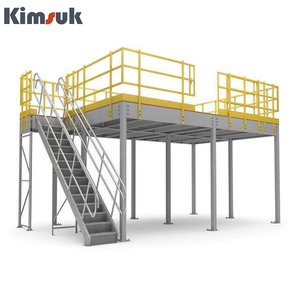
Manufacturer Industrial Warehouse Rack Shelf Mezzanine Storage Shelving Steel Platform Goods Lift Racking System
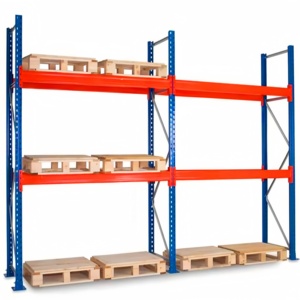
Heavy Duty Warehouse Pallet Racking Cargo & Storage Equipment with Wire Mesh Decking for Efficient Storage
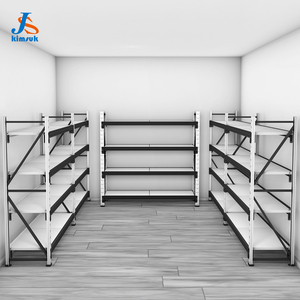
Racking Warehouse Storage Warehouse Shelving Solutions Cantilever Stacking Racks Shelves Selective Pallet Rack
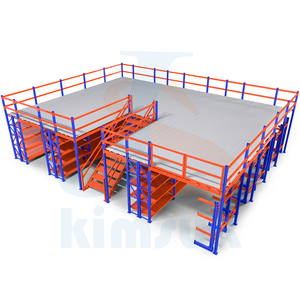
Warehouse Heavy Duty Steel Loft Platform Shelf Storage Attic Rack Pallet Racking Supported Mezzanine Floor Racks System
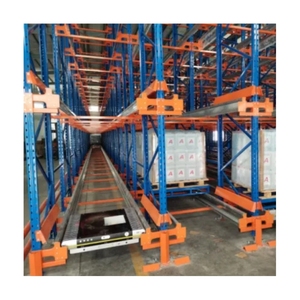
Peterack CE Certified Automatic Warehouse Stacking Racks Shelves Radio Shuttle Racking System Four Way Pallet Radio Shuttle Rack

Heavy Duty 2000KG Per Layer Large Capacity Racking System Warehouse Storage High Duty Beam Stacking Pallet Rack Shelving Unit
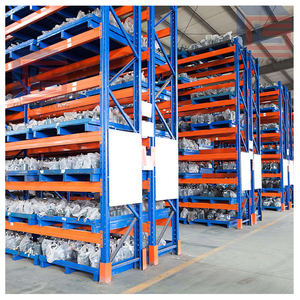
Adjustable Heavy Duty Warehouse Racking System Custom Steel Pallet Shelves for Factory and Storage
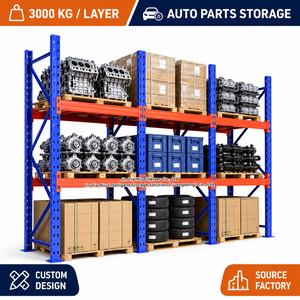
200-4000KG Selective Pallet Racking Heavy Duty Warehouse Rack Custom Size OEM Manufacturer
IronMax Storage Solutions: Engineering High-Density Integrity
Operating out of a state-of-the-art production base in Jining, Shandong Province, China, IronMax Storage Solutions Co., Ltd. (IronMax Rack) has established itself as an authoritative global manufacturer of high-load warehouse racking, sub-zero cold storage systems, structural mezzanines, and industrial metal pallets. Designed strictly under international structural standards including EN 15512, FEM 10.2.02, and RMI, IronMax racking systems bridge raw material excellence with rigorous structural design.
Unlike standard commercial racking suppliers, IronMax operates a fully vertically integrated manufacturing workflow. From continuous cold roll-forming of high-grade Q235B and Q355B structural steel uprights to robotic pulse-MIG welding, automated multi-stage pre-treatment, and high-durability epoxy/galvanized finishing, every component is manufactured in-house. This guarantees structural integrity, precise dimensional tolerances, and complete batch traceability for complex cold-chain logistics hubs worldwide.
Cold Storage Pallet Racking Metallurgy & Low-Temperature Mechanics
Designing racking for cold storage facilities operating between -18°C and -40°C presents distinct mechanical and metallurgical challenges that standard ambient warehouse solutions cannot withstand. Cold ambient temperatures alter the yield strength, ductility, and impact toughness of structural carbon steels, risking sudden brittle fractures under dynamic impact loading from forklifts.
Information Gain Insight: Structural steel undergoes a Ductile-to-Brittle Transition Temperature (DBTT) phenomenon. Standard Q235 steel without specialized impact testing can experience micro-cracking under heavy dynamic load at sub-zero temperatures. IronMax specifies fine-grain Q355ND/Q355E micro-alloyed structural steel with Charpy V-Notch impact testing down to -40°C for deep-freeze installations.
1. Thermal Contraction & Structural Tolerances
In deep-freeze warehouses, thermal contraction reduces physical beam spans and upright heights ($\Delta L = \alpha \cdot L \cdot \Delta T$). A 100-meter racking run subjected to a 45°C thermal drop will experience a linear contraction of approximately 52 mm. Without specialized slotted connection plates and engineered thermal expansion joint clearances, the racking structure will induce severe internal shear stresses on anchor bolts and floor slab interfaces.
2. Corrosion Dynamics & Condensation Protection
Cold storage environments are vulnerable to severe moisture condensation during defrosting cycles or localized air infiltration. Standard powder coatings often suffer from micro-porosity, allowing moisture to penetrate down to the steel substrate where freeze-thaw expansion causes coating delamination. IronMax solves this via two engineered surface methodologies:
- Hot-Dip Galvanizing (HDG): Zinc coating thickness of 80–120 microns complying with ISO 1461, forming a metallurgical sacrificial anode layer that self-heals against scratches inside humid freezer environments.
- Specialized Low-Temp Epoxy Powder Coating: Thermosetting pure epoxy resin baked at 200°C to achieve a zero-porosity, ultra-flexible barrier resistant to thermal shock down to -35°C.
Evaluating High-Density Cold Storage Racking Architecture
Because cold storage operating costs per cubic meter are up to 5 times higher than dry ambient warehouses due to refrigeration power consumption, maximizing volumetric efficiency is paramount. The table below outlines structural, operational, and financial trade-offs across core racking typologies.
| Racking Architecture | Volumetric Efficiency (%) | Pallet Selectivity | Operative Flow | Cold Store Energy ROI | Forklift Risk Profile |
|---|---|---|---|---|---|
| Selective Pallet Racking | 40% – 50% | 100% Direct | FIFO | Low (High Air Space Waste) | Low Risk |
| Drive-In Racking | 65% – 75% | Low (By Lane) | LIFO | Medium–High | Moderate to High Risk |
| Push-Back Racking (2–5 Deep) | 60% – 70% | Medium | LIFO | Medium | Low Risk |
| Radio Shuttle Racking (2-Way/4-Way) | 80% – 90% | High per Channel | FIFO / LIFO | Maximum Efficiency | Very Low Risk |
| Very Narrow Aisle (VNA) | 55% – 65% | 100% Direct | FIFO | Medium | Requires Turret Truck |
Future Trends in Cold Storage Racking Procurement
Strategic supply chain evolution, automation integration, and metallurgical innovations shaping global cold chain infrastructure.
1. Automated 4-Way Radio Shuttle Integration
Transitioning from manual forklift entry (Drive-In) to 4-way automated radio shuttle systems. Modern shuttle fleets equipped with sub-zero lithium iron phosphate (LiFePO4) batteries operate reliably at -30°C, drastically cutting forklift labor cost and thermal loss from open freezer doors.
2. Thermal Airflow & Duct Integration
Next-generation rack designs incorporate CFD (Computational Fluid Dynamics) thermal modeling. Uprights and beams are engineered with specific perforations and top-clearances to allow continuous chilled air velocity across stacked pallets, eliminating localized heat pockets and reducing freezer compressor load by 12–18%.
3. Green Steel & Eco-Galvanizing
Global enterprise procurement standards are mandating Scope 3 carbon emission reductions. IronMax is leading this transition by adopting low-carbon electric arc furnace (EAF) steel coils and closed-loop, zero-lead hot-dip galvanizing lines to comply with strict European environmental regulations.
Frequently Asked Questions for Global Procurement & EPCs
Engineering considerations, structural compliance, export logistics, and customization protocols answered by IronMax senior structural engineers.
How does IronMax ensure racking safety under sub-zero freezer conditions?
What is the difference between Hot-Dip Galvanized and Powder Coated finishes for cold rooms?
Can IronMax design custom rack layouts from existing warehouse CAD files?
What load capacities can IronMax selective and push-back pallet racks support?
How are racking components packed and protected during ocean freight?
Do you provide installation supervision for international projects?
Why Global Logistics Leaders Choose IronMax Rack
Direct Factory Engineering & Cost Efficiency
By eliminating trading intermediaries, IronMax provides direct factory-gate pricing without compromising material specifications. Our automated continuous roll-forming lines reduce manufacturing lead times by 25%.
Rigorous Quality Assurance & ISO Traceability
Every batch of raw steel undergoes tensile yield testing, coating thickness measurement (Elcometer checks), and weld penetration inspection. All production parameters are linked to batch numbers for 100% traceability.
Optimize Your Cold Storage Facility Today
Consult directly with our senior structural engineers to receive customized CAD layouts, structural load calculations, and competitive direct factory quotes.