Heavy-Duty Static Pallet Racking Systems
Explore our factory-direct static racking product portfolio, optimized for high structural rigidity, safety compliance, and maximum warehouse space utilization.
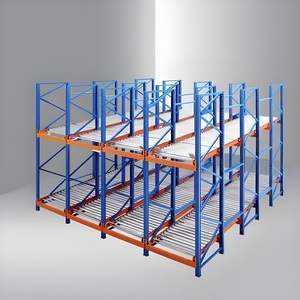
Custom Industrial Warehouse Pallet Flow Steel Roller Racks Gravity Racking
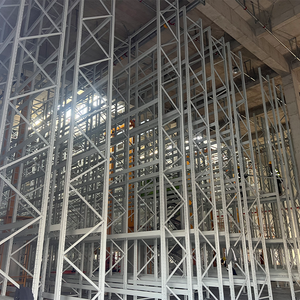
Industrial Pallet Racking for Raw Material Warehouse with Factory Direct Service
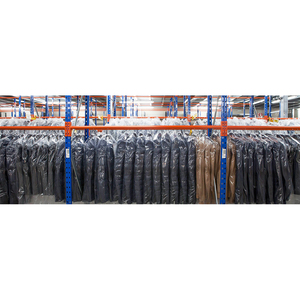
Heavy Duty Steel 5 Layer Selective Pallet Rack System High Strength for Warehouse Storage
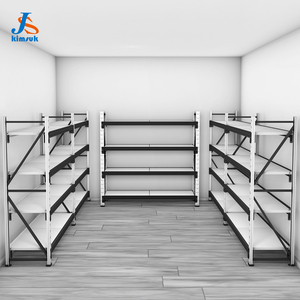
Racking Warehouse Storage Warehouse Shelving Solutions Cantliver Stacking Racks Shelves Selective Pallet Rack
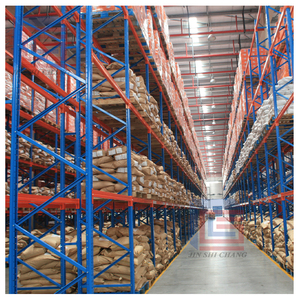
Manufacturer Steel Selective Pallet Rack for Warehouse Storage
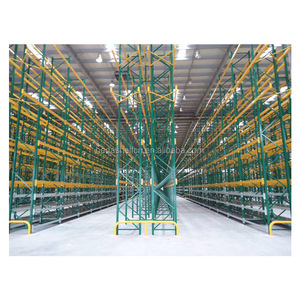
Warehouse Storage Heavy Duty Pallet Rack US Teardrop Pallet Racking System From China Supplier
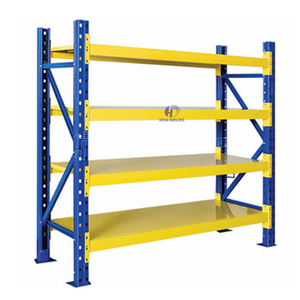
Manufacturer Heavy Duty Warehouse Shelving/Storage Pallet Rack /Selective Heavy Duty Racking System
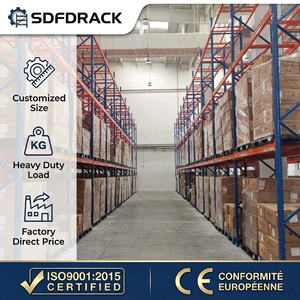
Heavy Duty Warehouse Pallet Racks Customized High Load 1000kg-5000kg Industrial Storage Selective Steel Pallet Racking System
Engineering Excellence in Static Pallet Racking Manufacturing
Static pallet racking systems constitute the fundamental backbone of modern industrial warehousing, cold storage facilities, and raw material distribution centers worldwide. As China’s premier static pallet racking supplier and exporter, our engineering methodology bridges advanced structural metallurgy with rigorous stress-strain analytical modeling. Static pallet racks differ fundamentally from dynamic or automated movement systems: they rely entirely on rigid, passive structural frames designed to sustain immense dead and live loads over decades without structural fatigue or structural deflection exceedance.
When procurement managers, structural engineers, and logistics architects evaluate static industrial racks, the primary technical metric centers around structural stability under maximum payload density. Our static selective racking systems utilize cold-rolled structural steel profiles (primarily Q235B and high-yield Q355B grades) engineered under strict FEM 10.2.02 (European Federation of Materials Handling) and RMI (Rack Manufacturers Institute) guidelines. This guarantees that beam deflection remains comfortably below the permissible L/200 limit (where L represents the clear span of the step or box beam under full design load).
Metallurgical Integrity & Precision Roll-Forming Standards
The operational lifespan of heavy-duty static racking is determined during the primary steel roll-forming process. Unlike generic fabricators that utilize standard structural angles or unverified steel coils, our manufacturing facilities operate multi-stage automated continuous roll-forming lines. This process cold-works structural steel into optimized column profiles (featuring 80mm to 120mm frontal widths with multi-ribbed side geometry), delivering superior section modulus (Z-axis) and moment of inertia values.
- High-Tensile Raw Material: Premium prime-grade cold-rolled steel coils with guaranteed yield strengths up to 355 MPa, ensuring zero micro-fracturing during continuous profile forming.
- Precision Connection Claws: 3-hook and 4-hook heavy-gauge connector brackets robotically welded to cross-beams, ensuring a rigid beam-to-column joint stiffness that minimizes frame sway.
- Automatic Safety Locks: Spring-loaded, zinc-plated drop locks integrated into every beam connection to prevent accidental dislodgement caused by forklift mast interference.
- Surface Pre-Treatment & Coating: 9-stage automatic dip-wash phosphatization followed by thermo-set epoxy polyester powder coating (60–80 µm thickness) or hot-dip galvanizing per ISO 1461 for corrosive or freezer environments.
Information Gain Insight: Static vs. Dynamic Load Mechanics
While dynamic flow systems introduce kinetic forces and mechanical wear items (such as brakes and rollers), static racking relies entirely on static equilibrium. Our engineering team calculates both frame buckling resistance (Euler load criteria) and pattern loading conditions (checkerboard load distributions) to prevent horizontal displacement during unbalanced order-picking cycles.
Comparative Engineering Guide for Static Racking Configurations
Selecting the optimal static storage topology requires aligning warehouse floor area, building clear height, forklift turning radius, and SKU selectivity requirements. Below is an engineering overview of the four primary static racking configurations produced at our manufacturing base in China:
| Racking Configuration | Selectivity Ratio | Floor Space Utilization | Payload Capacity Range | Primary Industrial Application |
|---|---|---|---|---|
| Standard Selective (Single Deep) | 100% Direct Access | 35% - 45% | 1,000 kg – 4,000 kg / Level | FMCG, Third-Party Logistics (3PL), E-commerce Fulfillment |
| Double Deep Static Racking | 50% Direct Access | 55% - 65% | 1,000 kg – 3,200 kg / Level | Cold Storage, Bulk Manufacturing, High-Density Stock |
| Very Narrow Aisle (VNA) Static | 100% Direct Access | 60% - 75% | 1,000 kg – 2,500 kg / Level | High-Bay Vertical Distribution, Pharmaceutical, Spare Parts |
| US Teardrop Compatible Racking | 100% Direct Access | 35% - 45% | 1,200 kg – 3,800 kg / Level | North American Warehouses, Import/Export Distribution Hubs |
Enterprise Advantages: Why Partner with China’s Leading Exporter
Exporting industrial structural steel requires absolute compliance with international shipping protocols, certified weld seam inspections, and precise project documentation. As a verified supplier and direct factory exporter, we provide enterprise-grade capabilities tailored to international procurement standards:
Designed in full compliance with ANSI/RMI MH16.1, EN 15512, and AS4084 standards. Every structural beam and upright frame undergoes rigorous Finite Element Analysis (FEA) testing.
Custom seismic anchoring engineering available for seismic zones 3 and 4. Upright footplates are dimensioned with heavy-duty chemical anchor bolts and custom base shim plates.
Our dedicated engineering office provides complete AutoCAD layouts, Navisworks 3D models, and architectural elevation drawings within 24 to 48 hours of project inquiry.
Framing members are tightly bundled with steel strapping, corner protectors, and moisture-resistant polyethylene wrapping to prevent transit abrasion during containerized sea freight.
Equipped with 15 continuous roll-forming lines and robotic welding cells, our plant achieves a monthly capacity of 5,000+ metric tons, guaranteeing reliable project delivery timelines.
Mill test certificates (MTC per EN 10204 3.1), coating thickness verification reports, and weld inspection documentation ship alongside every container bill of lading.
Future Global Procurement Trends in Static Industrial Racking (2025–2030)
As international supply chains evolve toward higher automation density, green building compliance (LEED certified logistics parks), and rigorous workplace safety regulations, the procurement criteria for static pallet racking have shifted significantly. Buying teams no longer look solely at initial cost-per-pallet-position; instead, total cost of ownership (TCO), modular adaptability, and environmental lifecycle metrics dominate executive sourcing decisions.
1. Automation-Ready Static Substructures
Modern distribution facilities are increasingly adopting hybrid operational models—combining traditional static selective racking with Autonomous Mobile Robots (AMRs) or Very Narrow Aisle (VNA) wire-guided turrets. Static frames installed today must feature hyper-accurate manufacturing tolerances (pitch accuracy within ±0.5mm) to accommodate future robotic laser scanning, pallet positioning sensors, and automated vertical lifts without structural re-engineering.
2. High-Strength Low-Alloy (HSLA) Steel Adoption
To reduce freight carbon footprints and total structural weight without compromising payload limits, Chinese racking manufacturing is shifting toward advanced High-Strength Low-Alloy steel formulations. By increasing yield strength from standard Q235 grade (235 MPa) to Q355 (355 MPa) and Q420 grades, upright frame profiles achieve a 15% to 22% weight reduction while maintaining identical column axial load capacities. This results in significantly lower shipping costs per container for international importers.
3. Circular Lifecycle & Sustainable Surface Coatings
Global logistics REITs and industrial developers demand strict environmental compliance. Our factory leads the export sector by adopting 100% heavy-metal-free, VOC-free epoxy polyester powder coatings. Furthermore, fully disassembled static steel racking components are 100% recyclable at the end of their operational lifecycle, aligning seamlessly with corporate ESG (Environmental, Social, and Governance) mandates.
4. Seismic Resiliency & Advanced Structural Anchoring
With warehouse development expanding in earthquake-prone coastal and Pacific Rim regions, international engineering codes now mandate dynamic seismic response modeling. Our technical team incorporates specialized seismic footplates, heavy-duty floor anchors, and cross-bracing geometry designed to absorb lateral shear energy during seismic events, safeguarding personnel and multi-million-dollar inventory holdings.
Frequently Asked Questions (FAQ)
Technical and commercial clarity for warehouse managers, structural engineers, and international procurement agents.
What design specifications are required to receive an accurate static racking layout and quote?
To prepare an engineered CAD layout and precise cost estimate, our team requires: (1) Warehouse architectural drawings detailing clear height, column grids, and floor slab specifications; (2) Pallet dimensions (Length x Width x Height including cargo); (3) Maximum unit payload weight per pallet; (4) Forklift specifications (minimum aisle turning radius and maximum lift height); and (5) Operating environment temperature (ambient, cold storage, or freezer).
How does your factory ensure structural steel quality and load capacity compliance?
We source prime steel coils exclusively from top-tier state steel mills with full Material Test Certificates (MTC EN 10204 3.1). Every production lot undergoes yield tensile testing, dimensional section verification, ultrasonic weld inspection, and destructive load testing under hydraulic press rigs to verify safety factor ratios (typically 1.65 to 2.0 times design load).
Can your static racking systems integrate with existing US teardrop or European beam profiles?
Yes. We manufacture fully compatible replacement components and system extensions. Our US Teardrop racking line matches standard American hole pitch and beam connector pins, allowing seamless integration with existing systems. Similarly, our 50mm and 75mm pitch European series comply fully with established FEM metrics.
What is the recommended surface finish for humid or sub-zero cold storage facilities?
For standard dry ambient warehouses, heavy-duty electro-static epoxy powder coating (60-80 microns) provides excellent wear and scratch resistance. For sub-zero freezers (below -20°C) or high-humidity environments, we strongly recommend Hot-Dip Galvanizing (HDG) per ISO 1461, which provides a zinc coating thickness of 65–85 microns for total rust prevention.
What post-sale installation and engineering support do you provide for export projects?
Every exported order includes detailed 2D/3D assembly drawings, column anchoring maps, load capacity sign labels, and step-by-step installation manuals. For large-scale logistics hub installations, we provide remote engineering supervision via video link or dispatch senior installation engineers on-site to direct local erection teams.
How are racking products packed to maximize container utilization and prevent shipping damage?
Upright frames and cross beams are nested and tightly bound with high-tensile steel strapping and plastic edge protectors. Small hardware (baseplates, row spacers, safety pins) is packed in reinforced wooden crates or heavy-duty cardboard boxes on pallets. Loading patterns are calculated via 3D container optimization software to ensure maximum weight/volume fill rates while facilitating fast forklift unloading at destination ports.
Request a Professional Layout & Structural Engineering Quote
Partner with China’s premier static pallet racking exporter. Send your building dimensions and storage parameters to receive a complimentary 3D CAD design, structural calculation summary, and competitive factory-direct pricing within 24 hours.
Get a Quote