Radio Shuttle
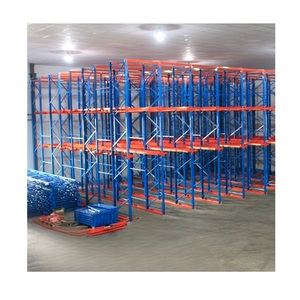
Automatic Warehouse Storage Pallet Shuttle Racking System
System Type: 2-Way Semi-Automated Shuttle
Load Capacity: 500 – 1500 kg / pallet
Structure: High-Grade Q235B/Q355B Steel
Explore high-precision engineered racking hardware, radio shuttle cars, and automated storage solutions manufactured for demanding global logistics operations.
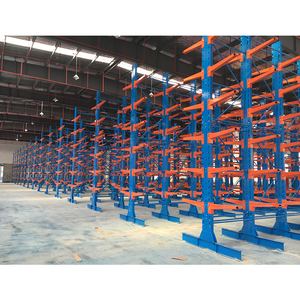
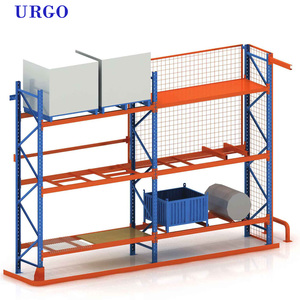
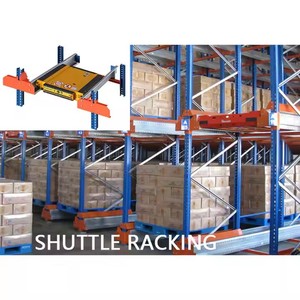
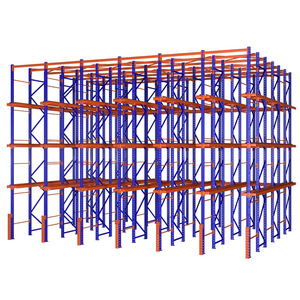
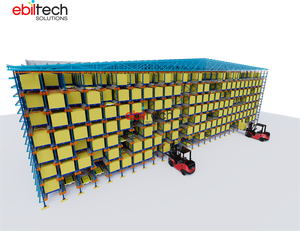
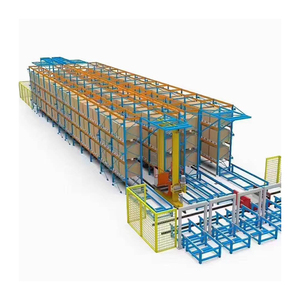
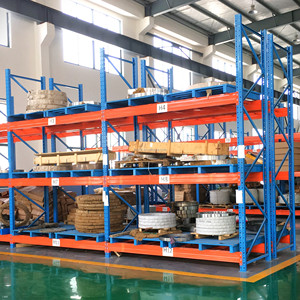
The global industrial warehouse landscape is experiencing a paradigm shift from conventional static storage to semi-automated and fully autonomous high-density storage and retrieval architectures. As global supply chains face escalating real estate acquisition costs, labor shortages, and stringent throughput demands, **China has emerged as the premier manufacturing hub for advanced robotic pallet storage systems, 4-way radio shuttles, and rack-supported building structures (ASRS).**
Modern automated pallet storage relies on specialized structural cold-rolled steel profiles engineered to micron-level straightness tolerances. Unlike legacy selective pallet racking, robotic shuttle systems introduce dynamic kinetic forces, micro-vibrations, and point loads that necessitate advanced Structural Finite Element Analysis (FEA). Manufacturers in China's industrial clusters—notably in Shandong and Jiangsu—have integrated automated continuous roll-forming production lines, robotic laser-welding cells, and inline powder coating to manufacture high-yield structural racking certified to global standards including **FEM 10.2.02 (European Federation of Materials Handling), RMI (Rack Manufacturers Institute), and EN 15512**.
Shuttle and ASRS matrix racking eliminates forklift access aisles, elevating warehouse floor space utilization from 35% (selective racking) up to 85% volumetric cubic utilization.
Fabricated from certified Q235B and Q355B structural cold-rolled steel with low yield stress variation, ensuring minimal rail deflection (< L/200) under maximum dynamic shuttle speeds.
Integrated mechanical backstops, rail end-buffers, photoelectric position sensors, and anti-collision safety systems compliant with ISO 12100 machinery safety directives.
When evaluating Chinese suppliers and OEMs for automated robotic storage systems, international procurement executives must analyze both the physical structural steel integrity and the mechatronics capability of the shuttle vehicles. Leading Chinese factories provide end-to-end engineering, delivering customized guide rails, mechanical safety accessories, and fully integrated Warehouse Control Systems (WCS) capable of communicating seamlessly with global SAP, Oracle, and Manhattan WMS platforms via standard REST APIs and OPC UA protocols.
Key engineering shifts shaping the future of autonomous warehousing, cold-chain automation, and smart material handling systems.
Traditional 2-way radio shuttle systems move forward and backward within a single dedicated deep storage channel, requiring a forklift to manually transfer the shuttle unit between racking channels. The global logistics industry is rapidly transitioning to **4-way omnidirectional shuttle systems**. 4-way shuttles can change channels autonomously by rotating their wheel assemblies 90 degrees, traveling along both longitudinal racking channels and lateral transfer aisles. When paired with automated vertical lifts (reciprocating elevators), 4-way shuttles form a complete 3D matrix storage system that operates entirely without manual forklift drivers inside the storage block.
Early-generation robotic shuttles relied on traditional lead-acid batteries, which suffered from long recharge cycles (6-8 hours), battery degradation, and safety risks in sub-zero environments. Modern Chinese shuttle manufacturers have standardized on **high-density Lithium Iron Phosphate (LiFePO4)** battery packs and **ultra-capacitor hybrid power modules**. These advanced energy storage systems allow automated fast-charging: the shuttle recharges automatically at docking stations embedded directly within the racking structure during idle moments, achieving **24/7 continuous operation with zero downtime**.
Energy costs in refrigerated and deep-freeze warehouses are up to 5 times higher than ambient facilities per cubic meter. High-density radio shuttle racking reduces the internal cubic volume requiring refrigeration by eliminating wasteful forklift aisles. Next-generation robotic shuttles engineered in China are manufactured with special low-temperature lubricants, condensation-proof sealed IP65 electronic enclosures, and low-temperature structural steel fasteners. This enables flawless autonomous material handling down to **-30°C in food processing, pharmaceutical, and cold-chain logistics centers**.
Modern warehouse automation is driven by intelligent software. Leading Chinese suppliers are integrating **Artificial Intelligence (AI) and Digital Twin technology** into Warehouse Control Systems (WCS). By analyzing real-time order streams, AI scheduling algorithms dynamically optimize shuttle robot paths, prevent traffic bottlenecks at vertical lifts, and automatically perform "stock reorganization" during off-peak hours—moving high-turnover SKUs to front-level pick faces to accelerate daytime dispatch speeds.
Evaluate storage density, selectivity, labor reliance, and capital expenditure (CAPEX) across standard and automated racking configurations.
| Storage Racking Architecture | Cubic Space Utilization | Pallet Direct Access / Selectivity | Forklift Operator Requirement | Throughput Speed (Pallets/Hr) | Relative CAPEX Investment |
|---|---|---|---|---|---|
| Selective Pallet Racking | Standard (35-40%) | 100% Direct Access | High (1 Forklift per Aisle) | 20 – 30 Pallets / Hr | Low / Baseline |
| Very Narrow Aisle (VNA) | High (55-65%) | 100% Direct Access | High (Specialized VNA Truck) | 25 – 35 Pallets / Hr | Moderate |
| Drive-In Racking | High (60-70%) | Low (LIFO Only) | Moderate (Truck Enters Rack) | 12 – 20 Pallets / Hr | Low-Moderate |
| 2-Way Radio Shuttle Racking | Very High (75-85%) | Lane Selective (FIFO/LIFO) | Low (Transfer Only) | 40 – 60 Pallets / Hr | Moderate-High |
| 4-Way Autonomous Shuttle ASRS | Maximum (>85%) | High Matrix Selectivity | Zero (Fully Autonomous) | 80 – 150+ Pallets / Hr | High ROI Investment |
Direct from our state-of-the-art production base in Jining, Shandong Province, China.
IronMax Storage Solutions Co., Ltd. (also operating under Jinghui Intelligent Warehousing Equipment Shandong Co., Ltd.) is a specialized manufacturer and global exporter of high-density warehouse storage systems, structural pallet racking, multi-tier mezzanine platforms, and automated robotic racking infrastructure. With a dedicated facility spanning tens of thousands of square meters in Shandong, China, IronMax combines heavy mechanical engineering with advanced manufacturing control.
Equipped with 18 automated continuous roll-forming machine lines, precision CNC punching cells, robotic welding stations, and a 120-meter continuous electrostatic powder coating line.
All structural profiles use certified prime cold-rolled steel sourced directly from top-tier steel mills (Baosteel, Shougang). Mill test certificates (MTC) provided with every batch.
From initial 3D CAD layout proposal, FEA structural calculation report, and export-compliant bundling to detailed installation manuals and remote installation supervision.
Our international engineering sales team supports buyers across North America, Europe, the Middle East, Southeast Asia, and Latin America. Whether you require standard selective racking components or a custom-designed automated 4-way radio shuttle high-bay matrix, IronMax delivers factory-direct pricing backed by strict quality assurance.
Critical technical and commercial answers for warehouse managers, EPC contractors, and procurement directors.
High-quality Chinese racking manufacturers utilize prime structural cold-rolled steel grades Q235B and Q355B (equivalent to European S235JR and S355JR, or ASTM A36 / A572 Grade 50). Q355B high-tensile steel is typically specified for heavy-duty upright frames and high-bay shuttle guide rails where higher yield strength is required to prevent beam deflection under maximum load.
Radio shuttle systems support both flow methods depending on warehouse operational configuration. For **LIFO (Last-In, First-Out)**, loading and unloading are conducted from the same front side of the racking block. For **FIFO (First-In, First-Out)**, goods are loaded from the rear loading aisle and retrieved from the front dispatch aisle. The shuttle vehicle software can be toggled between modes via wireless remote control or WCS interface.
Automated shuttle matrix racking requires high-precision concrete floor flatness compliant with **DIN 18202 or VDMA floor guidelines (e.g., Superflat tolerances)**. The concrete floor slab should have a minimum compressive strength of 30–35 MPa and be engineered to withstand the concentrated point loads exerted by heavy upright baseplates without differential settlement.
Leading Chinese racking suppliers employ a multi-stage automatic surface pre-treatment process including degreasing, acid rust removal, zinc-phosphate conversion coating, and high-temperature curing epoxy-polyester powder coating (80–100 micron thickness). For outdoor, humid, or cold-storage environments, **Hot-Dip Galvanizing (HDG)** compliant with ISO 1461 is applied, offering 30+ years of anti-corrosion protection.
Yes. The IronMax Warehouse Control System (WCS) is built on open architecture protocols (OPC UA, TCP/IP, Modbus, REST API). It communicates directly with major ERP and WMS platforms including SAP S/4HANA, Oracle WMS, Manhattan Associates, and custom Linux/Windows-based systems to synchronize real-time inventory balances and automated mission commands.
Standard manufacturing lead time is 15 to 25 days depending on total project tonnage. Components are packaged specifically for ocean freight: upright columns and beams are steel-strapped into rigid bundles with protective plastic corner guards and air-cushion wrapping. Small components and hardware are packed in heavy-duty wooden crates or corrugated cartons to prevent damage during transit.
Contact IronMax engineering specialists for a custom warehouse layout proposal, structural load calculations, and direct factory pricing within 24 hours.