Flagship Conveyor & Storage Hardware Matrix
Engineered to FEM 10.2.02 and EN 15512 international standards. Fully compatible with automated pallet handling, radio shuttle units, and high-density AS/RS warehousing.
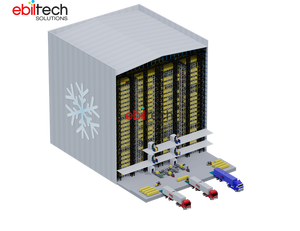
Custom Steel Four-Way Shuttle Rack with Corrosion Protection Heavy Duty Powder Coated Unmanned Smart Warehouse Solution
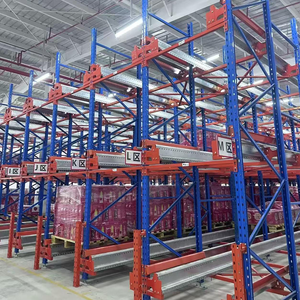
Heavy Duty Fully Automated Corrosion-Resistant Two-Way Radio Shuttle Pallet Racking System Remote Shuttle Cart for High-Density
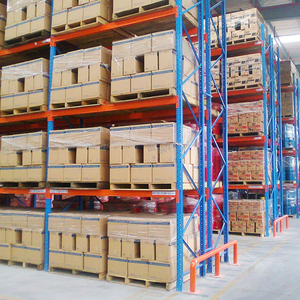
Combined Load-Row Connected Industrial Pallet Racking System Heavy Duty Warehouse Storage Racks 2000kg Steel
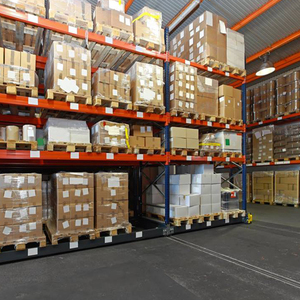
Certificate Heavy Duty Metal Storage Rack Mobile Racking Adjustable Pallet Racking System 1300KG 1400KG 1500KG Pounds Tons
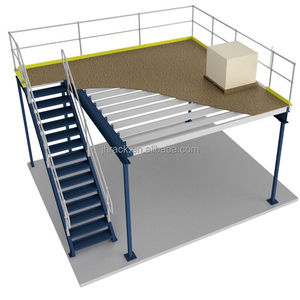
Mezzanine Design Platform Steel Mezzanine Structures Warehouse Storage Racking Mezzanine Floor For Warehouse Office
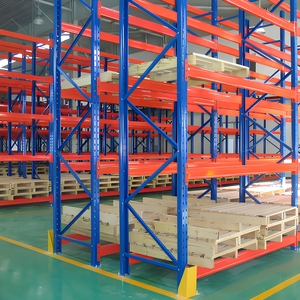
Steel Heavy Duty Double Deep 5 Pallet Rack High Density Warehouse Racking System Space Saving Reach Truck Access OEM Supplier
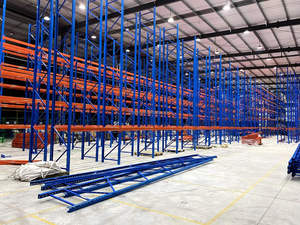
Adjustable Steel Heavy-Duty 5-Layer Warehouse Storage Shelves Van Racking Systems with Safety Railguards
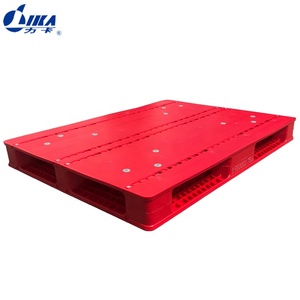
HDPE 4 Way Enter Great Price Plastic Pallets Pallet Racking Solution Industrial Storage Unit
Why Global Supply Chain Leaders Choose IronMax Rack
Operating from our high-precision manufacturing base in Jining City, Shandong Province, IronMax Storage Solutions Co., Ltd. integrates mechanical engineering, automated software validation, and heavy-duty structural steel fabrication.
High-Grade Steel Roll-Forming
We source certified Q235B and Q355B structural steel directly from premier state-owned mills. Advanced continuous cold roll-forming lines guarantee rigid profile tolerances and uniform structural density.
Automated Electrostatic Coating
Our fully automated 9-stage pre-treatment and powder-coating lines apply 80–120μm epoxy resin coatings. This ensures maximum scratch protection, chemical inertness, and salt-spray corrosion endurance.
Stringent Quality Verification
Every lot undergoes rigorous mechanical load testing, weld penetration ultrasonic examination, dynamic deflection checks under maximum rating, and strict dimension verification matching ISO 9001 and CE norms.
Technical Whitepaper: Engineering Automated Pallet Conveyor Storage Systems
Modern industrial supply chains require an unprecedented balance between high-density volumetric utilization, fast throughput per hour, and operational fault tolerance. As global logistics centers evolve toward Industry 4.0 automation, the mechanical infrastructure of warehouse operations—specifically structural pallet racking combined with motorized pallet conveyor systems—serves as the backbone of modern material handling. As a leading China best pallet conveyor storage system manufacturer and exporter, IronMax Storage Solutions Co., Ltd. produces engineered systems that solve physical space constraints, minimize human labor dependence, and streamline continuous unit-load movement.
Information Gain Insight: Selecting between dynamic pallet conveyor systems, radio shuttles, and traditional selective racking is not merely a matter of equipment cost. It requires evaluating structural deflection thresholds under full dynamic load ($L/200$), kinetic friction vectors of pallet runners, and thermal expansion dynamics across automated cold-storage facilities operating at down to -30°C.
1. Anatomical System Architecture: Pallet Conveyor Racking Integration
A high-performance automated conveyor storage matrix combines high-density structural steel rack frames with automated mechanical transfer equipment. Unlike static pallet racking where material handling relies strictly on manual forklift insertion, pallet conveyor systems incorporate continuous live-load transport beds directly within racking bays or throughput corridors.
1.1 Heavy-Duty Roller Conveyor Lines
Motorized Roller Conveyors (MRCs) utilize precision-machined, heavy-walled carbon steel rollers with internal bearings. Rollers are linked via heavy-duty duplex chains or polyurethane timing belts driven by gear-motors. They deliver precise indexing for wooden, plastic, or steel pallets weighing up to 2,000 kg per position. Roller spacing is determined based on bottom-deck runner orientations, ensuring at least three rollers remain in continuous contact with the pallet base at all times to prevent structural sagging or kinetic jam-ups.
1.2 Heavy-Duty Pallet Chain Conveyors
For applications where pallets present irregular bottom runners or orientation changes relative to transport direction, Multi-Strand Drag Chain Conveyors provide robust support. Precision-engineered steel roller chains slide along UHMW-PE wear strips mounted inside heavy structural C-channel frames. Chain conveyors are ideal for cross-dock transfer lines, pallet dispenser integration, and heavy unit loads up to 3,000 kg.
1.3 Shuttle-Conveyor Hybrids and Vertical Lifters
When bridging horizontal conveyor networks with multi-level high-density storage bays, two-way and four-way radio shuttle cars interface directly with main conveyor arteries. Pallet Vertical Reciprocating Conveyors (VRCs) elevate pallets across structural mezzanine platforms or AS/RS rack levels at speeds up to 1.5 m/s. Integrated safety interlocks and photoelectric sensor arrays ensure smooth handoffs between vertical lifts, horizontal conveyors, and shuttle racks without manual operator intervention.
2. Structural Engineering Standards and Deflection Metrics
In high-density automated conveyor racking, structural tolerances are far tighter than standard selective pallet racking. Standard racking allows a beam deflection of up to $L/200$ (where $L$ is beam span length). However, when integrating motorized roller beds, radio shuttle rails, or automated guide tracks, maximum allowable deflection under full static and dynamic load is strictly held to $\le L/300$ or a maximum of 3 mm.
Exceeding these deflection limits causes mechanical binding on conveyor drive shafts, misaligned sensor readings, and uneven wear on shuttle wheels. IronMax racking profiles are calculated using Finite Element Analysis (FEA) software, evaluating multi-axis stress vectors, seismic sway moments, and dynamic impact coefficients during pallet loading and unloading cycles.
3. Technical System Selection Matrix for Material Handling Engineers
To help warehouse planners, logistics consultants, and procurement managers evaluate the right storage infrastructure, the engineering matrix below outlines performance parameters across core industrial storage systems:
| Storage System Type | Volumetric Density Utilization | Pallet Access Velocity | Max Load / Level | Degree of Automation Integration | Primary Industrial Application |
|---|---|---|---|---|---|
| Four-Way Shuttle AS/RS Rack | Maximum (85% - 90%) | High (Automated 4-Way) | 1,500 kg | Full (WCS / WMS Controlled) | Cold Storage, FMCG, Pharmaceutical |
| Radio Shuttle Racking | Very High (75% - 85%) | Moderate (Semi-Automated) | 2,000 kg | Semi-Automated (Remote / PLC) | Beverage Distribution, Bulk Chemicals |
| Pallet Conveyor Racking | High (65% - 75%) | Very High (Continuous Flow) | 2,500 kg | High (Sensor & Motor Driven) | Cross-Docking, Manufacturing Buffer |
| Double Deep Pallet Racking | Moderate (55% - 65%) | Moderate (Reach Truck) | 3,000 kg | Manual / Forklift Driven | General Warehousing, Spare Parts |
| Heavy Steel Mezzanine Platform | Custom Vertical Floor Space | High (Manual + Conveyor) | 1,000 kg / m² | Hybrid (Conveyor + Manual Pick) | E-Commerce Fulfillment, Assembly Lines |
4. Global Procurement Trends in Automated Storage Systems (2025–2030)
As global supply chains navigate labor shortages, rising real estate costs, and stringent ESG compliance mandates, industrial purchasing strategies are undergoing major shifts. Supply chain executives sourcing pallet conveyor systems and high-density racking from China are focused on several core trends:
4.1 Modular "Plug-and-Play" System Standardization
Modern global logistics operators avoid customized, non-standard mechanical installations that restrict future expansion. The procurement trend favors modular conveyor frame sections, standardized roller pitches, and pre-wired bus systems. This modular approach cuts installation timelines by 40% and allows easy expansion or reconfiguration as business requirements change.
4.2 Energy-Efficient Low-Voltage Drives (24V/48V DC Roller Technology)
Traditional centralized AC motor drives connected to long mechanical line-shafts are being replaced by distributed 24V/48V DC Motorized Zero-Pressure Accumulation (ZPA) rollers. ZPA systems operate rollers only when a pallet is actively advancing, cutting electrical consumption by up to 60%, reducing mechanical wear, and eliminating pallet collision damage during queueing.
4.3 Cold Chain Automation & Sub-Zero Optimization
Global demand for temperature-controlled food and biopharmaceutical storage has accelerated investment in automated cold-room infrastructure. Operating inside freezer rooms (-25°C to -30°C) presents severe challenges for lubricants, electronics, and structural steel ductility. Future-ready procurement specifies structural steel with verified low-temperature impact toughness (Charpy V-notch tested), cold-rated synthetic lubricants, and IP67-rated heating elements for electrical enclosures.
4.4 Data-Driven Predictive Maintenance and IoT Sensor Integration
Contemporary conveyor beds and shuttle racking frames are increasingly equipped with embedded vibration sensors, thermal cameras, and current draw monitors. By tracking roller bearing wear, drive chain stretch, and motor heat build-up in real time, maintenance teams can schedule targeted service during planned downtime, preventing costly unscheduled stoppages.
5. Future Technological Evolution in Pallet Handling
Looking toward 2030, material handling equipment is converging into fully autonomous, self-healing warehouse environments. Key technological developments include:
- Autonomous Mobile Robot (AMR) & Conveyor Handover: AMR fleets equipped with top-mounted roller beds now interface directly with fixed racking conveyors. This eliminates stationary forklift drop stations and enables dynamic path selection across warehouse floors.
- AI-Powered Warehouse Control Systems (WCS): Advanced machine-learning algorithms dynamically optimize conveyor speeds and shuttle dispatch schedules based on real-time picking orders, pallet weight balancing, and energy tariff cycles.
- Green Steel & Carbon-Neutral Manufacturing: Leading global B2B buyers require transparent lifecycle environmental product declarations (EPDs). IronMax is advancing sustainable manufacturing through scrap steel recycling, solar-powered plant operation, and zero-VOC powder-coating recovery systems.
6. Comprehensive Quality Control and Structural Certification
IronMax Storage Solutions Co., Ltd. enforces strict quality assurance protocols at every production stage. Raw material steel coils are verified via spectral analysis for chemical composition and tensile yield strength before entering cold roll-forming lines.
Welded beam connectors, column base plates, and conveyor support brackets undergo robotic MIG welding to maintain consistent bead depth and fatigue resistance. Powder coating thickness is verified using digital magnetic gauges, and cross-hatch adhesion tests ensure zero flaking under heavy industrial use. Export orders are packed using steel-banded wooden pallets, protective corner guards, and waterproof stretch wrapping to ensure flawless delivery overseas.
Frequently Asked Questions for Procurement Engineers
Clear, technical answers to simplify layout planning, export logistics, structural calculations, and system customization.
What structural information is required to engineer a custom pallet conveyor storage layout?
To engineer an accurate layout, our technical team requires: warehouse CAD drawings showing clear height under building trusses, column grid locations, floor slab load rating (kN/m²), pallet dimensions (width × depth × height including cargo), maximum pallet weight, required pallets/hour throughput, operating temperature range, and desired WMS interface protocols.
How does IronMax ensure system compatibility with existing wooden or plastic pallets?
We conduct roller pitch and runner orientation analyses. For wooden pallets with variable bottom boards, we recommend 3-strand chain conveyors or closely spaced roller beds (75mm to 100mm center-to-center). For standard 4-way entry plastic pallets, standard motorized roller beds with guided side channels provide smooth, non-jamming travel.
What surface finishes are recommended for high-humidity or cold-storage environments?
For standard dry indoor warehouses, our 80–120μm electrostatic epoxy powder coating provides exceptional durability and color coding. For cold-storage environments (-30°C), high-humidity areas, or chemical exposure, we recommend hot-dip galvanizing matching ISO 1461 standards to ensure lifelong corrosion resistance.
Do IronMax systems comply with international racking and electrical safety standards?
Yes. All structural racking and mezzanine frameworks are engineered to FEM 10.2.02, EN 15512, and ANSI/RMI MH16.1 guidelines. Motorized conveyor components, sensor enclosures, and PLC control cabinets carry CE certifications and match IP54/IP65 ingress protection ratings.
What is the typical manufacturing lead time and export packing arrangement?
Standard project production requires 20 to 35 days depending on tonnage and automation complexity. Racking components are bundled with steel strapping, protective foam, and plastic wrapping. Conveyor beds and electronic modules are packed in export-grade, fumigated plywood cases for safe ocean transport.
Request a Custom Storage & Conveyor Engineering Proposal
Consult directly with IronMax structural engineers and logistics automation experts. Receive customized CAD layout drawings, structural load calculations, and competitive FOB/CIF factory quotes within 24 hours.
Contact Us