Featured Heavy Duty Storage & Shuttle Racking Systems
Factory-direct automated shuttle cars, heavy-duty racking modules, and space-optimizing warehouse storage systems from China's leading exporter.
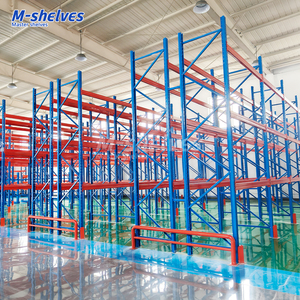
Warehouse Shelves Pallet Racking System Storage Heavy Duty Shelving Rack
Get a Quote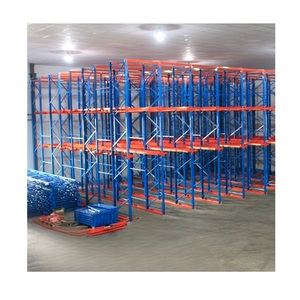
Automatic Warehouse Storage Pallet Shuttle Racking Selective Pallet Rack
Get a Quote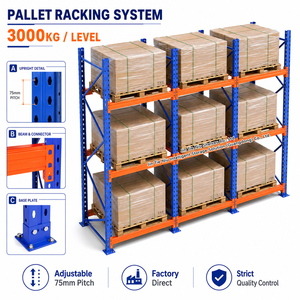
3 Pallet Levels Heavy Duty Steel Warehouse Rack Selective Racking 3000KG
Get a Quote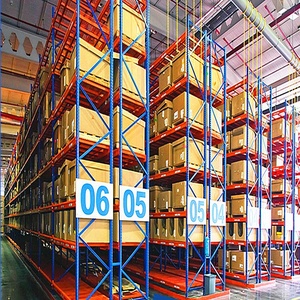
ISO CE Selective Steel Heavy Duty Pallet Rack VNA Pallet Racking
Get a Quote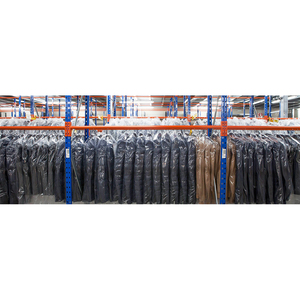
Heavy Duty Steel 5 Layer Selective Pallet Rack System High Strength
Get a Quote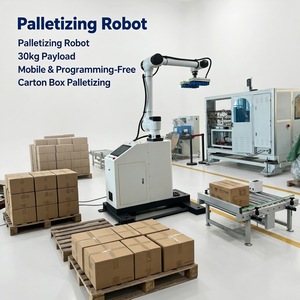
Intelligent Robot to Load Pallet in Warehouse AI-Driven Space Optimization
Get a Quote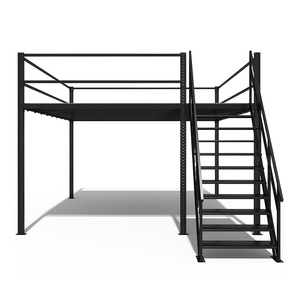
Heavy Duty Rack Industrial Mezzanine Interlocking Floor Attic System
Get a Quote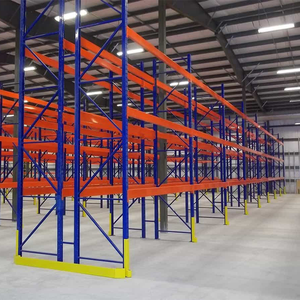
Ventilated Wire Mesh Deck Damp-Proof 5-Layer Stacking Racks 2000kg
Get a Quote1. Executive Summary & Engineering Paradigm Shift
In contemporary intralogistics and supply chain management, storage volume maximization, SKU flexibility, and automated operational efficiency stand as the three vital pillars of warehouse engineering. As industrial real estate costs rise globally and labor availability tightens, traditional static storage architectures—such as standard selective pallet racking, drive-in systems, and manual narrow-aisle configurations—are rapidly reaching their economic limits.
This engineering white-paper examines the technical framework, operational mechanics, and procurement logistics of the Four-Way Shuttle Racking System (4-Way Radio Shuttle ASRS). Designed and manufactured by Tier-1 Chinese OEMs, these systems represent the peak of high-density Automated Storage and Retrieval Systems (ASRS). By integrating longitudinal and transversal rail traversal inside a unified structural steel matrix, 4-way shuttles liberate warehouse operations from fixed aisle constraints, enabling 3D random pallet storage, dynamic fleet load-balancing, and unmatched volumetric storage efficiency exceeding 95%.
3D Omnidirectional Mobility
Shuttles shift seamlessly between longitudinal tracks and transversal cross-aisle rails via hydraulic lift wheel assemblies, eliminating dedicated aisle restrictions.
Ultra-Capacitor & LiFePO4 Power
Powered by fast-charging lithium iron phosphate battery packs or hybrid ultra-capacitors, enabling continuous 24/7 operations with 3-minute auto-docking recharges.
WCS Swarm Intelligence
Integrated Warehouse Control Software (WCS) routes multiple shuttles dynamically, dynamically avoiding path collisions and handling peak-hour throughput spikes.
2. Architectural Anatomy: 4-Way Shuttle Racking vs. Traditional Storage Systems
To accurately evaluate the return on investment (ROI) for modern distribution centers, logistics planners must understand how 4-way shuttle systems differ structurally and operationally from standard manual or semi-automated storage configurations.
Unlike 2-Way Radio Shuttle systems, which restrict the automated vehicle to a single deep channel (requiring a forklift to manually relocate the shuttle from lane to lane), the 4-Way Shuttle operates inside a complete 3D rail grid network. Recessed vertical lifters (elevators) move the shuttle vehicle between vertical rack levels, while the vehicle independently traverses horizontal tracks in both X and Y axes.
| System Type | Storage Density | SKU Flexibility | Throughput / Hour | Forklift Dependence | Cold Chain Suitability |
|---|---|---|---|---|---|
| 4-Way Shuttle ASRS | Ultra-High (90-95%) | High (3D Matrix Access) | Very High (Multi-Robot) | Minimal (Only I/O Points) | Optimal (-30°C Capable) |
| 2-Way Radio Shuttle | High (80-85%) | Medium (Deep Channels) | Medium (Forklift Bottleneck) | High (Level Transfers) | Good |
| Selective Pallet Racking | Low (40-45%) | 100% Direct Access | Manual Forklift Speed | 100% Dependent | High Energy Waste |
| Drive-In Racking | High (65-75%) | Very Low (LIFO Only) | Slow (High Collision Risk) | High (Inside Rack Driving) | Moderate |
| Stacker Crane ASRS | High (85-90%) | High | High (Fixed Aisle) | Zero | Good |
3. Future Procurement & Technology Evolution Trends (2025–2030)
As smart manufacturing and global supply chains evolve toward Industry 4.0 standards, procurement departments and logistics engineers are prioritizing modular automation solutions over rigid, high-cap-ex infrastructure. Key trends shaping the future of 4-way shuttle procurement include:
A. Swarm Robotics & AI-Driven Dynamic Task Allocation
Legacy automation relied on static path routing. Modern 4-way shuttle WCS algorithms utilize real-time swarm intelligence. When a high-priority dispatch order enters the system, nearby shuttles reconfigure their routes autonomously to clear obstruction pallets, optimize weight distribution across racking uprights, and prevent bottlenecking at vertical lifter stations.
B. Cold Chain Deep-Freeze Optimization (-30°C)
Cold storage facilities represent the highest operational cost per cubic meter in global logistics. High-density 4-way shuttle systems reduce warehouse footprint requirements by up to 60% for food processing, pharmaceutical, and cold-chain logistics providers. Modern shuttles feature low-temperature LiFePO4 batteries, anti-condensation sensor housings, and specialized low-viscosity synthetic lubricants capable of uninterrupted performance at -30°C.
C. Modular Scalability & Phased CapEx Investment
Unlike crane-based ASRS systems—which require total upfront commitment to fixed aisle cranes—4-way shuttle systems offer unmatched scalability. Enterprise buyers can erect the steel racking grid and install 4 to 6 shuttles during Phase 1, easily adding more shuttle robots into the active system as inventory throughput demands grow.
4. Key Engineering FAQ for 4-Way Shuttle Racking Procurement
What specific floor slab tolerances (flatness and levelness) are required for a 4-way shuttle rack?
Because structural alignment directly impacts shuttle rail wheel contact and high-speed positioning accuracy, 4-way shuttle systems require high-precision concrete floors conforming to DIN 18202 Table 3, Line 4 or ASTM E1155 F-Min 75/100 standards. Minor floor variances are further compensated using precision steel shim plates under structural baseplates during engineering installation.
How does the 4-way shuttle system handle FIFO and LIFO inventory strategies?
The system easily supports both First-In, First-Out (FIFO) and Last-In, First-Out (LIFO) strategies. For FIFO operations, loading lanes are positioned on one side of the matrix while picking lanes operate on the opposite side. The WCS directs shuttles to move pallets continuously forward along longitudinal tracks.
What happens if a shuttle robot suffers a power failure or mechanical error inside a deep lane?
Our 4-way shuttles are built with self-diagnostic fault handling and manual recovery protocols. If a vehicle experiences a battery loss or sensor failure, a secondary "Rescue Shuttle" can be dispatched under manual WCS control to latch onto the stranded shuttle and tow it back to the maintenance lifter platform.
Can your racking structures integrate with third-party Enterprise WMS/ERP systems?
Yes. Our proprietary Warehouse Control Software (WCS) comes equipped with standardized REST API, Modbus, and TCP/IP interface protocols. It seamlessly bridges communication between our rack hardware, shuttle robots, vertical lifters, and major enterprise platforms including SAP, Oracle, Manhattan Associates, and custom WMS solutions.
What cold-rolled steel grades and surface treatment standards are utilized in your factory?
We strictly utilize high-tensile Q355B and Q235B structural cold-rolled steel sourced from premium domestic mills (BaoSteel/Shougang). Racking uprights and beam profiles undergo 9-stage pre-treatment, followed by thermosetting epoxy powder coating tested to withstand over 500 hours of continuous ISO 9227 salt spray testing.
5. Enterprise Manufacturing Edge & OEM Sourcing Strengths
Selecting the right Chinese rack manufacturer and shuttle exporter requires rigorous verification of engineering capability, steel quality, roll-forming precision, and international compliance certification. Our manufacturing complex in Shandong, China provides complete end-to-end quality control:
Precision CNC Roll-Forming
Custom multi-station roll-forming lines guarantee rail straightness tolerances within ±0.5mm per 10-meter span, ensuring smooth shuttle travel at high speeds.
Robotic Welding Cells
Automated ABB robotic welding stations execute consistent, deep-penetration welds across all beam connectors, baseplates, and vertical elevator guide columns.
ISO & CE Certification
Every racking component and shuttle vehicle is fully certified under ISO 9001 quality management, CE electrical safety, and FEM 10.2.02 European design standards.
Global Turnkey Engineering
We supply complete export-ready packages: CAD structural drawings, 3D simulation analysis, packaging, export customs clearance, and overseas supervisor installation.
Ready to Modernize Your Warehouse Storage Density?
Connect directly with our senior intralogistics engineers. We provide complimentary CAD layout design, 3D simulation modeling, and detailed BOM cost estimation for your project.
Get a Quote