High-Density Industrial Storage & Pallet Racking Systems
Engineered for maximum structural integrity, optimized floor footprint, and seamless integration with manual, semi-automated, and robotic material handling equipment.
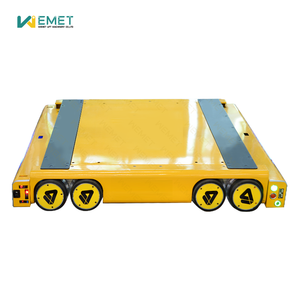
Warehouse Automation Automatic Radio Shuttle Heavy Duty Pallet Rack Fully Intelligent Four Way Shuttle
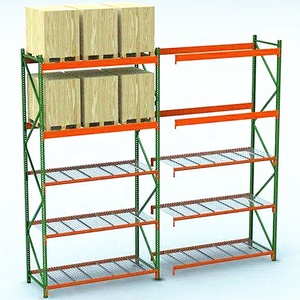
ISO CE Standard Euro Selective Pallet Rack Heavy Duty Pallet Rack Warehouse Storage with Wire Mesh Decking
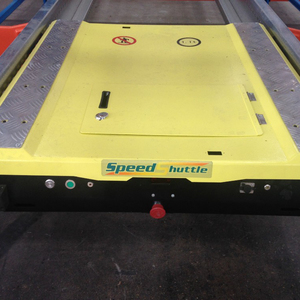
For Maxrac CE Certified Pallet Shuttle Racking Popular Automatic Satellite Storage System Cargo & Storage Equipment
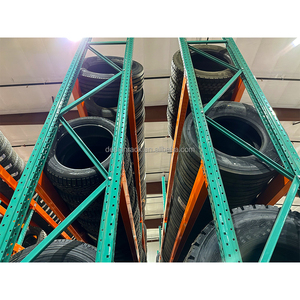
Beam Pallet Rack Q235B Steel Adjustable Heavy Duty Warehouse Storage Rack Custom Design Standard High Density 3 Year Warranty
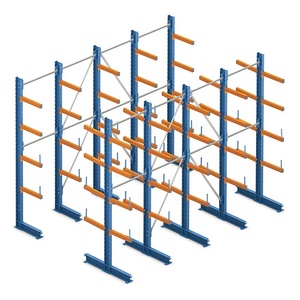
Victory Light Duty Cantilever Rack For Storage Long Product Use Q235B Steel Customized Stacking Rack
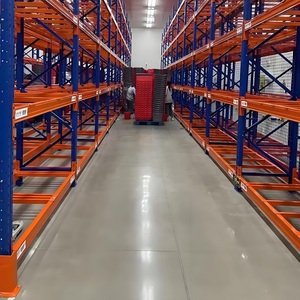
Long Span Heavy Duty Beam Racking with Straight Support Rail High Load Steel Shelving for Oversized Pallets
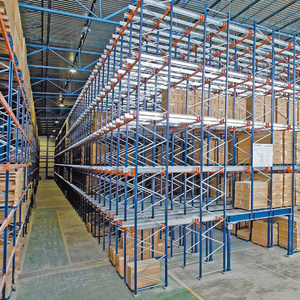
Stable Structure 5 Layer Heavy Duty Shuttle Pallet Racking Custom Intelligent Warehouse Storage System for E-commerce
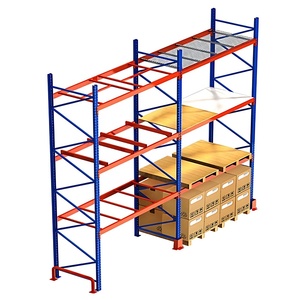
Heavy Duty Shelving System Multilayer Cross Beam Adjustable Storage Rack Metal Pallet Racking System CE/ISO 9001 Certified
Engineering Analysis: The Physics and Economics of Deep Storage Pallet Racking
Modern industrial supply chains demand exceptional volumetric efficiency. Traditional selective pallet racking systems, while providing 100% immediate pallet access, dedicate up to 60% of total floor surface area to forklift aisles. In contrast, Deep Storage Pallet Racking Systems engineered by top Chinese factories convert unused aisle space into active revenue-generating storage positions, increasing cube utilization from a standard 40-50% up to an astonishing 75-85%.
Comparative Structural Breakdown of High-Density Systems
When selecting a deep storage supplier from China, procurement directors and logistics engineers must evaluate five core deep-lane racking methodologies. Each system presents distinct operational trade-offs between Stock Keeping Unit (SKU) selectivity, throughput velocity, structural steel fatigue, and capital expenditure (CapEx).
1. Drive-In & Drive-Through Racking
Forklifts enter structural bays to deposit or retrieve pallets along continuous support rails. Operates predominantly under LIFO (Last-In, First-Out). Best suited for high-volume, low-SKU bulk inventory such as raw materials and seasonal produce.
2. Push-Back Racking Systems
Utilizes nested carts riding on inclined structural steel rails (2.5° to 3.5° pitch). As a new pallet is loaded, it pushes existing pallets back. Offers 2 to 6 deep storage per lane with higher pick speed than Drive-In while maintaining LIFO flow.
3. Radio Shuttle Racking (Semi-Auto)
Self-powered robotic shuttle cars traverse specialized deep channel rails under RF remote or WMS software control. Completely eliminates forklift rack entry, protecting structural uprights while enabling ultra-deep channels (up to 40m+).
Technical Specification Matrix: Selecting the Ideal Deep Storage Architecture
| Racking System Type | Floor Footprint Utilization | Pallet Selectivity | Operational Flow | Forklift Damage Risk | CapEx Index |
|---|---|---|---|---|---|
| Selective Pallet Rack | 40% - 50% | 100% Immediate | FIFO / LIFO Flexible | Low | $ (Baseline) |
| Double-Deep Selective | 55% - 65% | 50% Immediate | LIFO | Moderate | $$ |
| Drive-In Racking | 65% - 75% | 15% - 20% | Strict LIFO | High (Inside Bays) | $$ |
| Push-Back Cart System | 70% - 78% | 25% - 33% | LIFO per Lane | Low to Moderate | $$$ |
| Radio Shuttle Racking | 80% - 88% | Lane Dependent | FIFO & LIFO Dual | Very Low | $$$$ |
| 4-Way Shuttle ASRS | 88% - 95% | 100% Automated | Full Dynamic FIFO | Zero (Fully Robotic) | $$$$$ |
Why Sourcing Deep Storage Pallet Racking from Leading China Factories Delivers Superior ROI
China has solidified its position as the international epicentre for industrial steel rack fabrication. Top tier Chinese manufacturers like IronMax Storage Solutions Co., Ltd. combine access to primary high-grade steel mills (such as Baosteel and Shougang) with continuous automated roll-forming lines and robotic welding clusters.
Premium Material Integrity
Fabricated strictly from cold-rolled structural steel profiles conforming to Q235B and high-yield Q355B (equivalent to S355JR / ASTM A572 Grade 50). Structural elements undergo rigorous yield stress and tensile testing.
Compliance & Certifications
Full adherence to global design standards including FEM 10.2.02 (European Federation of Materials Handling), ANSI MH16.1 (Storage Equipment Manufacturers Association / RMI), ISO 9001:2015, and CE mark standards.
Advanced Surface Treatment
Automatic 6-stage pre-treatment wash coupled with thermosetting epoxy-polyester powder coating (80–120μm thickness) or hot-dip galvanizing for harsh cold-store environments (-30°C) and high humidity locations.
In-House Quality Control Engineering: Deflection Limits & Seismic FEA
In deep storage systems, structural deflection is amplified across long spans and high vertical columns. Qualified Chinese suppliers execute Finite Element Analysis (FEA) simulation under dynamic load distributions and local seismic criteria (Zone 1 through Zone 4). Beam structural deflection is engineered to strictly stay within the L/200 threshold (where L is the beam length), preventing permanent beam deformation or accidental pallet dislodgement.
Future Procurement Trends in Deep Storage Pallet Racking (2025–2030)
As global logistics centers transition toward digital automated ecosystems, purchasing teams must future-proof their racking investments. Sourcing decision-makers are actively moving beyond static shelving to embrace four pivotal industry shifts:
- Hybrid Radio Shuttle & AGV/AMR Interfacing: The modern warehouse baseline is shifting from manual forklift loading to autonomous micro-mobility. Radio shuttle tracks are now factory-fitted with optic sensors, laser reflectors, and docking plates to allow seamless pallet transfer from Autonomous Mobile Robots (AMRs) directly into deep storage channels.
- Cold Chain Thermal Efficiency Engineering: Energy costs for cold storage facilities have escalated globally. High-density shuttle systems and drive-in racks double the volume of frozen goods stored per cubic meter of cooled air. The future trend focuses on ultra-thin, high-yield Q355B galvanized steels that reduce thermal mass while maintaining structural rigidity at sub-zero temperatures (-28°C).
- Modular & Scalable Structural Components: Static, fixed storage is being replaced by reconfigurable teardrop or euro-pitch frame profiles. Companies demand bolt-free adjustable beam connectors (with 50mm or 75mm elevation pitch) enabling fast layout expansion without discarding baseline upright columns.
- IoT Structural Health Monitoring (SHM): Smart racking systems are emerging with integrated strain gauges and tilt sensors attached to upright footplates. These sensors transmit real-time telemetry to facility managers, instantly alerting them to forklift impact events or structural overload conditions before catastrophic rack collapse occurs.
Sourcing & Engineering FAQ: Deep Storage Pallet Racking
Expert answers to complex technical questions encountered by procurement managers, logistics planners, and structural engineers during factory evaluation.
Q1: How do I choose between Drive-In, Push-Back, and Radio Shuttle Racking for my facility?
Selection depends primarily on SKU count, throughput speed, and budget. Choose Drive-In Racking if you have very few SKUs, high volume per SKU, strict LIFO needs, and a tight CapEx budget. Choose Push-Back Racking if you have 2 to 6 pallets per SKU, require faster pick rates than Drive-In, and wish to prevent forklifts from driving into rack bays. Select Radio Shuttle Racking for maximum storage density, ultra-deep lanes (up to 40 meters), high throughput, low forklift rack damage, and compatibility with both FIFO and LIFO operational flows.
Q2: What steel grades are utilized by top Chinese racking manufacturers, and why does it matter?
Reputable factories utilize cold-rolled structural steel profiles conforming to Q235B (yield strength ≥ 235 MPa) for standard beams and Q355B (yield strength ≥ 355 MPa) for heavy-duty upright frames and tall bays. Q355B allows higher load-bearing capacity with lighter material thickness, significantly reducing freight shipping costs while ensuring structural compliance with FEM 10.2.02 and ANSI MH16.1 specifications.
Q3: Should I specify electrostatic powder coating or hot-dip galvanizing for surface finish?
Epoxy powder coating (80-120 microns) is ideal for standard ambient warehouses, offering durable corrosion protection and color-coded beam levels. Pre-galvanized or Hot-Dip Galvanized (HDG) finishes are mandatory for cold storage freezers, humid chemical environments, outdoor covered staging areas, and food processing plants where moisture condensation could accelerate rust and structural failure.
Q4: How can we verify the load capacity claims made by a China racking factory?
Request mill test certificates (MTC) verifying raw material chemical composition and mechanical properties. Ask for the supplier's Finite Element Analysis (FEA) structural calculation reports, verified under FEM or RMI standards. Additionally, reputable suppliers will provide third-party inspection reports from SGS, TÜV, or Bureau Veritas detailing destructive load testing results for beam-to-upright connectors and beam deflection limits.
Q5: What layout information does IronMax require to prepare a custom CAD engineering proposal?
To generate an accurate 2D/3D layout drawing and structural quotation, provide: (1) Warehouse building DWG drawing or interior dimensions including clear height under trusses, floor slab load limit, and pillar/door positions; (2) Pallet specifications including length, width, height (including load), and maximum gross weight per pallet; (3) Forklift model details, maximum lift height, and minimum turning aisle radius; (4) Preferred operational flow (FIFO vs. LIFO) and operating environment temperature.
Q6: How are heavy racking components packaged to prevent damage during sea container transit?
Upright frames and cross beams are bundled with high-tensile steel strapping, wrapped in protective plastic film, and supported by heavy wooden or steel dunnage feet for easy forklift unloading. Small hardware components (bolts, safety pins, footplates, base shims) are packed in reinforced corrugated export cartons on fumigated pallets. Container loading plans are pre-computed using 3D container packing software to optimize volume and weight distribution.
IronMax Storage Solutions Co., Ltd.: Global Engineering & Manufacturing Partner
Located in the heart of China’s steel manufacturing hub in Shandong Province, IronMax Storage Solutions Co., Ltd. is a specialized high-density warehouse racking manufacturer. Spanning advanced manufacturing facilities with certified ISO 9001 quality management, our engineering team has designed and delivered over 500 major logistics installations spanning Europe, North America, the Middle East, Southeast Asia, and Latin America.
From initial structural layout design and finite element calculations to automated precision manufacturing, export packing, and remote or on-site installation supervision, IronMax provides end-to-end turnkey storage solutions tailored to your operational KPIs.
Request Your Custom Warehouse Layout & Engineering Quote Today
Send us your warehouse CAD drawing or pallet dimensions. Our structural engineers will return a complete 2D/3D storage layout proposal and factory-direct price quotation within 24 hours.