Engineering Synergies Between Counterbalance Forklifts & Heavy-Duty Pallet Racking
An authoritative guide on optimizing warehouse volumetric efficiency, beam clearance mechanics, aisle dimensioning (AST), and structural integrity for global logistics operators.
In modern industrial material handling, the operational relationship between counterbalance forklifts and heavy-duty pallet racking systems represents the structural backbone of global supply chain infrastructure. Unlike specialized reach trucks or VNA (Very Narrow Aisle) turret trucks, sit-on or stand-on counterbalance forklifts—powered by lithium-ion batteries, AC electric systems, or IC diesel engines—require wider aisle configurations, specialized upright protection, and reinforced beam profiles to accommodate their larger turning radiuses (AST) and dynamic loading characteristics.
As a premier Chinese manufacturer and supplier of heavy-duty storage racking systems, IronMax Storage Solutions Co., Ltd. integrates rigorous FEM (Finite Element Method) structural modeling, Q355B high-yield strength cold-rolled steel, and precision engineering to manufacture racking architectures tailored to the exact specifications of 1.5-ton to 5.0-ton counterbalance fork trucks. This paper provides supply chain directors, warehouse engineers, and B2B procurement managers with deep technical insights into selecting, designing, and optimizing counterbalance-compatible racking infrastructure.
Featured Counterbalance Forklifts & Heavy-Duty Racking Systems
Explore our combined machinery and storage rack range engineered for high-density warehouse loading docks, factories, and outdoor staging yards.
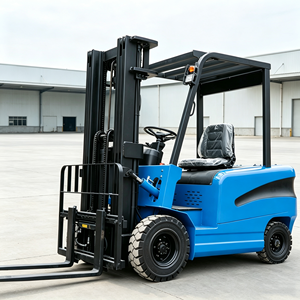
1.5 Ton 2 Ton 3 Ton 5 Ton Electric Forklift Counterbalance Fork Truck Li Ion Battery 5000mm Lift Mast For Factory Loading Dock
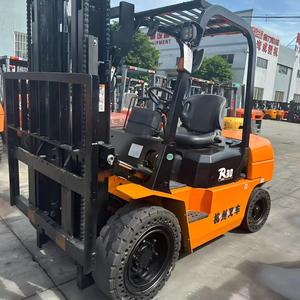
Used Diesel Forklift IC Counterbalance 4270kg Turning Radius 2400mm Two Stage Mast Fwd Drive Model R30 Seated Operation Shelving
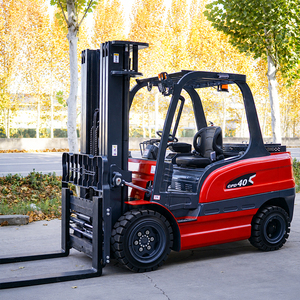
4 Ton Electric Forklift Li Ion Battery Heavy Duty AC Motor Counterbalance For Construction Outdoor Industry
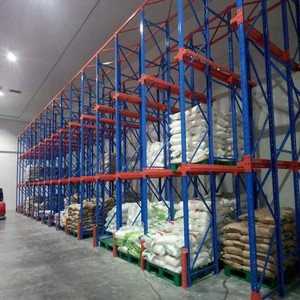
Forklift Drive-in Pallet Rack Heavy Duty Steel 5-Layer Durable Storage System for Reach Truck Counterbalance Forklift
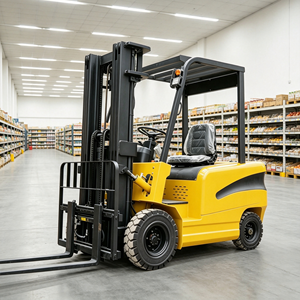
3 Ton 4 Ton Sit On Electric Forklift Counterbalance Fork Truck Li Ion Battery 5000mm Lift Mast For Factory Loading Dock
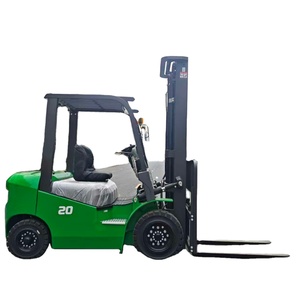
Indoor/Outdoor 2.0 Ton Electric Counterbalanced Forklift for 6m Standard Racking With Lead-acid Battery
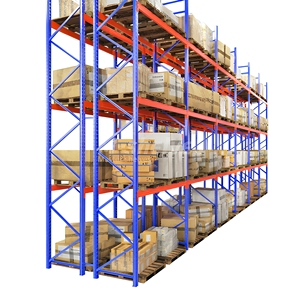
Anti-collision Upright Heavy Duty Rack For 1000kg Storage Forklift Working Selective Pallet Beam Racking System
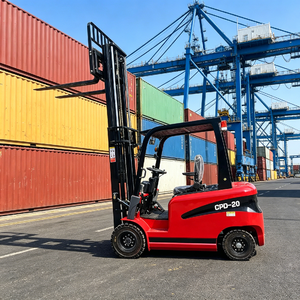
Custom Lifting Height Counterbalance Forklift FH-CPD20 2 Ton High Rack Warehouse Storage Equipment
Aisle Stacking Turn (AST) Calculation & Rack Clearance Dynamics
How to correctly space pallet racking aisles and engineer frame uprights for counterbalance fork trucks.
Understanding Counterbalance AST Formulas
Unlike reach trucks where the load retracts within the wheelbase, a counterbalance forklift carries the payload in front of its front axle balance point. Consequently, calculating the minimum required operational aisle width—known as Aisle Stacking Turn (AST)—is critical to preventing rack collisions and ensuring safe pallet placement.
The standard engineering equation used by IronMax racking specialists to establish minimum aisle clear space is:
Where:
• Wa = Turning Radius of the Forklift
• x = Distance from Front Axle Centerline to Fork Face
• l = Length of the Load/Pallet (typically 1200mm or 1000mm)
• a = Safety Clearance Margin (minimum 200mm to 300mm)
For standard 2.0-ton to 3.5-ton counterbalance forklifts, required aisle widths typically range between 3.5 meters and 4.5 meters. Designing selective racking beams with inadequate clearances leads to frequent upright strikes and premature structural degradation.
Essential Structural Protection Mechanisms
Because counterbalance forklifts possess substantial operational momentum (combining vehicle tare weight, rear cast iron counterweights, and front payload), upright frame protection must be built into the structural specification rather than treated as an afterthought.
- Heavy-Duty Corner Guards: Anchor-bolted steel angle guards (typically 8mm to 10mm thick structural steel) wrapped around peripheral uprights at aisle intersections.
- Structural Column Protectors: Form-fitting steel shields positioned directly in front of rack posts to absorb low-speed fork impacts.
- Tubular End-of-Aisle Barriers: Double-rail heavy structural channel sections welded between aisle frames to withstand side swipes from 4-ton IC counterbalance trucks.
- Guide Rails in Drive-In Systems: Floor-anchored structural steel angle rails (e.g., L100x75x8) that physically steer counterbalance wheels into drive-in channels safely.
Racking Compatibility Matrix for Counterbalance Forklifts
Evaluate storage density, SKU selectivity, and operational suitability across major racking architectures.
| Racking Type | Storage Density | Pallet Selectivity | Optimal Forklift Tonnage | Required Aisle Width | Key Operational Benefit |
|---|---|---|---|---|---|
| Selective Pallet Racking | Standard (30-40%) | 100% Direct Access | 1.5T – 5.0T Electric/Diesel | 3.5m – 4.2m | Maximum SKU flexibility and simple dock-to-stock workflow. |
| Drive-In Pallet Racking | High (65-85%) | Low (LIFO / Block Storage) | 2.0T – 3.5T Compact Electric | Requires Internal Guide Rails | Ideal for cold storage and high-volume homogeneous goods. |
| Push Back Racking | Medium-High (55-70%) | Medium (LIFO per Lane) | 2.0T – 4.0T Counterbalance | 3.6m – 4.4m | Forks stay in the aisle; gravity carts feed pallets to front. |
| Double-Deep Selective | Medium (45-55%) | 50% Immediate Access | Counterbalance with Pantograph | 3.8m – 4.5m | Doubles lane depth while using standard racking profiles. |
| Cantilever Racking | Variable (Long Stock) | 100% Open Linear Access | 2.5T – 5.0T Heavy Duty IC | 4.0m – 4.8m | Unobstructed support arms for pipes, timber, and steel bars. |
Future Procurement Trends in Counterbalance Racking (2025–2030)
How changing warehouse automation, battery chemistries, and sustainability standards are transforming rack purchasing decisions.
1. Lithium-Ion Shift & Weight Distribution
The rapid migration from lead-acid to lithium-ion batteries has permanently altered forklift tare weights and weight distribution curves. Li-ion counterbalance trucks possess smaller battery compartments and shorter turning radiuses (Wa). Procurement teams are leveraging this shift to reduce racking aisle widths by 150mm to 300mm, regaining up to 8% total floor area for additional rack bays.
2. ESG Compliance & Low-Carbon Steel
Global enterprise buyers now require Environmental Product Declarations (EPDs) for structural racking orders. Chinese manufacturers like IronMax lead this trend by utilizing scrap-recycled EAF (Electric Arc Furnace) steel coils, zero-VOC electrostatic powder coatings, and solar-powered roll-forming facilities, helping B2B clients meet Scope 3 carbon reduction targets.
3. Hybrid AMRs & Autonomous Counterbalance
As autonomous counterbalance forklifts (AGV/AMR) become affordable, racking systems are being retrofitted with laser reflector brackets, magnetic positioning plates, and ultra-precise floor-anchored baseplates to guarantee millimeter-level pallet entry accuracy without human operator intervention.
Technological Development Trends in Heavy-Duty Racking Production
How advanced metallurgy, dynamic stress simulation, and smart sensing are elevating storage rack reliability.
High-Yield Cold-Formed Metallurgy (Q355B to Q420)
Modern rack manufacturing has evolved from standard Q235 structural steel to micro-alloyed Q355B and Q420 cold-rolled steel. This material shift increases structural yield strength by over 40%, allowing thinner profile gauges to carry heavier beam loads (up to 4,000 kg per level) while reducing overall steel consumption and freight shipping weights.
IoT Beam Deflection & Seismic Structural Sensors
Next-generation rack systems feature integrated strain gauges and tilt sensors within main load-bearing upright beams. Connected via wireless IoT gateways, these sensors monitor real-time beam deflection (verifying compliance with L/200 deflection limits) and immediately flag micro-cracks or frame displacement caused by accidental forklift impacts.
Automated Continuous Roll-Forming & Laser Notch Punching
Precision component fitment is paramount during fast overseas installations. IronMax utilizes 26-pass continuous automatic roll-forming lines integrated with CNC fiber-laser punching heads. This guarantees teardrop or diamond hole pitch tolerance within ±0.1mm across 12-meter single-piece upright columns.
Nanotechnology Pre-treatment & Epoxy Powder Coating
To resist harsh warehouse environments, chemical exposure, and cold-chain condensation, modern racking components undergo a 9-stage zirconium pre-treatment process followed by thermosetting epoxy-polyester powder coating. This delivers exceptional salt spray resistance (>500 hours) and high impact resistance against fork tines.
IronMax Enterprise Strengths & Engineering Capabilities
Why Fortune 500 logistics companies and global B2B buyers partner with IronMax Storage Solutions Co., Ltd.
In-House Manufacturing Base
Located in Jining, Shandong Province, our state-of-the-art 35,000 m² production facility houses 12 continuous roll-forming lines, automated robotic welding cells, and eco-friendly powder coating plants. We maintain 100% control over raw material sourcing, fabrication, and quality verification.
Engineering CAD & FEM Analysis
Our engineering department consists of 120+ specialized technicians who perform full 3D CAD layout modeling, static/dynamic FEM stress calculations, and site-specific seismic load compliance (according to EN 15512 and ANSI RMI MH16.1 guidelines) prior to steel cutting.
Export Packing & Global Support
Components are bundled with heavy steel strapping, edge protectors, and waterproof plastic film to prevent shipping damage. Every order includes detailed bay-by-bay installation drawings, assembly manuals, and remote video technical supervision.
Frequently Asked Technical & Procurement Questions
Clear, authoritative answers from our structural engineering team.
Q: How do I determine the correct beam length for storing standard pallets with a counterbalance forklift?
For standard 1200mm x 1000mm pallets loaded on the 1000mm face, a standard 2700mm beam length is specified for 2-pallet bays, allowing 75mm side clearance between upright frames and 100mm center clearance between pallets. For 3-pallet bays, a 3900mm beam span is utilized. When operating counterbalance forklifts, adding an extra 25mm to 50mm clearance is recommended to prevent operator error during elevated placement.
Q: What is the difference between standard powder coating and hot-dip galvanizing for pallet racks?
Thermosetting epoxy powder coating (60–80 microns) is cost-effective, aesthetic, and ideal for dry, climate-controlled indoor warehouses. Hot-dip galvanizing (coating thickness 65–85 microns of zinc) chemically bonds zinc to steel, providing self-healing corrosion protection essential for sub-zero cold storage freezers (-30°C), high-humidity chemical plants, and outdoor staging yards.
Q: Can sit-on counterbalance forklifts enter drive-in racking systems?
Yes, provided the drive-in racking system is engineered specifically for the overall chassis width and overhead guard height of the counterbalance truck. Drive-in upright frames must be fitted with floor-anchored steel angle guide rails to direct the truck wheels safely into the bay, and the top tie beams must clear the forklift mast when fully lowered.
Q: How does IronMax calculate seismic compliance for international projects?
IronMax engineers calculate racking structural stability using finite element analysis (FEA) compliant with international standards such as ANSI RMI MH16.1 (USA), EN 15512 (Europe), and AS 4084 (Australia). We factor in ground acceleration codes, building soil classification, rack height-to-depth ratios, and dynamic pallet loads to specify heavy-duty baseplates and anchor bolt embedded depths.
Q: What documentation and quality certificates ship with an export order?
Every shipment includes complete Mill Test Certificates (MTC) verifying raw material chemical and mechanical properties, ISO9001/CE compliance certificates, factory quality inspection checklists (coating thickness, weld penetration, dimensional tolerances), detailed packing lists, and step-by-step CAD installation blueprints.
Request a Customized Warehouse Racking CAD Layout & Quotation
Send your warehouse architectural drawings, pallet load specifications, and forklift fleet details to our engineering team. We will deliver a complete layout design, load calculation report, and competitive factory-direct quote within 24 hours.