Wide Aisle Pallet Racking remains one of the most recognizable storage systems in modern warehouses. It uses generous aisle widths, often around 3 to 3.6 meters, allowing conventional forklifts to reach individual pallets directly. This arrangement supports clear stock rotation, straightforward inspection, and flexible pallet positions. It is not the densest option. However, it often provides dependable access.
Warehouse decisions now face stronger pressure from labor shortages, changing inventories, and limited industrial space. The 2024 MHI Annual Industry Report highlights continued investment in warehouse technology, visibility, and operational efficiency. CBRE’s 2024 North American Industrial & Logistics Occupier Survey also reflects persistent concern about space availability and logistics performance. These findings make rack design more than a purchasing decision. It becomes a daily operating decision.
A well-planned Wide Aisle Pallet Racking layout should match pallet dimensions, forklift turning requirements, building columns, fire protection, and expected throughput. A 1,000-kilogram pallet may appear simple on a drawing, yet its handling speed can change the whole aisle plan. Operators need safe sightlines and enough clearance at rack ends. Small errors become expensive during peak periods.
That assumption deserves scrutiny.
Wide aisles can reduce storage density compared with narrow-aisle or very-narrow-aisle systems. Still, they may reduce equipment complexity and simplify training. The right choice depends on product variety, access frequency, floor area, and future growth. This guide explains how the system works, where it performs well, and which practical limitations deserve attention before installation.
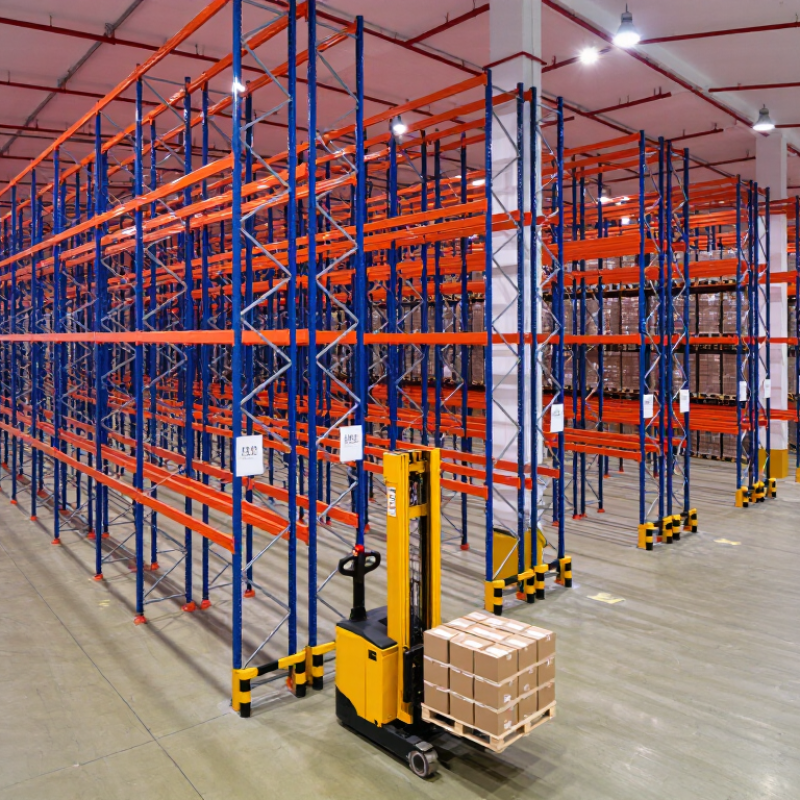
Wide aisle pallet racking is a storage system designed for forklifts that need generous travel and turning space. It stores palletized goods on vertical frames and horizontal beams. Unlike narrow aisle layouts, it prioritizes vehicle access over maximum floor density. A practical aisle width depends on the forklift, pallet size, rack height, and warehouse layout. There is no reliable universal measurement.
The system usually includes upright frames, adjustable beams, floor anchors, and load identification signs. Beam levels can be changed to suit different pallet heights. This flexibility helps warehouses handle mixed inventory without rebuilding the entire structure. Clear sightlines also make pallet placement easier. From daily warehouse experience, operators often value this access more than a small gain in storage capacity.
Safety depends on accurate load data and disciplined operation. Each beam level should match its rated capacity, while damaged frames require prompt isolation and inspection. Floor quality matters, especially beneath tall racks carrying concentrated loads. It sounds simple. Yet planning can fail when designers measure only the pallet and ignore forklift clearance. A better assessment records real vehicle movements, turning points, fire protection needs, and worker walkways. Even then, the first layout may need adjustment after actual operations begin.
What Is Wide Aisle Pallet Racking?
Main Components and Structural Design
Wide aisle pallet racking is designed for direct forklift access to stored pallets. Its structure usually includes upright frames, horizontal beams, baseplates, anchors, and protective guards. Wire decking or pallet supports sit between the beams. These parts create stable storage levels and help distribute pallet loads safely.
The upright frames carry vertical forces, while the beams transfer weight across each bay. Diagonal bracing strengthens the frames against movement. A properly designed aisle must allow enough room for the forklift, pallet size, turning radius, and operator visibility. Floor strength also matters. Heavy racks on weak concrete can create serious problems.
In practical inspections, small details often reveal larger risks. Missing anchors, bent uprights, or overloaded beams should never be ignored. Measure twice. A qualified engineer should verify load capacity, anchoring, seismic conditions, and required clearances. Load signs should remain visible at eye level.
Tips: Keep aisles free from loose packaging and damaged pallets. Install column guards near busy travel paths. Inspect beams and uprights regularly, especially after forklift contact. One overlooked defect can affect an entire storage bay. Racking design is not perfect by default; it must be reviewed as warehouse conditions change.
Wide aisle pallet racking is a selective storage system designed for direct access to every pallet position. Its structural design typically includes upright frames, horizontal beams, diagonal bracing, pallet supports, decking, and floor protection.
Vertical columns and bracing transfer pallet loads safely to the floor.
Horizontal beams support pallet levels and are sized according to span and load.
Additional supports help stabilize pallets and prevent loads from falling between beams.
Column guards, end-of-aisle guards, and floor anchors reduce impact and movement risks.
The chart shows common planning ranges for clear aisle width by truck type. Wide aisle layouts commonly use approximately 3.0–3.7 m of clear aisle space, while the final dimension must be checked against the handling equipment, pallet dimensions, turning radius, rack height, load weight, and applicable safety requirements.
Wide aisle pallet racking works through direct forklift access to every pallet position. A typical aisle measures about 10 to 12 feet wide, depending on the forklift and load size. Upright frames carry vertical beams, while adjustable levels support pallets at different heights. Operators drive into each aisle, lift the pallet, and place it on the selected beam level.
This layout offers simple stock visibility and flexible access. It suits warehouses handling many product types, moderate turnover, or frequent pallet changes. The trade-off is floor efficiency. More aisle space means fewer storage locations per square metre.
The 2024 MHI Annual Industry Report found that 55% of supply chain professionals planned to increase investment in technology. That trend matters here: warehouse teams increasingly use barcode scanning, location control, and fleet monitoring to reduce picking errors.
Still, technology cannot correct poor rack measurements. A 100-millimetre clearance mistake can become an everyday obstruction.
Safety requires practical verification. OSHA reports that forklifts cause about 85 workplace fatalities and 34,900 serious injuries annually in the United States. Rack load signs, trained operators, impact checks, and routine inspections are essential.
In real warehouses, damaged uprights are sometimes noticed too late. That deserves honest attention.
Measure the forklift’s turning radius with a loaded pallet, not an empty vehicle. Keep sprinkler clearance and emergency routes unobstructed. Review aisle widths after changing pallet sizes. Storage plans often fail when they reflect drawings, not daily movement.
What Is Wide Aisle Pallet Racking?
Warehouse Applications and Storage Benefits
Wide aisle pallet racking typically leaves about 3.0 to 3.7 meters between rack rows. The exact width depends on the forklift, pallet size, and turning radius. This layout suits warehouses handling mixed stock, frequent replenishment, and direct pallet access. Operators can reach each pallet without moving another load. That reduces unnecessary handling and supports clearer inventory control.
The 2024 MHI Annual Industry Report reported that 55% of supply chain leaders planned to increase technology investment. Wide aisles create practical space for forklifts, barcode scanning, and future equipment changes. WERC’s 2024 DC Measures report also highlights dock-to-stock time, order accuracy, and labor productivity as key warehouse benchmarks. Better access can support these measures, but only when locations remain disciplined. More space is not automatically more efficiency.
Measure twice.
In daily operations, wide aisles improve visibility around rack faces and simplify cycle counting. They also allow safer separation between pedestrians and powered equipment. However, the design uses more floor area than narrow-aisle systems. That trade-off is easy to underestimate. A warehouse may gain access but lose storage density. Rack height, fire protection, floor quality, and load capacity also require professional review. I would not select aisle width from a drawing alone. Test the turning path with the actual forklift and pallet.
Wide aisle pallet racking provides generous lanes for forklift access and direct access to individual pallets. It suits warehouses handling varied products, frequent picking, or changing inventory. The extra space improves maneuverability, but it reduces storage density. That trade-off matters.
Start with the pallet. Record its length, width, height, and loaded weight. Then check the forklift’s turning radius, lift height, and operating clearances. A narrow lane may increase capacity, yet create awkward reversing and collision risks. The first layout is rarely perfect. Allow space for damaged pallets, uneven loads, and occasional oversize cartons. These details are easy to ignore during a desk-based plan.
Building conditions also shape the right system. Measure the clear ceiling height, floor flatness, column positions, lighting, and sprinkler arrangement. Rack frames must match the expected load at every beam level, not only the average pallet weight. Ask a qualified engineer to review anchoring, impact protection, and local structural or fire requirements. In practical warehouse assessments, I have seen storage plans fail because future growth was treated as a small issue. Leave realistic room for seasonal peaks and new equipment. It may seem inefficient today. It can prevent expensive rework later. Review the design with operators before installation, because they understand daily traffic patterns better than a drawing often shows.
It is a pallet storage system with generous lanes for forklift travel and turning. Upright frames and horizontal beams support pallets at adjustable heights. Access comes before maximum storage density.
Many layouts use aisles about 10 to 12 feet wide. The correct width depends on the forklift, pallet size, rack height, and building layout. Measure a loaded forklift, not an empty one.
Forklifts can reach each pallet position directly. Workers gain clearer sightlines and simpler stock visibility. Mixed inventory is easier to manage. That convenience costs floor space.
Wider aisles create fewer storage locations per square metre. The system may not suit warehouses seeking maximum density. A small capacity gain can create awkward daily movements.
It suits warehouses with varied products, frequent pallet changes, or moderate inventory turnover. It also helps operations needing direct access to individual pallets. It may be excessive for highly uniform stock.
Record pallet length, width, height, and loaded weight. Measure forklift turning radius, lift height, and operating clearance. Also check ceiling height, columns, lighting, floor flatness, and sprinklers.
Display clear load limits for every beam level. Inspect frames, anchors, beams, and floor areas regularly. Isolate damaged components promptly. Train operators and keep emergency routes unobstructed.
Barcode scanning and location controls can reduce placement errors. Fleet monitoring may reveal repeated congestion points. Technology cannot repair poor aisle measurements. That part still needs honest review.
Operators understand turning points, reversing habits, and daily traffic better than drawings. They may identify blocked walkways or difficult pallet positions. The first layout is rarely perfect. Adjust it after real use.
Wide Aisle Pallet Racking is a warehouse storage system designed with generous space between rack rows, allowing standard forklifts to access pallets directly and maneuver safely. Its main structure typically includes upright frames, horizontal beams, pallet supports, and protective accessories. The modular design can be adjusted to accommodate different pallet sizes, load capacities, and warehouse heights, while properly secured connections help maintain stability during daily operations.
In practice, pallets are stored on horizontal levels and retrieved according to inventory needs, providing clear product visibility and straightforward access. This system is suitable for warehouses that prioritize flexible handling, direct access to individual pallets, and simple stock control. When selecting Wide Aisle Pallet Racking, businesses should evaluate available floor space, ceiling height, pallet dimensions, load weight, forklift specifications, required storage capacity, and future expansion plans. A well-planned system can improve organization, support efficient workflows, and provide dependable long-term storage performance.