Warehouse managers often face a familiar constraint: more pallets, limited floor space, and costly expansion. Double Deep Pallet Racking can increase storage density by placing two pallet positions behind one another. This layout may reduce the number of aisles required compared with single-deep storage, depending on the building and rack design. It can suit operations holding several pallets of the same product, where every pallet does not need immediate access. A compatible reach truck retrieves the rear pallet. Small detail, big impact. However, the front pallet must be moved first, adding a handling step. That can affect picking pace, stock rotation, and replenishment schedules. The extra density is useful. The trade-off is real.
A sound decision starts with the inventory, not just the floor plan. Measure aisle widths, ceiling height, pallet dimensions, and the working space needed by the selected truck. Confirm rack capacity with a qualified supplier, using actual load weights and pallet conditions. Check how often rear positions will be accessed. For example, fast-moving mixed products may create more delays than steady, high-volume stock. A short trial or layout review can reveal awkward turns and blocked access before installation. Do not assume that every saved aisle becomes usable storage; columns, fire equipment, and staging areas still need space. Even a well-planned system can feel cumbersome during a busy shift. That is worth admitting. When product profiles and handling routines fit the layout, Double Deep Pallet Racking can balance storage density with practical access. The best choice is the one warehouse staff can operate safely and consistently.
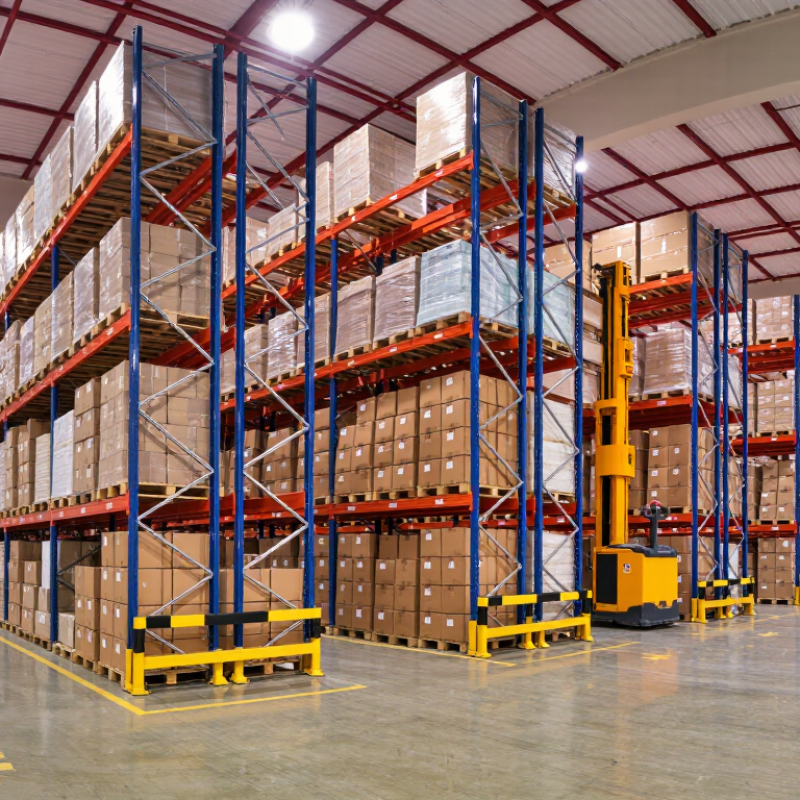
Double-deep pallet racking places two pallets, one behind the other, on each side of a storage lane. From the aisle, workers can reach the front pallet directly, while the rear pallet sits farther inside the rack. It is a compact layout. The extra depth uses floor space that might otherwise be needed for another aisle.
Access requires a forklift designed to reach deeper into the rack, often using an extending mechanism. The operator retrieves the front load before reaching the one behind it. That usually makes each lane best suited to a single product or batch, since different goods can become awkward to access. It also means rear pallets are less immediately available. That matters.
In a working warehouse, clear labels and a planned loading sequence help prevent unnecessary pallet movements. For example, an operator may place a full pallet of the same item behind another and pick the front one first. The setup can increase storage density, but it trades away some direct access. Not magic. A layout drawing may look simple, yet truck reach, pallet dimensions, load weight, rack clearances, and floor conditions all affect safe operation. These details deserve checking before installation; they are easy to underestimate.
Double deep pallet racking places two pallet positions behind each other, rather than keeping every load at the aisle edge. This layout can reduce the number of aisles needed for the same inventory. More floor area then becomes available for pallet storage. Space adds up.
The capacity gain depends on the warehouse’s dimensions, pallet size, aisle width, and required clearances. For example, a site with a long, narrow footprint may fit deeper rows efficiently, while a room with many columns may not. A qualified layout review should account for turning space, rack protection, sprinkler clearance, and safe working access. Small measurements matter.
There is a trade-off. The front pallet must be moved before an operator can reach the rear one, so item selectivity is lower than in single-deep storage. Double deep systems also need compatible reach equipment and clear operating procedures. They often suit products stored in several pallets per SKU, where rear loads can wait. Not every product fits this pattern. Reviewing order frequency and stock rotation before installation can prevent extra handling later. During a site walk, mark aisle widths and note which pallets are picked daily; those details reveal whether the added density will work in practice.
Compare pallet positions stored in a rack bay by storage depth.
Double-deep racking stores pallets two deep instead of one in each bay, increasing positions within the rack depth. The chart compares positions per bay, not total warehouse capacity; actual gains depend on the layout, aisle space, and equipment. Double-deep systems typically require reach trucks designed to access the rear pallet.
Double-deep pallet racking stores two pallets behind each other, reducing the number of aisles needed for a given storage area. The trade-off is access: a front pallet can block the one behind it. Access changes. A standard reach truck may not reach the rear position safely, so operations often require a compatible double-deep reach truck or a telescopic fork attachment. Confirm the truck’s rated capacity at the required reach, not just its maximum lift capacity.
Aisle width, rack height, pallet dimensions, and floor condition all affect equipment choice. Measure the actual load, including any overhang, and check clearances at every beam level. Check carefully. Uneven floors or tight turning space can complicate placing a pallet deep in the bay. Rack protection and clearly marked travel paths also help reduce impact risks, but they do not replace trained operators or routine inspections.
Double-deep systems work best when inventory movement can tolerate less direct access to each pallet. Rear pallets may need to be moved before they can be picked, which can add handling time. That is easy to underestimate. Grouping similar products and planning replenishment around pallet order can help, though it may not suit every SKU. Before installation, have a qualified rack designer and equipment provider review the layout, load data, and operating pattern together.
Double-deep pallet racking can increase storage density, but it changes how people and inventory move through a warehouse. A reach truck with extended reach is usually needed to access the rear pallet. Aisles may be narrower than in some layouts, yet handling can take longer when a rear load is needed.
That matters. The front pallet must be moved before the rear one can be retrieved. If orders frequently require specific pallets, this extra movement can slow picking and create temporary staging needs. Operators also need clear rules for returning displaced pallets; otherwise, a busy shift can leave loads in inconvenient places.
Inventory fit is just as important as rack fit. Double-deep storage works best when each lane holds compatible products, with predictable replenishment and rotation. Fast-moving stock can still cause delays if several unrelated lots share a lane. Check pallet dimensions, load weights, and the reach truck’s actual capacity at working height before planning the system. Test real order patterns, too. A layout may look efficient on a drawing, but daily exceptions can eat into the expected gain. Some warehouses discover this late. That is an avoidable mistake, though not always an obvious one.
| Dimension | Double-Deep Racking | Operational Trade-Off | Inventory Consideration |
|---|---|---|---|
| Storage density | Stores pallets two positions deep, increasing storage positions within the rack footprint compared with single-deep selective bays. | Greater depth can reduce the number of aisles or floor area needed for a given storage capacity, depending on the building layout and equipment clearances. | Model capacity using usable building dimensions, aisle widths, pallet sizes, clearances, and fire-protection requirements—not rack depth alone. |
| Access to individual pallets | The front pallet is directly accessible; a rear pallet generally requires moving the front pallet first. | Access is less immediate than in single-deep selective racking, where each pallet position is independently reachable. | Works best when pallets are assigned to lanes with compatible products and the expected retrieval sequence is manageable. |
| Stock rotation | Retrieval is commonly last-in, first-out within a two-deep lane unless the operating process deliberately manages the sequence. | Replenishment and picking may require extra moves to reach a rear pallet. | Assess product shelf life, expiry controls, and rotation rules. Use other storage methods or dedicated procedures where strict first-in, first-out access is essential. |
| SKU and lane assignment | Both positions in a lane are easiest to manage when they contain the same SKU or inventory that can be treated as interchangeable. | Mixed products in one lane can increase search time and create extra pallet movements. | Review SKU count, pallet quantities per SKU, lot controls, and replenishment patterns before setting lane rules. |
| Handling equipment | Typically requires a deep-reach truck or another truck configuration designed to place and retrieve pallets at the rear position. | Equipment choice affects aisle design, lift capacity at height, operator training, maintenance, and throughput. | Check the truck’s rated capacity at the required lift height and reach, along with compatibility with pallet dimensions and rack clearances. |
| Handling moves | Rear-pallet retrieval can require temporarily relocating the front pallet. | Extra moves may increase labor and equipment time, especially when rear positions are picked frequently. | Estimate daily picks and replenishments by position—not only total pallet capacity—to compare operating cost with space savings. |
| Best-fit inventory profile | Often considered for larger quantities per SKU and relatively predictable demand. | High SKU variety or frequent access to isolated pallets can reduce the practical benefit of denser storage. | Compare pallet quantity per SKU, order-line frequency, and variability in demand before assigning products to double-deep lanes. |
| Planning and safety | Rack layout, truck operation, load limits, and protection measures must be designed for the specific facility and equipment. | Denser storage does not remove the need for safe clearances, inspections, load signage, and operator procedures. | Final capacity and layout should be confirmed by qualified warehouse-design and rack-safety professionals against applicable local requirements. |
Assess your inventory before comparing rack layouts. Double deep racking stores two pallets behind each other, increasing storage density but reducing direct access to rear pallets. It often suits warehouses with several pallets per product and predictable stock rotation. Count your active SKUs, check pallet sizes, and review how often each item is picked. A layout that looks spacious on paper may still slow down daily picking.
Then compare usable capacity with operating effort. Rear pallets may require a suitable reach truck and careful stock planning, such as loading slower-moving products behind faster-moving ones. Consider floor condition, rack design, load requirements, and sprinkler or building clearances with qualified professionals. A site assessment can reveal constraints that a simple storage calculation misses. One detail is easy to overlook: staff may need extra training and practice. That adds cost, and it may disrupt picking at first. If your products change often or require immediate access to every pallet, selective racking may be more practical. Double deep can be a strong fit, but not for every aisle.
It stores two pallets behind each other in one rack lane. The front pallet is easier to reach. The rear one sits farther inside.
The front pallet usually needs to be moved first. A compatible reach truck or telescopic fork attachment can access the rear position. Extra handling is part of the deal.
Check the truck’s rated capacity at the required reach and lift height. Measure pallet dimensions, including overhang, and confirm rack clearances at each beam level. Details matter.
It can store more pallets in a given area by reducing aisle space. But the layout trades some direct access for compactness. Not a free gain.
Lanes suit compatible products or batches with predictable replenishment. Mixing unrelated lots can make picking awkward, especially when a specific rear pallet is needed.
Yes. A front load may need to be moved before the rear one can be picked. That can add handling time and require temporary staging space.
Measure aisle width, rack height, pallet sizes, load weights, and floor conditions. Check turning space and the truck’s reach. A drawing alone can miss real-world constraints.
Use clear labels and planned loading sequences. Set rules for returning displaced pallets, too. Busy shifts are messy; the plan may still need revisiting.
Double Deep Pallet Racking stores pallets two positions deep on each side of an aisle, allowing warehouses to use floor space more efficiently than single-deep layouts. By reducing the number of aisles, this system can increase storage capacity within an existing footprint, making it useful when space is limited and many pallets contain similar products. However, accessing the rear pallet requires moving the front one, so the layout works best when inventory can be managed in a suitable loading and retrieval sequence.
Because standard forklifts may not reach both pallet positions safely and efficiently, double-deep systems generally require specialized reach equipment and carefully planned aisles. They can reduce selectivity and add handling steps, so businesses should consider inventory turnover, product variety, and access needs before choosing this option. Assessing warehouse dimensions, pallet loads, equipment, and daily workflows helps determine whether the added capacity is worth the operational trade-offs.