Engineering response within 24 hours English
0%

Selecting a reliable Selective Pallet Racking supplier requires more than comparing catalog prices. Buyers must examine steel thickness, beam capacity, frame design, surface treatment, installation quality, and after-sales support. A rack may look strong under showroom lighting, yet fail to suit uneven floors, narrow aisles, high forklifts, or changing pallet weights. Small details matter.

Warehouse consultant David J. Piasecki offers a useful reminder: “Inventory accuracy is not a counting problem; it is a process problem.” The same principle applies to storage equipment. A supplier should understand your inventory flow, not simply sell standard frames. This guide reviews ten worldwide suppliers through practical buyer concerns, including engineering experience, manufacturing consistency, safety documentation, customization, delivery capability, and service coverage. Their suitability may differ by region, warehouse size, and project complexity.

The ranking is not absolute. It is a starting point.

Experienced buyers should request load calculations, installation references, warranty terms, and clear replacement policies. They should also verify whether the supplier follows recognized technical standards and provides inspection guidance after installation. A low quotation can become expensive when beams arrive late, anchors do not match the floor, or replacement parts cross several borders. These issues are easy to underestimate. We may also overlook communication quality until a project is already delayed. The strongest suppliers combine dependable products with honest technical advice. That balance helps buyers choose Selective Pallet Racking that remains safe, adaptable, and useful as warehouse demands change.
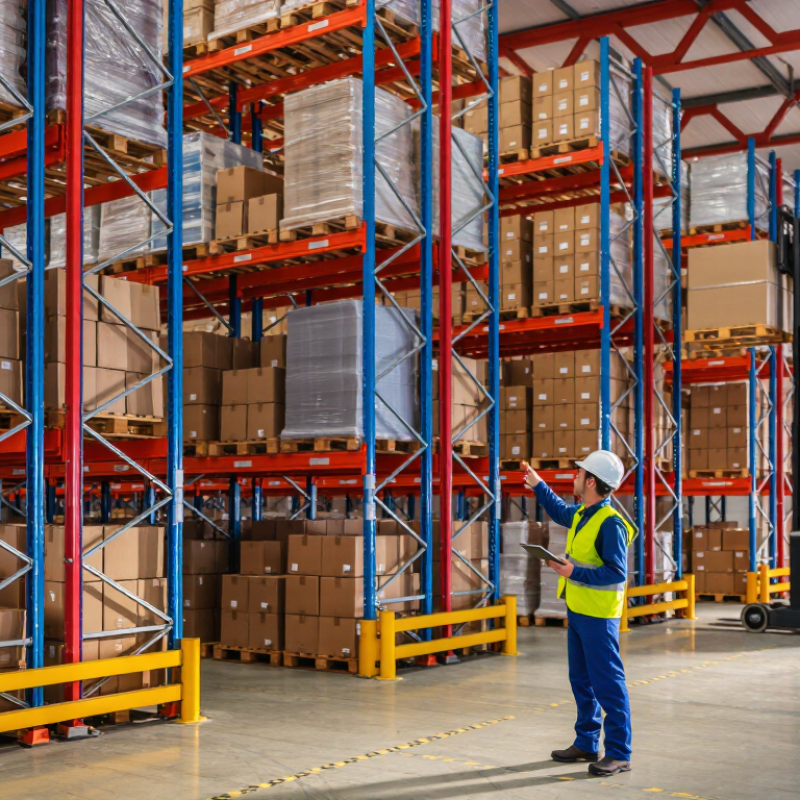
Top 10 Selective Pallet Racking Suppliers Worldwide for Buyers

What Selective Pallet Racking Is and How It Works

Selective pallet racking stores palletized goods on horizontal beams supported by upright frames. Each pallet has a direct access position, so workers can retrieve a specific load without moving the pallets in front of it. That makes the system useful for warehouses handling many product types or frequent order changes.

Simple, but not effortless.

A forklift enters an aisle, lifts a pallet, and places it onto a selected beam level. The frame carries vertical loads, while beams support the pallet edges; connectors and floor anchors help keep the structure stable.

A warehouse planner must match beam capacity to the actual pallet weight and consider pallet dimensions, forklift reach, and aisle width. A few centimeters can matter when loads are uneven or equipment has limited clearance.

Selective racking offers straightforward access, but it uses more aisle space than some high-density storage systems. The best layout depends on how often stock moves, how many product lines are stored, and how much floor space is available.

Before installation, measure the tallest loads and check floor condition and slab capacity with qualified professionals. Racking should also be inspected regularly for bent uprights, damaged beams, loose connections, or impact marks.

Small dents may look harmless. They may not be. A practical design leaves room for safe handling, even if that means storing fewer pallets than a drawing first suggests.

How to Evaluate Global Selective Pallet Racking Suppliers

Evaluating global selective pallet racking suppliers requires more than comparing prices. Grand View Research estimated the global pallet racking market at about USD 8.65 billion in 2023. It also forecasts continued growth through 2030. This expansion increases supplier choice, but not necessarily supplier quality. Buyers should check manufacturing experience, documented load calculations, and completed warehouse projects with similar pallet weights.

Ask for steel grades, beam deflection limits, corrosion protection, and inspection procedures. Request drawings that show clear aisle widths, upright spacing, and floor requirements. The 2024 MHI Annual Industry Report highlights ongoing investment in supply chain technology and warehouse efficiency. Racking should support that goal without creating difficult maintenance work. Supplier documentation matters. So does technical communication.

Do not accept vague promises.

I would test response quality before signing. Send the same technical question to several suppliers and compare the detail of their answers. Verify references independently, including delivery records and replacement-part support. A low quotation may exclude anchoring, installation, or local engineering review. That omission can change the real cost. I would also ask how the supplier handles damaged frames, altered loads, and future expansion. These practical details are easy to overlook. They often reveal whether a supplier understands warehouse operations or only sells components.

Top 10 Selective Pallet Racking Suppliers Worldwide for Buyers — How to Evaluate Global Selective Pallet Racking Suppliers

Supplier-neutral comparison framework: These are ten evaluation criteria, not a verified ranking of individual suppliers. Rack capacity and suitability depend on the specific design, site conditions, loads, and applicable local requirements.

No. Evaluation dimension What a capable supplier should demonstrate Buyer checks and evidence to request Suggested weight
1 Structural engineering and compliance Rack design is engineered for the stated loads, configuration, operating conditions, and relevant jurisdiction. Applicable standards may include EN 15512, EN 15620, EN 15629, EN 15635, or ANSI MH16.1, depending on location and project scope. Request project-specific calculations, design drawings, stated design assumptions, and the standards or codes used. Confirm that a qualified engineer reviews the design where required. 15%
2 Load data and capacity communication Beam and frame capacities are clearly documented for the proposed configuration. Capacity is not presented as a universal rating independent of beam span, frame height, bracing, connections, and load arrangement. Compare the load schedule with pallet weight, pallet dimensions, beam levels, bay widths, and planned storage layout. Ask for posted load notices and written limits for the installed system. 12%
3 Configuration and site suitability The proposal accounts for the building layout, clear height, floor conditions, aisle widths, material-handling equipment, sprinklers, and other site constraints. Provide a site survey and dimensioned layout. Check that clearances and aisle widths match the selected forklift or truck and that the plan reflects the actual operating workflow. 12%
4 Product quality and traceability Components are consistently manufactured, identified, and specified, with documented material and quality-control processes appropriate to the project. Request component specifications, inspection records, product identification details, and applicable quality-system documentation. Verify that supplied components match approved drawings. 10%
5 Installation planning and execution The supplier can define installation scope, responsibilities, tolerances, sequencing, and site prerequisites, and can provide appropriately qualified installation support. Review the installation method statement, schedule, safety plan, handover checklist, and responsibility matrix. Confirm who checks anchoring, plumb, alignment, and final acceptance. 10%
6 Safety, inspection, and damage management The supplier provides practical guidance for rack inspection, damage reporting, safe loading, and corrective action. EN 15635 is a commonly used reference for the use and maintenance of steel static storage systems in relevant markets. Ask for inspection guidance, damage-classification procedures, user training materials, and recommendations for isolating or unloading damaged areas pending assessment. 10%
7 Warranty and after-sales support Warranty terms specify coverage, exclusions, duration, claim procedures, and responsibilities. Support arrangements are clear for replacement parts, technical questions, and repairs. Compare written warranty terms and response commitments. Confirm how replacement components are identified and ordered, and whether repairs require engineering approval. 9%
8 Lead time and delivery coordination The supplier provides a project-specific production and delivery schedule, including dependencies, packaging, shipment scope, and procedures for handling schedule changes. Request a milestone plan covering drawing approval, production, dispatch, delivery, and installation. Confirm delivery terms, unloading responsibilities, and contingency arrangements. 8%
9 System flexibility and future expansion The design explains which components and configurations can be adapted and what engineering checks are needed before changes, relocation, or expansion. Ask for a record of the installed configuration and approved component details. Confirm whether future changes require revised calculations or a site-specific engineering review. 7%
10 Lifecycle cost and commercial clarity The quotation defines the included equipment and services and makes exclusions, optional items, and ongoing maintenance considerations clear. Compare like-for-like quotations covering design, components, freight, installation, inspections, training, spare parts, taxes, and any site work. Assess total lifecycle needs, not purchase price alone. 7%

Top 10 Selective Pallet Racking Suppliers Worldwide

Top 10 Selective Pallet Racking Suppliers Worldwide

The top 10 selective pallet racking suppliers worldwide should be judged beyond production scale. Buyers need evidence of load testing, installation training, and regional service coverage. Selective racking remains practical for warehouses storing many stock-keeping units, because each pallet position stays directly accessible. Grand View Research identifies warehouse expansion and e-commerce fulfillment as major growth drivers for the global racking market. This supports continued demand for adaptable storage systems.

MHI’s 2024 Annual Industry Report found that 55% of supply chain leaders plan to increase technology investment. It also reported that 90% expect artificial intelligence adoption within five years. For racking buyers, this means supplier capability must include barcode integration, inventory software compatibility, and measurable inspection procedures. Strong suppliers provide beam load labels, upright protection, corrosion-resistant finishes, and installation records. Small details matter. A damaged floor anchor can affect an entire aisle.

A credible worldwide ranking should compare safety documentation, delivery consistency, warranty clarity, and local engineering support. It should also examine total ownership cost, not only the quoted steel price. Some suppliers appear competitive initially, yet replacement parts arrive slowly. That weakness can disrupt picking operations. Product quality is important, but after-sales response often separates experienced suppliers from ordinary manufacturers. No ranking is perfectly neutral. Warehouse height, pallet weight, seismic conditions, and forklift type can change the final choice.

Key Differences in Products, Services, and Market Coverage

Selective pallet racking suppliers differ less by appearance than by engineering depth, service reach, and data quality. The MHI 2024 Annual Industry Report identifies warehouse technology investment as a continuing priority for many supply-chain operators. This raises buyer expectations beyond basic frames and beams. Strong suppliers provide load calculations, seismic options, corrosion-resistant finishes, and documented testing. They also explain how pallet weight, forklift type, aisle width, and building height affect the design.

Market coverage creates another clear gap. Some suppliers focus on domestic production and offer faster replacement parts. Others operate through regional partners, supporting multinational rollouts with shared specifications and local installation teams. Interact Analysis projects the warehouse automation market to approach USD 41 billion by 2027. That expansion increases demand for racks compatible with conveyors, shuttle systems, sensors, and warehouse software. However, digital compatibility is often described too broadly. Buyers should request interface details and site references, not vague claims.

Service quality may decide the real cost. A supplier with engineering support, installation supervision, inspections, and operator training can reduce delays after delivery. Smaller suppliers may offer more flexible customization, but their documentation can be uneven. A cheaper quotation is not always efficient. In practical sourcing, hidden costs often appear in freight, anchoring, modifications, and spare parts. I would compare total installed cost, warranty limits, response times, and regional support. The perfect supplier rarely exists. Some trade speed for customization, and that trade-off deserves careful review.

How Buyers Can Choose the Right Racking Supplier

Choosing among the top 10 selective pallet racking suppliers worldwide requires more than comparing prices. Buyers should examine how each supplier understands their warehouse conditions, product weights, forklift routes, and future growth. A reliable supplier should request clear load data and provide drawings before production. Look for practical experience with similar storage environments, not only attractive catalogs. Ask for test reports, material specifications, installation procedures, and references from comparable facilities. These details reveal professional capability.

Safety documentation matters. Confirm that the proposed system follows applicable regional standards and includes suitable column protection, beam locking, and anchoring methods. The supplier should explain allowable loads in plain language. Be cautious when calculations seem rushed. A low quotation may hide weaker steel, limited engineering support, or expensive replacement parts later. Delivery schedules also deserve attention. A supplier with stable quality control can usually explain inspection points from fabrication to packing.

Tips: Invite shortlisted suppliers to review floor plans and forklift clearances. Compare total ownership cost, not only the initial price. Check whether installation training, spare components, and inspection guidance are included. Request a sample drawing for one rack bay. It can expose misunderstandings early. Buyers should also speak with recent customers about delivery accuracy and after-sales response. No supplier is perfect, and assumptions can fail on site. A careful buyer leaves room for revisions after a physical survey.

How Buyers Can Choose a Selective Pallet Racking Supplier

Example procurement score allocation (100 points total). Adjust the weights to reflect your loads, facility, and project requirements.

Prioritize load capacity and safety compliance, then compare material quality, configuration fit, installation support, lead time, and after-sales service. Verify specifications against your actual pallet loads and local requirements.

FAQS

What should a selective pallet racking supplier provide beyond frames and beams?

Look for load calculations, design drawings, material details, and documented testing. Ask how pallet weight, forklift type, aisle width, and building height shape the design.

How can buyers check whether a rack system suits their warehouse?

Share floor plans, product weights, and forklift clearances. Request a sample drawing for one rack bay. Small details matter.

What safety features should buyers ask about?

Ask about anchoring, beam locks, column protection, and relevant regional standards. The supplier should explain allowable loads in plain language.

How should buyers compare quotations?

Compare total installed cost, not just the initial price. Freight, modifications, anchoring, and replacement parts can change the final figure.

What service support is worth confirming before ordering?

Check installation supervision, operator training, inspection guidance, spare components, warranty limits, and response times. Some support may not be included.

How can a buyer assess a supplier’s experience?

Request test reports and references from facilities with similar storage conditions. Recent customers can describe delivery accuracy and after-sales response.

What if the warehouse may add automation later?

Ask for specific interface details and site references for conveyors, shuttle systems, sensors, or warehouse software. Broad compatibility claims are not enough.

Does a lower price always mean better value?

Not always. A low quote may involve limited engineering support or higher future parts costs. I would still check the assumptions carefully.

Conclusion

Selective Pallet Racking is a widely used storage system that gives forklifts direct access to individual pallet locations. Its straightforward layout can support efficient picking and inventory handling, while the rack design, aisle width, load capacity, and available floor space all influence how well it works in a particular warehouse. Understanding these basics helps buyers compare options and identify the specifications their operations require.

A thoughtful supplier evaluation should consider product quality, engineering and customization capabilities, installation and after-sales support, delivery capacity, and experience serving different markets. Suppliers may differ in the configurations and services they offer, as well as in the regions they can support. Buyers can make a more suitable choice by comparing these factors against their storage needs, budget, facility conditions, and plans for future growth, rather than relying on a single feature or quoted price.

Ethan

Ethan

Ethan is a marketing professional with a strong understanding of the company’s products and the needs they are designed to address. He works closely with product and customer-facing teams to turn detailed product knowledge into clear, useful information for customers. Through regular articles on......