Engineering response within 24 hours English
0%

Drive-In Pallet Racking is a high-density storage system that lets forklifts enter storage lanes to place and retrieve pallets. Unlike selective rack, it uses fewer access aisles, so more floor area can hold inventory. That difference matters in a chilled warehouse, a seasonal stockroom, or any site where space is costly. Inside each lane, pallets rest on support rails while the forklift moves carefully between the rack frames. Carefully. Most layouts work best when many pallets share a product and rotation needs are predictable. Because access is usually from one end, the system commonly follows last-in, first-out (LIFO) handling. This can be a practical compromise, not a universal answer.

Before specifying a system, managers should compare pallet dimensions, load weights, forklift turning clearance, lane depth, and stock rotation. Consistent pallets help; damaged or irregular loads can complicate placement and retrieval. Rack capacity and layout should be verified by a qualified designer against site conditions and equipment. Clear operating rules, trained drivers, and routine inspections matter because forklifts work close to rack structures. Keep lanes orderly. Not every warehouse benefits. High density may come at the cost of selectivity, and blocked access can slow picking. That trade-off deserves a real review, not a quick assumption. This guide explains how Drive-In Pallet Racking works, where it fits, and what to check before installation.
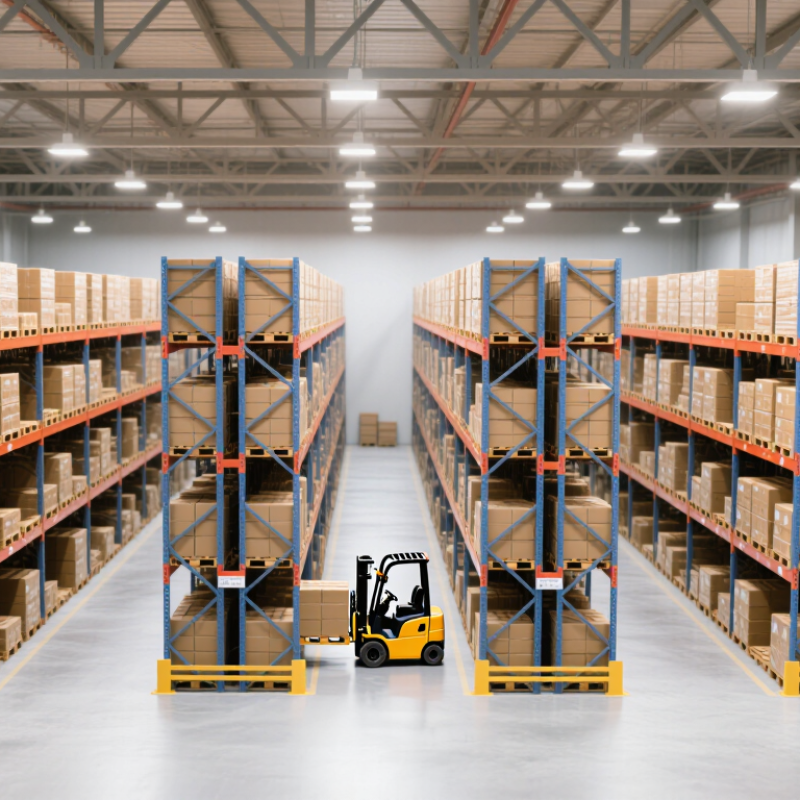
What Is Drive-In Pallet Racking?

What Drive-In Pallet Racking Is and How It Works

Drive-in pallet racking stores pallets several positions deep on rails inside each bay. A forklift enters the lane, places a pallet on the rails, then reverses out. To retrieve stock, it enters the same lane and removes the pallet nearest the opening. This usually creates last-in, first-out (LIFO) rotation. Drive-through systems allow access from both ends and can support first-in, first-out flow when managed accordingly.

The design suits warehouses holding many pallets of the same product, where dense storage matters more than direct access to every pallet. It reduces aisle space, but a forklift must travel inside the rack structure. That changes the workflow.

OSHA cites estimates of about 85 forklift-related fatalities and 34,900 serious injuries annually in the United States; these figures cover powered industrial trucks broadly, not drive-in racks specifically. They underline why clear lanes, trained operators, suitable trucks, and routine rack inspections matter.

A practical caveat: dense storage can make stock rotation and damage checks harder. Not every product belongs in a deep lane. MHI’s 2024 Annual Industry Report surveyed more than 1,000 supply-chain professionals, reflecting the sector’s continued focus on technology and operational change, but rack selection still depends on actual SKU mix, pallet condition, and daily handling patterns.

Key Components and Structural Design

Drive-in pallet racking uses deep storage lanes where a forklift enters the rack to place or retrieve pallets. Its structure usually includes upright frames, horizontal pallet-support rails, and bracing that stabilizes each frame. The rails run along both sides of a lane, leaving a clear path for the forklift. Simple in concept. Less forgiving in practice.

Lane width and height must match the pallet dimensions and handling equipment. Designers also account for pallet overhang, load weight, beam or rail spacing, and the forklift’s turning clearance. Small mismatches can cause contact with the uprights or rails. A neat layout drawing may not show how uneven pallet boards behave under real handling. That deserves a second look.

Upright frames transfer loads to the floor, while bracing helps resist movement across the rack. Base plates and floor anchors are selected for the structure and site conditions; they should not be treated as interchangeable hardware. Entry guide rails and column guards can help limit impact damage, while end stops may be used where the design calls for them. Clearances matter. Rack depth also affects inventory flow: single-entry lanes generally work on a last-in, first-out basis, while access from both ends can support a different sequence. A qualified rack designer should verify the layout, loads, and installation details for the actual site.

What Is Drive-In Pallet Racking? - Key Components and Structural Design

Component or Design Factor Function Typical Design Considerations Planning Data
Drive-in configuration Creates deep storage lanes that forklifts enter to place or retrieve pallets. A lane is generally accessed from one end. This arrangement commonly operates on a last-in, first-out (LIFO) basis. Best suited to storing multiple pallets of the same product or SKU in each lane.
Upright frames Vertical structural assemblies that support the rack rails and transfer loads to the floor. Frame height, depth, bracing, and member sizes depend on the loads, rack layout, building conditions, and applicable design requirements. Specify the required number of storage levels and the maximum loaded rack height.
Load-support rails Run along each lane and support pallet edges at each storage level. Rail position and capacity must suit the pallet dimensions, load weight, and intended pallet orientation. Pallets should be placed consistently on both support rails. The rated capacity must account for the specified pallet load at every level.
Bracing and top ties Connect and stabilize the structure, helping it resist forces in the directions considered in the design. Bracing arrangement and connections are engineered for the specific rack geometry and site conditions; they should not be removed or altered without qualified review. Include building clearances and any required connection to adjacent rack structures in the layout review.
Base plates and anchors Connect upright frames to the floor and transfer design forces into the supporting slab. Anchor type, embedment, and base-plate details depend on the rack design, concrete properties, slab thickness, and site conditions. Confirm the floor’s condition and suitability before installation.
Lane depth and width Determine how many pallets fit in a lane and how safely the forklift can enter and maneuver. Dimensions depend on pallet size and orientation, load overhang, forklift dimensions, operating clearances, and the number of pallet positions per lane. Common pallet footprints include 1,200 × 1,000 mm and 1,200 × 800 mm; verify the actual load unit before design.
Forklift guidance and protection Helps operators align with lanes and reduces the risk of impact to rack components. Guide rails, entry details, and protective devices should be selected for the handling equipment and site traffic conditions. Check forklift width, turning requirements, mast height, and operating visibility.
Load rating and safety review Defines the allowable storage loads and supports safe operation. Capacity is specific to the rack configuration, materials, connections, and site conditions; there is no single universal capacity for drive-in racking. Obtain project-specific design documentation, post load information, and inspection procedures.

Loading, Storage, and Retrieval Methods

What Is Drive-In Pallet Racking?

Loading, Storage, and Retrieval Methods

Drive-in pallet racking stores pallets several positions deep on support rails. A forklift enters the rack lane to place or remove each load. In a single-entry system, operators load the deepest position first, then work toward the aisle. Retrieval reverses this sequence: the nearest pallet comes out first. This creates last-in, first-out inventory flow. A drive-through layout, accessible from both ends, can support first-in, first-out handling. That distinction matters for dated stock.

Loads need compatible pallets, consistent dimensions, and stable wrapping. Operators should center each pallet on the rails and move slowly inside the lane, where turning space is limited. OSHA’s powered industrial truck safety material cites estimates of about 85 forklift-related fatalities and 34,900 serious injuries each year. These figures are not specific to drive-in racks, but they underline why clear operating rules matter. High storage density can be appealing; it can also make inspection and access less convenient. That trade-off deserves a second look.

Tips: Label each lane with its loading direction and inventory sequence. Check rails and uprights for impact damage, and keep pedestrians out of active lanes. Verify pallet fit before buying the system. It is an easy detail to overlook.

Benefits and Limitations of the System

Drive-in pallet racking lets a forklift enter storage lanes to place or retrieve pallets. Because pallets sit several positions deep, the system can use warehouse floor space efficiently. This can be valuable when a facility handles large quantities of a few product types, such as one pallet load of the same packaged goods. Fewer aisles leave more room for storage. Space is gained.

The main benefit is density, but access is less direct than with selective racking. In a typical drive-in layout, pallets are loaded and removed from the same end, so the last pallet placed is usually the first one retrieved. This suits goods that can be stored in batches and do not require strict first-in, first-out rotation. Separate lanes help keep product types apart, but each lane needs enough stock to avoid wasted positions.

There are trade-offs on the warehouse floor. Forklifts travel inside the lanes, so operators need clear visibility and careful control near support rails. A small steering error can damage the rack or a pallet. Deep lanes also make it harder to reach a particular load quickly, and stock counts may need closer attention. In practice, the space calculation can look attractive while slow-moving inventory leaves half-empty lanes. That detail is easy to underestimate. Drive-in racking works best when lane depth, pallet dimensions, forklift clearance, and product turnover are checked against real operating patterns.

Drive-In Pallet Racking: Benefits and Limitations

Drive-in racking uses deep lanes that forklifts enter, reducing aisle space and supporting high-density storage. Because pallets within a lane are accessed in sequence, selectivity is limited and the system is generally best suited to storing larger quantities of fewer SKUs. Drive-in lanes typically operate on a last-in, first-out (LIFO) basis; drive-through systems can support first-in, first-out (FIFO) flow.

Ratings are qualitative design comparisons, not measured performance data. Scale: 1 = low, 5 = high.

Common Applications and Safety Considerations

What Is Drive-In Pallet Racking?

Common Applications and Safety Considerations

Drive-in pallet racking stores pallets in deep lanes supported by rails. Forklifts enter the structure to place or retrieve loads. It suits operations holding many pallets of the same product, especially when floor space is limited and stock can move last-in, first-out. Access to individual pallets is less flexible. That trade-off matters.

Operators drive between rack frames, so steering errors can strike rails or uprights. OSHA’s Powered Industrial Trucks eTool reports about 85 forklift-related deaths and 34,900 serious injuries annually in the United States. These figures cover forklift work broadly, not drive-in racks alone, but they show why safe clearances and operator training matter. Set lane-entry rules, keep loads within posted capacities, and avoid rushing. Worth checking twice.

Inspect uprights, bracing, rails, anchors, and floors regularly. Record visible damage and keep affected bays out of use until they are assessed. ANSI MH16.1, the industrial steel storage rack design standard, provides a technical reference for rack design and use. Follow the rack’s load plans; do not assume every pallet fits. A broken pallet board can catch on a rail and destabilize a load. Dense storage saves aisle space, but can reduce visibility and room to maneuver. That deserves a careful site review.

FAQS

What is drive-in pallet racking?

It stores pallets several positions deep on rails. A forklift enters each lane to place or retrieve loads. Tight access requires care.

What are its main space-saving benefits?

Deep lanes reduce the number of aisles, leaving more floor space for storage. The gain can look impressive on a layout. Real stock patterns still matter.

Which products suit this storage system?

It works well for large quantities of a few product types. Each lane should hold enough stock to avoid empty positions. Slow-moving goods can waste space.

How does pallet retrieval usually work?

Single-entry lanes typically follow last-in, first-out handling. The newest pallet is usually retrieved first. That may not suit every inventory rotation.

What dimensions should be checked before installation?

Match lane width and height to pallet sizes and forklift clearance. Allow for pallet overhang, load weight, and rail spacing. Small mismatches can cause contact.

What safety details matter during forklift operation?

Operators need clear visibility and controlled steering inside each lane. Loads should stay within posted capacities. A small mistake can damage a rail.

Which rack parts need regular inspection?

Check uprights, bracing, rails, anchors, and the floor. Record visible damage, and keep affected bays unused until assessed. Don’t guess.

Can every pallet be stored in a drive-in lane?

No. Pallet dimensions and condition should suit the rails and handling plan. A broken board can catch on a rail and destabilize a load. Examine the fit.

Conclusion

Drive-In Pallet Racking is a high-density storage system designed to make efficient use of warehouse space. Instead of placing pallets on individual access aisles, it creates deep storage lanes supported by upright frames, rails, and protective structural elements. A forklift enters a lane to place or retrieve pallets, so loading and retrieval generally follow a last-in, first-out sequence. This arrangement works best when many pallets contain the same product and direct access to every pallet is not essential.

The system can increase storage capacity and reduce the floor area needed for aisles, but it may limit selectivity and require careful planning around product rotation and forklift access. Common applications include storing large quantities of uniform goods in warehouses, distribution facilities, and cold-storage areas. Safe operation depends on suitable pallet condition, correct load limits, clear lane access, trained equipment operators, and regular inspection of the rack structure for damage.

Charlotte

Charlotte

Charlotte is a professional marketing specialist with a deep understanding of the company’s products, customers, and industry landscape. Through clear communication, thoughtful research, and a strong commitment to accuracy, she regularly updates the company website with practical and insightful......