Choosing among China’s top 10 Very Narrow Aisle Racking suppliers requires more than comparing catalog prices. This guide examines manufacturers through practical warehouse criteria, including design capability, production control, installation support, and after-sales service. A reliable supplier should understand pallet dimensions, load weights, floor conditions, and forklift turning requirements. Small measurement errors can reduce storage capacity or create unsafe working distances.
The evaluation also considers factory experience, engineering documentation, quality inspections, export history, and completed warehouse projects. Photographs can help, but verified project details matter more. Look for accurate load calculations, clear steel specifications, stable powder coating, and documented testing procedures. Suppliers should also explain how their systems integrate with turret trucks, wire guidance, warehouse software, and emergency access planning.
Some companies may offer excellent pricing but limited engineering support. Others may provide stronger technical advice with higher initial costs. That difference deserves careful attention. No supplier list remains perfect forever. Product quality, service teams, and production capacity can change. This comparison should therefore support further verification, not replace it.
Readers can use the shortlist to compare quotations, request reference projects, and inspect sample components before making a decision. Local building requirements and workplace safety rules must also be confirmed with qualified professionals. The strongest supplier is not always the cheapest. It is the one that delivers a practical, traceable, and maintainable storage solution for the warehouse’s real operating conditions.
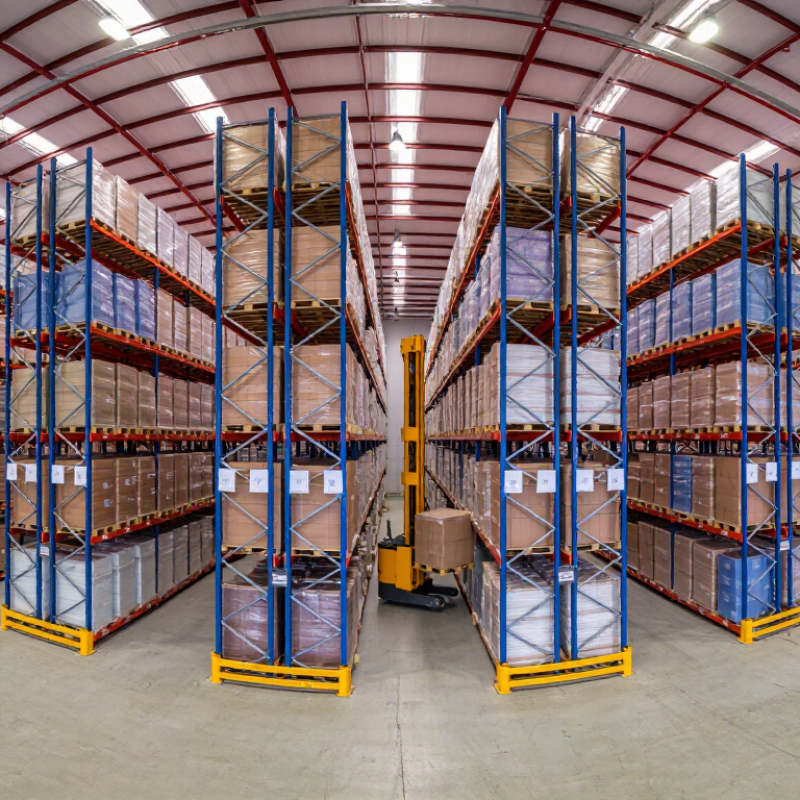
Very narrow aisle racking uses compact storage aisles, usually about 1.5 to 2.0 meters wide. Conventional forklift aisles often need nearly twice that space. This layout increases pallet positions without expanding the building. Special turret trucks or articulated forklifts travel through the narrow lanes. Guide rails, floor wires, or camera systems help maintain accurate movement. The truck lifts pallets vertically, turns within limited clearance, and serves both sides of the rack.
According to the MHI 2024 Annual Industry Report, 55% of surveyed supply-chain professionals planned to increase investment in innovation. That pressure makes space-efficient systems more attractive. However, very narrow aisle racking is not simply “more racks in less space.” It needs a flat floor, suitable battery charging areas, trained operators, and carefully managed traffic. A small alignment error can damage pallets or uprights. In practice, the system may save substantial floor space, but it can reduce flexibility during peak periods. That trade-off deserves honest measurement.
Tips: Measure clear height, pallet dimensions, and daily pallet movements before choosing equipment. Test the turning radius with a loaded pallet, not an empty truck. Keep emergency routes unobstructed. Review the design with an independent warehouse engineer. It is tempting to maximize every aisle, but a few extra centimeters may improve safety and throughput. Some warehouse plans look efficient on paper and perform poorly during real shifts.
China Top 10 Very Narrow Aisle Racking Suppliers
When comparing Chinese VNA racking suppliers, start with engineering evidence, not catalog images. Ask for load calculations, upright profiles, beam deflection data, and installation drawings. A dependable supplier should explain how each bay handles pallet weight, height, and storage density.
Aisle width must match the selected truck and pallet dimensions. Request a clear turning diagram. Check rail guidance, floor flatness requirements, rack anchoring, and end-of-aisle protection. Small measurement errors can reduce truck performance. They can also create costly collision risks. Material traceability matters. Look for steel certificates, coating specifications, weld inspection records, and documented quality checks. Independent testing is valuable, especially for heavy-duty applications.
Supplier experience becomes visible during site planning. Ask for similar warehouse references, commissioning procedures, maintenance guidance, and spare-part availability. Confirm whether the team supports installation training and responds quickly after delivery. Automation compatibility also deserves attention. Verify interfaces with conveyors, warehouse software, scanners, and safety sensors before signing technical documents. A low quotation may seem attractive, but it can exclude floor preparation, transport, or commissioning. I have seen comparisons fail for this reason. Total cost needs careful review. No supplier is perfect, and even a strong design may need adjustment after real traffic data appears.
This chart summarizes practical benchmark dimensions for comparing Chinese very narrow aisle racking suppliers. Typical aisle widths are approximately 1.5–2.0 m, lift heights 12–17 m, pallet capacities 500–1,500 kg, and direct pallet accessibility is generally 100% in a selective VNA layout. Final specifications should be verified against the warehouse layout, pallet size, forklift type, floor conditions, and applicable safety standards.
China’s Top 10 Very Narrow Aisle Racking Suppliers are usually judged by more than product price. Strong suppliers combine structural engineering, installation experience, and dependable after-sales support. Their systems must fit narrow aisles, high storage levels, and frequent forklift movement without wasting floor space.
In practical warehouse projects, buyers should inspect upright thickness, beam locking methods, rail alignment, and floor tolerance requirements. Aisles near 1.6 to 2.0 meters can improve capacity, but only when the handling equipment matches the layout. Supplier engineers should provide load calculations, seismic considerations, pallet dimensions, and clear installation drawings. Small details matter. A poorly aligned guide rail can slow every picking cycle.
The leading ten suppliers often differ in customization, export experience, testing procedures, and response speed. Some offer reliable engineering but limited local service. Others communicate quickly but provide weaker technical documentation. That trade-off deserves attention. Ask for recent project references, coating specifications, inspection records, and replacement-part policies. A factory visit can reveal welding quality, material organization, and whether production appears controlled or improvised.
No ranking remains perfect for every warehouse. Site conditions change the result. Humidity, uneven concrete, mixed pallet sizes, and operator training can affect performance as much as rack design. A careful buyer should compare total operating value, not only the first quotation. Mistakes happen. The important question is whether the supplier identifies them early and corrects them transparently.
Choosing a VNA racking supplier requires more than comparing prices. Request steel grade documents, load calculations, welding inspection records, and coating specifications. Check whether uprights remain straight after production. Small distortions can affect trolley movement and pallet stability. A sample bay is useful. Look closely at beam connectors, base plates, anchor bolts, and protective guards. Do not accept only attractive computer drawings.
Safety depends on the warehouse, not just the rack. Confirm the required aisle width, floor flatness, rack height, pallet dimensions, and forklift turning limits. Ask for installation procedures, inspection schedules, and clear load notices. A qualified engineer should verify the design against local building and fire requirements. Suppliers should also explain how damaged frames will be isolated and repaired. That detail matters.
Customization should solve real operating problems. Options may include adjustable beam levels, guide rails, mesh decking, aisle lighting, and cold-store finishes. Ask for drawings showing sprinkler clearance and access paths. A reliable supplier explains limitations instead of promising everything. That is a good sign. Still, no checklist catches everything. One overlooked floor joint can create vibration, noise, and uneven pallet handling. Recheck the design after a site survey, and compare the final production rack with the approved drawings. The cheapest quotation may become expensive when installation changes begin.
Choosing the Right Chinese VNA Racking Supplier for Your Warehouse
Selecting a Chinese very narrow aisle racking supplier requires more than comparing unit prices. Start with accurate site data, including clear height, floor flatness, aisle width, pallet dimensions, and load weight. A reliable supplier should convert these details into structural calculations and readable layout drawings. Ask how the racking works with your turret truck, guidance system, sprinklers, and emergency access. Small mismatches can create expensive delays.
Factory capability matters. Review welding areas, coating lines, inspection records, and quality-control procedures through current photos or a scheduled audit. Request material certificates, load-test information, and references from warehouses with similar heights and pallet loads. Technical communication also deserves attention. Can the engineering team explain tolerances, anchoring, bracing, and installation steps in clear English? If answers remain vague, pause before signing.
A low quotation may hide transport limits, installation charges, or unavailable spare parts. Check packaging, delivery terms, warranty coverage, and after-sales response times in writing. One practical lesson is often overlooked: reserve space for damaged components and future expansion. Measure twice. Even experienced planners miss obstructions near columns or fire equipment. A capable supplier should welcome revisions instead of pushing a fixed design. The best choice is not always the cheapest; it is the supplier that documents assumptions, identifies risks early, and supports safe operation after installation.
| No. | Evaluation Dimension | Practical VNA Reference Data | What the Supplier Should Provide | Selection Priority | Suggested Weight |
|---|---|---|---|---|---|
| 1 | Very Narrow Aisle Width | Approximately 1.5–2.0 m for many VNA layouts, subject to pallet dimensions, truck specifications, load overhang, and local safety requirements. | A scaled layout showing rack-to-rack clearance, turning requirements, pedestrian protection, and emergency access. | Critical | 18% |
| 2 | Load Capacity and Pallet Configuration | Common selective VNA designs are engineered for roughly 500–1,500 kg per pallet position, but the actual rating depends on beam level, bay width, frame height, and load distribution. | Stamped load plaques, bay-load tables, pallet drawings, beam ratings, and calculations for the specified pallet weight and dimensions. | Critical | 16% |
| 3 | Rack Height and Building Fit | VNA systems are frequently designed from about 6 m to 15 m, while taller installations require project-specific structural, fire-protection, and material-handling review. | A height survey confirming clear height, slab levelness, sprinkler obstruction limits, roof services, lighting, and installation tolerances. | High | 10% |
| 4 | Steel Grade and Structural Design | Chinese projects commonly specify structural steels such as Q235 or Q355 under applicable GB standards; the final grade must match the engineering calculations and environment. | Material certificates, section properties, connection details, design assumptions, and signed structural calculations. | High | 10% |
| 5 | Forklift and Guidance Compatibility | VNA operation generally uses turret or articulated trucks with wire guidance, rail guidance, or another approved guidance method; aisle clearance must be verified with the selected truck. | A compatibility matrix covering truck turning radius, fork length, lift height, guidance system, battery charging area, and operating clearances. | Critical | 14% |
| 6 | Standards and Safety Compliance | Relevant references may include EN 15512, FEM guidance, ANSI/RMI MH16.1, and applicable Chinese GB standards. The governing code should be agreed before design. | A compliance matrix identifying the design code, seismic assumptions, rack protection, anchoring, inspection requirements, and deviations. | Critical | 14% |
| 7 | Manufacturing Quality Control | Key controls include profile dimensions, weld quality, hole positioning, coating consistency, beam deflection, base-plate alignment, and traceability of structural components. | Factory quality plan, inspection records, welding qualifications where applicable, dimensional reports, coating records, and nonconformance procedures. | High | 7% |
| 8 | Surface Protection and Environment | Powder-coated or galvanized finishes may be selected according to indoor conditions, humidity, cold storage, chemical exposure, and cleaning requirements. | The proposed coating system, pretreatment method, color specification, corrosion class, repair procedure, and sample approval process. | Medium | 4% |
| 9 | Installation and Commissioning | Safe installation requires a level slab, controlled tolerances, approved anchoring, rack protection, and final inspection before loading goods. | Installation method statement, team qualifications, lifting plan, project schedule, as-built drawings, training, and handover checklist. | High | 4% |
| 10 | Documentation, Warranty, and After-Sales Support | Warranty periods, spare-part availability, inspection frequency, and response times are contractual matters rather than standardized VNA industry values. | A written warranty, spare-parts list, inspection schedule, service-level commitment, claims process, maintenance manual, and technical contact structure. | Medium | 3% |
Request load calculations, steel certificates, upright profiles, beam deflection data, and installation drawings. Ask for welding inspection records and coating specifications. Do not rely on catalog images alone. Details matter.
Match aisle width with the forklift, pallet size, and turning limits. Request a clear turning diagram. Check guide rails, floor flatness, rack height, and end protection. A small measurement error can reduce truck performance.
A sample bay reveals real construction quality. Inspect beam connectors, base plates, anchor bolts, guards, and upright alignment. Check whether pallets sit securely. Attractive drawings cannot show every weakness.
Ask for installation procedures, inspection schedules, load notices, and repair instructions. Confirm anchoring and damaged-frame isolation methods. The engineer should review local building and fire requirements. Safety depends on the whole warehouse.
Useful options include adjustable beam levels, guide rails, mesh decking, aisle lighting, and cold-store finishes. Request drawings showing sprinkler clearance and access paths. Customization should solve a real problem, not add decoration.
Review transport, floor preparation, installation, commissioning, training, and spare parts. A low quotation may exclude important work. Compare the complete project scope. Cheap can become expensive.
Confirm interfaces with conveyors, warehouse software, scanners, and safety sensors. Ask for technical drawings and testing procedures before approval. Include commissioning support. Compatibility should be demonstrated, not merely promised.
Floor joints can cause vibration, noise, and uneven pallet handling. Traffic data may require design changes. Recheck the rack against approved drawings after installation. No checklist catches everything. I may still miss something.
This article provides a practical guide to Very Narrow Aisle Racking for warehouses seeking higher storage density and better use of floor space. It explains how VNA systems operate with specialized equipment in narrow aisles, allowing pallets to be stored at greater heights while maintaining organized access to inventory. Readers will also learn which features to compare when reviewing Chinese suppliers, including load capacity, material quality, structural design, surface treatment, installation support, and compatibility with warehouse equipment.
The article further outlines how to evaluate racking quality, safety standards, customization capabilities, delivery reliability, and after-sales service. It presents a framework for comparing China’s top ten Very Narrow Aisle Racking suppliers without focusing on brand names, helping warehouse owners identify suitable partners for different layouts, storage requirements, and operating conditions. By considering technical specifications, safety planning, communication, and long-term service, buyers can make a more informed supplier decision and build a secure, efficient, and scalable warehouse storage system.