Engineering response within 24 hours English
0%

Choosing the best Deep Lane Pallet Racking system in 2026 starts with the pallets, the building, and the work happening between shifts. A freezer warehouse handling uniform loads has different needs from a busy distribution center with changing stock. Measure pallet dimensions, load weights, aisle space, ceiling height, and daily throughput before comparing systems. Small details matter: a few centimeters of clearance can affect safe placement and access.

Deep Lane Pallet Racking can increase storage density by placing pallets several positions deep. That gain comes with trade-offs. Operators may have less direct access to individual pallets, and product rotation, forklift type, and replenishment routines all influence the right configuration. The best choice is not automatically the one with the greatest capacity. It should fit the inventory profile and the people who use it.

One practical design principle is: “Storage density only helps when the operating method fits the stock.” I can’t responsibly attribute that wording to a named industry expert without a verifiable source. A credible 2026 comparison should use a sourced expert quotation, then examine drive-in and drive-through layouts, load compatibility, safety features, installation requirements, and total lifecycle cost. It should also acknowledge uncertainty: supplier estimates may not reflect real picking patterns. Before committing, test the proposed layout against actual pallet data and forklift movements. A paper plan can look convincing. The aisle tells the truth.
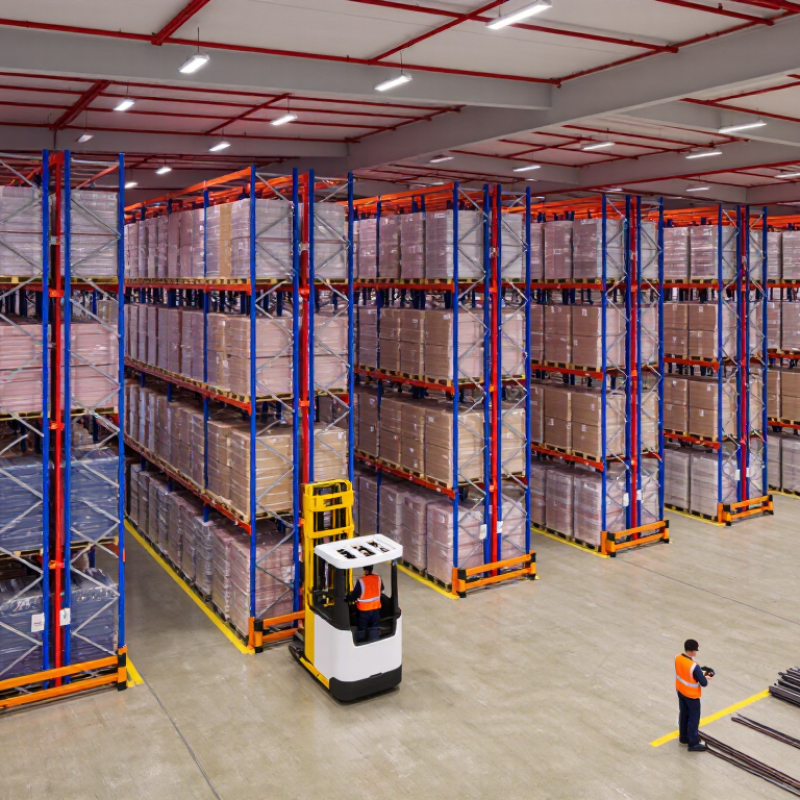
What Is the Best Deep Lane Pallet Racking System in 2026?

What Deep Lane Pallet Racking Is and How It Works

Deep lane pallet racking stores pallets several positions deep within each lane, rather than placing every pallet beside an aisle. Steel rails support the pallets, while a forklift enters the lane to deposit or retrieve loads. In drive-in layouts, one access face serves each lane, so the last pallet loaded is usually the first retrieved: a last-in, first-out flow. Drive-through layouts allow access from both ends and can support first-in, first-out handling when loading and picking follow a disciplined sequence.

This arrangement can reduce aisle space, but it works best when each lane holds a consistent product and pallet size. Mixed stock can make the rear pallet difficult to reach. Keep it simple. Operators should check pallet condition, load dimensions, truck clearance, and rack capacity before use. A poorly placed load can obstruct a lane or damage its rails. MHI’s 2024 Annual Industry Report surveyed more than 1,700 supply-chain professionals; 55% expected to increase investment in supply-chain innovation. That figure is not specific to racking, but it reflects the pressure to improve storage efficiency. Deep lanes can help, though they trade direct access for density. That trade-off deserves a careful look.

Main Deep Lane Racking Configurations and Their Differences

Deep-lane racking trades direct pallet access for higher storage density. The main configurations differ in pallet rotation, aisle access, and handling equipment.

Drive-in racks have one working face, so forklifts enter the lanes and pallets are generally managed last-in, first-out (LIFO). They suit uniform products with few stock-keeping units and large batches.

Drive-through racks allow access at both ends, supporting first-in, first-out (FIFO), but require an aisle on each side.

Push-back racks use nested carts, letting operators load and retrieve pallets from the same face. They typically operate on a LIFO basis and suit several pallet positions per lane.

Pallet-flow racks use gravity rollers: pallets enter at the rear and move toward the picking face, supporting FIFO. They need compatible pallets and regular roller checks. Small pallet differences can cause trouble.

MHI’s 2024 Annual Industry Report found that 55% of respondents planned to increase technology investment within two years. This is not a rack-performance benchmark, but it highlights the value of reliable inventory tracking and controls as systems grow.

Before choosing a layout, check SKU turnover, pallet dimensions, forklift clearances, and loading discipline. A dense design can look efficient on paper, yet poor lane utilization may erase the gain.

How to Compare Storage Capacity, Selectivity, and Throughput

What Is the Best Deep Lane Pallet Racking System in 2026?

How to Compare Storage Capacity, Selectivity, and Throughput

In 2026, the best deep-lane pallet racking system is the one that fits your warehouse’s order patterns, not just its floor plan. Deep-lane designs store pallets several positions deep, saving aisle space and increasing density. They work well when many pallets share the same SKU. But density is not free. Frequent access to individual pallets can slow retrieval and add handling steps. Start by reviewing SKU counts, pallet dimensions, daily picks, and replenishment frequency.

Compare capacity by measuring usable space, not merely counting rack positions. Include aisle width, clear height, fire protection clearances, and staging areas. Selectivity means how easily staff can reach a specific pallet. Drive-in layouts typically follow last-in, first-out access, while pallet-flow systems can support first-in, first-out rotation. Push-back designs offer another option, often with last-in, first-out access. Confirm that lane depth matches inventory turnover. A deep lane looks efficient on paper. Sometimes it is not.

Throughput depends on the rack and the work around it. Track pallet moves during peak shifts, including lift-truck travel and replenishment delays. Ask for a layout simulation based on your order history, then test awkward cases: mixed pallet heights, damaged loads, or a sudden demand spike for one SKU. These details expose bottlenecks. Leave room for inspection and safe maneuvering. I would challenge the forecast, too; warehouse demand rarely behaves as neatly as a spreadsheet suggests. A short pilot can reveal whether the assumed picking rhythm holds up.

Key Factors for Choosing a Deep Lane System in 2026

Start with inventory, not a headline capacity figure. Measure how many pallets each SKU holds, how often it moves, and whether batches stay consistent. Deep lanes work best when many identical pallets move in predictable cycles. That matters. With mixed SKUs, stock can sit behind front pallets and slow picking. Decide whether LIFO access is acceptable or whether a drive-through, FIFO arrangement better suits expiry dates and replenishment. FIFO is not automatically better; layout and handling discipline still matter.

Lane depth should reflect daily turnover, available floor space, and the reach truck or shuttle equipment used on site. Ask operators to test the turning path with a loaded pallet. Clearances on drawings can feel very different at rack level. Check pallet dimensions, load weights, rack ratings, floor condition, and sprinkler clearance with qualified professionals. Small variations matter. Damaged pallets or uneven loads may jam deep channels, creating delays and difficult recovery work.

Compare drive-in, push-back, and pallet-shuttle options using real order data, including peak-season volume and replenishment windows. Shuttles can reduce forklift travel, but require compatible pallets, charging plans, maintenance support, and a response plan for faults. Budget for inspection and operator training, not only installation. A forecast can look precise and still miss actual daily patterns. Review a sample week of movements, then leave room for an imperfect peak.

Choosing a Deep Lane Pallet Racking System in 2026

Typical fit with FIFO (first in, first out) and LIFO (last in, first out) inventory rotation. A value of 1 means the system commonly supports that flow; 0 means it is not the typical configuration.

How to use this: Choose a flow system when stock rotation is a priority: pallet flow commonly supports FIFO, while drive-in and push-back commonly operate LIFO. Drive-through is typically suited to FIFO. Selective racking provides direct access to each pallet and can support either rotation method, but stores fewer pallets per aisle. Actual suitability depends on the rack layout and operating rules.

Which Operations Benefit Most from Each System Type

Deep-lane pallet racking works best when an operation stores many pallets of a few products. Drive-in systems suit warehouses holding bulk stock, seasonal goods, or reserve inventory. They use a last-in, first-out sequence, so each lane should contain a consistent product. Forklifts enter the rack structure. That needs careful training and clear operating rules.

Drive-through racking allows loading at one end and picking at the other. It can support first-in, first-out rotation for products with dated stock or planned replenishment. Pallet-flow systems also support FIFO, using rollers to move pallets toward the picking face. They suit fast-moving goods and steady order volumes. Not every pallet moves smoothly, though. Pallet condition, weight, and dimensions can affect flow.

Push-back systems suit operations that need more selectivity than drive-in storage, while still prioritizing density. They work well for several pallets of each SKU, with last-in, first-out picking. A warehouse with limited floor space and moderate product variety may benefit.

The right choice depends on actual pallet counts, turnover, and forklift access—not just rack capacity. A lane that looks efficient on a layout can become awkward during peak shifts. Test the proposed layout against real picking patterns before committing.

FAQS

What is deep-lane pallet racking?

It stores several pallets deep in each lane. Steel rails support the loads, and forklifts enter lanes to place or retrieve pallets. More storage, less direct access.

How does drive-in racking handle pallet rotation?

Drive-in racking has one access face. Pallets are generally handled last-in, first-out, so the newest load is retrieved first. This suits large batches of similar products.

How is drive-through racking different?

Drive-through lanes can be accessed from both ends. With disciplined loading and picking, they can support first-in, first-out handling. They also need an aisle at each end.

When might push-back or pallet-flow racks be useful?

Push-back racks use nested carts and usually follow last-in, first-out handling. Pallet-flow racks use gravity rollers to move pallets toward the picking face. Pallets must fit properly.

What products suit deep-lane storage best?

It works best with consistent products, pallet sizes, and large batches. Mixed stock can leave a needed pallet trapped behind another. That can slow picking.

What should be checked before choosing a lane depth?

Review daily pallet movement, floor space, load weight, and forklift reach. Test turning paths with a loaded pallet. Drawings may not show every tight clearance.

Can shuttle equipment reduce forklift travel?

Shuttles can reduce forklift movement, but they need compatible pallets, charging plans, and maintenance support. Plan for faults too. Delays happen.

What safety and operating checks matter?

Check pallet condition, load dimensions, rack capacity, floor condition, and sprinkler clearance with qualified professionals. Train operators and inspect rails regularly. Small differences can matter.

Conclusion

Deep Lane Pallet Racking is a high-density storage approach that places pallets several positions deep within a lane, reducing the space taken up by aisles. Its layout and operating method determine how goods are stored and retrieved, so understanding the main configurations is essential. Different systems balance storage capacity, selectivity, and throughput in different ways: a design that maximizes pallet density may offer less direct access to individual loads, while a more accessible layout may require additional aisle space.

Choosing the best system in 2026 depends on factors such as inventory variety, pallet turnover, available floor space, handling equipment, and the speed of access required. Operations with large quantities of similar products may benefit from a high-density configuration, while facilities handling varied goods or frequent order changes may prioritize selectivity and flexibility. The right Deep Lane Pallet Racking system is the one that fits an operation’s storage goals and daily workflow, rather than simply offering the greatest capacity.

Emily

Emily

Emily is a professional marketing specialist with a strong understanding of the company’s products, services, and customer needs. She combines market insight, clear communication, and practical product knowledge to create valuable content for readers across different industries. Through the......