Choosing the right Heavy Duty Pallet Racking system in 2026 requires more than comparing load capacities and prices. Warehouses now face heavier products, faster order cycles, tighter floor plans, and higher expectations for traceability. A pallet beam may look strong, yet poor aisle planning can waste valuable cubic space. Small details matter.
The MHI 2024 Annual Industry Report found that 55% of supply chain professionals planned to increase technology investment. That finding matters because modern pallet storage increasingly connects with warehouse management systems, scanners, conveyors, and automated vehicles. However, automation does not solve weak rack design. It can make mistakes happen faster. The Rack Manufacturers Institute’s ANSI MH16.1 standard remains an important reference for industrial steel storage rack design and performance. Buyers should also review seismic conditions, forklift impact risks, pallet quality, beam deflection, and required safety clearances.
This 2026 guide compares major Heavy Duty Pallet Racking configurations, including selective, drive-in, double-deep, push-back, and pallet flow systems. Each option serves a different operating pattern. Selective racks offer direct access, while high-density systems improve storage efficiency but may reduce selectivity. That trade-off is often underestimated. Data from industry reports can guide decisions, but warehouse experience still exposes practical problems, such as damaged pallets, uneven floors, and difficult inspections. The strongest system is not always the densest one. It is the system that safely supports daily work, future growth, and disciplined maintenance.
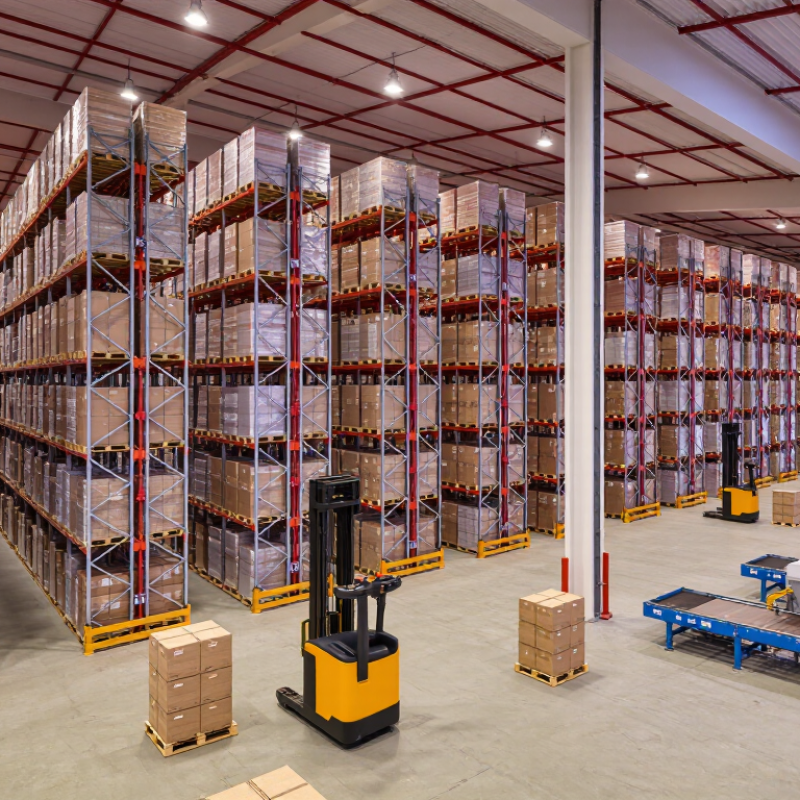
Define Heavy-Duty Pallet Racking by ANSI MH16.1 and 2,000–5,000 lb Loads
2026 Top Heavy Duty Pallet Racking Systems?
Heavy-duty pallet racking should be defined by engineering, not appearance. ANSI MH16.1-2023 establishes design and testing principles for industrial steel storage racks. In practical warehouse planning, a heavy-duty position often supports 2,000–5,000 pounds per pallet. That range is useful, but it is not an automatic classification.
A 48-by-40-inch pallet loaded with steel parts behaves differently from boxed products. Load distribution, beam span, upright height, floor quality, and forklift impact all affect capacity. The Rack Manufacturers Institute’s technical guidance stresses that rated capacity depends on the complete rack configuration. Changing beam levels can change the rating. Small details matter.
OSHA estimates that forklifts cause about 85 deaths and 34,900 serious injuries each year in the United States. Rack protection therefore deserves the same attention as load capacity. Anchors, column guards, aisle clearance, and visible capacity plaques should match the approved design. Inspection records should include bent uprights, missing pins, and damaged braces.
A clean spreadsheet does not guarantee a safe rack. I have seen warehouses focus on maximum capacity while ignoring uneven floors and inconsistent pallet weights. That decision needs review. A qualified engineer should verify the layout, seismic conditions, connections, and actual operating loads before installation. Source references: ANSI MH16.1-2023; Rack Manufacturers Institute technical specifications; U.S. OSHA forklift safety data.
2026 Top Heavy-Duty Pallet Racking Systems
Heavy-duty pallet racking is commonly engineered for pallet loads from 2,000 to 5,000 lb. Under ANSI MH16.1, rack capacity must be verified by the complete system design, including upright frames, beams, connections, bracing, anchorage, seismic conditions, and the specified load configuration.
The chart illustrates pallet-load levels and the corresponding bay load for a three-level rack with two pallets per level. Bay load is calculated as pallet load × 6 positions. These values are planning examples, not universal rack ratings; final capacity must be confirmed by a qualified rack engineer in accordance with ANSI MH16.1.
Compare Selective, Drive-In, Push-Back, and Pallet-Flow Systems by Density
2026 Top Heavy Duty Pallet Racking Systems: Comparing Density
Density is not simply the number of pallets per square foot. It also depends on aisle width, ceiling height, pallet dimensions, and inventory turnover. Selective racking uses more aisles, so its storage density is usually the lowest. However, it provides direct access to every pallet. That matters when warehouses handle many stock-keeping units or frequent picking.
Drive-in racking offers very high density because forklifts enter deep storage lanes. It suits uniform products with limited rotation. The trade-off is slower access and a last-in, first-out pattern. Push-back racking stores pallets two to six positions deep. Carts move older pallets forward, reducing aisle space while preserving better selectivity than drive-in systems. It can be practical for medium-turnover goods.
Pallet-flow racking uses inclined rollers and gravity. Operators load from one side and pick from the other, supporting first-in, first-out handling. This design works well for dated products and busy dispatch areas. Yet rollers need regular inspection, and damaged pallets can interrupt movement. I have seen density calculations fail when teams ignore pallet overhang and forklift turning space. A compact layout may look efficient on paper, but become awkward during peak shifts. Measure actual pallet loads, test traffic paths, and verify beam capacity before choosing the deepest system.
Choose Rack Dimensions for 42-in Pallets and 10–12 ft Forklift Aisles
For 42-inch pallets, rack depth should usually fall between 42 and 44 inches. This range supports the pallet without hiding the load behind the front beam. Confirm the pallet’s actual footprint, because nominal dimensions can vary. A 48-inch pallet width also affects beam length and bay spacing. Measure twice. Allow practical clearance for damaged boards, stretch wrap, and uneven loading.
Forklift aisles need more than a tape measure.
A 10-foot aisle may suit a compact reach truck, while a counterbalance forklift often needs closer to 12 feet. Use the truck’s turning radius, load center, and mast height. Mark a test bay with the intended pallet. Drive in, turn, and retrieve a full load. Leave room. An aisle that works empty may feel unsafe during peak movement.
Heavy-duty design also depends on beam height, upright capacity, floor condition, and anchoring.
Keep heavier pallets on lower levels when operations allow. Specify capacity per level, not only per frame. Inspect beams, connectors, and anchors after installation. Field reviews often find efficient layouts losing clearance near columns or fire equipment. That mistake deserves a second review. Final dimensions should be checked by a qualified rack engineer and the forklift supplier.
Apply OSHA 1910.176 and NFPA 13 Rules for Safe Rack Layouts
2026 Top Heavy Duty Pallet Racking Systems?
Heavy-duty pallet racking starts with a safe layout, not maximum storage density. OSHA 1910.176 requires stored materials to remain stable, secure, and free from hazards. A rack may look strong, yet poor aisle spacing or uneven loading can create a serious collision risk. OSHA’s General Industry Digest identifies struck-by hazards as a recurring warehouse concern. The U.S. Bureau of Labor Statistics recorded 1,075 fatal work injuries in transportation and warehousing during 2023. That figure is broader than rack accidents, but it shows the operating environment’s risk.
NFPA 13 requires sprinkler design to match commodity type, storage height, rack configuration, and aisle arrangement. Selective racks usually provide clearer sprinkler access than compact drive-in layouts. Measure the top pallet, beam level, flue space, and clearance below sprinklers. Keep rack uprights protected where forklifts turn sharply. A six-inch gap can disappear quickly after pallet deflection.
Field audits often find the same mistake: operators calculate pallet weight but ignore load shape. Concentrated loads can overstress beams and connectors. Mark every bay’s capacity visibly. Inspect damaged frames immediately, isolate the area, and document the repair decision. Local authorities may apply additional fire or seismic requirements. Check the adopted NFPA edition and site conditions before final approval. Perfect layouts are rare. A second review can expose what the first drawing missed.
Rank 2026 Systems by Capacity, Selectivity, Throughput, and Space Utilization
For 2026, heavy-duty pallet racking should be ranked by more than load rating. Capacity ranks first for dense, stable inventory. Selective pallet racking offers the highest accessibility, with every pallet directly reachable. Double-deep systems increase storage density, but reduce immediate selectivity. Drive-in racks provide stronger space utilization for uniform products, although forklift access becomes less flexible. Push-back and pallet-flow racks improve throughput by supporting faster replenishment and controlled stock rotation. Automated storage systems can maximize vertical space, but require higher investment and disciplined inventory data. Capacity comes first. Not always.
WERC’s 2024 DC Measures report identifies 99.5% as the median order-picking accuracy benchmark. This makes rack layout a throughput decision, not merely a storage decision. Shorter travel paths can support accuracy, yet narrow aisles may slow inexperienced operators. The 2024 MHI Annual Industry Report also shows continued investment in automation and digital supply-chain tools, reinforcing the value of scalable rack designs. However, published rankings can look too neat. Product dimensions, pallet weights, ceiling height, and fire-protection requirements change the result. A practical comparison should score capacity, selectivity, throughput, and space utilization separately. My own preference would shift toward selective or flow-based layouts when SKU variety is high. For predictable, full-pallet inventory, denser systems usually perform better. Measure the aisles. Then test real operating data.
2026 Top Heavy Duty Pallet Racking Systems? - Rank 2026 Systems by Capacity, Selectivity, Throughput, and Space Utilization
Comparative ranking of common heavy-duty pallet storage configurations. Scores use a 1–5 scale and represent typical operating characteristics when systems are properly designed, loaded, and managed.
| Rank |
Racking System |
Typical Unit-Load Capacity |
Capacity Score |
SKU Selectivity |
Selectivity Score |
Typical Throughput |
Throughput Score |
Space Utilization |
Space Score |
Best-Fit Application |
Overall Score |
| 1 |
Pallet Flow Racking |
1,500–3,000 kg per pallet position |
4.0/5 |
FIFO; front-face access to active lanes |
4.0/5 |
20–60 pallet movements/hour per active lane |
5.0/5 |
High; typically 60–80% floor-area utilization |
4.0/5 |
High-volume, date-sensitive goods with regular replenishment |
4.3/5 |
| 2 |
Pallet Shuttle Racking |
1,000–1,500 kg per pallet position |
4.0/5 |
One SKU per lane; FIFO or LIFO layouts available |
3.0/5 |
15–35 pallet movements/hour per shuttle |
4.0/5 |
Very high; typically 70–90% floor-area utilization |
5.0/5 |
High-density storage with repetitive pallet handling |
4.0/5 |
| 3 |
Selective Pallet Racking |
500–2,500 kg per pallet position |
4.0/5 |
Direct access to every pallet |
5.0/5 |
15–30 pallet movements/hour per truck |
4.0/5 |
Moderate; typically 35–50% floor-area utilization |
3.0/5 |
Large SKU ranges, mixed inventory, and frequent picking |
4.0/5 |
| 4 |
Double-Deep Pallet Racking |
800–2,000 kg per pallet position |
4.0/5 |
Two-deep access; reduced direct selectivity |
3.0/5 |
12–25 pallet movements/hour per truck |
3.0/5 |
High; typically 50–65% floor-area utilization |
4.0/5 |
Medium SKU counts with multiple pallets per SKU |
3.5/5 |
| 5 |
Push-Back Pallet Racking |
800–1,500 kg per pallet position |
4.0/5 |
Two- to six-deep storage; LIFO operation |
3.0/5 |
10–25 pallet movements/hour per truck |
3.0/5 |
High; typically 55–70% floor-area utilization |
4.0/5 |
High-density LIFO storage with limited pallet access requirements |
3.5/5 |
| 6 |
Drive-In / Drive-Through Racking |
800–1,500 kg per pallet position |
4.0/5 |
One SKU per lane; limited direct access |
2.0/5 |
8–18 pallet movements/hour per truck |
3.0/5 |
Very high; typically 60–85% floor-area utilization |
5.0/5 |
Low-SKU, high-volume storage of uniform products |
3.5/5 |
| 7 |
Mobile Pallet Racking |
500–2,000 kg per pallet position |
4.0/5 |
Direct access when an aisle is opened |
4.0/5 |
8–18 pallet movements/hour per truck |
3.0/5 |
Very high; typically 70–90% floor-area utilization |
5.0/5 |
Space-constrained facilities with moderate access frequency |
3.8/5 |
Data basis: Capacity values are typical engineering ranges for properly specified beams, frames, decking, pallets, and floor slabs. Throughput depends on aisle width, lift-truck type, travel distance, operator practices, inventory profile, and replenishment design. Space-utilization ranges are indicative planning values rather than guaranteed results. Final capacities and layouts must be verified against applicable local codes, seismic conditions, rack-member ratings, pallet condition, and the manufacturer’s structural calculations.
Scoring guide: 1 = low, 3 = moderate, 5 = very high. The overall score is an indicative balanced comparison of capacity, selectivity, throughput, and space utilization.
Conclusion
Choosing the right Heavy Duty Pallet Racking system in 2026 begins with understanding its load requirements, structure, and operating environment. Systems designed under ANSI MH16.1 principles commonly support approximately 2,000–5,000 pounds per pallet position when properly engineered and installed. Selective racks provide the best direct access, while drive-in systems maximize storage density. Push-back racks improve space utilization with multiple pallet positions per lane, and pallet-flow racks support efficient first-in, first-out movement for high-throughput operations.
Rack dimensions should match 42-inch pallets, including appropriate beam spacing, clearance, and upright protection. Forklift aisle widths of about 10–12 feet may be suitable depending on equipment and maneuvering needs. A safe layout should also consider OSHA 1910.176 requirements for stable material handling and NFPA 13 provisions affecting sprinkler clearance and building protection. Overall, the best 2026 solution depends on balancing capacity, selectivity, throughput, and available floor space rather than choosing the densest design alone.